The Apology Johnny Depp Never Forgot
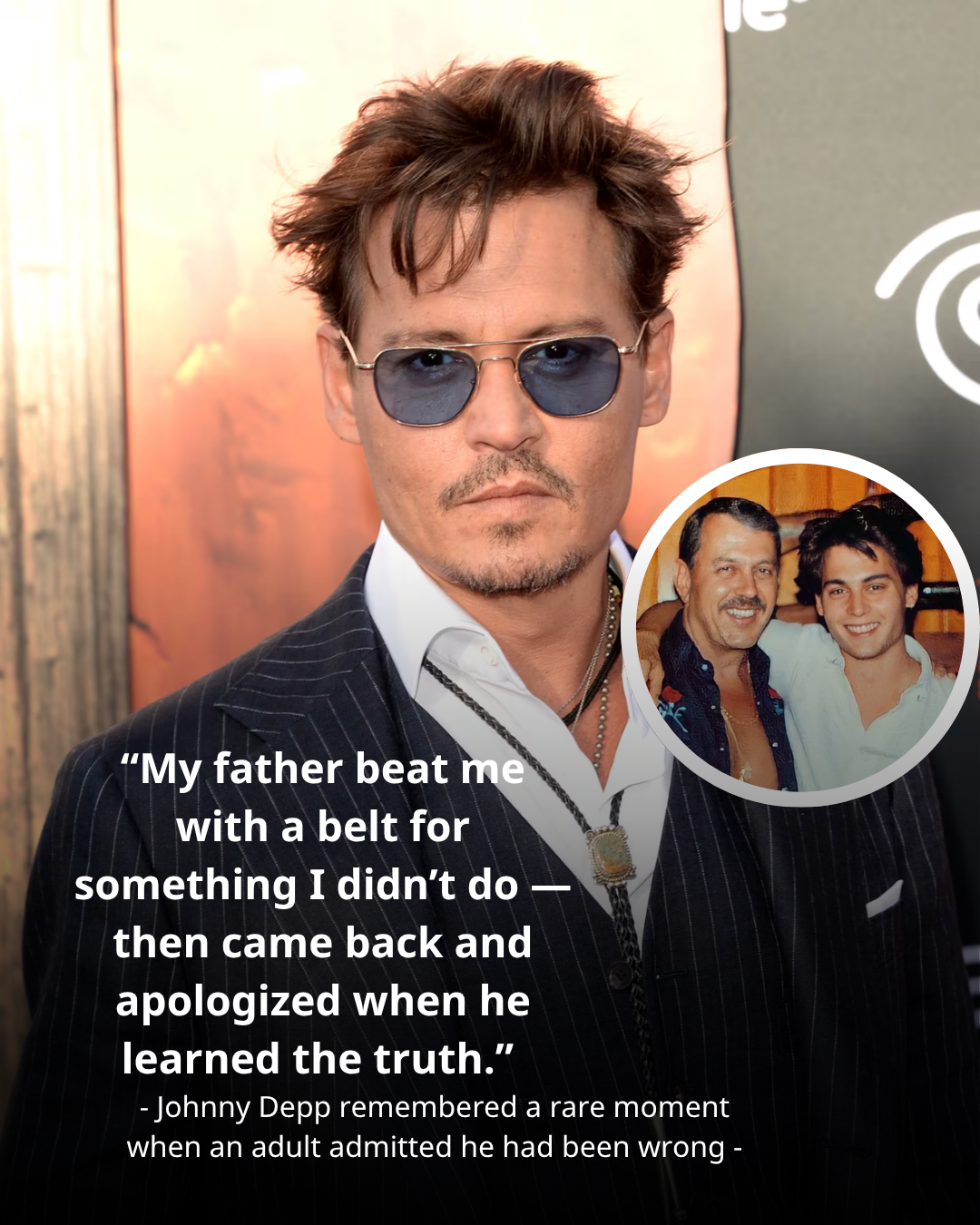
Some childhood memories stay with us because they are happy.
Others stay because, for one brief moment, someone finally admitted they were wrong.
When Johnny Depp took the witness stand in Virginia in April 2022, millions of people were watching a famous actor speak about one of the most public and painful chapters of his adult life. But during his testimony, Depp also went much further back — to a childhood he described as chaotic, unpredictable, and often frightening.
Among the memories he shared was one that might have seemed small compared with everything else he described.
His father punished him with a belt for something Depp insisted he had not done.
Later, after discovering that his son had been telling the truth, his father came back and apologized.
It was a simple act.
But in the world Depp described growing up in, an apology meant something.
Depp testified that his mother could be physically and emotionally abusive toward members of the family. He described his father very differently. According to Depp, his father was generally a quiet man who did not respond to his wife with violence, even when she treated him harshly.
But there were moments when his mother instructed his father to discipline the children.
Depp recalled one particular occasion when he was accused of doing something he said he had not done.

He kept insisting that he was innocent.
His father did not believe him at the time.
The punishment went ahead anyway.
Depp testified that his father used a belt to punish him, despite his repeated claims that he had done nothing wrong.
For a child, there are few feelings more helpless than telling the truth and realizing that the adults around you do not believe you.
You can explain.
You can swear that you are innocent.
You can repeat yourself again and again.
But when you are a child, the final decision belongs to someone else.
Depp could not stop the punishment.
What happened afterward, however, became the part of the story that seemed to stay with him.
His father eventually discovered that Depp had, in fact, been telling the truth.
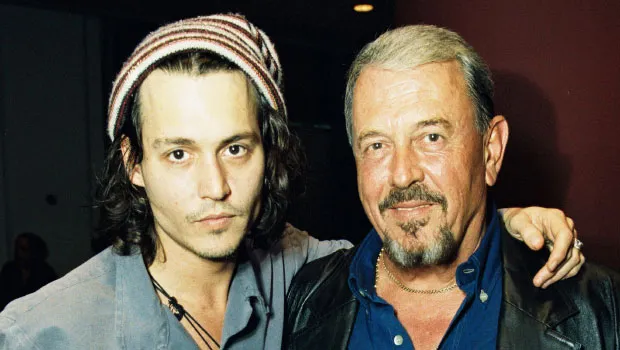
And he came back to his son.
He apologized.
Depp recalled in court that his father acknowledged having gone through with the punishment when his son had not deserved it.
Then Depp added another painful observation: his mother, he said, never did the same.
That contrast makes the memory especially striking.
The story is not powerful because the punishment itself was unusual for the environment Depp described. In fact, much of his testimony painted a picture of a childhood in which fear and instability had become part of ordinary life.
What made this moment different was that an adult returned.
An adult admitted a mistake.
An adult effectively told the child, “You were telling the truth, and I was wrong.”
That may sound like the bare minimum a parent should do.
For a child who rarely heard those words, however, it can become unforgettable.
An apology cannot erase what happened.
It does not undo fear.
It does not make a punishment disappear.
But an apology does something else: it restores reality.
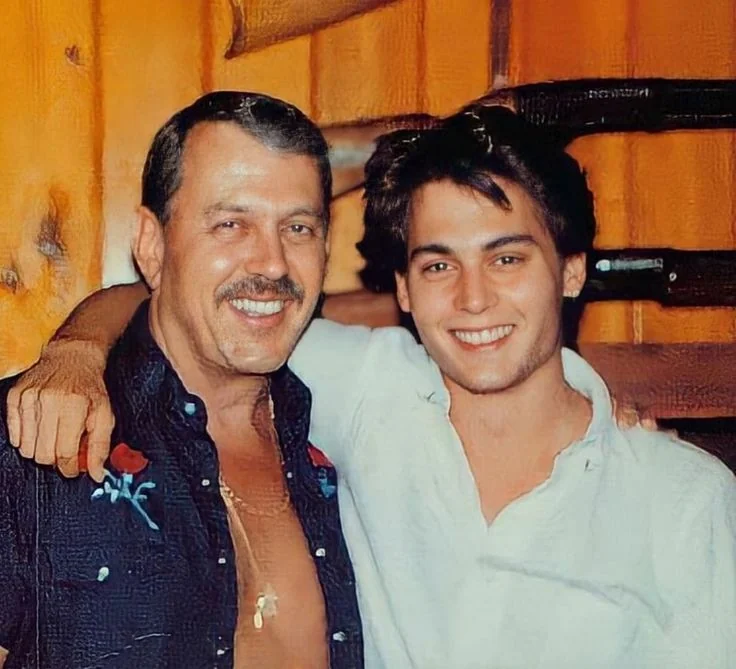
For a child who has been wrongly accused, being believed matters. Having the truth acknowledged matters. Hearing an authority figure admit that they made a mistake matters.
Perhaps that is why this memory stands out so sharply among the darker stories Depp told about his upbringing.
During the same testimony, Depp described a household marked by volatility and emotional pain. He said his father eventually left the family. He also testified that after his father left, his mother attempted suicide and later fell into a deep depression.
These were not isolated childhood difficulties. They were part of an environment that Depp portrayed as deeply unstable.
Years later, he said those experiences influenced the way he wanted to raise his own children.
Depp testified that he and Vanessa Paradis, the mother of his two children, tried to create something very different from the home he had known.
He said they avoided raising their voices around their children and tried to talk through mistakes rather than simply shouting “no.”
There is something revealing in that choice.
People do not always repeat the childhood they were given.
Sometimes they spend adulthood trying to build its opposite.
A child who grew up around shouting may become determined to speak softly.
A child who remembers being frightened may become determined to make home feel safe.
And a child who remembers what it felt like not to be believed may understand how important it is to listen.
That does not mean painful childhood experiences automatically create wisdom. Trauma is more complicated than that, and no single childhood story can explain an entire adult life.
But certain moments can leave permanent emotional landmarks.
For Depp, one of those landmarks appears to have been the day his father came back.
Not because his father had behaved perfectly.
He had not.
Not because an apology erased the punishment.
It could not.
The significance was that his father was capable of admitting that he had been wrong.

In the complicated childhood Depp described, that distinction mattered enough for him to remember it decades later and recount it under oath in a courtroom.
There is also something deeply human about the father in this story.
Parents often hold enormous authority in the eyes of their children. Admitting a mistake can feel like surrendering that authority.
But sometimes the opposite is true.
A parent who says, “I was wrong,” can teach a child something more valuable than a parent who pretends to be infallible.
They teach them that truth matters more than pride.
They teach them that authority does not make someone automatically correct.
And they teach them that love sometimes requires returning to the person you hurt and acknowledging what you did.
Johnny Depp’s memory of his father is complicated.
It contains fear, punishment, family conflict and pain.
But buried inside it is also an apology.
A father discovered that his son had been telling the truth.
And instead of pretending nothing had happened, he went back.
Decades later, the boy remembered.
Perhaps that is the quiet power of an apology.
It may take only a few seconds to say.
But for the person who needed to hear it, it can last a lifetime.