The Ocean Fingerprint: Humpback Whale’s $5,000\text{-Mile Return After }35\text{ Years}$
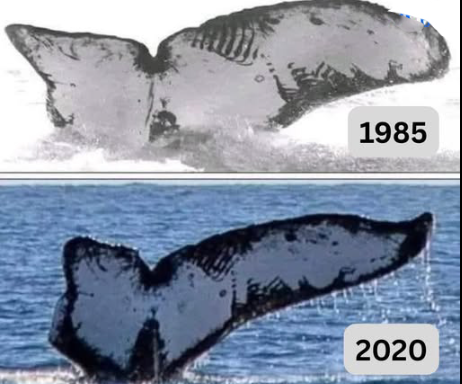
In 1985, off the coast of Mexico, researchers photographed a humpback whale and documented the unique black-and-white pattern on its tail—a marine “fingerprint” used for identification.
 The 5,000 Mile Journey
35 years later, in 2020:
That very whale was spotted again—thousands of miles away, but right back in familiar waters! Same fluke. Same whale. Same migratory path. 
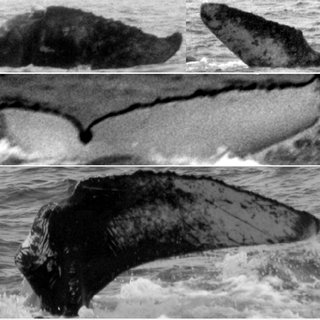
Humpback whales are known for their long migrations, often traveling over 5,000 miles between summer feeding and winter breeding areas—returning to the exact same spots year after year with astonishing accuracy.
 The Invisible Map
This cross-decadal reunion is more than just a feel-good moment. It is a testament to the resilience of marine life and the power of long-term research.
Could this return be the subtle proof of how deeply nature’s navigational memory runs? And is it possible that, even with technology spanning from analog to digital, we are only just beginning to unveil the secret of the invisible map held deep within the minds of these ocean giants? 
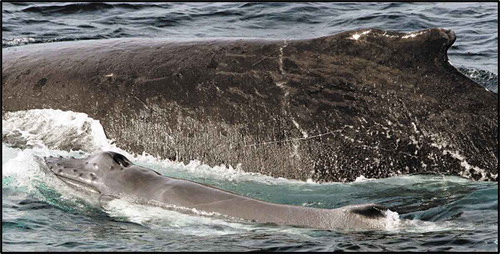
In 1985, off the coast of Mexico, researchers photographed a humpback whale and documented the unique black-and-white pattern on its tail—a marine “fingerprint” used for identification.
The 5,000 Mile Journey35 years later, in 2020:
That very whale was spotted again—thousands of miles away, but right back in familiar waters! Same fluke. Same whale. Same migratory path.
Humpback whales are known for their long migrations, often traveling over 5,000 miles between summer feeding and winter breeding areas—returning to the exact same spots year after year with astonishing accuracy.
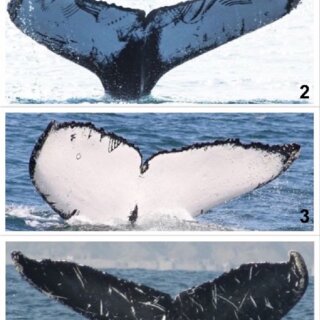 The Invisible Map
This cross-decadal reunion is more than just a feel-good moment. It is a testament to the resilience of marine life and the power of long-term research.
Could this return be the subtle proof of how deeply nature’s navigational memory runs? And is it possible that, even with technology spanning from analog to digital, we are only just beginning to unveil the secret of the invisible map held deep within the minds of these ocean giants?
In 1985, off the coast of Mexico, researchers photographed a humpback whale and documented the unique black-and-white pattern on its tail—a marine “fingerprint” used for identification.
The 5,000 Mile Journey35 years later, in 2020:
That very whale was spotted again—thousands of miles away, but right back in familiar waters! Same fluke. Same whale. Same migratory path.
Humpback whales are known for their long migrations, often traveling over 5,000 miles between summer feeding and winter breeding areas—returning to the exact same spots year after year with astonishing accuracy.
The Invisible MapThis cross-decadal reunion is more than just a feel-good moment. It is a testament to the resilience of marine life and the power of long-term research.
Could this return be the subtle proof of how deeply nature’s navigational memory runs? And is it possible that, even with technology spanning from analog to digital, we are only just beginning to unveil the secret of the invisible map held deep within the minds of these ocean giants?