Army Veteran Jonathan Turnbull Survived a Devastating ISIS Bombing — Then Defied Every Medical Prediction
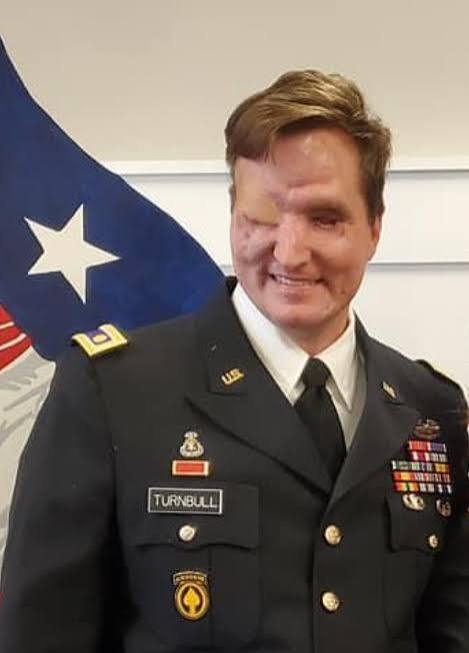
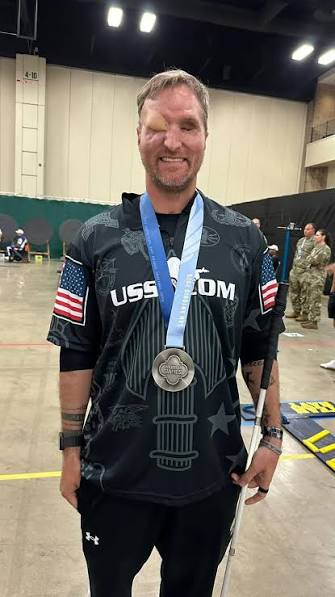
Retired U.S. Army Maj. Jonathan Turnbull was given almost no chance of survival after an ISIS suicide bombing in Syria. Years later, despite losing his eyesight and enduring more than 20 surgeries, he returned to competition at the 2026 Warrior Games.
On January 16, 2019, Jonathan Turnbull was serving in Syria when an ISIS suicide bomber attacked his team in Manbij.
The explosion killed four Americans and wounded three others, including Turnbull, who was then a captain working in a special operations civil affairs mission.
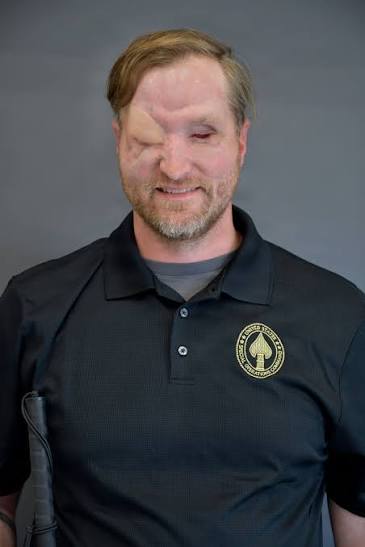
He was just a few feet from the bomber when the blast threw him beneath his vehicle. The injuries were catastrophic, leaving the right side of his face severely damaged, his right eye lost, and his left eye permanently impaired.
At the scene, two members of his security team initially believed he was dead.
But Turnbull was still alive.
Doctors Gave Him Almost No Chance of Survival
Turnbull’s condition became a desperate race against time.
After receiving initial emergency treatment in Syria, he was transported to Baghdad, Iraq. During the flight, his heart stopped, and a young medic performed CPR for the entire four-hour journey.
At a military hospital in Baghdad, doctors removed shrapnel from near his iliac artery, an injury that could have killed him within minutes if the fragment had moved.
Medical staff also began reconstructing his face before he was transferred to Landstuhl Regional Medical Center in Germany and later Walter Reed National Military Medical Center in Maryland.
Turnbull recalled that doctors believed he had a “zero percent chance” of survival.
His wife, Samantha, was told that he might become paralyzed on one side and could lose much of his memory. He had suffered severe traumatic brain injury, and the right side of his face had lost significant skin and tissue.
Yet he continued to survive.
Nearly Two Years of Recovery and 23 Surgeries
At Walter Reed, Turnbull underwent an extensive recovery process that lasted nearly two years.
One of his most complex operations involved transferring tissue from his left thigh to reconstruct the area around his right eye and face. The procedure lasted more than 13 hours as surgeons connected individual blood vessels to the damaged tissue.
He eventually underwent 23 surgeries, with doctors reportedly telling him that he would need significant time before he could stand or walk independently.
Turnbull, however, challenged those expectations.
Despite being told he might not stand for six months, he stood up with the encouragement of his recovery care coordinator. He later progressed through physical therapy and began rebuilding his strength.
At one point, he had lost approximately 110 pounds and could lift only five-pound dumbbells, a dramatic change from his previous physical condition.
The emotional impact was also profound. Turnbull experienced severe depression and received mental health support during his recovery.
He later explained that the people who came to help him were among the most effective parts of his treatment.
A Soldier Learns to Rebuild His Life
Turnbull was medically retired from the Army in November 2021.
Although he missed military service and its mission, he found another way to help others: sharing his experience and encouraging people facing difficult circumstances.
He became involved in adaptive sports, which gave him a renewed sense of purpose while he continued rehabilitation for his injuries and blindness.
He also wrote and published a book titled “Zero Percent Chance,” describing his experience and the long road back from the bombing.
His message centers on refusing to allow injuries or difficult circumstances to completely define a person’s future.
Returning to Competition at the 2026 Warrior Games
In June 2026, Turnbull competed in the Warrior Games in San Antonio, Texas.
The adaptive sports event brought together wounded, ill, and injured service members and veterans. Turnbull entered the competition as a member of Team SOCOM and took part in multiple events despite being blind.
His competition included powerlifting, archery, cycling, track and field, and other adaptive sports.
He won a gold medal in tandem cycling and a silver medal in archery. He also earned five gold medals in track and field events, including the 100-meter dash, 200-meter race, 1,500-meter race, men’s 4×100-meter relay, and seated discus.
The results represented a remarkable stage in his recovery, but Turnbull emphasized that the competition was about more than medals.
For him, the Warrior Games provided an opportunity to demonstrate that life-changing injuries do not necessarily end a person’s ability to pursue new challenges.
“You Can Either Let Your Situation Define You”
Turnbull has repeatedly spoken about the importance of choosing how to respond to hardship.
“You can either let these symptoms or your situation define you, or you can use it to better yourself,” he said.
His journey has included life-threatening injuries, blindness, major reconstructive surgery, depression, and years of rehabilitation. But he continued to seek ways to regain independence and serve others.
He also remains involved in supporting Gold Star Families and has continued public service after leaving the military.
A Story of Survival and Purpose
Jonathan Turnbull’s story began with an explosion that nearly ended his life. It continued through emergency evacuations, complex surgeries, physical therapy, and the psychological challenges of adapting to permanent injuries.
Years later, he stood on the starting lines and competed in adaptive sports alongside other wounded service members and veterans.
His experience demonstrates that recovery is not always about returning to the person someone was before a tragedy. Sometimes, it involves discovering new goals, new abilities, and new ways to contribute.
Turnbull’s journey from a near-fatal bombing to the 2026 Warrior Games is a reminder of the long and difficult process behind survival—and the possibility of finding purpose after unimaginable trauma.
Course: NY Post