Dolly Parton Reportedly Made Secret Trip to Germany for Experimental Cancer Treatment During Final Year

Dolly Parton reportedly traveled quietly to Germany during the final year of her life to undergo an experimental cancer treatment, adding a previously unknown chapter to the intensely private health battle she kept largely hidden from the public.
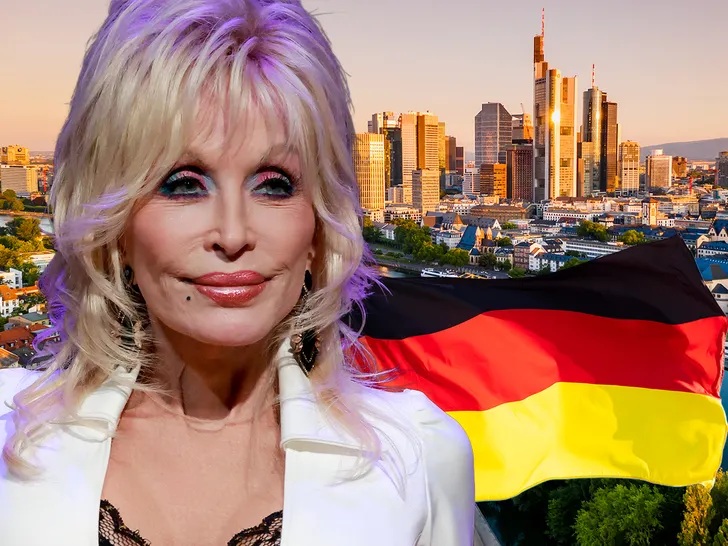
People familiar with the situation say the country music legend flew by private jet to Frankfurt, where she remained for approximately one week while receiving a treatment that has not been publicly identified.
The exact type of cancer Parton was fighting has also never been disclosed.
According to those familiar with the trip, however, Parton returned home believing the treatment had helped her regain some of her strength and that the experience had been worthwhile.
The journey reportedly took place roughly a year before her death on August 25, 2026, at age 80.
A Medical Journey Kept Almost Completely Private
Parton spent decades sharing enormous portions of her personality with audiences while carefully protecting certain parts of her private life.
Her final illness appears to have followed that same pattern.
Although people closest to her knew she had been dealing with serious health problems, the severity of her condition remained unknown to much of the public — and even to some members of her extended family.
Her younger sister Stella Parton later explained that Dolly deliberately limited the number of people who knew about her cancer because she did not want loved ones or fans worrying about her.
Only those in her closest circle were fully aware of what she was facing.
That makes the reported trip to Germany consistent with the way Parton handled much of her final year: quietly, privately and without allowing illness to dominate the public image she had built over more than six decades.
Private Jet Reportedly Took Her to Frankfurt
Sources familiar with the situation say Parton traveled privately to Frankfurt for the experimental treatment.
She reportedly remained in Germany for about a week before returning to the United States.
Details about the medical facility, physicians or treatment protocol have not been made public.
It is therefore unclear whether the procedure involved an experimental drug, an immunotherapy approach or another form of cancer treatment.
No medical institution has publicly confirmed treating Parton.
What sources have said is that she believed the trip had made a difference.
After returning home, Parton reportedly felt stronger and thought the treatment had been effective.
That perception is particularly significant given another detail her family disclosed after her death: she was willing to participate in experimental medicine even if doctors believed it might no longer save her.
Her Sister Said Dolly Was Willing to Help Future Patients
Days after Parton died, Stella shared an extraordinary conversation she said she had with her sister.
Dolly had apparently told her that if doctors reached a point where there was no realistic hope of recovery, she would still allow her medical team to try experimental drugs on her if doing so could produce information useful to future cancer patients.
For Stella, the statement captured something essential about her sister.
Even while confronting her own mortality, Dolly was apparently thinking about whether her experience could benefit someone she would never meet.
It remains unclear whether the treatment she reportedly received in Germany was connected to that specific conversation or whether it was part of a separate effort to extend or improve her life.
There is no public medical documentation tying the two together.
But the revelation that Parton traveled overseas for experimental treatment gives new context to her sister’s account of just how far she was willing to go.
She Continued Working While Privately Ill
One of the remarkable aspects of Parton’s final year was how little the public understood about the seriousness of her condition.
Even as she dealt with cancer privately, she continued working and communicating with fans.
Only days before her death, Parton acknowledged publicly that she had been dealing with “some health issues.”
She explained that she had neglected some of her own medical needs while caring for her husband, Carl Dean, who died in March 2025 at age 82.
Parton said she had been through health challenges before and emphasized that she was still working while recovering.
Nothing in those remarks revealed the full extent of what she was facing.
Three days later, news of her death stunned fans around the world.
Carl Dean’s Death Had Already Changed Her Life
Parton’s final period of illness came after one of the most significant personal losses of her life.
She and Carl Dean had been married for nearly 60 years.
Unlike his internationally famous wife, Dean spent almost his entire adult life away from the spotlight.
Their marriage became one of the most enduring relationships associated with country music, precisely because so much of it remained private.
Dean’s death in March 2025 was devastating for Parton.
In later comments about her own health, she acknowledged that caring for him had caused her to put off dealing with some of her medical issues.
What is not known is exactly when doctors diagnosed her cancer or whether the diagnosis came before or after Dean’s death.
Her family has continued to keep those medical details private.
Even Some Relatives Did Not Know How Sick She Was
Stella later said Dolly’s instinct was to protect people from bad news.
That reportedly extended beyond fans and into their own family.
Some relatives were not told the full seriousness of her condition.
Dolly, according to Stella, did not want people surrounding her with fear or negativity.
That decision may help explain why news of her death was such a shock even to people who knew she had been experiencing health problems.
Her public life had always been marked by humor, optimism and an almost relentless instinct to reassure others.
Even during her own cancer battle, she apparently maintained that approach.
Her Final Message Arrived After Her Death
Less than a month after Parton’s death, audiences received another reminder of how active she had remained.
A prerecorded video message from the singer was shown during the Americana Honors & Awards on September 16, where she received a Lifetime Achievement Award.
In the recording, Parton reflected warmly on her musical career and expressed gratitude for being recognized.
There was little sense in the video that viewers were watching the words of someone approaching the end of her life.
That was consistent with the way she had handled her illness throughout the previous year.
She allowed the work to remain visible.
The disease remained largely invisible.
Cancer Type and Treatment Still Unknown
For all the new information surrounding the Germany trip, several fundamental details remain unanswered.
The family has not publicly disclosed what type of cancer Parton had.
There is no confirmed name for the treatment she reportedly received in Frankfurt.
It is also unknown what institution provided the therapy, how long any benefit lasted or whether the treatment was intended to cure the disease, slow its progression or simply improve her quality of life.
Those gaps are important.
Describing the treatment as “experimental” does not tell us whether it was part of a formal clinical trial or another medically supervised intervention unavailable in the United States.
Without medical records or confirmation from her physicians, further conclusions would be speculation.
A Final Year Defined by Privacy and Persistence
The newly reported trip to Germany changes the picture of Dolly Parton’s final year.
From the outside, she remained the familiar figure generations of fans knew — productive, humorous and intensely committed to her work.
Behind the scenes, however, she was apparently fighting cancer aggressively enough to travel across the Atlantic in search of another option.
Those close to her say she came back believing the treatment had helped her.
And according to her sister, Parton was prepared to go even further if her own experience could eventually help somebody else.
That combination feels consistent with the legacy she left behind.
Parton spent her career transforming deeply personal experiences into songs that belonged to millions of people.
Through her literacy programs, disaster relief and medical philanthropy, she repeatedly turned her success into practical help for strangers.
Her reported willingness to undergo experimental cancer treatment — even with uncertain odds — appears to have followed the same instinct.
Nearly a month after her death, the details of that private battle are only beginning to emerge.
But they reveal a side of Parton’s final chapter that the public never saw: an 80-year-old icon quietly boarding a plane to Germany, hoping medicine might give her more time — and apparently willing for whatever doctors learned from her treatment to matter even if that time eventually ran out.