Breaking Discovery: The Hidden Legacy of America’s Ancient Giants
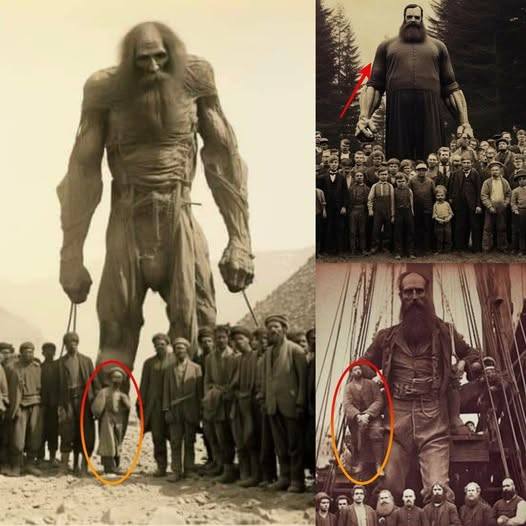
Across the quiet plains and winding river valleys of the American heartland, a mystery older than recorded history is stirring once again. Beneath the soil and the shadows of time, archaeologists are uncovering evidence that may point to a forgotten civilization — the legendary Mound Builders. Their vast earthen monuments, intricate burial chambers, and towering skeletal remains have reignited one of history’s most tantalizing debates: Who were America’s ancient giants?
The Mound Builders: Architects of Mystery
Stretching from the Mississippi River basin to the Appalachian foothills, thousands of earthen mounds still rise like silent sentinels over the landscape. These structures — some geometric, others serpent-like or conical — were built long before the arrival of European settlers, their purpose shrouded in mystery.
Recent excavations have revealed sophisticated construction methods, astronomical alignments, and artifacts of remarkable craftsmanship, suggesting a people of deep knowledge and cultural complexity. Yet among these findings lie anomalies that challenge conventional archaeology — skeletal remains of unusual height, some reported to exceed eight or nine feet, buried with ceremonial tools and ornaments of copper, shell, and stone.
Were these truly the remains of giants, or simply misunderstood evidence of an advanced but forgotten culture?
Echoes of a Lost Civilization
For centuries, Native American oral traditions have spoken of a race of great beings — powerful, wise, and sometimes fearsome — who inhabited the land long before modern tribes. Early settlers and 19th-century explorers recorded accounts of these “ancient giants,” weaving myth and discovery into one haunting tapestry of forgotten history.
Today, new analyses of mound sites and recovered artifacts are giving fresh weight to those legends. Some researchers suggest that the Mound Builders possessed engineering and astronomical knowledge far beyond their era, possibly inherited from or influenced by a much older, global civilization.
Others point to reports of subterranean tunnels and chambers stretching beneath the mound networks — vast underground corridors that have yet to be fully explored. These have fueled speculation about a connection to the long-rumored Hollow Earth theory — a concept proposing that ancient beings once dwelled beneath the surface, their presence echoing in myths across cultures.
Where Myth and Science Converge
Mainstream archaeologists remain cautious, emphasizing that much of the evidence for “giant skeletons” has been lost, misinterpreted, or exaggerated over time. Still, the persistence of the legend — combined with new technological surveys revealing unexplored underground structures — continues to draw attention from historians, scientists, and alternative theorists alike.
The rediscovery of the Mound Builders’ legacy reminds us that human history is rarely linear. Each discovery adds nuance, complexity, and mystery — challenging us to see our ancestors not as primitive survivors, but as builders, dreamers, and keepers of forgotten wisdom.
A Legacy Buried, But Not Forgotten
As excavations continue, one truth grows impossible to ignore: the ancient landscape of North America holds secrets that could redefine humanity’s timeline. Whether the “giants” of legend were physical beings or metaphors for lost greatness, their story continues to awaken our imagination — whispering that beneath every mound lies not just earth, but memory.
Perhaps the past is not gone at all. Perhaps it waits, patient and silent, beneath the soil — a legacy both human and mythic, waiting to be unearthed.