Two Men on a Mountain Road
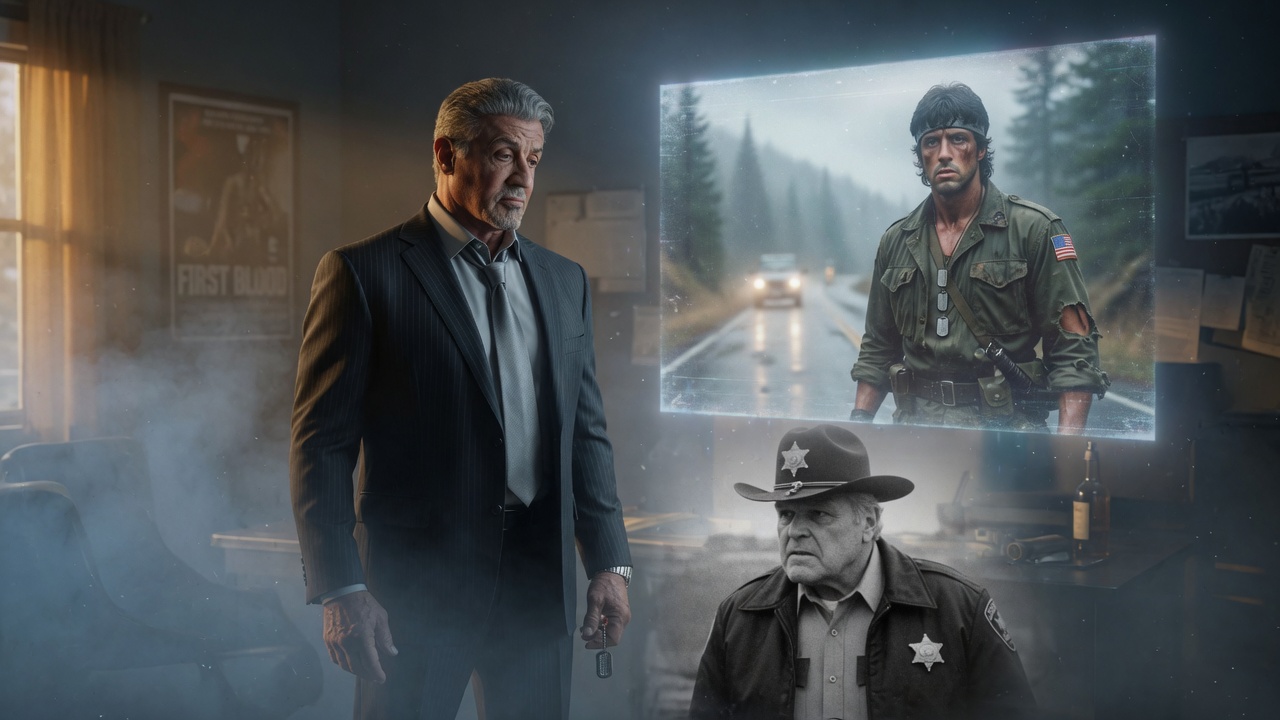
Two Men on a Mountain Road: The Enduring Power of First Blood (1982)
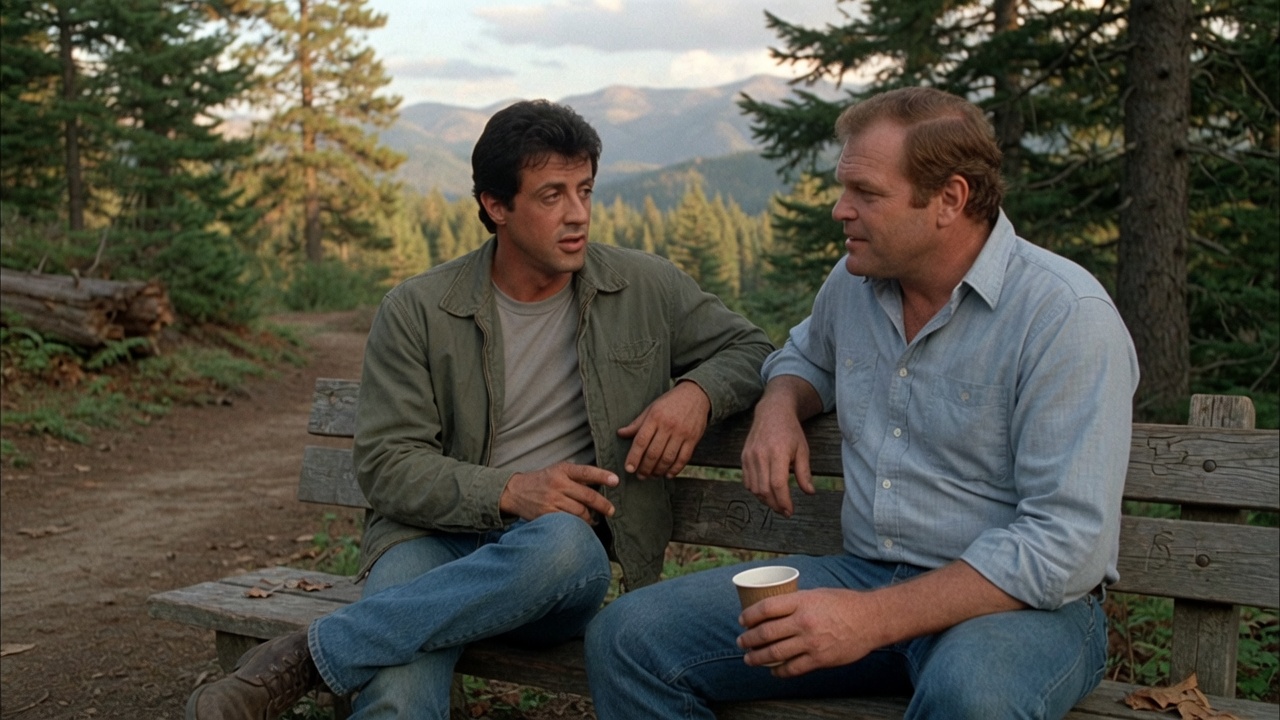
In 1982, two men stood on opposite sides of a narrow mountain road in the Pacific Northwest. One was lean, silent, and coiled like a spring — a Vietnam veteran named John Rambo, dressed in a worn army jacket, his eyes carrying the weight of a war that never truly ended for him. The other was broad-shouldered and authoritative, wearing a sheriff’s jacket with the confidence of a man who believed the rules of his small town were absolute. His name was Will Teasle.
They weren’t enemies by choice. They were simply two men from entirely different worlds who, through a chain of small misunderstandings, bad luck, and escalating pride, found themselves locked in a collision that neither could walk away from.
That film was First Blood, directed by Ted Kotcheff and starring Sylvester Stallone as Rambo and Brian Dennehy as Sheriff Teasle. Forty-four years later, in 2026, the movie still bleeds with raw emotion and relevance. Only one of those two legendary actors is still standing.
The Setup That Changed Everything
Rambo is drifting. He has come to the small town of Hope, Washington, looking for the last surviving member of his old Special Forces unit. When he learns his friend has died from cancer — likely caused by Agent Orange — something inside him fractures a little more. All he wants is to pass through quietly.
But Sheriff Will Teasle sees a vagrant, a drifter who doesn’t belong. What begins as routine harassment quickly spirals into brutality when Rambo is arrested and abused by sadistic deputies. The moment Rambo snaps, the forest becomes his battlefield, and the hunter becomes the hunted.
First Blood is not the over-the-top action spectacle that later sequels would become. It is a tense, grounded character study wrapped in a survival thriller. It asks a painful question that still resonates today: What happens when a society trains men to become perfect weapons, sends them to fight an unpopular war, and then discards them upon their return?
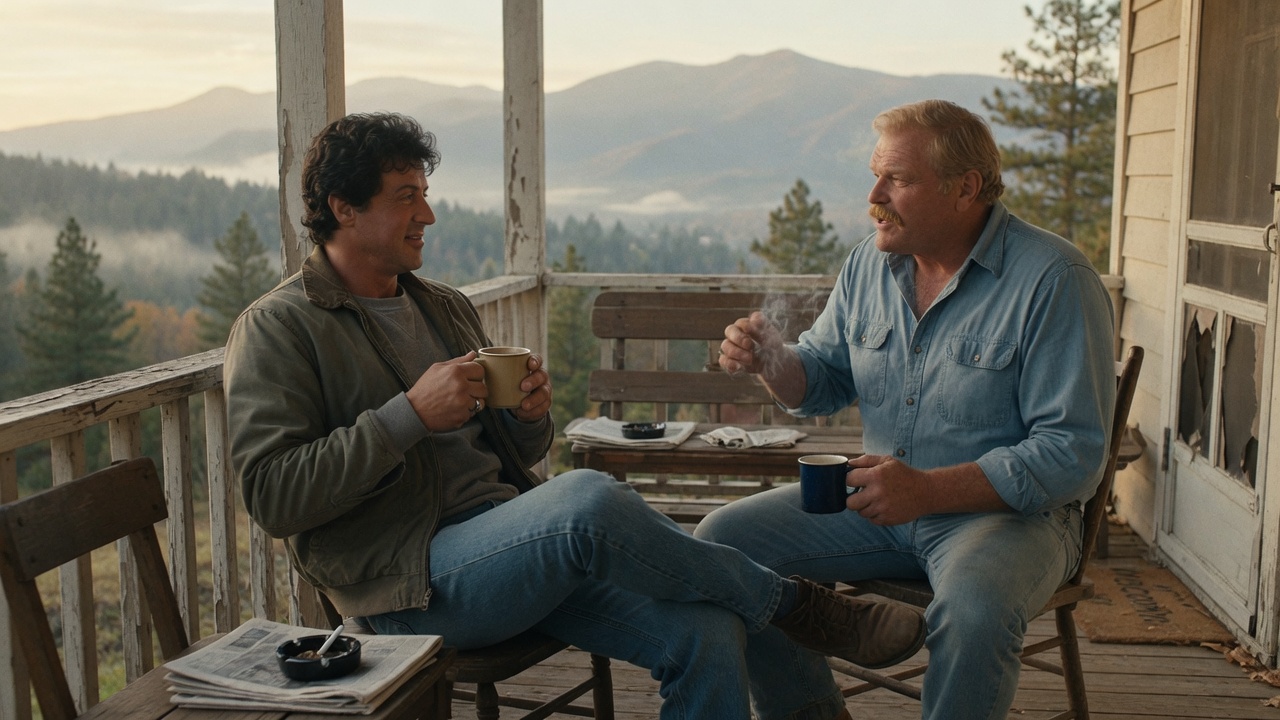
Sylvester Stallone: Giving Rambo a Soul
Many people remember Rambo as the invincible, muscle-bound action hero from the sequels. But in First Blood, Stallone delivers one of the most restrained and heartbreaking performances of his career.
He plays Rambo as a man who desperately does not want to fight. Every punch, every trap, every act of violence comes with visible reluctance and deep sorrow. Stallone gives the character a profound silence — a quiet that speaks volumes about trauma, isolation, and the lingering wounds of war. His famous breakdown monologue at the end, delivered in tears to Colonel Trautman (Richard Crenna), remains one of the most powerful moments in 1980s cinema.
Stallone didn’t just play a soldier. He gave Rambo a soul, a wound, and a humanity that made audiences feel the cost of Vietnam not just overseas, but back home in the daily indignities faced by returning veterans.
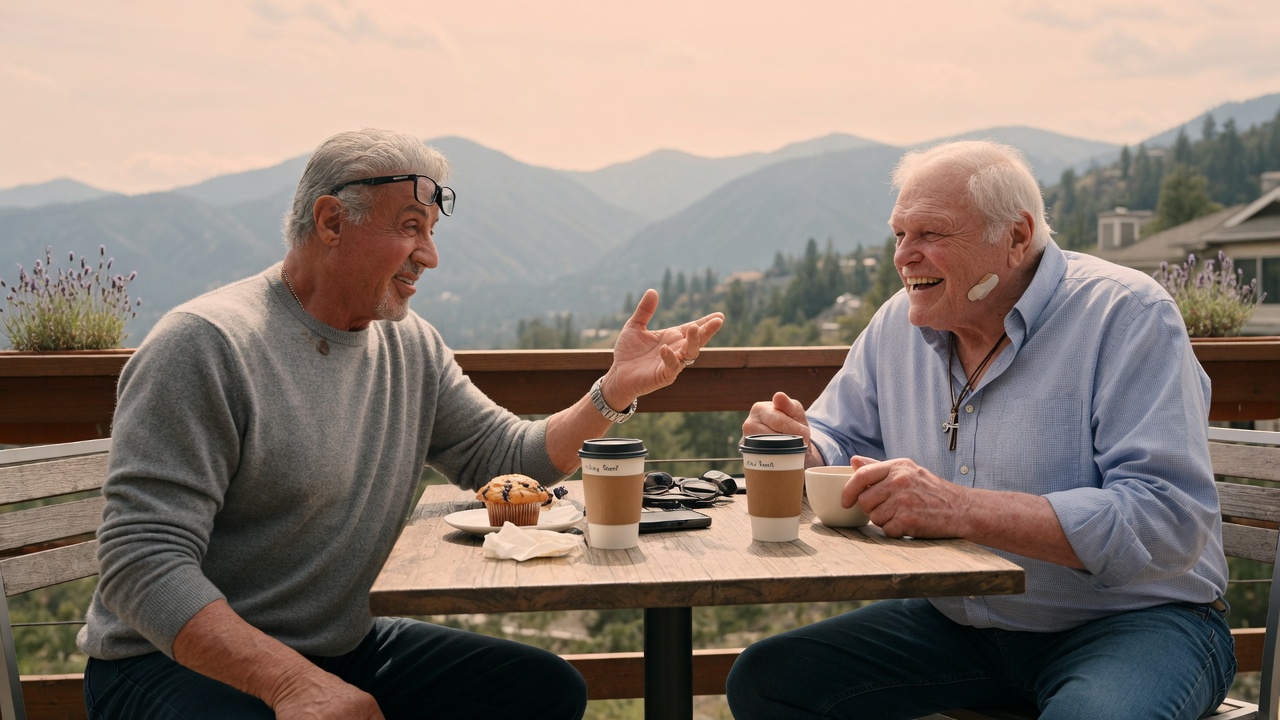
Brian Dennehy: The Human Face of Authority
Opposite Stallone, Brian Dennehy created something rare in cinema — a fully human antagonist who is clearly in the wrong, yet never reduced to a cartoon villain.
Sheriff Teasle is the aggressor from the first moment. He could have let Rambo walk through town. Instead, he chooses to make a point about territory, control, and who belongs. Dennehy plays him with total conviction: you see the logic of a small-town lawman protecting his world, even as you watch that logic destroy everything around him.
Dennehy never asked the audience to like Teasle. He simply asked us to understand how a decent man could become the catalyst for tragedy. That nuance — making the “wrong” man feel painfully real — is the mark of a great actor. It elevates First Blood far above typical good-vs-evil action fare.
A Film About What Comes After the War
At its core, First Blood is about the invisible scars carried by veterans. It explores post-traumatic stress, societal rejection, and the quiet rage of men who were asked to give everything and received little in return.
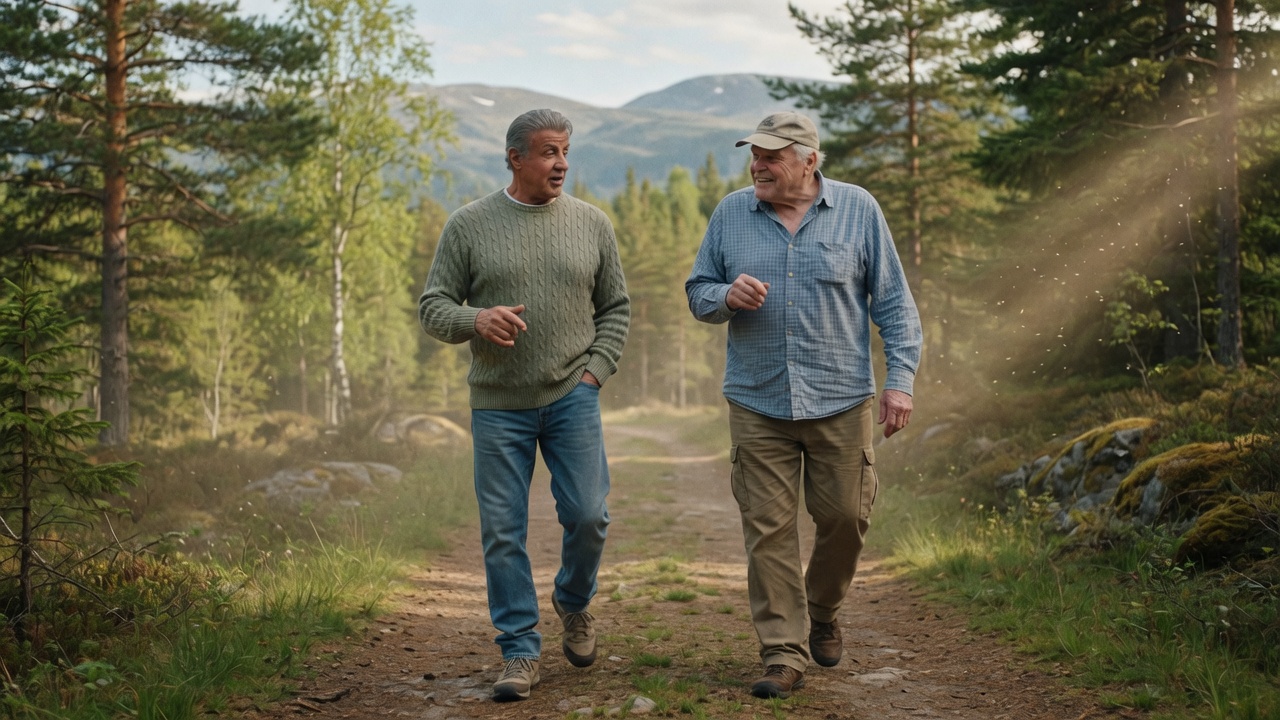
The film doesn’t glorify violence. It shows the horror of it — the way trauma turns a man who wants peace into a one-man army when pushed too far. The forest itself becomes a character: dark, unforgiving, and the only place where Rambo feels in control again.
Critics and audiences at the time recognized its power. It wasn’t just an action movie; it was a cultural statement about how America treated its warriors after Vietnam.
Two Lives, One Legendary Collision
In the decades that followed, their paths diverged.
Sylvester Stallone continued to build an iconic career, becoming synonymous with resilience and comeback stories through Rocky, Rambo, and The Expendables. Even in his late 70s, he remains a force — still acting, producing, painting, and sharing his life with fans. In 2026, he stands as a living legend, silver-haired but still formidable, carrying the weight of the characters who defined generations.
Brian Dennehy took a different road. After First Blood, he built a respected career across film, television, and especially theater — his true passion. He won two Tony Awards for his powerful performances in Death of a Salesman (as Willy Loman) and Long Day’s Journey Into Night. He was known as a generous colleague, a demanding artist, and a man who never coasted. By every account, he was exactly the kind of person you hoped he would be.
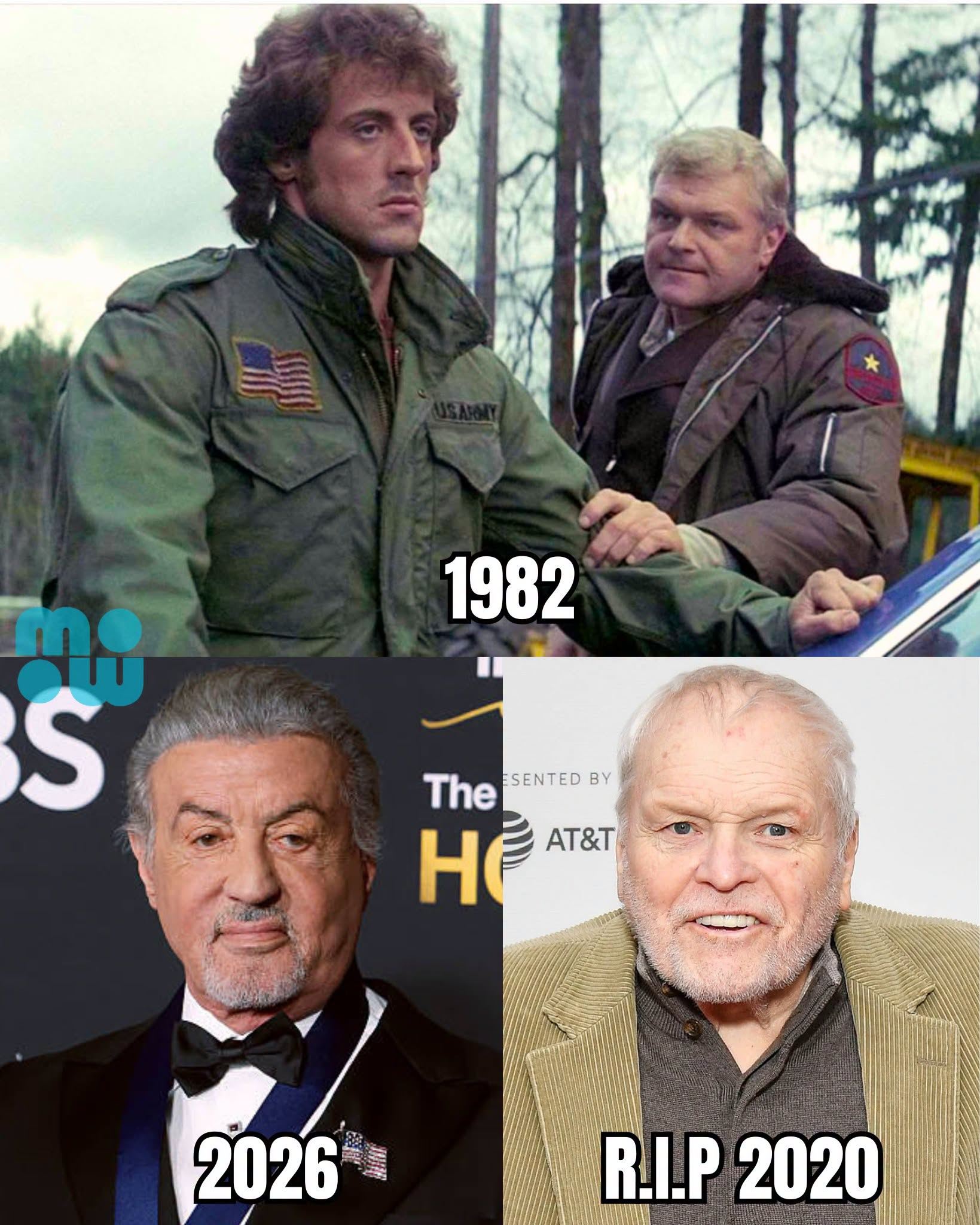
Dennehy passed away on April 15, 2020, at the age of 81, from cardiac arrest due to sepsis. He left behind a rich legacy on stage and screen, and a body of work that touched millions.
He is gone now, but in First Blood, both men remain eternally young and fierce — locked forever on that mountain road, eyes meeting with mutual incomprehension that would soon explode into legend.
Still Bleeding in 2026
Today, First Blood feels as urgent as ever. The struggles of veterans, the tension between authority and the individual, the psychological cost of war and abandonment — these themes have not faded. If anything, they have only grown more relevant in our divided world.
The film endures because it refuses to simplify. It shows the tragedy on both sides: a soldier broken by war and a sheriff broken by his own rigid sense of order. It reminds us that real conflict often begins not with hatred, but with small failures of empathy.
In 1982, they stood on opposite sides of a mountain road.
In 2020, Brian Dennehy crossed a different kind of mountain.
And in 2026, Sylvester Stallone still carries the film they made together — the one where the sheriff pushed too hard, the soldier pushed back, and the forest remembered everything.
First Blood. Still bleeding. Still unforgettable.