THE REVENANT BLOOD AND FROST
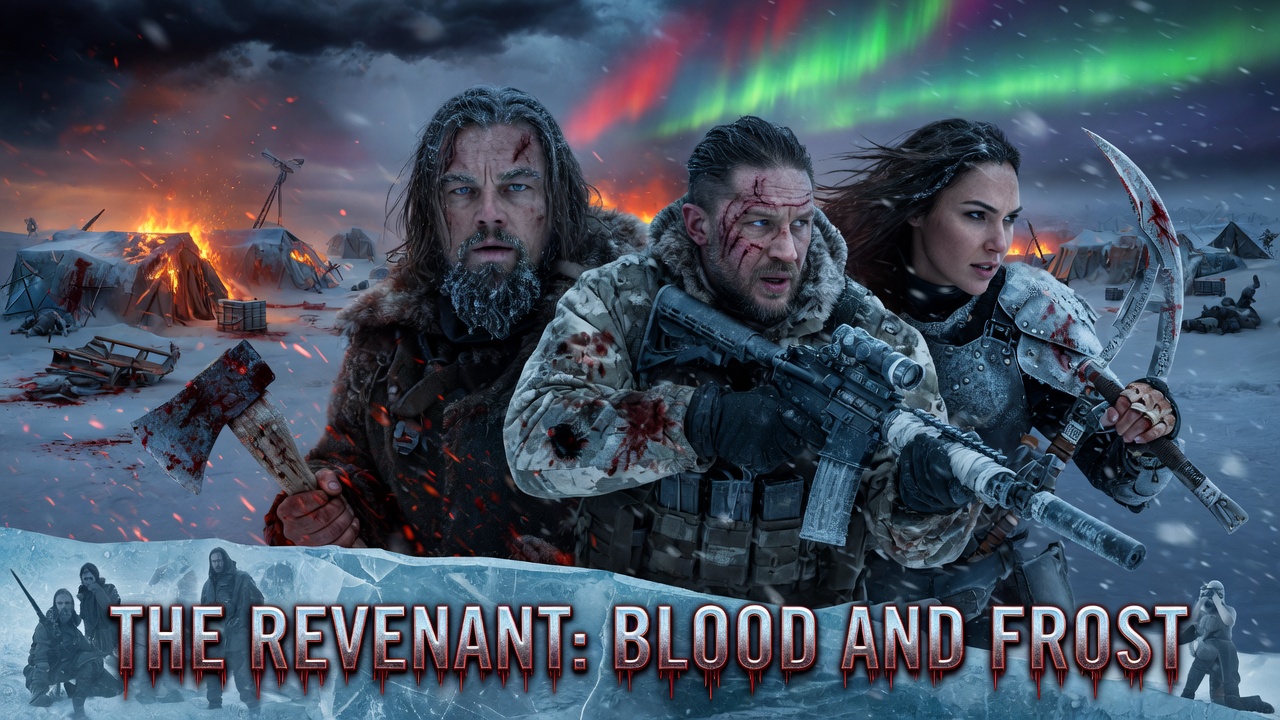
THE REVENANT BLOOD AND FROST (2026) Leonardo DiCaprio, Tom Hardy, Gal Gadot
In the unforgiving silence of a world swallowed by ice and memory, THE REVENANT: BLOOD AND FROST (2026) returns with a haunting tale of survival, vengeance, and redemption where nature is not just an environment—but an enemy that remembers every sin.
Years after the original struggle for survival in the frozen wilderness, Hugh Glass (Leonardo DiCaprio) has vanished from legend and myth alike. Some say he died in the mountains. Others believe he became part of them. But when a series of brutal killings begins to surface along the expanding northern frontiers, whispers of a man who cannot die begin to spread among fur traders and settlers. Tracks lead deep into the frozen unknown—territory untouched by civilization, where the wind carries voices of the dead and the snow hides ancient violence beneath its surface.
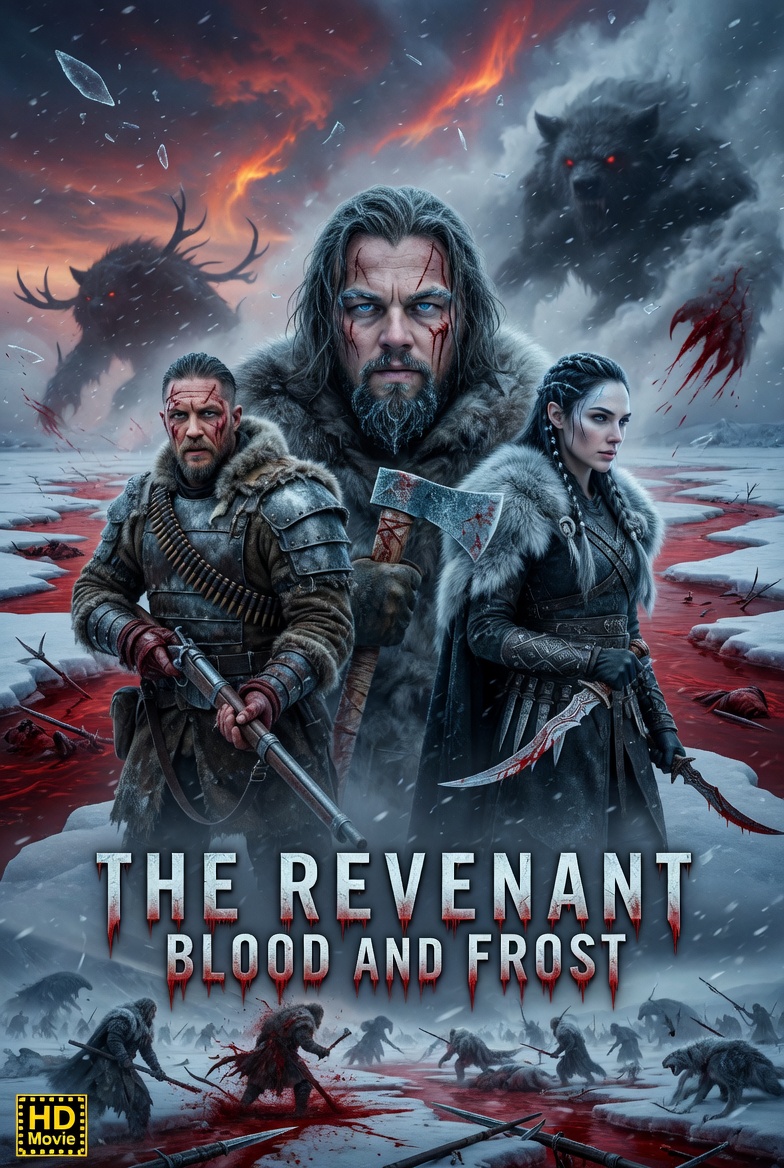
At the center of this new conflict stands a fractured world on the edge of collapse. Nations and trading empires push further into the icy wilderness in search of resources, unknowingly disturbing something far older than conquest. Among them is a ruthless expedition leader played by Tom Hardy, a man driven not by survival, but by control. Hardened by loss and obsession, he believes the frozen lands must be conquered at any cost. To him, the wilderness is not sacred—it is unfinished business.
But the ice has its own memory.
As bodies begin to disappear and entire supply routes are wiped out without explanation, rumors spread of a ghost-like figure moving through storms—silent, precise, and unrelenting. This force of nature is neither fully man nor myth, but something forged from pain, survival, and time itself. When Glass finally re-emerges, he is no longer simply a survivor. He is something closer to judgment.
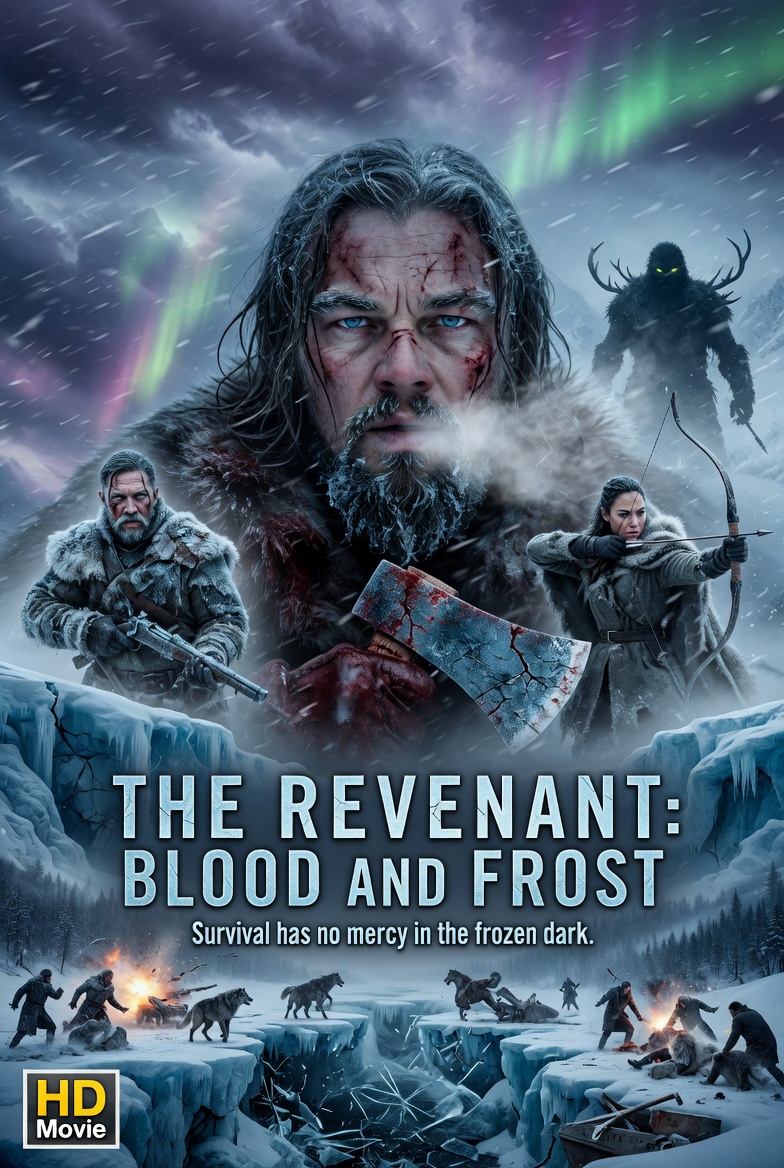
Guiding part of the unfolding mystery is a remote scout and strategist portrayed by Gal Gadot, a woman caught between two worlds: the expanding civilization that demands obedience and the wilderness that refuses to be controlled. Her journey becomes a moral battle as she begins to uncover the truth behind the violence—an old conflict that never truly ended, only froze beneath the surface of history.
What begins as a struggle for territory slowly transforms into something far more spiritual and terrifying. The frozen landscape becomes a living entity—storms that seem to respond to human presence, rivers of ice that conceal forgotten graves, and echoes of past betrayals that refuse to stay buried. Every step deeper into the wilderness strips away not only warmth, but identity.
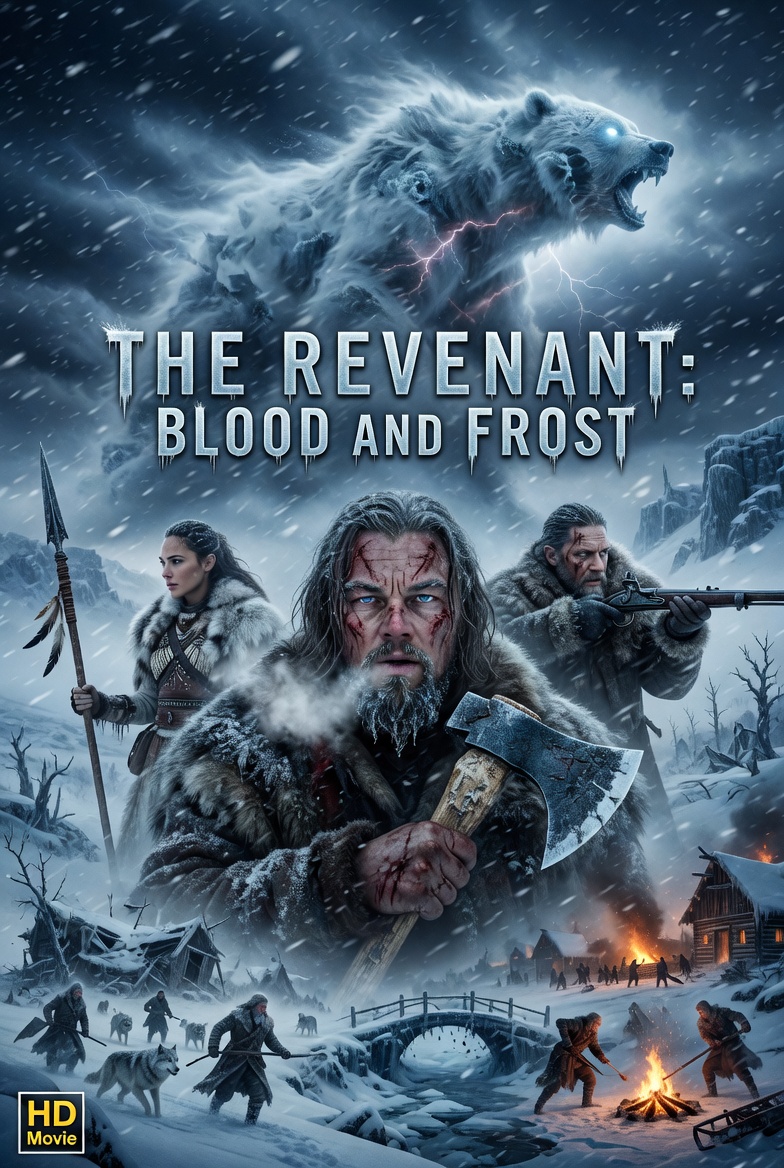
At its core, The Revenant: Blood and Frost is not simply a survival story. It is a meditation on what remains when civilization is stripped away. Glass is no longer driven by revenge alone, but by something heavier—the question of whether redemption is possible in a world that has already decided who must suffer and who must endure.
The confrontation between Glass and Hardy’s expedition force becomes inevitable, unfolding in a brutal, storm-lashed climax where survival is measured in seconds and morality collapses under the weight of desperation. Yet even in violence, the film refuses simplicity. Every character is shaped by loss, and every decision carries consequences written in blood and ice.
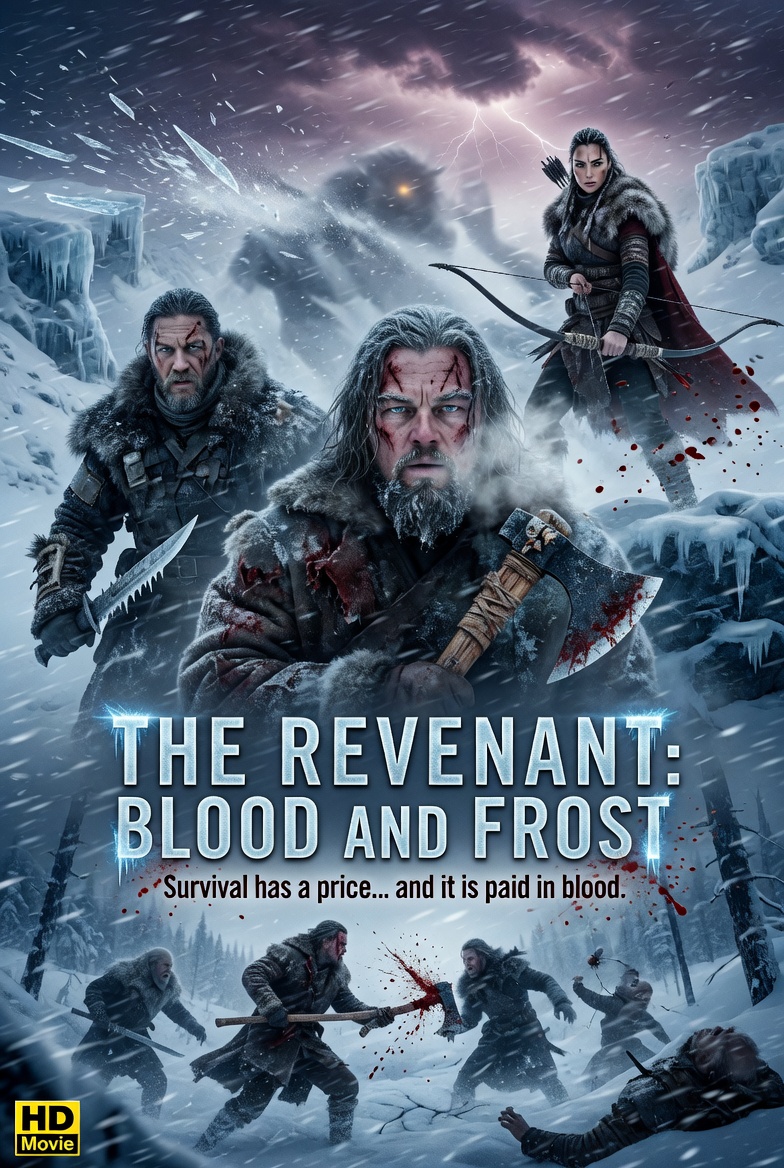
As the storm reaches its peak, the wilderness itself seems to awaken—erasing paths, swallowing screams, and reshaping the battlefield into something almost mythological. In the end, there are no true victors, only those who are left standing long enough to be remembered by the cold.
“In the end, the cold does not forgive. It only remembers.”
Rating: 4.7/5 – A haunting, visually breathtaking survival epic that blends raw brutality with emotional depth, turning the frozen wilderness into a character as powerful as its legends.