Historic Face Transplant Marks Turning Point in Richard Lee Norris’s Journey
Historic Face Transplant Marks Turning Point in Richard Lee Norris’s Journey
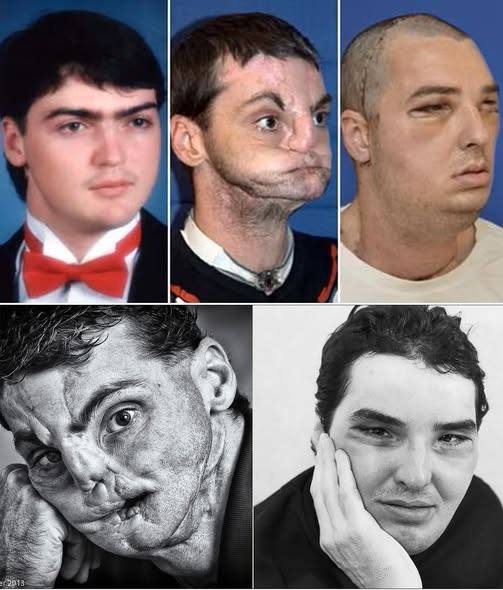
In 1997, the life of 22-year-old Richard Lee Norris was irreversibly changed by a tragic accident in his home. While cleaning what he believed to be an unloaded shotgun, the weapon discharged at close range, causing catastrophic injuries to his face. There was no crime involved, only a devastating mistake that left him without many of the basic structures that form a human face.
The blast destroyed his lips, nose, teeth, jaws, and part of his tongue. Over the following years, surgeons attempted more than 30 reconstructive procedures. Despite their efforts, the severity of the damage made lasting reconstruction impossible.
Norris withdrew from public life. For nearly 15 years, he relied on masks, avoiding crowds and mirrors, and venturing outside only at night. His world narrowed to a life of isolation as he tried to cope with both physical loss and the emotional burden that came with it.
In 2012, a major breakthrough arrived. A team of medical specialists selected Norris for one of the most ambitious and complex facial transplant procedures ever attempted at the time. The operation required the transplantation of jaws, teeth, lips, nose, skin, muscles, nerves, and part of his tongue.
The surgery, considered a milestone in modern medicine, offered Norris a chance at rebuilding not only his appearance but parts of his daily life many take for granted. Within days, he regained the ability to smell, to speak more clearly, to breathe through a functional nose, and to perform ordinary tasks such as brushing his teeth and shaving.
Medical experts hailed the procedure as one of the most extensive and successful face transplants in history, noting its significance for future advancements in reconstructive surgery.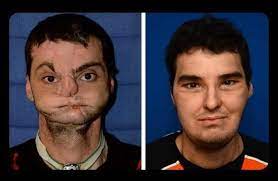
Norris’s story stands as a testament to human resilience and the transformative power of medical innovation. His experience illustrates how quickly life can change, and how science, determination, and compassion can restore hope after profound loss.