DRAMATIC FLOOD RESCUE: Driver Escapes Through Vehicle Window as Floodwaters Swamp the New Jersey Turnpike
A terrifying flood rescue unfolded on the New Jersey Turnpike after relentless heavy rain transformed sections of one of the nation’s busiest highways into dangerous waterways, trapping a driver inside a partially submerged vehicle as floodwaters rose at an alarming rate. Emergency responders rushed to the scene as rapidly accumulating water surrounded the stranded vehicle, creating a life-threatening situation that highlighted just how quickly flash flooding can turn an ordinary drive into a desperate fight for survival.
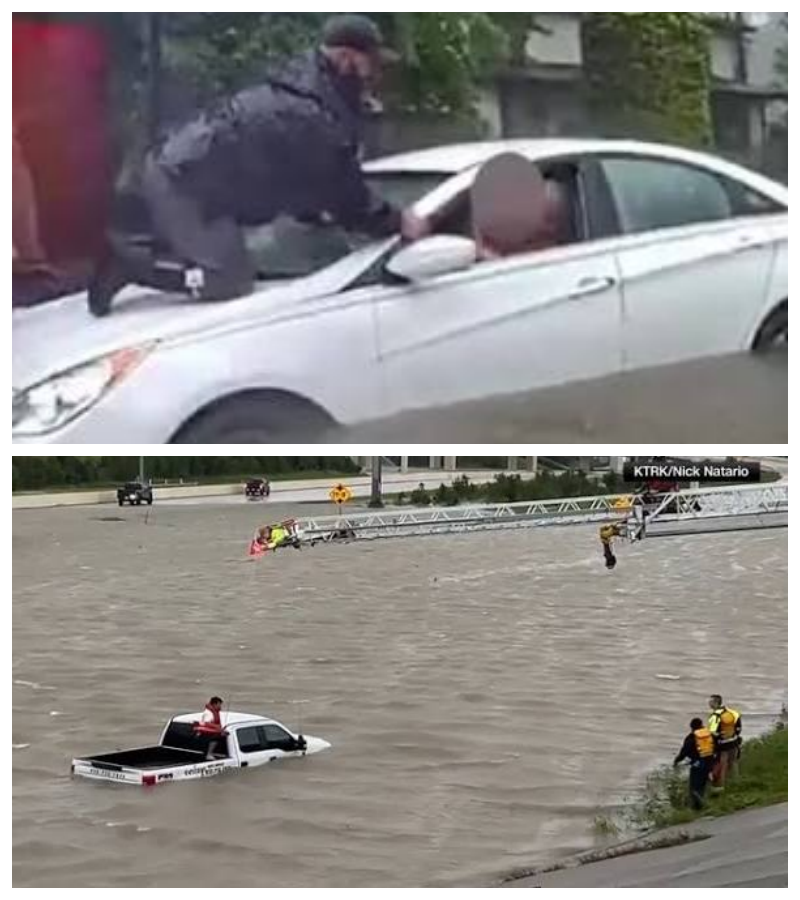
PH๏τographs captured during the rescue tell a dramatic story. The vehicle sat stranded in deep floodwater, with muddy water climbing to just below the headlights and continuing to rise. Unable to safely open the doors because of the surrounding water pressure, the occupant was forced to climb out through a side window while rescue personnel worked to bring them safely to dry ground.
The dramatic rescue unfolded after powerful thunderstorms swept across parts of New Jersey, producing intense rainfall that overwhelmed drainage systems in a matter of hours. Water rapidly accumulated on highways, entrance ramps, underpᴀsses, and low-lying stretches of roadway, leaving motorists with little warning before conditions became extremely dangerous.
What began as a routine day of travel quickly deteriorated into a regional weather emergency.
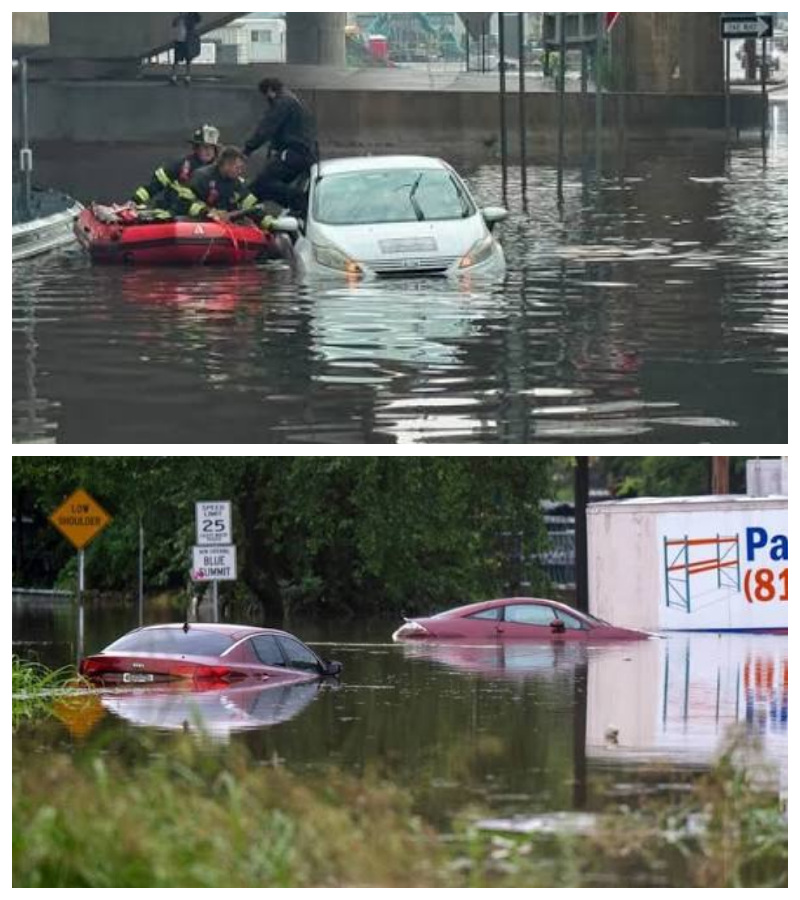
Drivers reported visibility dropping sharply as torrential rain pounded windshields, while standing water began covering multiple lanes of traffic. In some locations, storm drains could no longer handle the extraordinary volume of rainfall, allowing water to collect faster than it could drain away.
As water levels continued climbing, several vehicles became stranded after engines stalled or tires lost traction in the deepening floodwater.
One of those vehicles became the focus of an urgent rescue operation.
According to emergency officials, the driver found themselves trapped as water surrounded the vehicle faster than they could safely escape. Opening the doors became increasingly difficult because floodwater pressing against the outside of the vehicle created tremendous resistance.
As the water continued rising, every pᴀssing minute increased the danger.
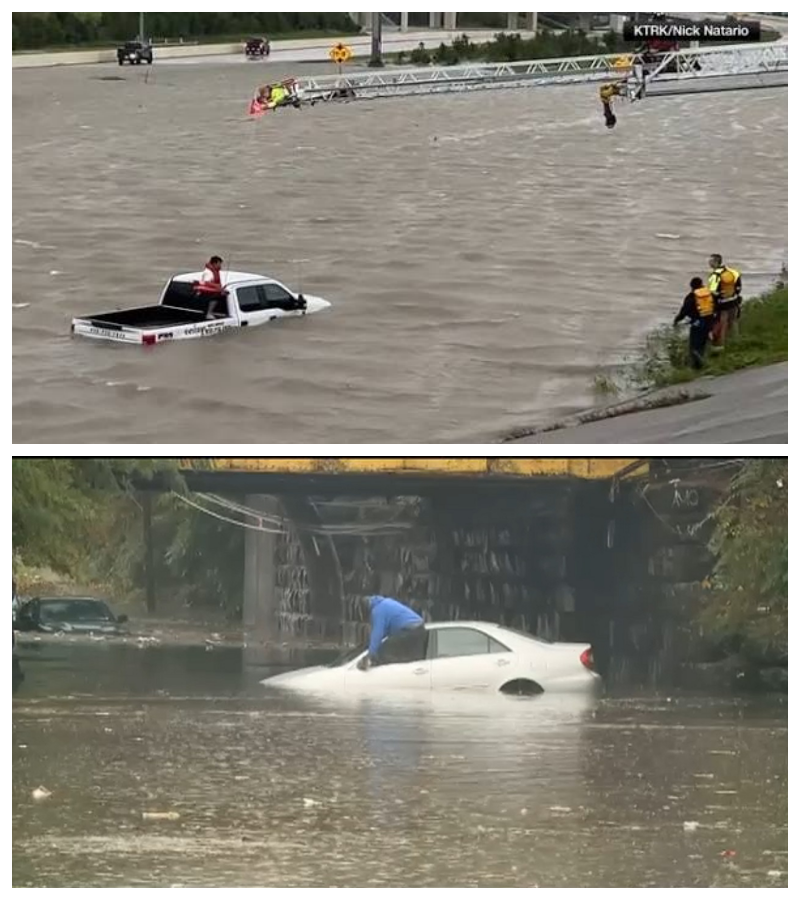
Floodwater can rise surprisingly fast during intense thunderstorms, particularly on highways where large paved surfaces prevent rain from soaking into the ground. Instead, water rushes toward the lowest areas, creating sudden pools capable of trapping unsuspecting motorists.
Recognizing the seriousness of the situation, emergency responders quickly mobilized.
Firefighters, police officers, emergency medical personnel, and rescue teams arrived on scene equipped with specialized gear designed for water rescues. Working carefully in unstable conditions, responders reached the stranded vehicle while monitoring the constantly changing water levels around them.
Rather than attempting to force open the doors against the surrounding water pressure, rescuers instructed the occupant to exit through the vehicle’s window.
PH๏τos from the incident show the individual carefully climbing through the window while standing water nearly reached the front lights of the vehicle. Rescue personnel remained nearby throughout the operation, ensuring the resident could safely reach higher ground without being swept away by moving water.
Fortunately, the rescue was completed successfully.
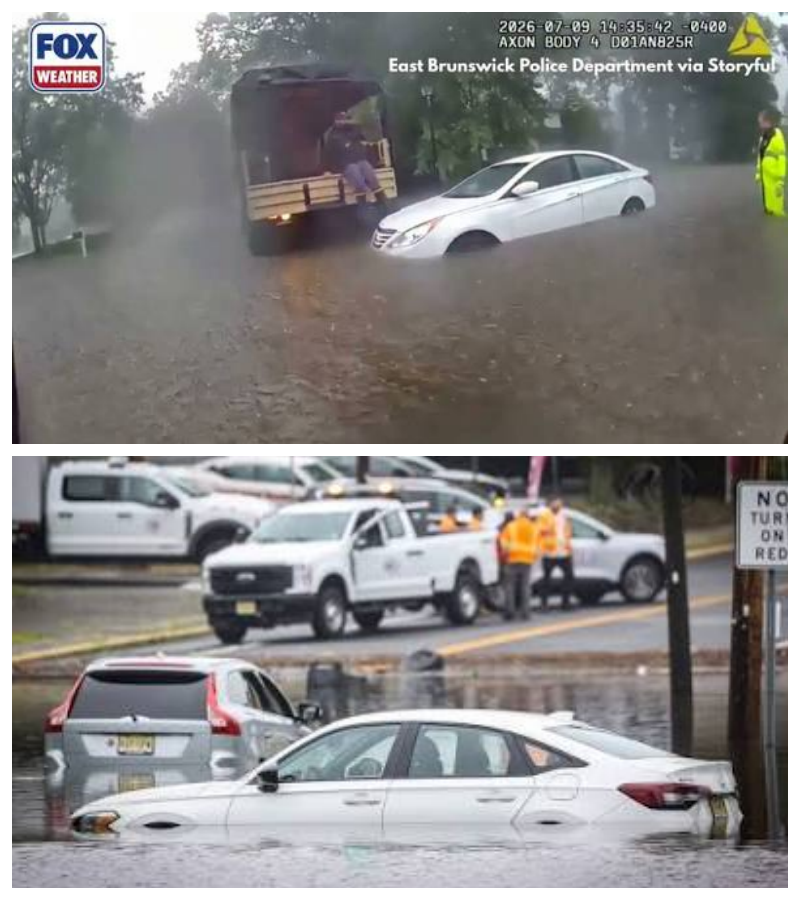
Although the incident ended without reported serious injuries, officials say it serves as a powerful reminder of how dangerous roadway flooding can become, even during storms that may initially appear manageable.
Meteorologists explain that flash flooding often develops much faster than many people realize.
Unlike river flooding, which may take hours or days to develop, flash floods can form within minutes after extremely heavy rainfall overwhelms drainage systems. Urban environments are particularly vulnerable because concrete, asphalt, and other paved surfaces prevent rainwater from being absorbed naturally into the ground.
Instead, enormous volumes of water flow rapidly into storm drains, roadside ditches, and low-lying roadways.
When rainfall exceeds the drainage system’s capacity, water begins accumulating quickly across highways and intersections.
The New Jersey Turnpike is one of the busiest transportation corridors in the United States, carrying hundreds of thousands of vehicles each day. During periods of extreme rainfall, maintaining safe travel conditions becomes increasingly difficult as visibility decreases and standing water develops across travel lanes.
Transportation officials responded by monitoring roadway conditions, issuing travel advisories, and working alongside emergency responders to address flooded sections of the highway.
Drivers throughout the affected region were urged to reduce speed, increase following distance, and avoid unnecessary travel until weather conditions improved.
Authorities continue emphasizing one critical flood safety message:
Turn Around, Don’t Drown.
Every year, dozens of flood-related fatalities occur after motorists attempt to drive through water-covered roads. Many drivers underestimate both the depth and the strength of moving water.
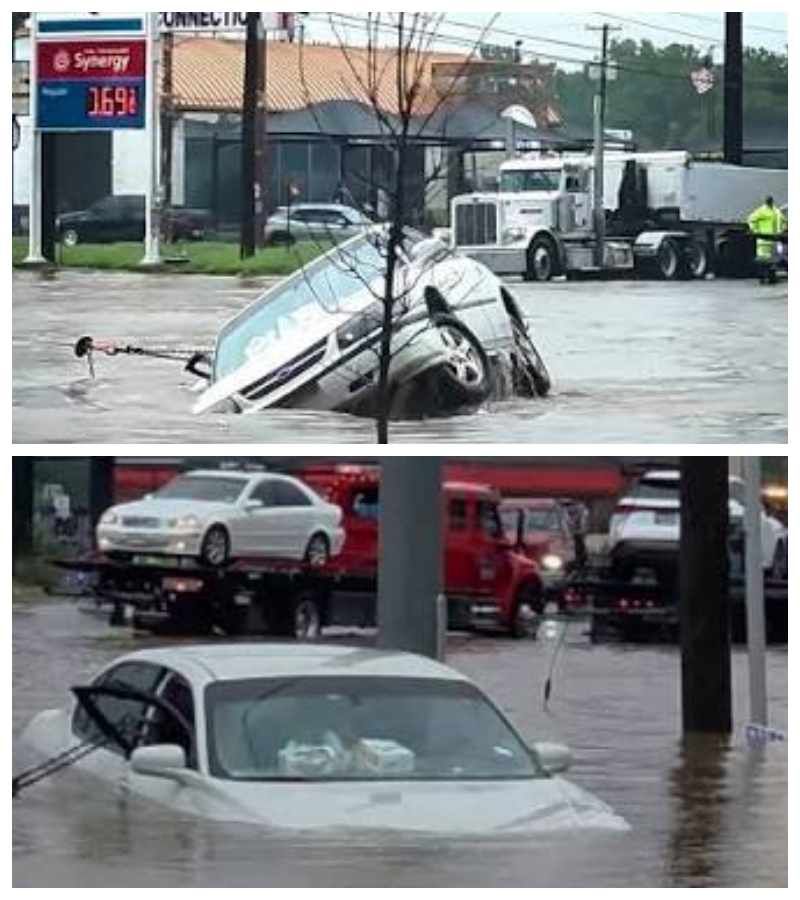
Just a small amount of flowing water can reduce tire traction, making steering and braking extremely difficult.
As water becomes deeper or begins flowing across the roadway, even large pickup trucks and SUVs can lose stability and be swept away by surprisingly powerful currents.
Another danger is that floodwater often hides hazards beneath the surface.
Drivers cannot see damaged pavement, open drainage channels, washed-out roadbeds, sharp debris, or submerged vehicles concealed beneath muddy water. A road that appears pᴀssable may have suffered significant structural damage underneath.
Emergency managers urge motorists to remember that if water is covering the road, there is no reliable way to determine what lies beneath.
The safest decision is always to find an alternate route.
Beyond transportation concerns, the storms also affected surrounding communities.
Heavy rainfall caused localized flooding in neighborhoods, parking lots, parks, and commercial areas, while emergency crews responded to multiple reports of flooded basements, blocked storm drains, and water entering homes and businesses.
Utility companies also monitored electrical infrastructure for weather-related outages, while public works departments worked to clear drainage systems and remove debris carried by floodwater.
Meteorologists note that these types of storms can be especially dangerous because rainfall intensity often changes rapidly.
A location experiencing only light rain may suddenly receive torrential downpours capable of producing flash flooding within minutes. Similarly, water flowing from higher elevations can continue arriving long after local rainfall has decreased, causing flood conditions to persist unexpectedly.
Public safety officials encourage residents to monitor weather forecasts closely whenever thunderstorms are expected.
Receiving emergency alerts, knowing alternate travel routes, and avoiding flooded areas can significantly reduce the risk of becoming trapped during rapidly changing weather conditions.
The successful rescue on the New Jersey Turnpike also highlights the dedication of first responders who regularly place themselves in hazardous environments to protect others.
Working in fast-moving water presents significant risks, including unstable footing, hidden debris, poor visibility, and the possibility of changing currents. Despite these dangers, emergency personnel acted quickly and professionally, ensuring the stranded motorist was brought safely out of harm’s way.
Community members have praised the response, recognizing the teamwork displayed by firefighters, law enforcement officers, emergency medical personnel, and transportation crews throughout the incident.
As cleanup operations continue and floodwaters gradually recede, officials are reminding the public that hazards often remain after the rain ends.
Roads may remain weakened, standing water can conceal dangerous debris, and additional storms may quickly recreate similar conditions if drainage systems have not fully recovered.
The dramatic images from the New Jersey Turnpike serve as a sobering reminder that flash flooding remains one of the fastest-developing and most unpredictable weather emergencies. A journey that begins under ordinary conditions can change within moments when heavy rain overwhelms roadways and drainage systems.
Thanks to the rapid response of emergency crews, this incident ended with a successful rescue rather than a tragedy. Yet it also reinforces an important lesson for every driver: never underestimate floodwater. When roads begin disappearing beneath rising water, turning around and choosing a safer route can be the decision that saves a life.
SOURCE: https://ar.thegioisuaazmilk.com/dramatic-flood-rescue-driver-escapes-through-vehicle-window-as-floodwaters-swamp-the-new-jersey-turnpike/