Restaurant Manager Shares Powerful Encounter With Mother and Autistic Child at Table 9

Restaurant Manager Shares Powerful Encounter With Mother and Autistic Child at Table 9
For fifteen years, Tony Posnanski has worked as a restaurant manager—washing dishes, cooking when needed, handling guest complaints, and keeping the business running. He has seen and heard nearly every kind of customer frustration, from a burger cooked slightly wrong to a soda poured incorrectly. But one recent night, a quiet exchange at table 9 became one of the most memorable moments of his entire career.
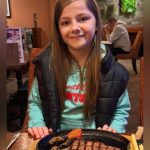
It was a busy evening when Tony was called to address a complaint from a table near the front. As he approached, he heard a young girl making loud beeping sounds, followed by irritated voices from nearby diners. The customers pointed toward a mother and her daughter seated at table 9, prompting him to walk over.
Before he could speak, the mother looked up at him with sincere, tired eyes and asked the question she clearly expected him to answer:
“Do you know what it is like to have a child with Autism?”
Her daughter—no older than five, beautiful and frightened—watched Tony closely, as if bracing for trouble. The mother’s voice wasn’t defensive; it was honest, heavy with experience from similar encounters in other restaurants.
Tony knew what he was supposed to say. He was supposed to ask them to quiet down, to offer another table, to recite the polite but hurtful script managers use when responding to noise complaints. But instead, he thought about the promises he made the day his children were born. He thought about the daughter he had lost, the family he loved, and the kind of father he tried every day to be.
So he chose differently.
“I hope your meal is awesome,” he told them.
He gave the little girl a high-five.
And then he quietly comped their entire sixteen-dollar dinner.
He didn’t wait for a reaction. The kitchen needed help, and he returned to work. When staff asked why the meal was free, he simply said the guest hadn’t enjoyed her steak. He kept the mother’s question to himself, grateful she had asked it.
Tony later admitted he didn’t know what it was like to raise a child with autism—but he knew what it meant to be a father. He knew love, responsibility, and the desire to protect one’s children from judgement.
The moment at table 9, he says, taught him something important:
Doing the right thing doesn’t always make everyone happy—just the people who need it most.
And for Tony, that memory is worth far more than the cost of any meal.