Canadian cuisine: 20 foods that reflect the country’s size and diversity
Ask one of my fellow Canadians to describe our nation’s cuisine and you may very well be met with a blank stare, followed by a few mumbles about poutine and maple syrup being awesome.
It’s a tough question to answer.
Taking up a space of 3.8 million square miles, Canada is the world’s second-largest country, its terrain and waters offering a diverse range of ingredients that have been incorporated into the culinary traditions of its multicultural population.
Skilled chefs from Canada’s Indigenous communities have increasingly been highlighting traditional flavors, presenting them in new and delicious ways everywhere from restaurants to food trucks.
And then there are the many outside influences that have contributed a wealth of flavors to our national palate, some dating back centuries.
“To me, Canadian food is strongly defined by its multiculturalism and diversity, which is partly expressed through diasporic cuisines,” Clayton Ma, an editor with the Canadian Encyclopedia, which offers in-depth articles on many of Canada’s most famous dishes, tells CNN Travel.
“For instance, the Chinese Canadian community has established strong roots in this country and, as such, the Chinese food scene in places like the Greater Toronto Area is really authentically excellent, easily on par with places like Hong Kong even.”
In addition to British and French influences, he notes that Canada’s settler cuisines “have been shaped by multiple immigration cohorts over time. Some notable ones which come to mind are the Jewish, Ukrainian, Chinese, Portuguese, Southwest and South Asian communities.”
As for the question of whether there’s one dish that could be described as “Canada on a plate,” he says the country is far too diverse.
“That said, poutine, especially with the way it’s been shaped by the Montreal scene, is a good icon because it allows different gastronomic cultures to meet,” he notes.
Naturally, we had to include the famed dish in the following list of top Canadian foods we put together in honor of Canada Day, which falls on July 1.
You know which dish didn’t make the cut? Hawaiian pizza. It was indeed invented in Canada, but many of us are happy to let the US claim ownership of that one.
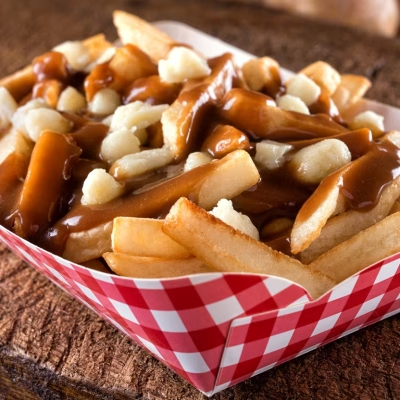
Poutine
Poutine is one of those dishes that appears incredibly simple to make — French fries, squeaky cheese curds and gravy. But not all poutines are created equal, and the taste depends on the quality of ingredients. For instance, you’re going to want to use Prince Edward Island potatoes for those fries.
And like many great dishes, there’s more than one claim about who invented it.
Most food historians agree it originated in rural Quebec in the late 1950s, and the word “poutine” is Québécois slang for mess.
Today, you can find it anywhere. Diners. Pubs. High-end restaurants. And as Ma notes, there are now many variations.
“In Montreal, poutine ― while originally a Québécois dish ― has been reshaped by a number of other gastronomic cultures,” he says.
“Famously, you have things like smoked meat poutine, which of course borrows from the Jewish community or Portuguese chicken poutine. Recently, I even tried a Vietnamese-inspired poutine, which featured Vietnamese-style grilled meats! I can go on, there’s also butter chicken poutine, Haitian-style poutine with griot and pikliz, etc.”
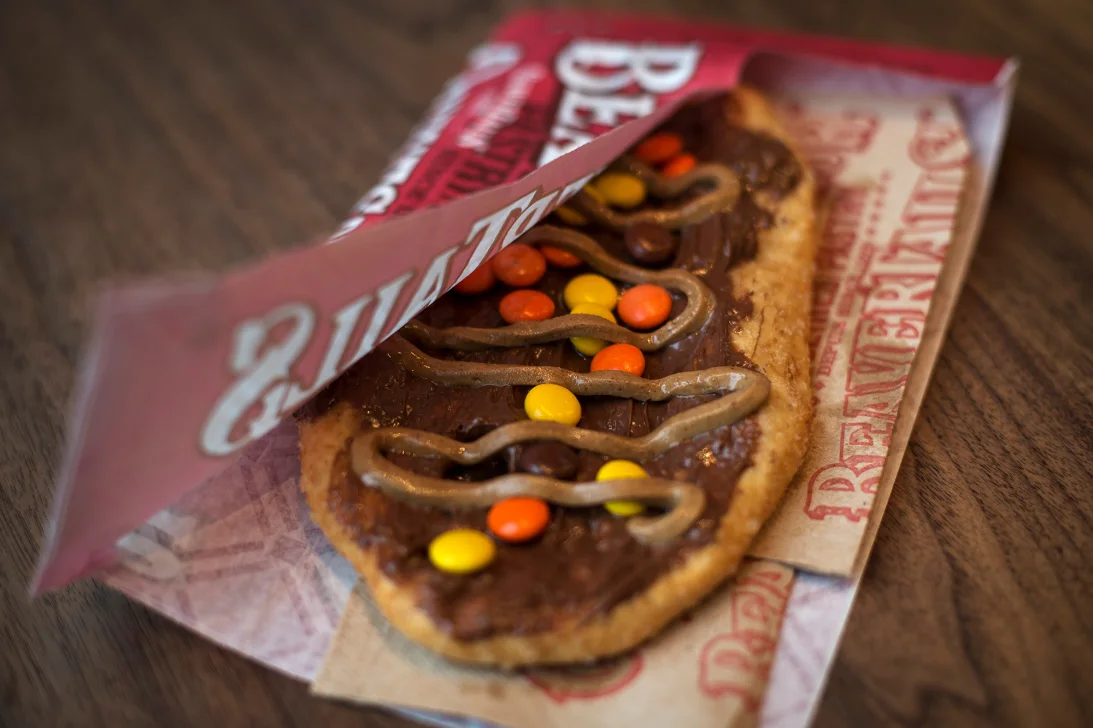
Beaver tails
These much-loved pastries are oval, flat and long — just like a beaver’s tail. The dough is deep-fried until golden, then topped with a variety of ingredients, usually sweet.
Looking to sample some of these sweet treats? Fortunately, though many people make their own at home, the original inventors now operate a chain of “BeaverTails” restaurants, which can be found all over Canada.
According to the company, former US President Barack Obama enjoyed a beaver tail during a visit to Ottawa in 2009, and they were featured in a 2015 episode of “South Park.”
Nanaimo bars
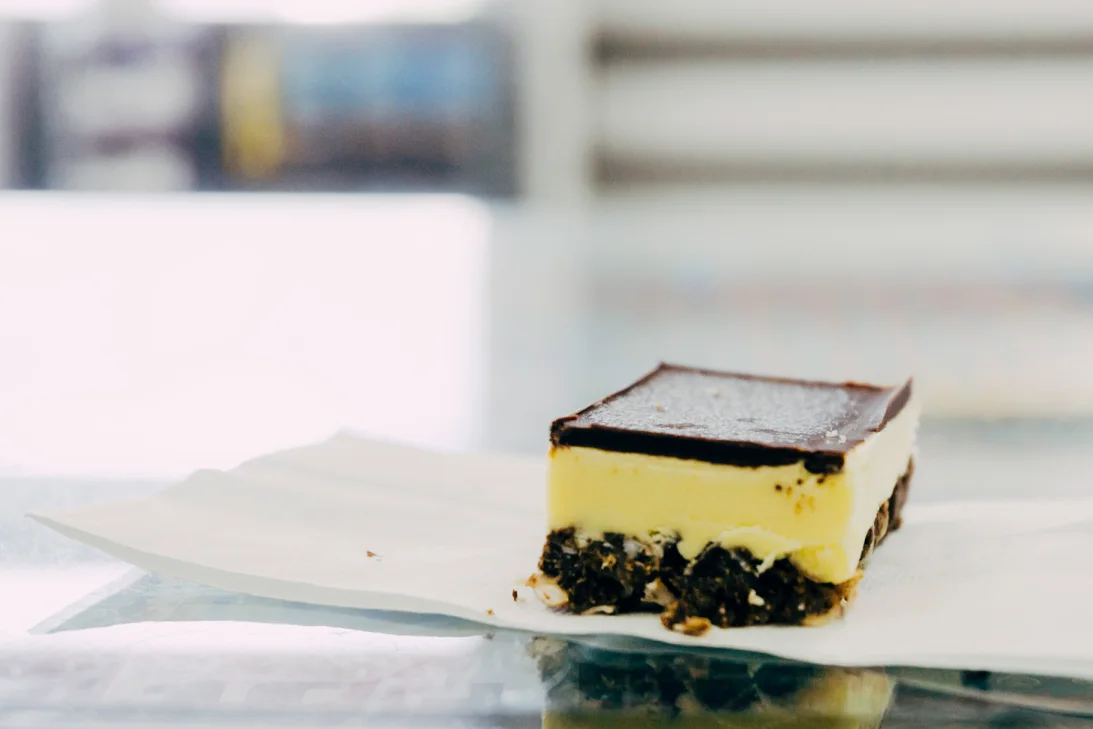
A staple at picnics, potlucks and celebrations in many Canadian homes, these no-bake treats are made up of three layers.
There are flavor variations, but a good Nanaimo bar should have a buttery custard filling that sits over the base, which is usually made of a mix of graham cracker crumbs and shredded coconut. This delectable combo is topped with a layer of chocolate ganache.
Pinpointing its origin is difficult and there are many claims to the recipe, including under different dessert names.
But, according to the Canadian Encyclopedia, it was the inclusion of Nanaimo bars in the official Expo 86 cookbook that helped expose the dessert’s deliciousness to the world.
The city of Nanaimo, on Vancouver Island, has understandably embraced its sweet fame and offers many options for those wanting to sample them in shops and restaurants.
Tourtière
The province of Quebec has contributed heavily to Canada’s culinary scene, so much so that we could easily put together a separate list of classic Québécois dishes. Among the most famous is tourtière, a meat pie with a golden flaky crust that’s often served at Christmas gatherings.
According to Canadian Food Focus, it was eaten as far back as the 1600s, when the French began settling in Quebec.
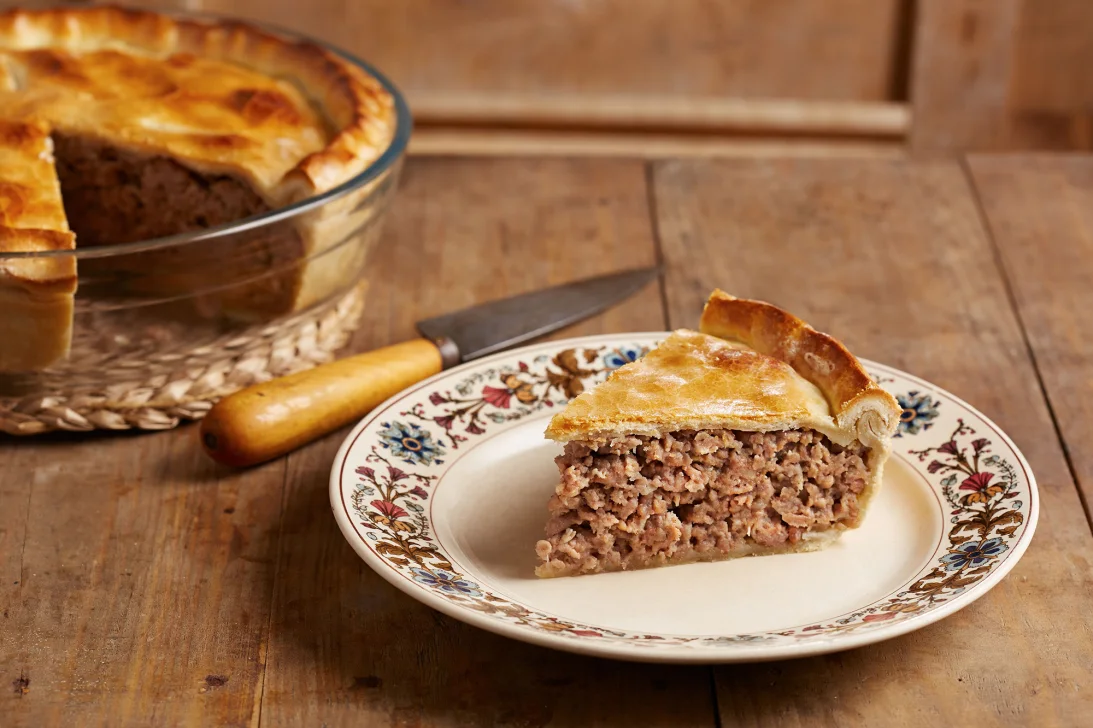
Fillings often include ground beef, veal or pork, as well as potatoes and various spices including cloves and nutmeg.
Saskatoon berry pie
While we’re on the subject of pie, this one is not savory but it’s definitely tasty. Famous in Canada’s prairie provinces, Saskatoon berry pie, as the name suggests, is filled with Saskatoon berries. It’s even been featured on a Canadian postage stamp.
Saskatoon berries are often described as a nuttier version of a blueberry. According to the Canadian Encyclopedia, ‘Saskatoon’ is derived from the Cree word for these berries, which thrive in cold temperatures.
A 2019 report by Canada’s national broadcaster, the CBC, quotes Caroline Harris, a traditional knowledge keeper from Saskatchewan’s Big Island Lake Cree Nation, as saying the berry has played a “huge role in our culture for thousands of years.”
“We use them in soups, pies, to sweeten our teas, in bannock,” she said. “You can also use them for dyes.”
Bannock
Bannock is a traditional quick bread that takes its name from the early Scottish settlers who arrived in North America during the 18th and 19th centuries and cooked it on a bannock stone. Today, it is widely associated with Canada’s First Nations communities.
It often makes an appearance at festivals and family gatherings, and is usually deep-fried, oven-baked or pan-fried. And, according to the CBC, most Indigenous families have their own unique recipes, which are passed down from generation to generation.
Want to sample bannock during your next visit to Canada? There are plenty of restaurants and food trucks that have you covered, including Salmon n’ Bannock Vancouver, Tea N Bannock (Toronto) and Bannock Express (Saskatoon).
Lobster rolls
Yes, the US has these too. And it may even have invented them, claim various food historians. But Canada’s lobster rolls are delicious as well, and we’re willing to bet the Atlantic lobsters caught to make them don’t concern themselves with matters of maritime borders as they freely wander the waters of our great nations.
The provinces of Newfoundland and Labrador, New Brunswick, Nova Scotia and Prince Edward Island are all excellent places to sample Canada’s famed lobster rolls.
Usually served on a grilled hot dog bun, in some versions the thick, juicy chunks of lobster are mixed with butter, lemon juice, salt and black pepper, while other variants use mayonnaise and can include chopped celery or scallions.
Split pea soup
This is another comforting home-cooked dish that was born out of convenience.
The Canadian Food Focus organization notes the main ingredients — yellow split peas and pork — were easy to transport and store, making it a popular dish for French sailors and fur traders who began traveling to Canada in the 17th century.
Today, it remains a beloved staple of Québécois cuisine.