Two Brothers Face Their Mother’s Rare Dementia — and Refuse to Wait Quietly
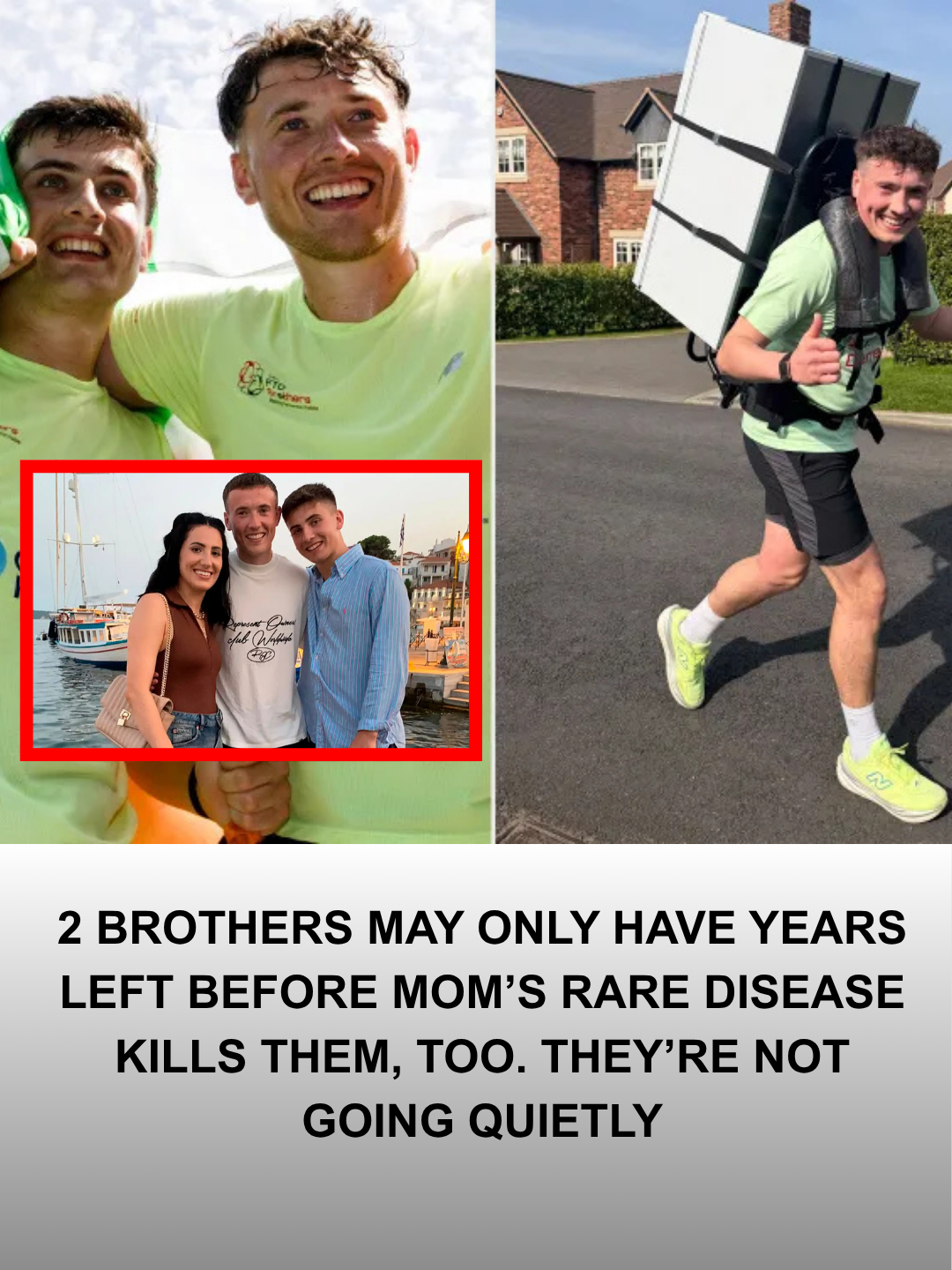
On April 26, Jordan Adams arrived at the London Marathon carrying something that made other runners stare.
Strapped to his back was a white kitchen refrigerator weighing about 55 pounds.
His younger brother, Cian, had good reason to worry. Jordan planned to carry it for all 26.2 miles.
“We worried he was going to get injured,” Cian told PEOPLE. Instead, he said, the strange choice did exactly what the brothers needed it to do: people paid attention.
For Jordan, the refrigerator wasn’t simply a stunt.
“The fridge represents the burden we both carry,” he said.
Jordan, 31, and Cian, 26, know that burden by name. Both have learned they face a 99.9% chance of developing frontotemporal dementia, or FTD, the same rare disease that killed their mother at 52. Their story was first reported by PEOPLE.
Rather than spend the healthy years ahead waiting for symptoms, they have decided to make those years loud.
The Disease First Changed Their Mother
The brothers grew up in Redditch, England, with what they remember as “two loving parents.”
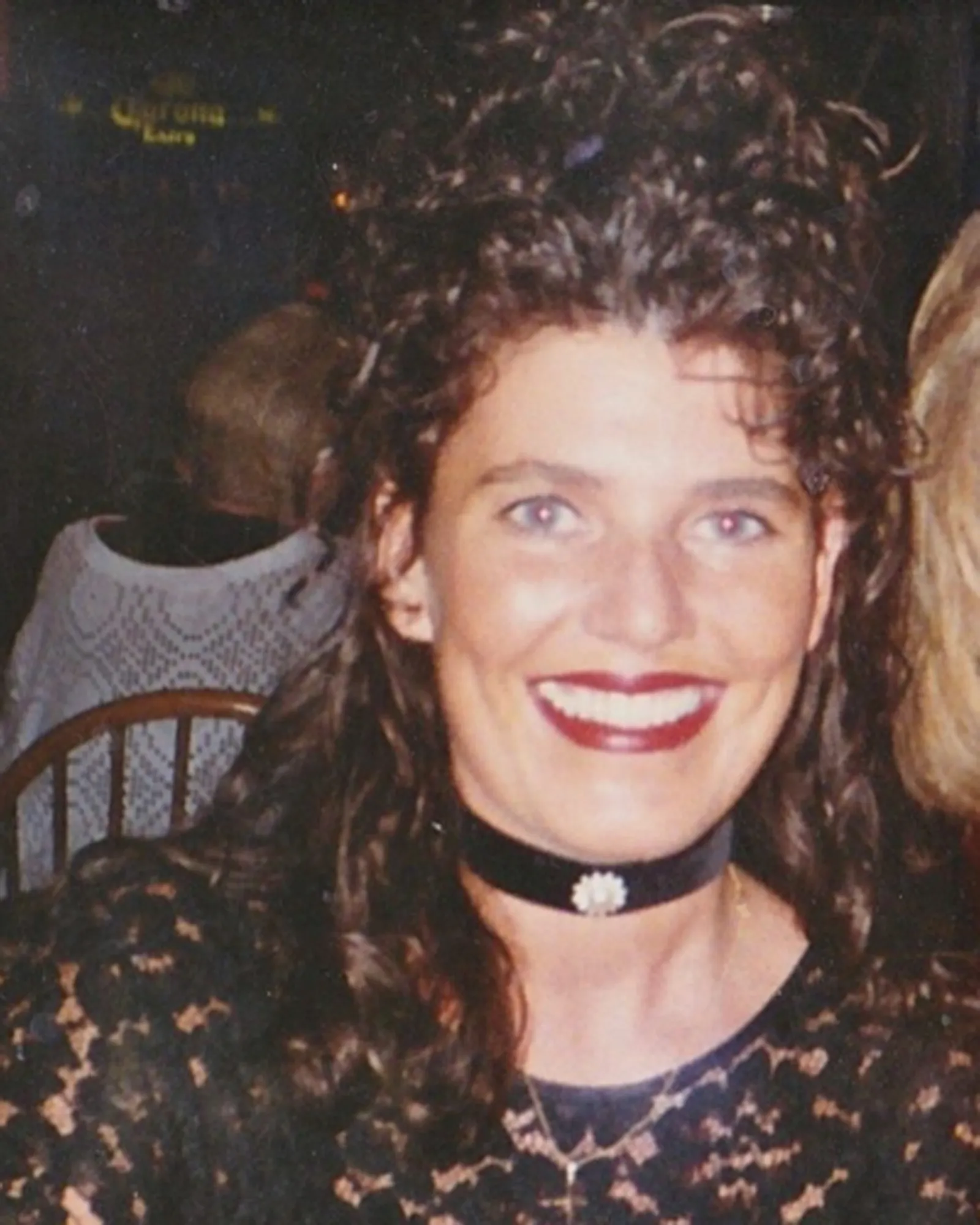
Their mother, Geraldine Adams, loved R&B and colorful clothes. Inside the family, she was remembered as “the beating heart” of their home.
Then things began to shift.
In 2008, Geraldine started showing changes in her personality and behavior. She forgot simple tasks and asked the same questions more than once. Two years later, at age 47, she received a diagnosis.
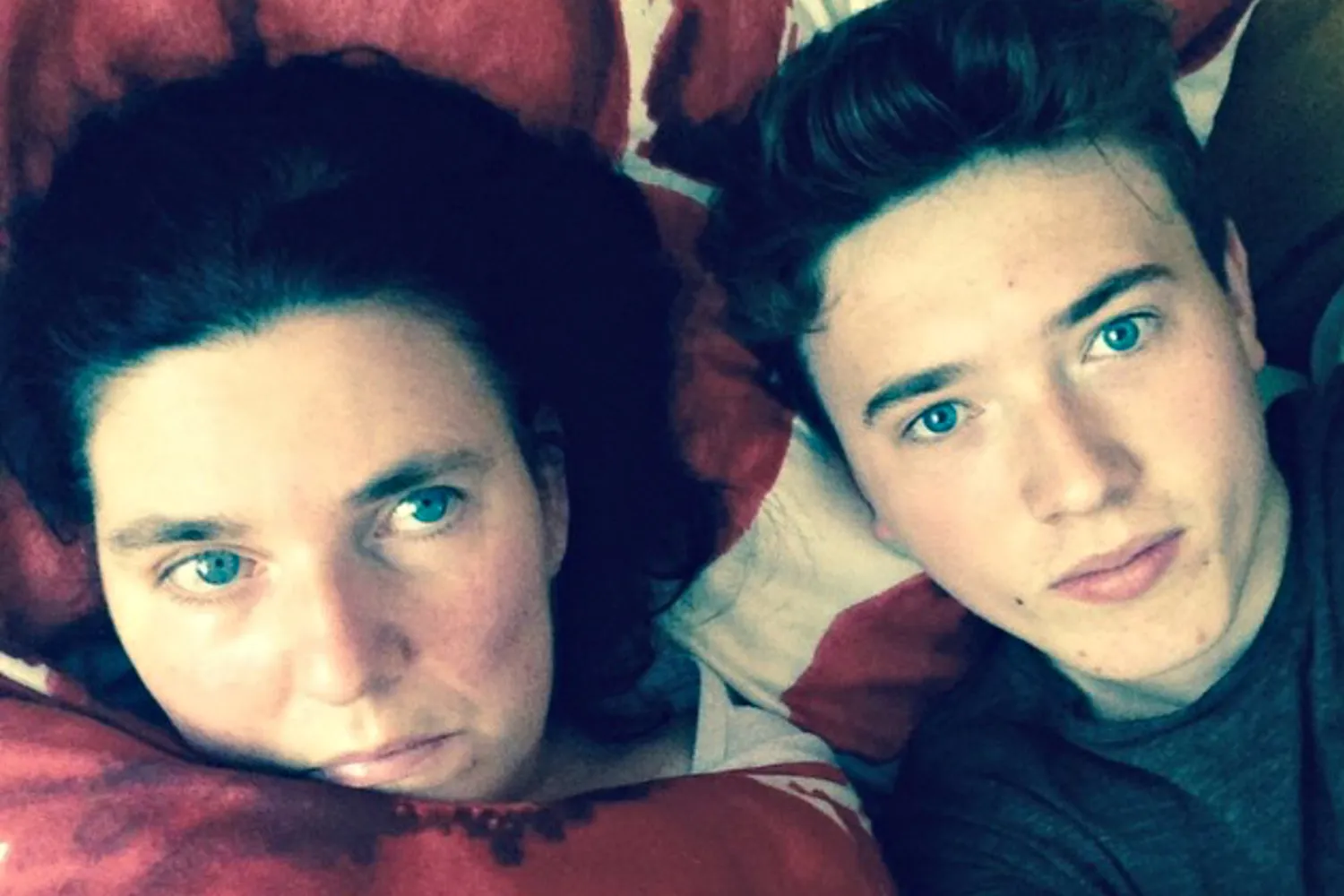
Jordan was 15. Cian was 9.
Six years later, Geraldine died.
For Cian, some of the hardest parts of losing his mother are tied to how young he was when she became sick.
“The thing I struggle with the most is that I don’t have good memories of when she was well,” he said.
The family later discovered that other relatives had received the same dementia diagnosis, leading them toward genetic testing. FTD is a neurodegenerative disease that can affect personality, speech and mobility, and there is no cure.
What the testing revealed divided the siblings in a way none of them could control.
One Sister Tested Negative. Her Brothers Didn’t
Jordan learned in 2018 that he carried the genetic mutation linked to the disease.
Cian got his result five years later, in 2023.
Their older sister, Kennedy Frampton, did not carry the risk. Their father doesn’t either.
For Kennedy, now 32, relief came with another emotion.
“When we found out they both have it, there was a lot of survivor’s guilt,” she told PEOPLE.
Her thoughts sometimes reach decades into the future, toward a family that could look very different.
“I think a lot about how my life is gonna look in 20 years when I’m the only one left,” she said.
Based on their family history, Cian believes symptoms for him and Jordan could begin around their mid-40s.
That knowledge gave the brothers a rough idea of how much healthy time they may have.
It also gave them a reason to stop putting things off.
“We’re using our time to make as much of a racket as possible,” Cian said.
The London Marathon was only one example.
The brothers have taken on a string of endurance challenges, including running the length of the United Kingdom and completing 33 marathons in 33 consecutive days. In 2025, they started their foundation, FTD Brothers.
Combined with Instagram and TikTok accounts followed by more than 1 million people, their efforts have helped raise approximately $4 million for awareness and research.
Getting noticed is part of the plan.
That helps explain the refrigerator.
A Decision Their Family Couldn’t Take Lightly
For Jordan, the mutation affected another part of his future in 2023.
During the same week that Cian received his genetic results, Jordan and his now-wife, Agnès, learned they were expecting a child.
Testing later showed that the fetus carried the mutation.
They chose to terminate the pregnancy.
“It was the most difficult decision of our lives,” Jordan said.
He acknowledged that others may see the decision differently, but said he and Agnès believed it was “in the best interest of the child.”
Cian has also thought about what it means to know what may be waiting in his own future.
“I didn’t want to pass on the generational trauma,” he said.
Neither brother says he regrets being tested.
Knowing the result removed uncertainty, but it also placed a clock over choices that many people their age can make without thinking about illness.
For Jordan, it eventually changed his work.
Turning a Prognosis Into a Full-Time Mission
In 2025, Jordan left his job in design and painting and began working as a full-time advocate through FTD Brothers and their online platforms.
Cian works as a physical therapist and helps with the foundation when he can. His role sometimes becomes especially practical after the brothers’ endurance events: he helps Jordan recover with massages.
More challenges are already on their list.
Jordan has said they plan to climb Mount Kilimanjaro in October, another attempt to turn physical strain into attention for a disease they believe too few people understand.
The brothers aren’t pretending the diagnosis disappeared when they started running. Their efforts are built around the opposite idea: they know what may happen, and they want to decide what they do before it does.
Jordan has described the shift in simple terms.
“My life was spiraling,” he said, but learning his genetic status gave him “an opportunity to take control back.”
That control now looks like marathon starting lines, fundraising campaigns, social media videos and a white refrigerator carried mile after mile through London.
“I made the decision to build a legacy that can continue even after dementia takes our lives,” Jordan said.
For now, the next challenge is still ahead.
And the brothers are still running.