16 Years After Kyron Horman Vanished from His School, Investigators Are Using New Technology to Reexamine Thousands of Files

Sixteen years after 7-year-old Kyron Horman disappeared from an Oregon elementary school, investigators are turning to modern technology in hopes that something buried inside thousands of documents and massive amounts of digital evidence could finally help answer one of the case’s most haunting questions:
What happened to Kyron?
On June 4, 2026 — exactly 16 years after the boy vanished — the Multnomah County Sheriff’s Office announced a significant new phase in the investigation. Authorities said they had completed the digitization of the entire case during 2025 and were now using new technological tools to analyze more than 5,300 written documents and more than half a terabyte of data connected to Kyron’s disappearance.
For a case that has remained unresolved since 2010, the announcement represented one of the clearest indications in years that investigators are still actively searching for answers.
Kyron was just 7 years old when he disappeared from Skyline Elementary School in Portland, Oregon, on the morning of June 4, 2010.
That morning, the school was hosting a science fair.
Kyron was photographed smiling in front of his project, wearing glasses and a black T-shirt with the letters “CSI” printed in green. It became one of the final known images of him before he vanished.
According to the official timeline maintained by the Multnomah County Sheriff’s Office, Kyron’s stepmother reported seeing him at approximately 8:45 a.m. walking down a hallway toward his classroom.
Hours later, when the school day ended, Kyron did not arrive home on his bus.
At approximately 3:30 p.m., his family realized something was wrong.
A Skyline Elementary employee called 911 at 3:56 p.m., and police and sheriff’s deputies were dispatched minutes later. By that evening, search-and-rescue teams had been activated, and the FBI had been notified.
What followed became the largest single search effort in Oregon history, according to the sheriff’s office.
Local, state and federal agencies searched extensively for the child. Investigators examined leads, interviewed witnesses and followed tips.
But Kyron was never found.
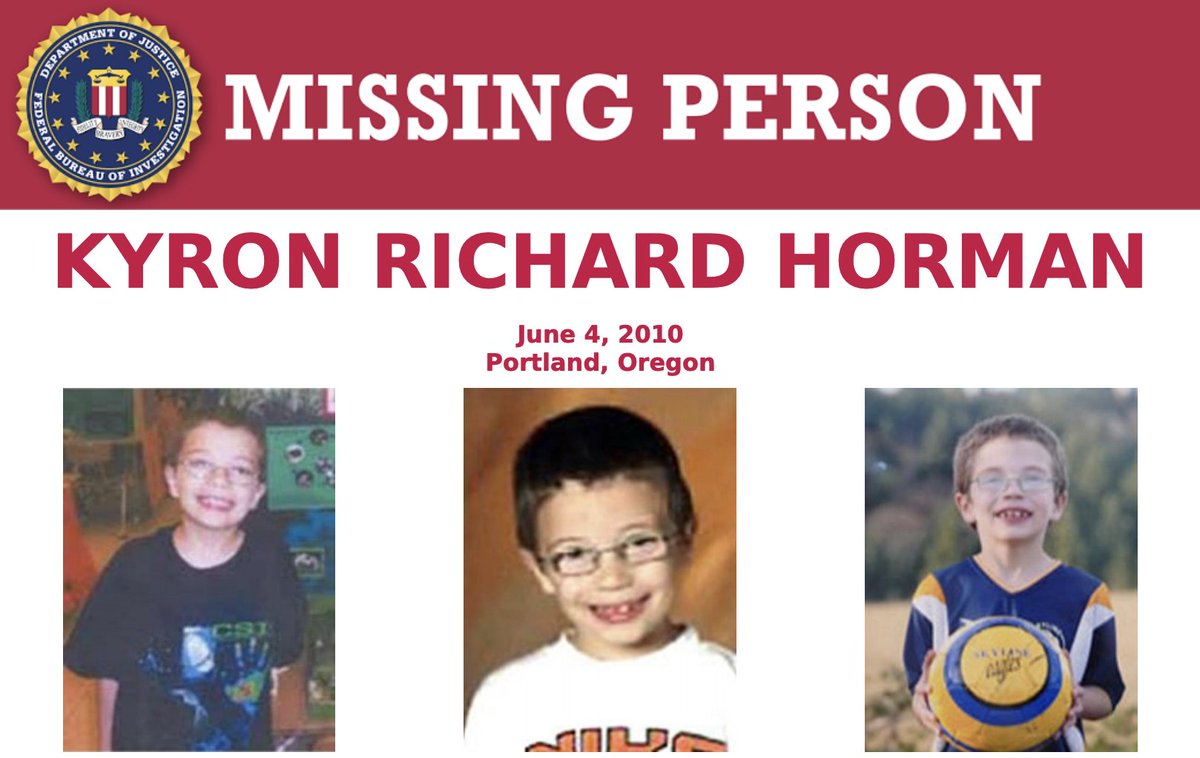
No one has ever been criminally charged in connection with his disappearance.
And over the years, one anniversary after another passed without an answer.
Now, investigators are hoping that technology unavailable in 2010 may allow them to look at the same information in an entirely different way.
The process began before the 16th anniversary.
In May 2025, the Multnomah County Sheriff’s Office announced that investigators had begun a major effort to digitize and reorganize the entire case file. Thousands of pages of reports, photographs and evidence were being scanned and documented so they could be reviewed in a more systematic way.
Authorities also said the completed digital file would be reexamined with assistance from the FBI’s Behavioral Analysis Unit, which can analyze statements, narratives, evidence and behavioral patterns while comparing them with other historical and contemporary cases.
By 2026, that enormous digitization project was finished.
The scale of the material illustrates just how complex the investigation has become.
More than 5,300 written documents.
More than half a terabyte of data.
Thousands of pages accumulated across 16 years of searching, interviews, tips, photographs and investigative work.
Instead of relying only on detectives manually reviewing boxes of old records, authorities can now apply newer analytical tools to the digital material.
The sheriff’s office has not publicly described exactly which technologies are being used or what, if anything, the new analysis has discovered so far.
But officials said the new tools allow detectives to process and analyze the case information “in a new and meaningful way.”
Investigators have also increased staffing devoted to the case.
The Multnomah County Sheriff’s Office continues working with the Multnomah County District Attorney’s Office, the FBI, the East County Major Crimes Team and the Portland Police Bureau.
For Sheriff Nicole Morrisey O’Donnell, the passage of 16 years has not changed the department’s responsibility to Kyron or his family.
“Sixteen years have passed since Kyron Horman disappeared,” she said in the June 2026 announcement, noting that his family has lived through years of birthdays, holidays and other milestones without him.
She emphasized that investigators have not forgotten Kyron and remain committed to providing his family with answers.
Multnomah County District Attorney Nathan Vasquez delivered a similar message.
“Sixteen years is a long time — too long,” Vasquez said, adding that a lack of public news about the case should not be mistaken for a lack of investigative work.
Authorities say hundreds of tips continue to arrive each year.
Each one is reviewed and considered for possible follow-up.
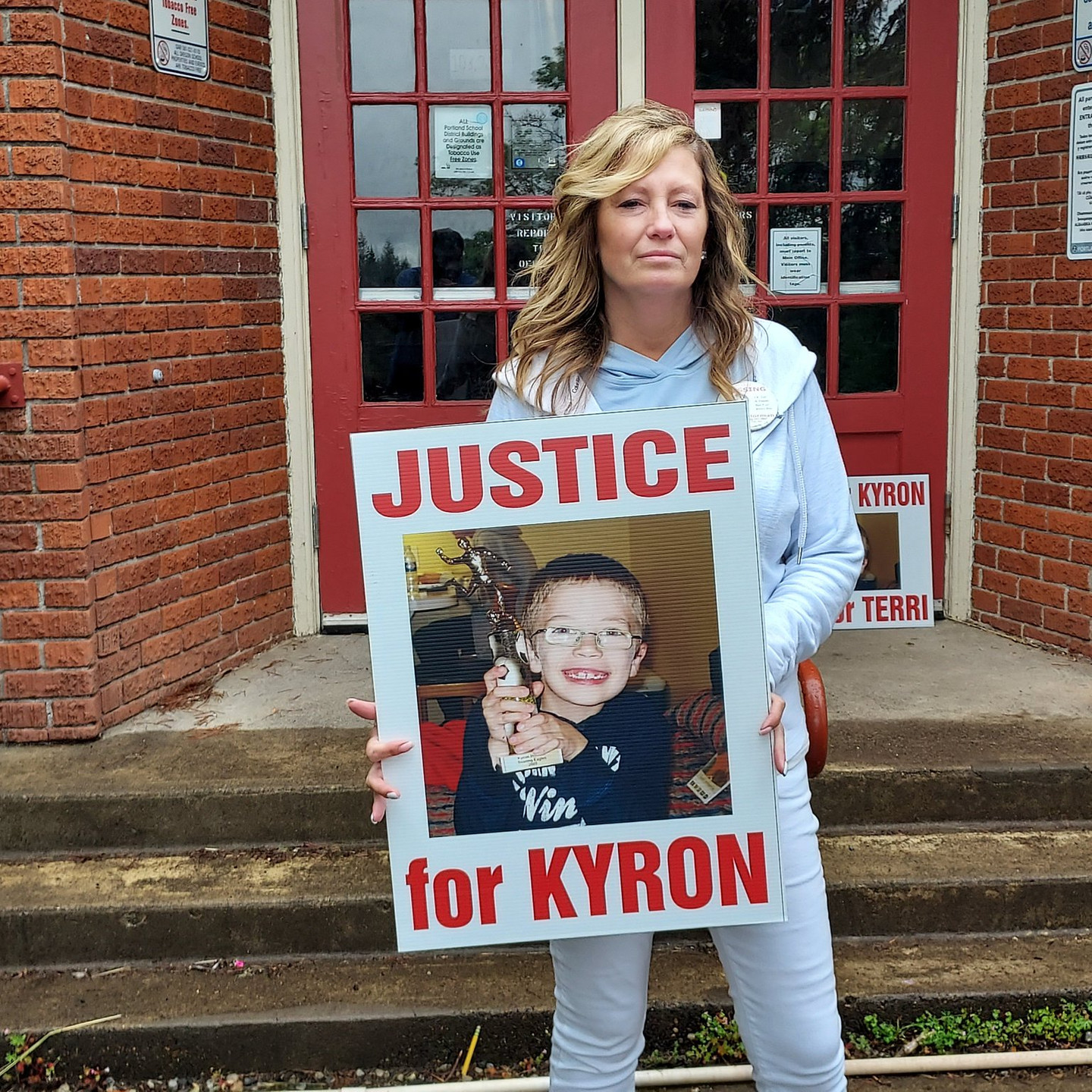
Investigators also continue conducting searches as part of the ongoing effort to determine what happened to Kyron.
A $50,000 reward remains available for information that leads to the resolution of his disappearance.
The renewed technological review is especially significant because cold and long-running cases can sometimes change when investigators gain the ability to organize old evidence in new ways.
Information that once existed in separate reports can potentially be compared more efficiently.
Names, dates, locations and statements collected years apart can be examined together.
Patterns that were difficult to detect manually may become more visible when thousands of documents can be searched and cross-referenced digitally.
But officials have not claimed that technology alone will solve Kyron’s case.
The investigation still depends on evidence, credible information and potentially someone coming forward with knowledge that has never been shared.
That is why authorities continue asking the public for help.
The fundamental facts of the case remain painfully simple.
A 7-year-old boy went to school for a science fair on June 4, 2010.
He was photographed there that morning.
Later that afternoon, he was expected to step off his school bus and return home.
He never did.
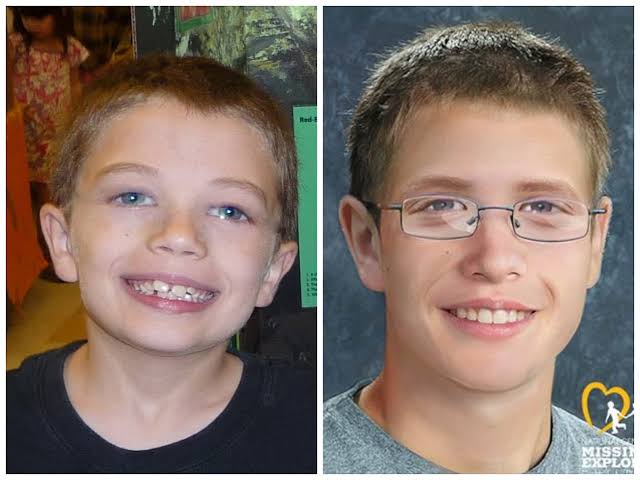
Sixteen years later, Kyron would no longer be a child.
The National Center for Missing & Exploited Children has produced age-progressed images showing how he might appear as an older teenager and young adult. Those images now sit alongside the familiar photograph of the small boy with glasses standing proudly beside his science project.
That contrast is one of the most difficult realities surrounding long-term missing-child cases.
The photograph remains frozen in time even as the years continue to pass.
For investigators, however, the evidence is not being left in the past.
The completion of the digitization project means that thousands of pages gathered since 2010 can now be examined with tools that did not exist when Kyron first disappeared.
It does not guarantee a breakthrough.
It does not mean investigators have identified a suspect.
And it does not change the fact that no one has been charged and Kyron remains missing.
But after 16 years, the case is not sitting untouched in an archive.
Detectives are reading it again — this time through the lens of modern technology.
And somewhere inside more than 5,300 documents, hundreds of tips and more than half a terabyte of data, investigators hope there may still be something that was overlooked, something that can be understood differently now, or something that finally points them toward the answer Kyron’s family has been waiting more than a decade and a half to hear.