BEASTS OF NO NATION 2
- CongDung
- March 19, 2026
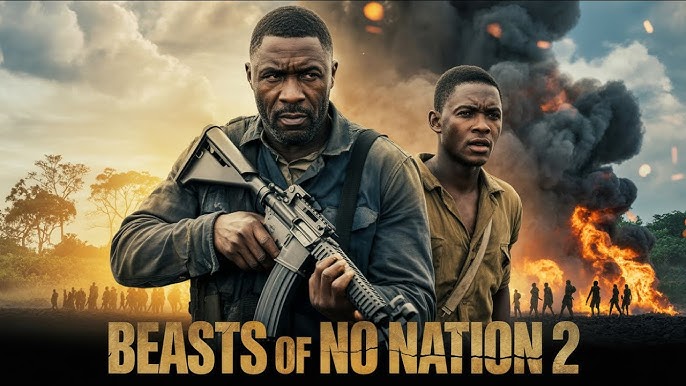
Beasts of No Nation 2: Children of the Dust
Rating: 2.5/5 Broken Souls
Let’s address the elephant in the room immediately: Beasts of No Nation (2015) was a masterpiece. Cary Fukunaga’s unflinching look at the life of a child soldier, Agu, was harrowing, beautiful, and complete. It ended on a note of fragile hope—a boy beginning the long, impossible journey back to humanity. It did not need a sequel.
And yet, here we are. Beasts of No Nation 2: Children of the Dust arrives a decade later, asking a question that feels almost exploitative: “What happens after the hope runs out?”
The film jumps forward fifteen years. Agu (a stunningly committed performance by a now-adult Abraham Attah) is no longer a child. He’s a man in his late twenties, living in a dusty, crowded refugee camp on the border of an unnamed West African country. The civil war that consumed his childhood is over, but the war inside him rages on. He works a dead-end job hauling water, haunted by the ghost of the Commandant (Idris Elba, appearing in fever-dream flashbacks that feel both necessary and like cheap scares). He is a ghost in a land of the living.
The plot, such as it is, kicks off when a new conflict erupts across the border. A militant group, led by a messianic figure known as “The Prophet” (a chilling turn from a newcomer), begins recruiting from the camp, promising displaced youth the power and purpose they crave. When Agu’s younger cousin—a boy he has tried to protect from his own past—runs off to join the militia, Agu must make a choice: stay in his self-imposed purgatory, or venture back into the hell he barely escaped to save the one piece of family he has left.
The Good: The Performances
Abraham Attah is extraordinary. Returning to this role after a decade, he carries the weight of a generation on his shoulders. His Agu is a man of few words, his eyes doing the talking. You see the trauma in the way he flinches at loud noises, the guilt in the way he avoids looking at children playing. The film is at its best in these quiet moments—Agu trying to teach himself to read, or sharing a silent meal with an old woman who has also lost everything.
The cinematography, handled by a new team attempting to channel Fukunaga’s spirit, captures the brutal beauty of the landscape. The red dust, the endless sky, the faces of thousands of forgotten people—it’s visually poetic, even when the subject matter is bleak.
The Bad: The Necessity
The fundamental problem with Beasts of No Nation 2 is that it exists. The original film was a perfect, self-contained story about the loss of innocence. This sequel is a story about the consequences of that loss, and while that sounds noble, the execution often feels like trauma tourism.
The script leans heavily on misery. Scene after scene depicts Agu suffering—reliving nightmares, being shunned by the community, failing to connect with anyone. It becomes exhausting, not in a cathartic way, but in a numbing way. By the time he ventures back into the war zone, the film has lost its narrative drive. We’re just watching a sad man walk through sadder places.
The new villain, The Prophet, is a pale imitation of the Commandant. Where Elba’s character was a complex, charismatic monster, The Prophet is a one-note zealot who spouts religious rhetoric and does evil things because the script says so. The tension is gone.
The Verdict:
Beasts of No Nation 2 is a well-acted, beautifully shot, and utterly unnecessary film. It tries to honor the legacy of the original by exploring the long tail of trauma, but it mistakes suffering for depth. It’s a grim slog that offers little new insight, leaving the audience feeling hollow rather than moved.
For fans of the first film, this sequel may actually diminish its power. Sometimes, the bravest thing a filmmaker can do is let a story end.
Final Thought: A haunting performance in search of a reason to exist.