A 2-Year-Old Listened to His Pregnant Mom’s Belly—His Warning Helped Save His Baby Brother
At 37 weeks pregnant, Amanda Braverman-Brohn woke with a feeling she could not explain.
Nothing dramatic had happened. There was no obvious emergency. Yet her pregnancy suddenly felt different—strangely quiet and almost empty.
Later that day, her 2-year-old son, Aiden, picked up his toy stethoscope and began one of his favorite games. He often pretended to be a doctor, placing the toy against his mother’s belly before confidently announcing that his baby brother was doing well.
This time, he stopped.
After listening, Aiden told his mother that the baby was not okay.
The words confirmed the fear already growing inside her.
Braverman-Brohn rushed to the hospital, where doctors performed an emergency cesarean section. Her unborn son, Preston, had suffered a stroke and needed immediate medical intervention after he was delivered.
Doctors were able to resuscitate him in the operating room.
What began as a toddler’s innocent game had helped push his mother to act during a medical crisis—and may have saved his brother’s life.
Eighteen years later, Preston is alive, compassionate and preparing to study music in college. His survival transformed his mother’s life, inspiring her to become an advocate for fetal-movement education and stillbirth prevention.
For Braverman-Brohn, now 45, the experience also left behind a difficult question: Why should another baby’s survival depend on whether a parent happens to recognize the warning signs in time?
She believes families should be given the information needed to notice changes, trust their instincts and speak up when something feels wrong.
Her family’s story began in Wisconsin in 2008, during what was already a closely watched pregnancy.
Braverman-Brohn had been placed on bed rest because she was experiencing preterm labor, something she described as typical for her pregnancies. By the time she reached 37 weeks, she was familiar with the sensations and routines that came with carrying a baby.
That familiarity made the unusual silence especially troubling.
The baby did not seem to be moving as he normally did. Although Braverman-Brohn could not immediately identify the problem, her body felt different enough to make her uneasy.
Then Aiden performed his pretend examination.
Normally, the little boy would press his toy stethoscope against his mother’s stomach and happily report that everything sounded fine. His game had become a familiar family ritual as they waited for Preston’s arrival.
But that day, Aiden could not detect the movements he expected.
His simple warning—delivered without any understanding of the medical danger—became the moment that turned concern into action.
At the hospital, the family learned how serious the situation had become. Preston had experienced a stroke before birth. Once doctors delivered him by emergency C-section, they worked to revive him in the operating room.
They succeeded.
Braverman-Brohn later recognized just how narrow the distance had been between bringing her son home and losing him.
The realization did not fade after the immediate crisis passed. Instead, it changed the direction of her life.
She began working to educate other expectant parents about fetal movement and the potential warning signs of stillbirth. Her message was straightforward: Pregnant people should know what is normal for their babies and feel empowered to seek medical attention when that pattern changes.
Tracking movement does not require a complicated procedure or specialized equipment. It can be done at home, giving parents a way to become active participants in their own care.
For Braverman-Brohn, that knowledge is powerful because it can help someone recognize danger before it is too late.
Her advocacy eventually expanded across Wisconsin. She has spoken with health professionals and even discussed maternal health education with a senator, emphasizing the need to teach parents why fetal movement matters.
She also founded the Moving Forward Foundation, a nonprofit connected to her mission of education, awareness and community support.
In July 2026, her volunteer work was recognized with a Daily Point of Light award, an honor celebrating people whose service has made a meaningful difference in their communities.
The recognition came nearly two decades after the frightening morning that first pushed her toward advocacy.
Braverman-Brohn is now raising five children with her partner, Matthew: Aiden, Preston, Benjamin, Tate and Jovie.
Music has become an important part of their family life. The siblings enjoy performing in musicals together, and Preston plans to continue studying music in college.

His mother describes him as deeply compassionate and naturally drawn to supporting people who may feel overlooked. He is someone who roots for the underdog—a quality that makes the life doctors saved in 2008 feel even more meaningful to those closest to him.
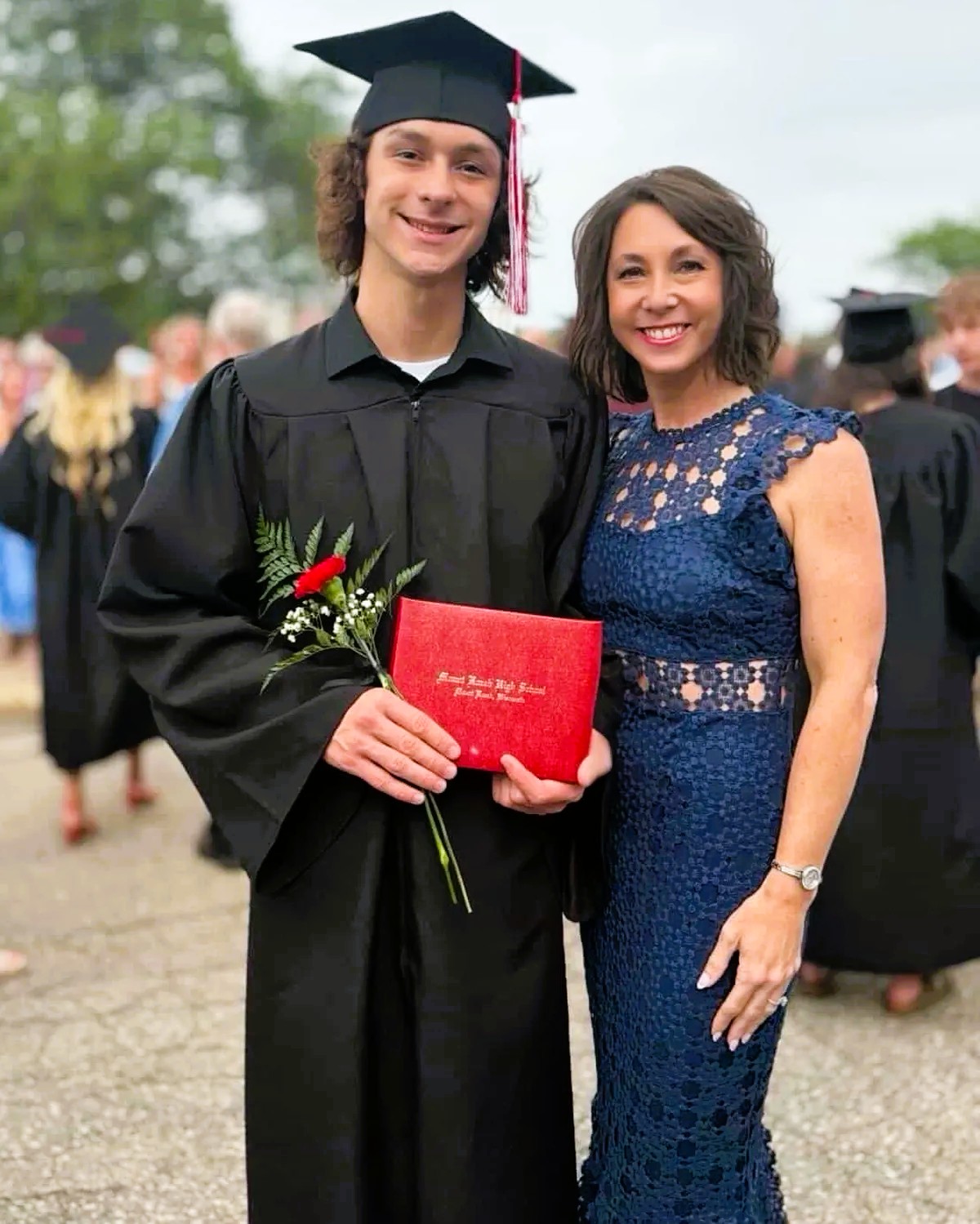
In June 2026, Preston graduated from high school.
For many families, graduation is a joyful but expected milestone. For Braverman-Brohn, it carried the memory of an operating room, an emergency delivery and the terrifying possibility that her son might never have grown up at all.
Watching him graduate reminded her not to overlook the seemingly ordinary moments of family life.
After years of birthdays, school days, performances and everyday routines, it could be easy to forget how uncertain Preston’s beginning had been. His graduation brought that reality back with full force.
Life, she realized again, is both fragile and precious.
Aiden has also never forgotten the role he played.
He does not remember the day only as the moment he warned his mother. He understands it as the reason his younger brother—and best friend—is alive.
When speaking with nurses during his mother’s advocacy work, Aiden has emphasized that preventing a stillbirth does more than save one baby. It preserves an entire web of relationships.
The child being saved may also be someone’s brother, closest friend, future classmate or source of comfort. The impact extends through a family for decades.
That truth is visible in the relationship between Aiden and Preston.
One brother was only 2 years old when he sensed that something had changed. The other had not yet taken his first breath. Neither could have understood how profoundly that moment would shape their family.
Today, they have grown up together.
For Braverman-Brohn, their bond is part of the reason she continues sharing what happened. Her family was fortunate that she noticed something unusual, that Aiden’s game reinforced her concern and that doctors were able to act in time.
But she does not believe good fortune should be the deciding factor in whether a baby survives.
She wants parents to receive clear information before an emergency occurs—to understand their baby’s movements, recognize meaningful changes and feel confident seeking help.
Preston’s life is proof of what can follow when a warning is heard.
What began with a mother’s uneasy feeling and a toddler pressing a toy stethoscope against her belly has now led to 18 years of memories, a high school graduation, a future in music and a family determined to help others bring their babies safely home.
Source: https://people.com/pregnant-mom-felt-empty-then-son-listened-to-her-tummy-helped-save-brother-exclusive-12024756