At 82, Anita LeBrun Took on Minnesota Law—and Won Back Happy Hour for Seniors
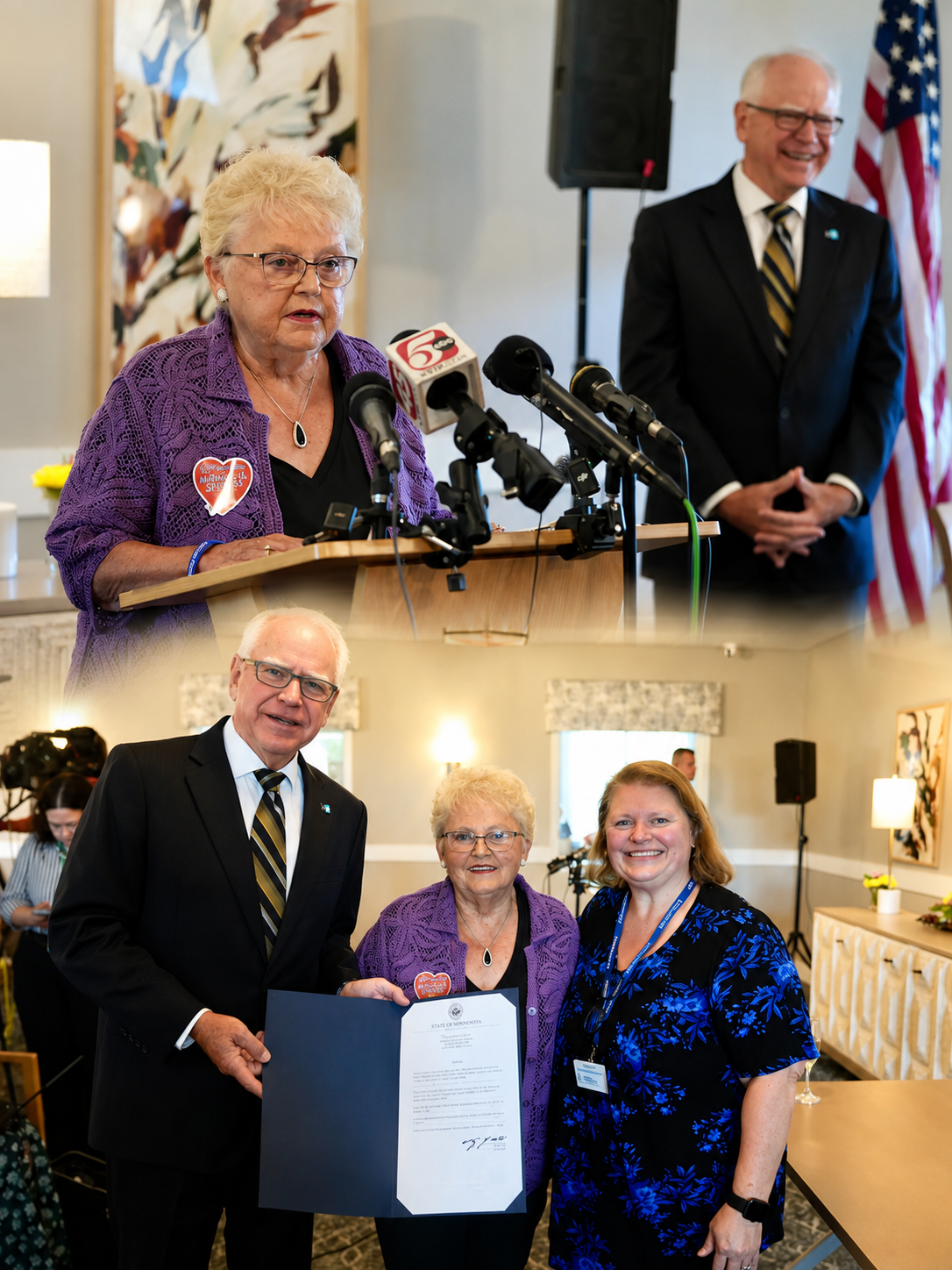
When Anita LeBrun learned that her assisted living community could not legally serve residents a glass of wine at a social event, she did not accept the restriction quietly.
The 82-year-old Minnesota grandmother believed that moving into senior housing should not mean surrendering the ordinary freedoms adults had enjoyed throughout their lives. Sharing a drink with friends at a birthday, anniversary or evening gathering was not merely about alcohol, she argued. It was about independence, companionship and the right to continue living fully.
So LeBrun took her complaint beyond the walls of her residence.
She appeared before Minnesota lawmakers, explained why the rule mattered and helped turn a frustrating discovery at one assisted living facility into a successful campaign for statewide change.
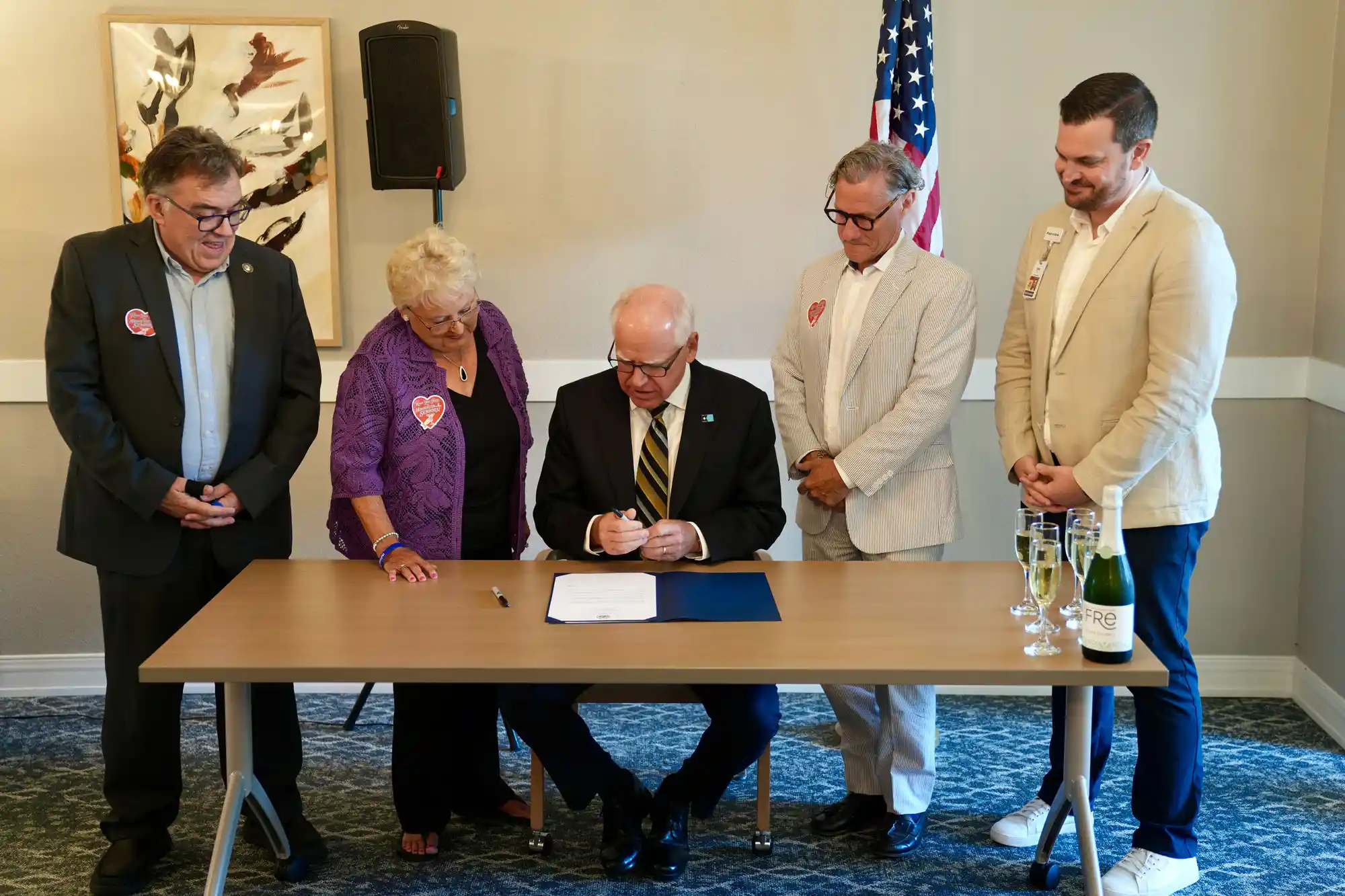
Months later, Minnesota Gov. Tim Walz visited LeBrun’s own community to ceremonially sign the new provision into law.
The amendment, affectionately known as the “Grandparents’ Happy Hour” bill, allows assisted living facilities, nursing homes and similar communities to serve alcoholic beverages during resident-focused events without obtaining a traditional retail liquor license.
For LeBrun, a grandmother of five, the signing represented more than a legislative victory. It showed that older adults could still challenge government policy, influence elected officials and reshape the rules affecting their daily lives.
The issue first emerged at Amira Choice Champlin, the senior living community in Champlin where LeBrun resides.
Staff members were preparing a reception following renovations at the facility. A happy hour seemed like a natural addition—an opportunity for residents to gather, see the improvements and enjoy time together.
Then administrators discovered a legal obstacle.
Residents were allowed to possess and drink alcohol privately in their rooms. The facility itself, however, could not serve wine, beer or mixed drinks at a communal event unless it secured a liquor license.
To LeBrun and others at Amira Choice, the distinction made little sense.
An adult resident could drink alone behind a closed door, but the community could not pour a glass of wine at a supervised social gathering. The rule restricted the very kind of shared experience that senior living communities often try to encourage.
Amira Choice Executive Director Abby Dahl considered the licensing requirement unnecessary. Assisted living facilities already operate under hundreds of rules covering resident health, safety and well-being, she noted. Adding a conventional liquor license created another administrative barrier without offering meaningful additional protection.
LeBrun viewed the issue from the resident’s perspective.
Life in assisted living can involve major adjustments. Older adults may leave longtime homes, familiar neighborhoods and routines built over decades. Social events provide opportunities to form friendships, maintain a sense of community and preserve the small pleasures that make daily life feel personal.
A drink shared with friends could be part of that experience.
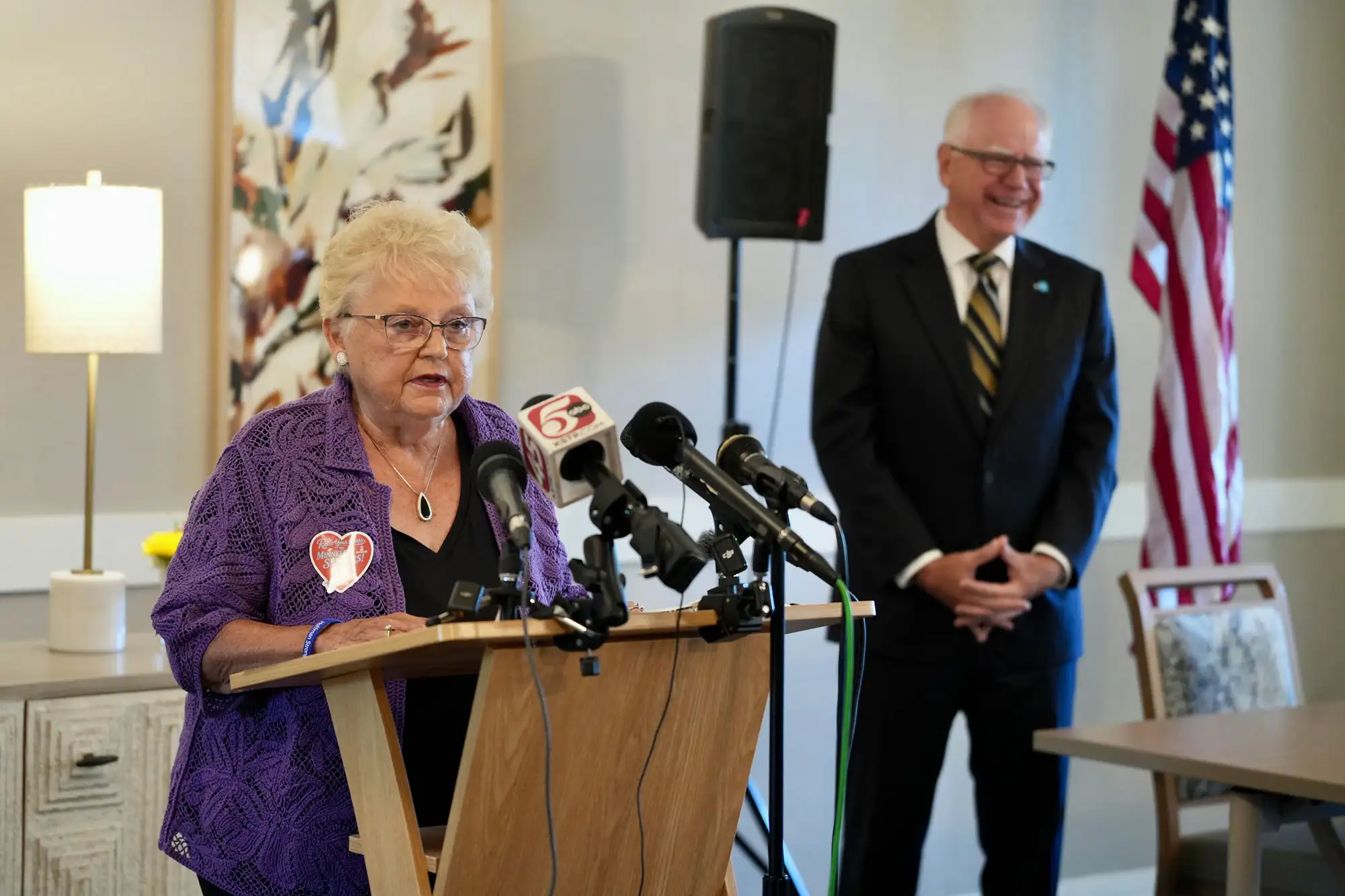
In March, LeBrun brought that argument before the Minnesota House Commerce Finance and Policy Committee.
She told legislators that older people should not have fewer freedoms simply because they had moved into assisted living. Residents, she argued, still deserved the ability to gather socially and enjoy a glass of wine during what she called the golden stage of their lives.
Her testimony placed a human face on what might otherwise have appeared to be a narrow licensing issue.
This was not a campaign demanding unrestricted access to alcohol. It was a request for senior communities to host ordinary resident events—happy hours, birthdays and anniversary celebrations—without navigating the same licensing process required of businesses selling drinks to the public.
LeBrun’s message resonated.
The proposed amendment passed in March as part of Minnesota’s 2026 omnibus liquor legislation. Its bipartisan support cleared the way for senior living facilities to serve alcohol to residents and their guests during qualifying community events.
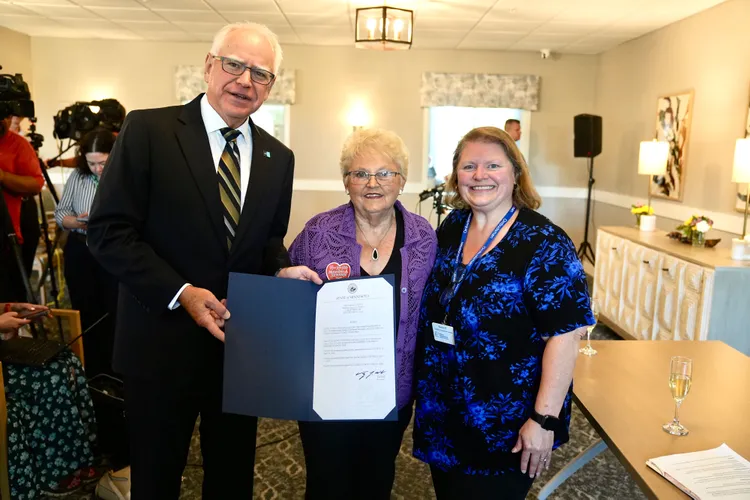
On July 14, Walz traveled to Amira Choice Champlin for a ceremonial signing attended by LeBrun, fellow residents, caregivers and legislators.
The setting made the moment especially meaningful.
The policy problem had first surfaced inside the facility. The resident who helped challenge it lived there. Now, the governor was sitting among the same community members whose social lives would be directly changed by the new law.
LeBrun watched as the measure she had supported became official.
She said she felt proud, particularly because of the excitement the change had created among residents. What began as disappointment over one canceled or restricted happy hour had grown into a statewide recognition that aging should not automatically mean losing familiar choices.
Walz expressed a similar idea during the celebration.
Growing older, he said, should not force people to abandon freedoms they had enjoyed throughout adulthood. The new law would make it possible for residents to toast birthdays, anniversaries, happy hours and ordinary moments together.
The provision was scheduled to take effect on Aug. 1.
At Amira Choice, plans were already underway to celebrate the change. The community intended to hold a special event featuring a lunchtime food truck for residents, employees and relatives, followed by an evening cookout.
Then would come the part that had once been prohibited: a celebratory happy hour.
Residents would be able to choose wine, beer or mixed drinks and enjoy them together as part of the community gathering.
The celebration would mark both the beginning of the law and the persistence required to make it happen.
Amira Choice credited LeBrun and Dahl with leading the advocacy effort. The community also expressed hope that their success would encourage other seniors and residential facilities to speak publicly about policies affecting them.
The victory carried a broader message about aging and civic participation.
Older adults are sometimes treated as though major decisions should be made for them rather than with them. Rules designed around safety or administration can unintentionally reduce personal choice, even when residents remain fully capable of expressing what they want.
LeBrun challenged that assumption directly.
At 82, she did not limit herself to complaining among friends or accepting that the regulation was too complicated to change. She spoke to lawmakers and explained how the policy affected real people.
Her argument connected personal freedom with social well-being.
For residents of senior communities, gatherings can ease isolation and create a stronger sense of belonging. The significance lies not in the drink itself, but in the conversation around it—the stories exchanged, the birthdays recognized and the friendships strengthened.
LeBrun understood that distinction.
A glass of wine consumed alone in a private room was technically permitted. But a toast shared with neighbors could create something far more valuable: community.
Her campaign ultimately transformed an overlooked restriction into a public discussion about dignity, autonomy and the experiences people should be allowed to carry with them into later life.
The result was a law that changed because one resident refused to believe age should make her voice less powerful.
When Amira Choice raises its first legal communal toast under the new provision, the residents will be celebrating more than happy hour.
They will be honoring an 82-year-old grandmother who reminded Minnesota that freedom does not expire when someone moves into assisted living—and that meaningful political change can begin with something as simple as asking why friends cannot share a drink together.