At 22, Emilie Held a 5-Day-Old Orphan in Uganda — Seven Years Later, He Finally Became Her Son in Two Countries
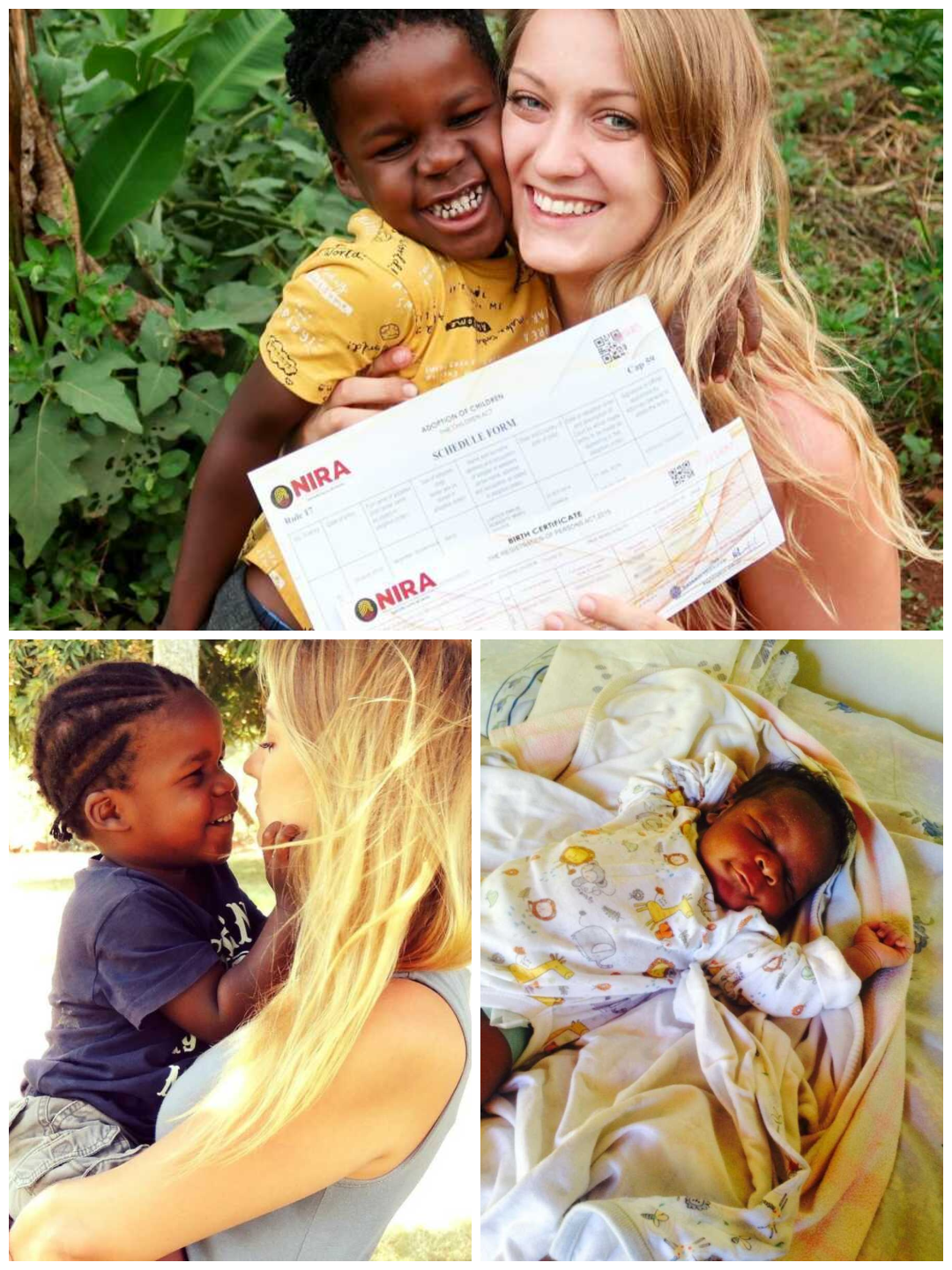
Emilie Larter had gone to Uganda expecting to volunteer for two months and then continue traveling.
Instead, one phone call changed the direction of her life.
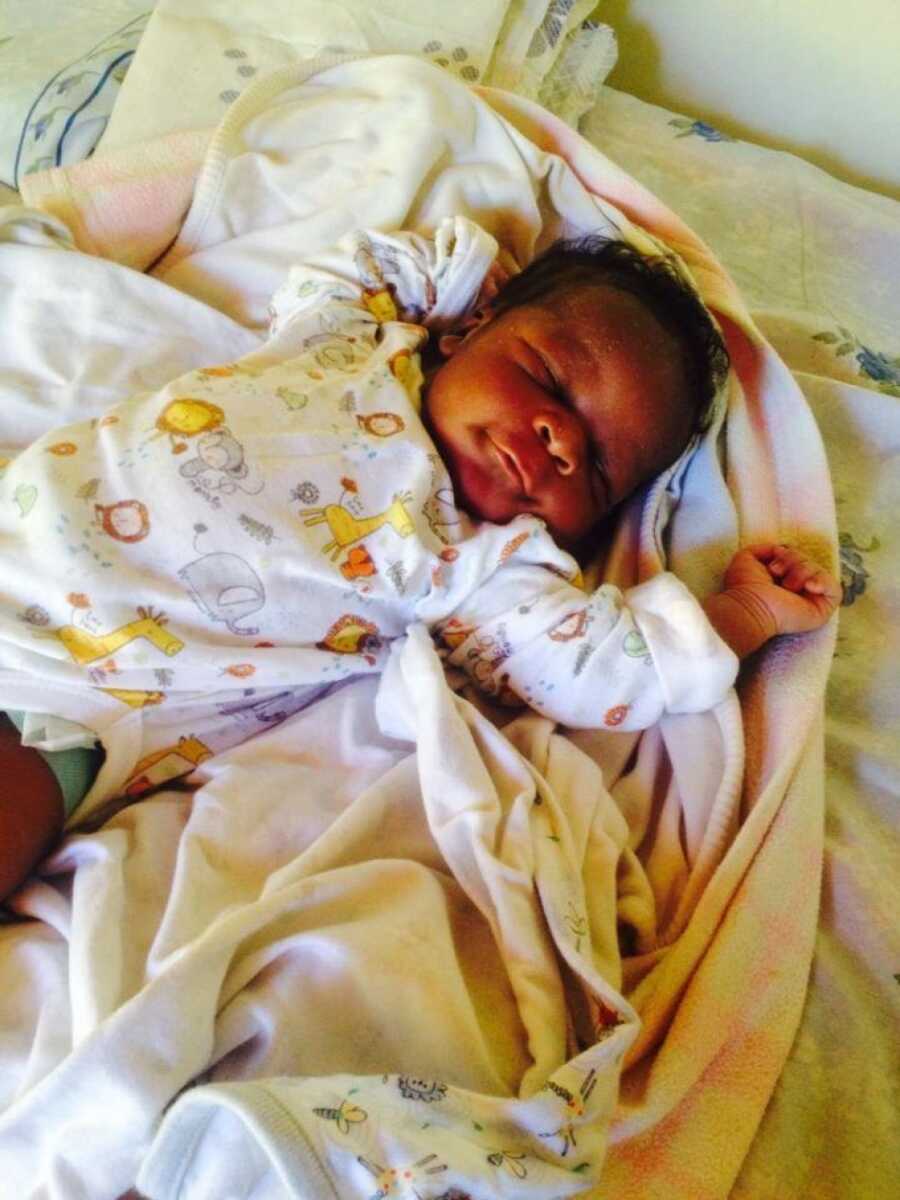
A mother had died, leaving seven children behind. Among them was a newborn boy only five days old, so young he had not even been given a name.
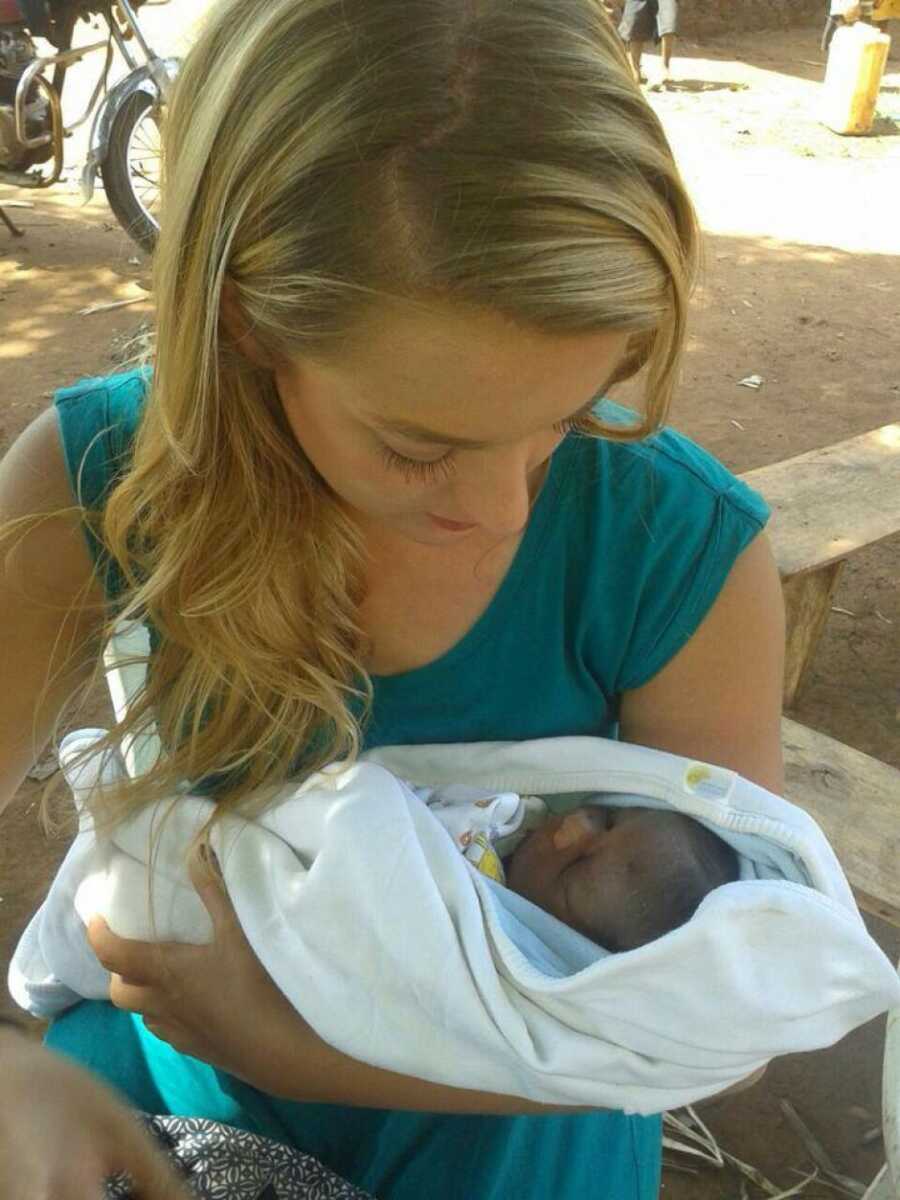
Emilie climbed onto the back of a motorcycle taxi with workers from the children’s home and traveled deep into a village where the mother was being buried.
Then someone placed the tiny baby in her arms.
Emilie was 22 years old, newly finished with university and still imagining years of travel ahead.
She could not have known that the baby she was holding would eventually become her son—or that making their family legally permanent would take more than seven years, two countries, repeated court delays, a lost job and even a global pandemic.
A Volunteer Trip Became Something Much Bigger
In July 2014, Emilie had finished her final university lecture and almost immediately left for Africa.
She climbed Mount Kilimanjaro in Tanzania, went on safari, visited Zanzibar and then traveled to Uganda, where she had arranged to volunteer at a children’s home.
At the time, she viewed the experience as one more adventure before continuing through Africa.
She quickly became involved in everyday life at the home, helping with meals, changing diapers and spending time with the children.
About a month into her stay came the call about the newly orphaned baby.
Because the women working at the home were already responsible for many children, Emilie was asked to become the newborn’s primary caregiver so he could receive more individual attention.
She agreed immediately.
The baby was given a name: Adam.
Soon, Emilie’s days and nights revolved around him.
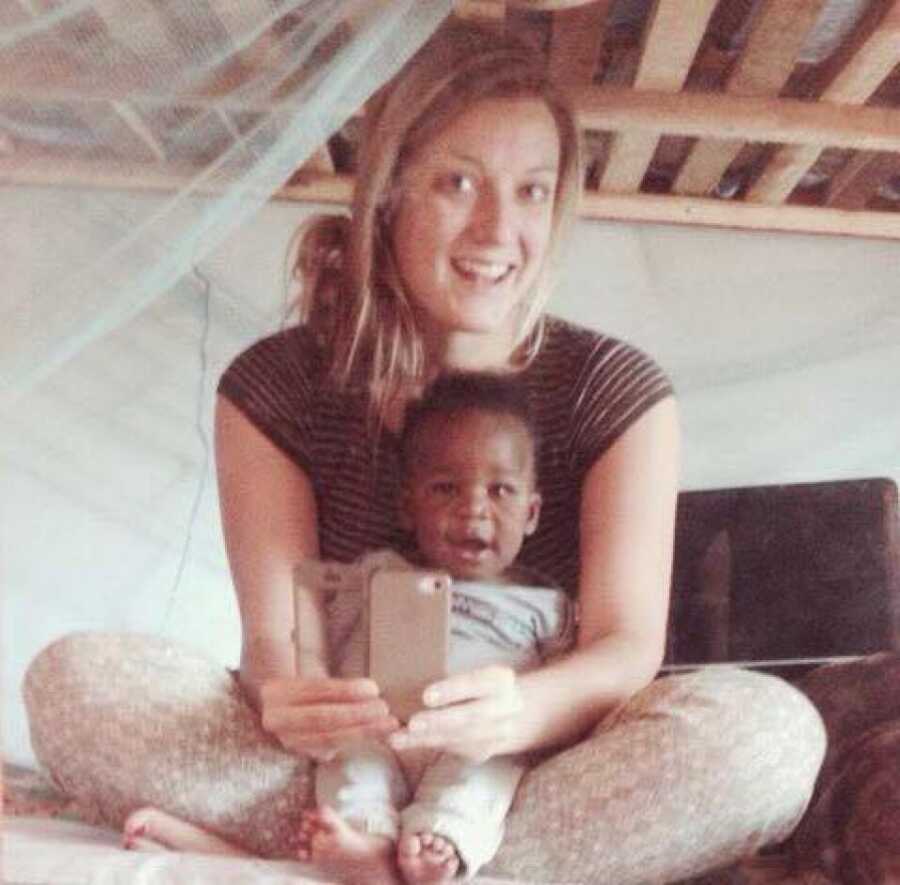
She handled feedings, changed him, soothed him and allowed him to sleep against her chest.
The emotional boundary between volunteer and caregiver disappeared quickly.
She loved him.
Adoption Seemed Impossible
The possibility of adopting Adam crossed Emilie’s mind, but she initially dismissed it.
She was young.
She had no established career.
International adoption could be expensive and complicated, and she understood that Uganda’s rules made it particularly difficult for a single woman to adopt a boy.
So she focused on what she could do in the present.
She extended her stay.
She raised money for formula, diapers and clothing.
Even after returning with Adam to the larger children’s home, she continued making him her priority.
Eventually, however, more than seven months had passed.
Emilie knew she could not remain a volunteer forever.
She returned to the United Kingdom.
Leaving Adam was devastating.
A friend brought the 7-month-old baby to the airport to say goodbye. Adam was too young to understand why Emilie was leaving.
Emilie understood perfectly.
She Tried to Build a Life Back Home — But Adam Was Still Part of It
In Britain, Emilie found work as a teacher.
On paper, she was beginning the adult life expected after university.
Emotionally, she still felt as though a piece of her remained in Uganda.
She thought about Adam constantly.
Certain songs reminded her of the months when she had rocked him to sleep. She continued helping from thousands of miles away, paying for his formula and enrolling him in a British nursery school in Uganda.
Then a message arrived that changed everything again.
Adam had been hospitalized with severe malaria.
Emilie called her father in tears.
Being far away while Adam was sick made something undeniable clear to her: continuing to care for him from a distance was no longer enough.
She was going to find a way to become his mother.
She Moved Thousands of Miles to Pursue Adoption
By Christmas 2015, during another visit to Uganda, Emilie began meeting with social workers.
This time, adoption was no longer a private wish.
It was a plan.
In May 2016, she received the necessary care order to begin fostering Adam.
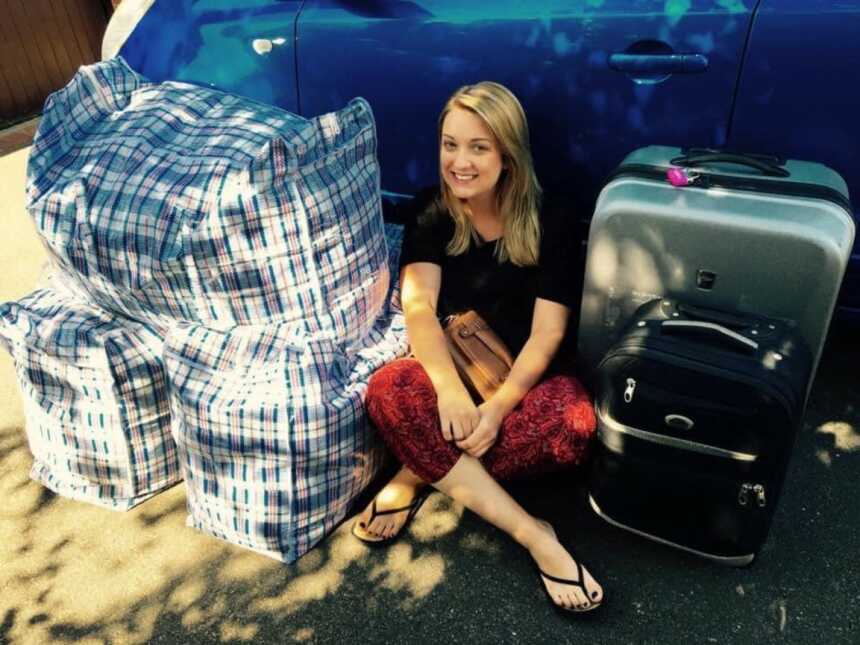
Three months later, Emilie packed her belongings and moved approximately 6,500 miles from Britain to Uganda.
She had secured a job at a large international school, giving her a way to support herself while raising Adam.
For a brief moment, it appeared the pieces were falling into place.
Then the school made cutbacks.
Only months after moving countries, Emilie lost her job.
Adam had finally moved in with her, and she now faced the terrifying possibility that financial circumstances could threaten everything she had worked toward.
A colleague suggested crowdfunding.
Emilie reluctantly created a GoFundMe page and shared the story.
What happened next stunned her.
Strangers Around the World Stepped In
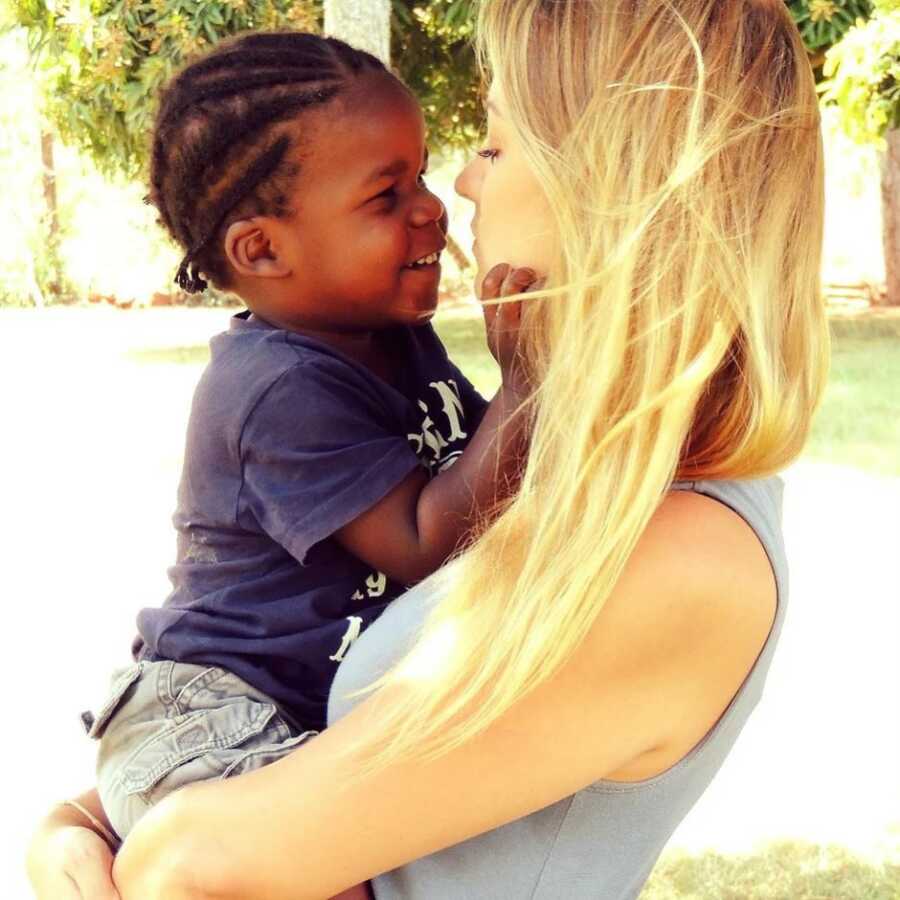
Emilie woke to discover donations arriving from people she had never met.
Her story spread far beyond her immediate circle.
She appeared in newspapers, gave radio interviews and spoke on live television.
Before moving to Uganda, Emilie had barely told people about her adoption plans. She had not even publicly announced them on her personal social media.
Suddenly, thousands of strangers knew about Adam.
More importantly, many wanted to help.
The donations provided enough support to continue the adoption process, while Emilie’s family offered to help with living expenses until she could find another job.
What had looked like a crisis became another path forward.
But the legal journey was nowhere near finished.
Nearly Everything That Could Delay the Adoption Did
Emilie watched other adoptive families arrive in Uganda, complete their processes and leave.
Her case continued.
Court dates were canceled.
A file went missing.
Names were recorded incorrectly.
Two court hearings failed to bring the final result she wanted.
Then, in December 2018, Emilie and Adam finally appeared before a judge again.
Seven months later, the decision came.
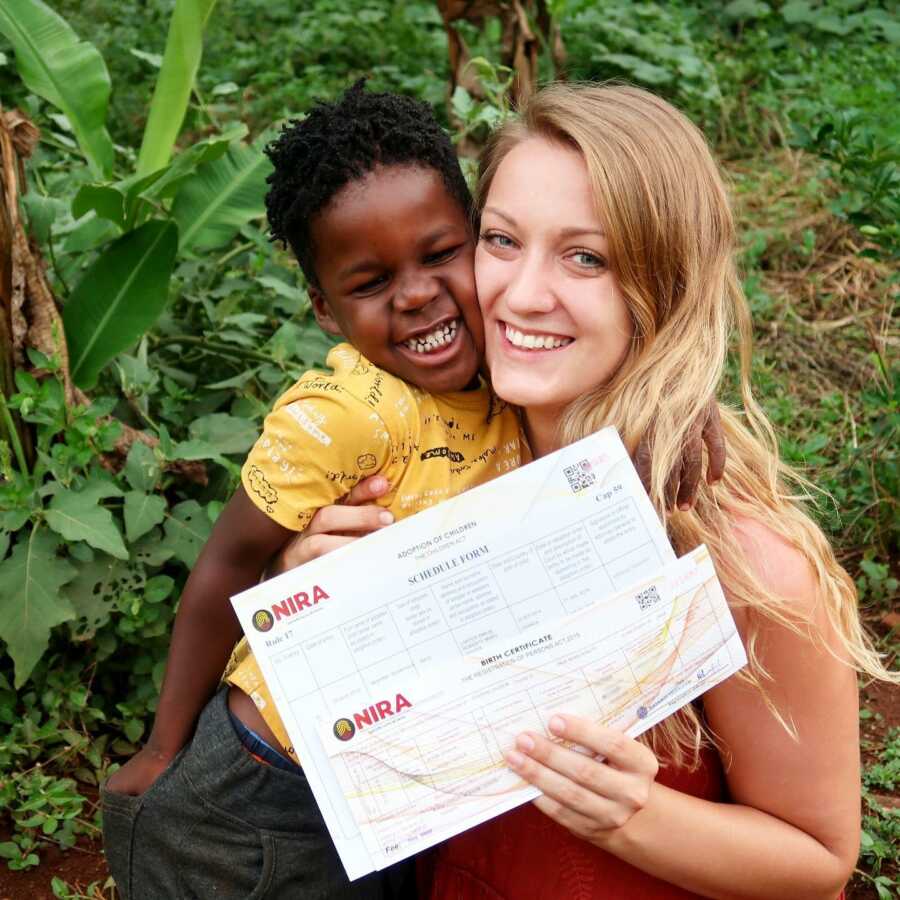
Emilie was legally Adam’s mother under Ugandan law.
Nearly five years had passed since she first held him as a 5-day-old baby.
The relief was enormous.
But even that ruling did not mean they could simply board a plane and begin their life in Britain.
There were more documents to secure, including the written ruling, adoption paperwork, Adam’s legal name change, passport and British visa.
Then their rental car broke down on the way to an immigration appointment.
They received another appointment.
This time, something even less predictable intervened.
The COVID-19 pandemic arrived.
On the day Emilie and Adam were supposed to enter immigration, offices closed as lockdown restrictions began.
They Finally Reached Britain in 2021
By the end of November 2020, the Ugandan side of the process was finally complete.
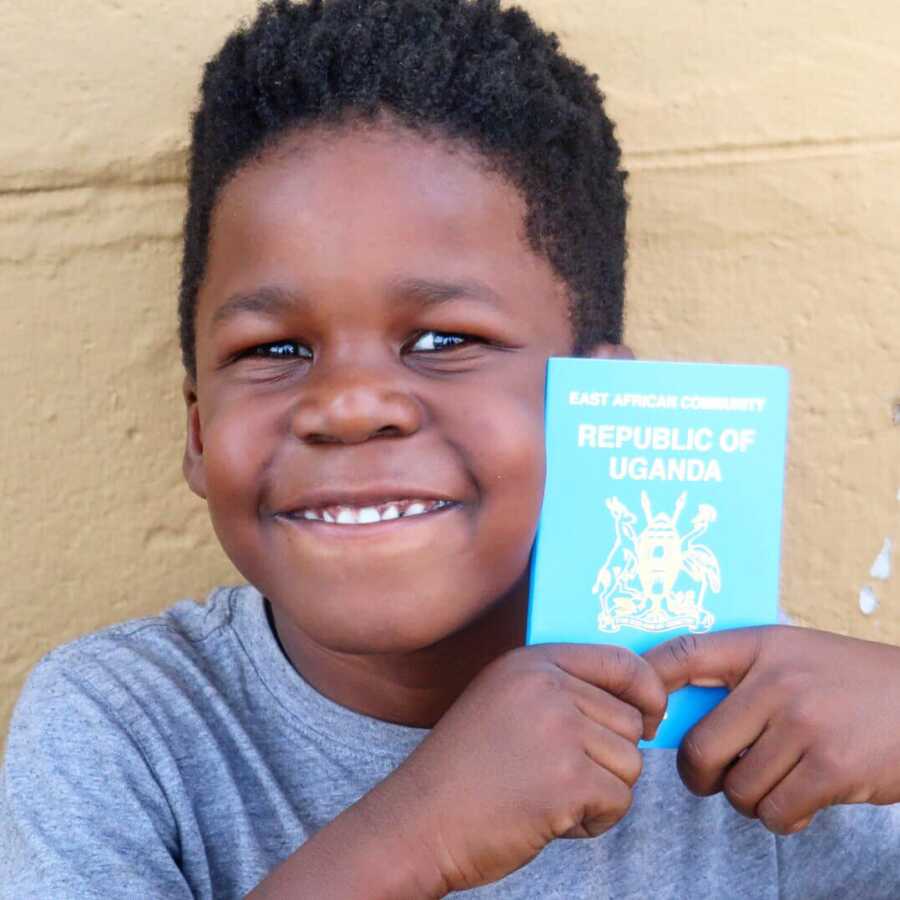
Adam had his passport.
His visa had been approved.
In January 2021, four and a half years after Emilie had moved to Uganda, mother and son flew to the United Kingdom.
But one last legal obstacle remained.
The Ugandan adoption was not automatically recognized under British law.
Adam was allowed to live in the country with Emilie, but she still needed to adopt him again before Britain would legally recognize her as his mother.
The family went through another round of social-worker visits, background checks and court proceedings.
Then, just before Christmas in December 2021, a British judge made it official.
Emilie was legally Adam’s mother in both countries.
Seven years and four months had passed since the day a newborn boy was first placed in her arms.
Emilie Refuses to Describe Herself as Adam’s Savior
For Emilie, the happiness of adoption does not erase what came before it.
Adam’s story began with profound loss.
His biological mother died days after giving birth, and Emilie recognizes that adoption exists because something painful happened first.
She also thinks carefully about the responsibility of being a white mother raising a Black son.
She rejects the idea that she rescued Adam or should be treated as the hero of his story.
From her perspective, she simply loved a baby and eventually built her life around that love.
By the time she shared their journey, Adam had grown into a funny, caring child who loved his family, animals and sports.
Emilie’s family had grown too.
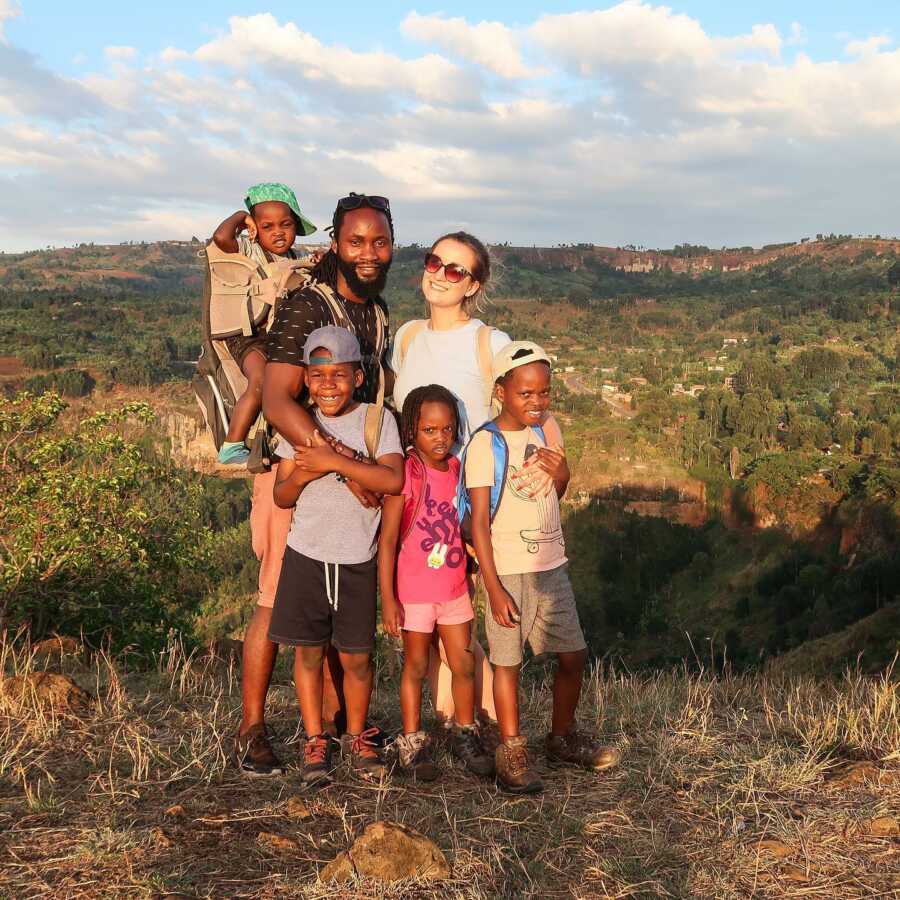
During her years in Uganda, she met her partner, Josh, and three more children became part of their family. At that stage, Emilie and Adam were living in Britain while Josh and the other children remained in Uganda, leaving the family with more immigration processes to navigate before they could permanently reunite.
Once again, the future required patience.
But Emilie had already learned what could happen when a seemingly impossible journey was taken one step at a time.
At 22, she thought her greatest adventures would come from traveling the world.
Instead, the journey that defined her began in a Ugandan village with a nameless 5-day-old baby placed unexpectedly into her arms.
His name became Adam.
And after years of separation, setbacks, strangers’ generosity and courtroom battles, he became what Emilie’s heart had recognized long before any judge did.
Her son.