After Three Miscarriages, She Was Stunned to Learn She Was Carrying Triplets — Then Doctors Warned She Could Lose Them All
Christine Taala was not expecting another pregnancy.
In November 2018, she was already raising an 11-year-old daughter and a 9-month-old baby when a routine visit unexpectedly revealed she was pregnant again.
The news overwhelmed her.
Her husband worked long hours. Their youngest child was still an infant. Christine could not imagine adding another baby so soon.
Then came the ultrasound.
At first, she thought she saw twins.
The technician told her to count again.
There were three.
Christine was carrying spontaneous triplets, conceived naturally without fertility treatment.
Instead of immediate joy, she burst into tears.
She was frightened by the financial reality, the physical risks and the possibility of suddenly becoming a mother of five.
Then her mother said something that completely changed the way Christine viewed the pregnancy.
Christine had previously suffered three miscarriages.
Could these three babies, her mother wondered, somehow represent the children she had lost?
For Christine, that thought became a turning point.
The Pregnancy Began With Fear, Not Celebration
Christine learned she was pregnant only after arriving for what she expected to be a routine Pap smear.
Her doctor could not perform the appointment because her urine test was positive for pregnancy.
A few days later, on Nov. 5, 2018, she underwent an ultrasound to determine how far along she was.
The image immediately surprised the technician.
Christine first noticed what looked like two sacs and nervously assumed she was carrying twins.
Then she was told there were three babies.
The technician described the pregnancy as spontaneous triplets and told Christine such a situation was extremely rare.
Christine was only about six weeks pregnant.
That meant uncertainty surrounded all three babies.
Her obstetrician warned there was a significant chance she could lose one or more of them.
For the next four weeks, Christine lived with anxiety.
She cried frequently and struggled with depression and fear while waiting for another scan.
When she returned at roughly 10 weeks, however, all three babies were still developing.
Their heart rates were strong.


Her Mother Helped Her See the Pregnancy Differently
Even with good news from the scan, Christine remained overwhelmed.
Her doctor discussed the possibility of fetal reduction because of the risks associated with carrying triplets.
Christine admitted the idea crossed her mind, but she could not imagine choosing which pregnancy to reduce.
That evening, she finally told her mother.
The response became one of the most emotional moments of the entire journey.
Her mother reminded Christine that she had already lost three pregnancies during adulthood.
Perhaps, she suggested, there was meaning in now being given three babies at once.
Christine had previously been asking why this was happening to her.
After that conversation, the question changed.
Instead of seeing the pregnancy as punishment, she began believing these children belonged in her life.
She decided to continue carrying all three.
Doctors Discovered Another Rare Twist
As the pregnancy progressed, Christine began seeing a perinatologist because triplets automatically made the pregnancy high risk.
Then doctors noticed something unusual.
The babies were not all measuring at the same gestational age.
According to Christine’s account, doctors believed Baby C appeared approximately one week further along than Babies A and B.
The specialist told her it seemed she had become pregnant from separate eggs at different times, with Babies A and B being identical twins and Baby C fraternal.
For a pregnancy already filled with surprises, it was another astonishing development.
At around 16 weeks, Christine learned the sex of the babies.
She wanted to reveal the news to her family during a trip to Disney World, so the results were kept secret.
Three Mickey ears were prepared.
When the family revealed them, all three were pink.
Christine was going to have three more daughters.
With her two older girls, that meant a household of five daughters.
Then the Pregnancy Became Dangerous
After returning home, Christine continued weekly medical checks.
Doctors began watching Babies A and B particularly closely because they shared a placenta and were at risk of twin-to-twin transfusion syndrome.
The condition can create an imbalance in blood flow between identical twins sharing placental connections.
Christine understood the stakes.
If one baby stopped growing, both twins could be threatened.
At 23 weeks, her fears became real.
Doctors found that Baby A had stopped growing properly.
Christine was hospitalized.
The initial recommendation was terrifying: the babies might need to be delivered within days.
At barely 23 weeks, their chances would be dangerously uncertain.
Christine begged for another possibility.
Then her perinatologist returned with what he described as a desperate alternative.
A specialist team in Houston might be able to perform a procedure to improve the blood flow between the twins.
Christine needed to get from Atlanta to Texas immediately.
Not on a commercial flight.
A medical aircraft was coming for her.
She Was Flown to Texas for Emergency Surgery
Within hours, Christine and her family had to rearrange everything.
Her husband found relatives to care for their 13-month-old daughter and their older child.
They packed quickly.
Then Christine was medically transported to Texas Children’s Hospital.
Doctors there planned a laser procedure intended to correct the abnormal placental blood-flow connections threatening Babies A and B.
Christine remained awake during the surgery.
Afterward came another ultrasound.
All three babies were alive.
For Christine, it felt like another impossible hurdle had been cleared.
She returned to Atlanta with a new goal.
If she could reach 28 weeks, she believed the girls would have a much better chance.
Her body had other plans.
At 26 Weeks, Labor Could No Longer Be Stopped
On March 28, 2019, Christine was 26 weeks and three days pregnant.
She had become extremely uncomfortable and began experiencing pain she could no longer ignore.
Her doctor told her not to come to the office.
She needed to go directly to the hospital.
When physicians examined her, Christine was already about four centimeters dilated and having contractions.
She asked whether she could go home and wait longer.
The answer was no.
Labor had progressed too far.
The babies were coming.
Because delivering premature triplets required a large medical team, doctors tried to delay the birth until enough staff could be assembled the following morning.
Then, just after 8 a.m. on March 29, the girls arrived one minute apart.
Baby A was born at 8:03.
Baby B followed at 8:04.
Baby C arrived at 8:05.
Christine had made it far enough to deliver all three alive.
But another long fight was beginning.
She Could Not See Her Daughters for Three Days
Christine developed a fever after delivery and was unable to visit the babies immediately.
For three days, her husband saw them while she waited.
He tried to prepare her for what she would eventually find in the neonatal intensive care unit.
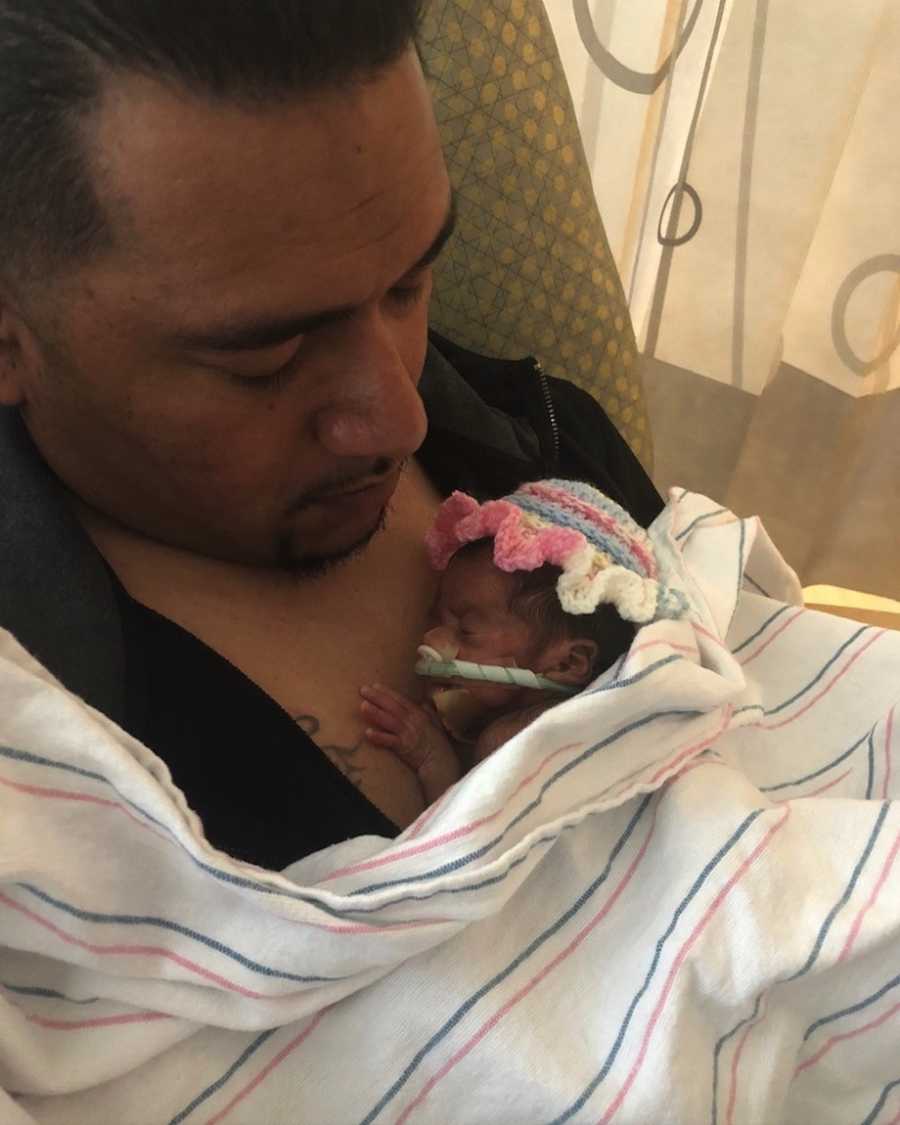
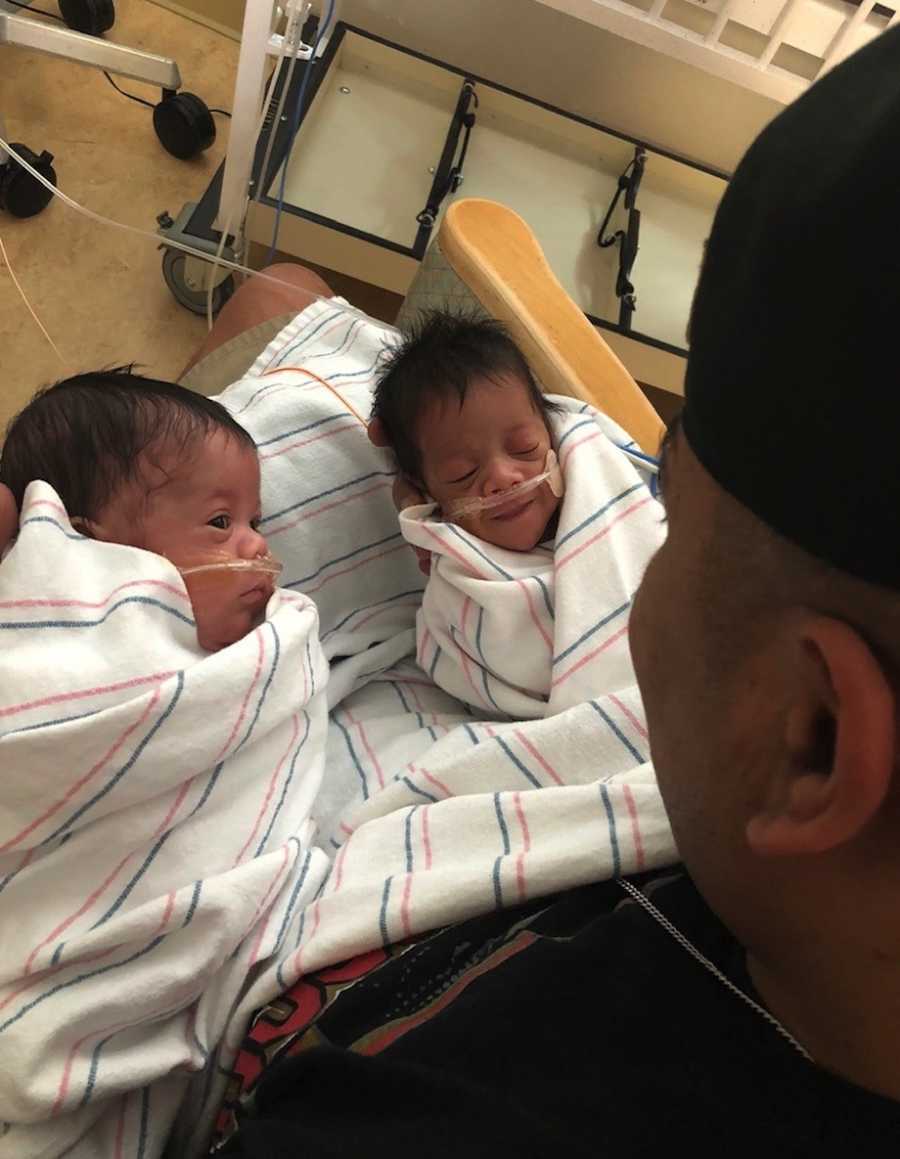
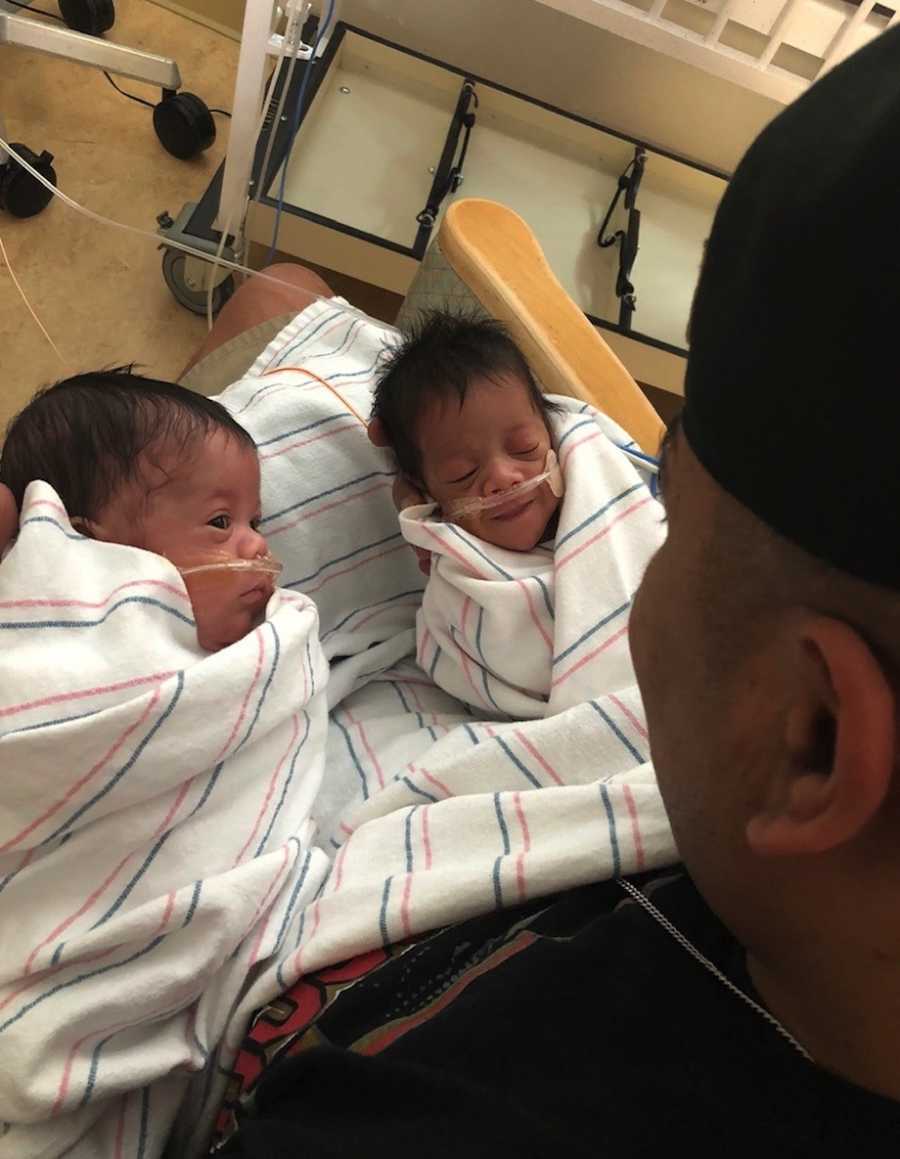
The girls were extremely small.
They were surrounded by machines and incubators.
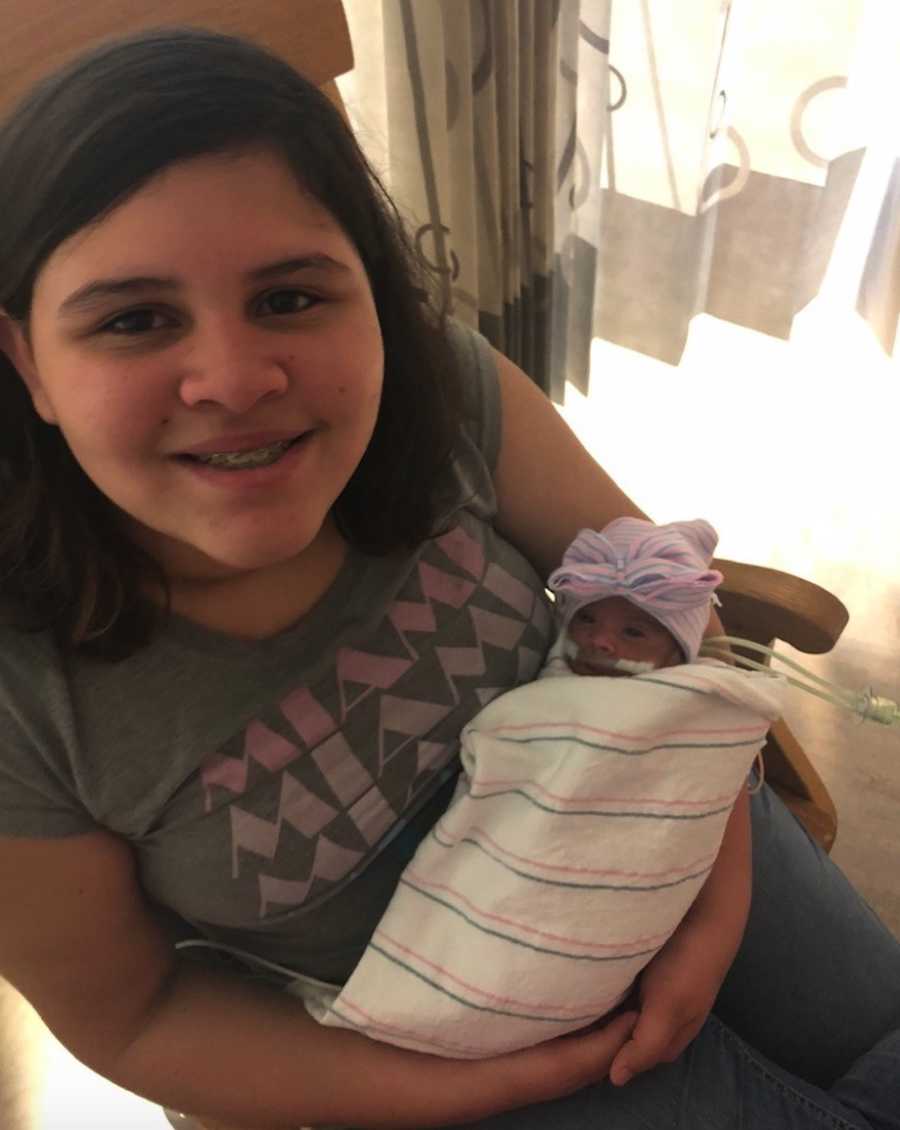
When Christine was finally allowed to see them, she was stunned by their size.
The smallest weighed just 1 pound, 10 ounces. The others weighed approximately 2 pounds and 2 pounds, 3 ounces.
Christine remembered thinking they were no larger than her hand.
The following weeks were filled with uncertainty.
Every day brought unfamiliar medical terms, setbacks and small victories.
Then, on April 13—Christine’s birthday—the neonatologist called with encouraging news.
The girls had finally begun improving.
Doctors still warned that the journey was far from over, but for the first time, Christine felt she could breathe.
They believed the babies were going to survive.

After 103 Days, All Three Finally Went Home
The NICU became the family’s second home.
Christine and her husband learned how to change diapers through incubator openings, give gentle “hand hugs” and practice skin-to-skin contact with babies too fragile for ordinary cuddling at first.
The girls slowly grew.
They began in tiny P2 diapers and eventually reached newborn sizes.
Clothes that were once too large even in doll sizes eventually gave way to preemie outfits.
By July 2, 2019, 103 days had passed since their birth.
The babies who had entered the world weighing between roughly 1 pound, 10 ounces and 2 pounds, 3 ounces had grown dramatically.
They weighed approximately 5 pounds, 10 ounces; 5 pounds, 3 ounces; and 6 pounds.
Christine could finally take them home.

The Pregnancy She Once Feared Became the Family She Could Not Imagine Losing
More than two years later, Christine looked back at how differently she had reacted when the pregnancy first appeared.
She had cried at the idea of another baby.
Then she cried harder after discovering there were three.
She worried about money, space, motherhood and whether any of the babies would survive.
During the pregnancy, doctors warned about miscarriage, suggested fetal reduction, discovered dangerous complications and eventually sent her across the country for emergency surgery.
Then came premature labor, tiny NICU babies and more than three months before the whole family could finally live under one roof.
Christine eventually called the triplets her heroes.
They had changed her understanding of motherhood and of herself.
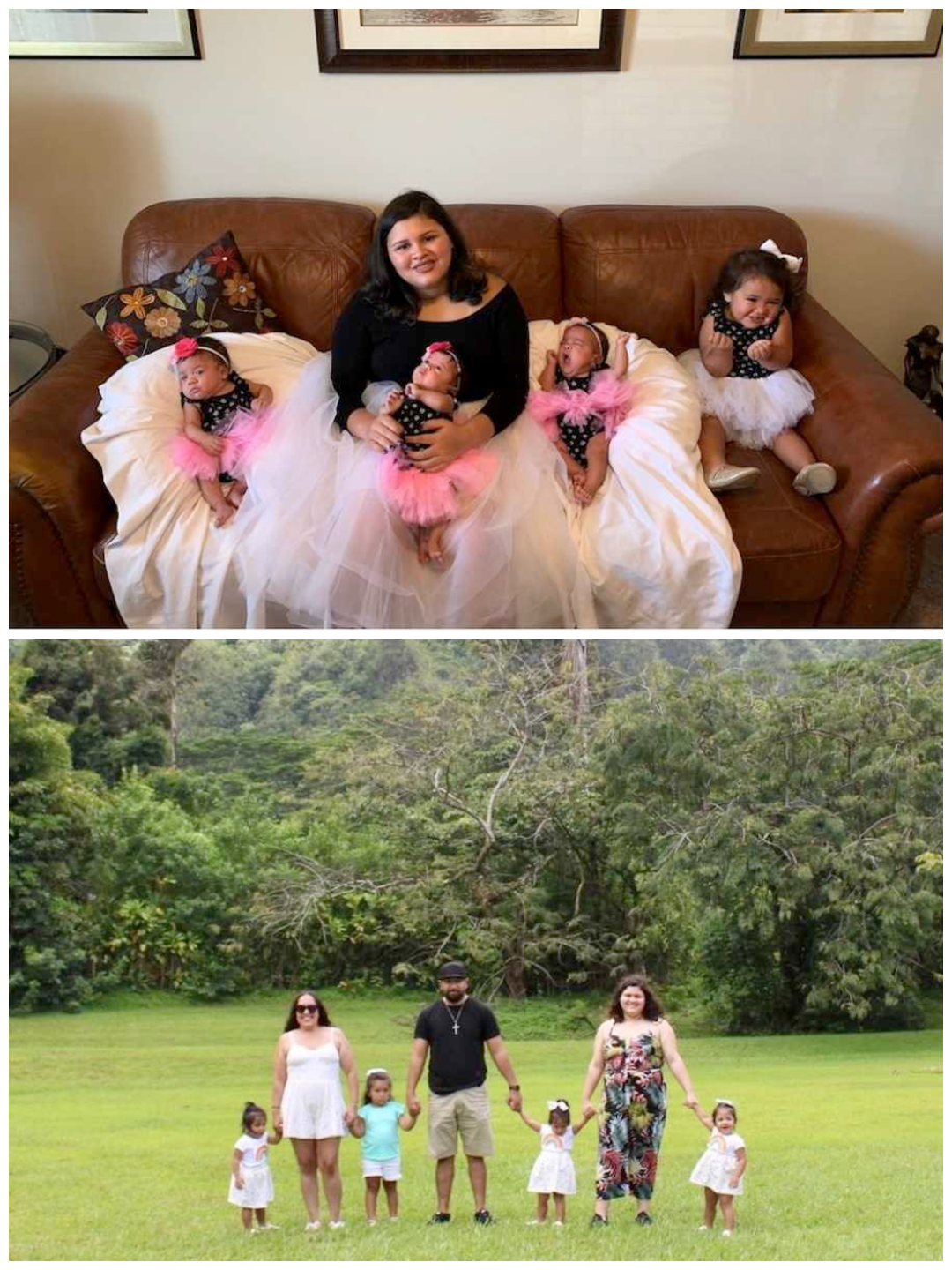
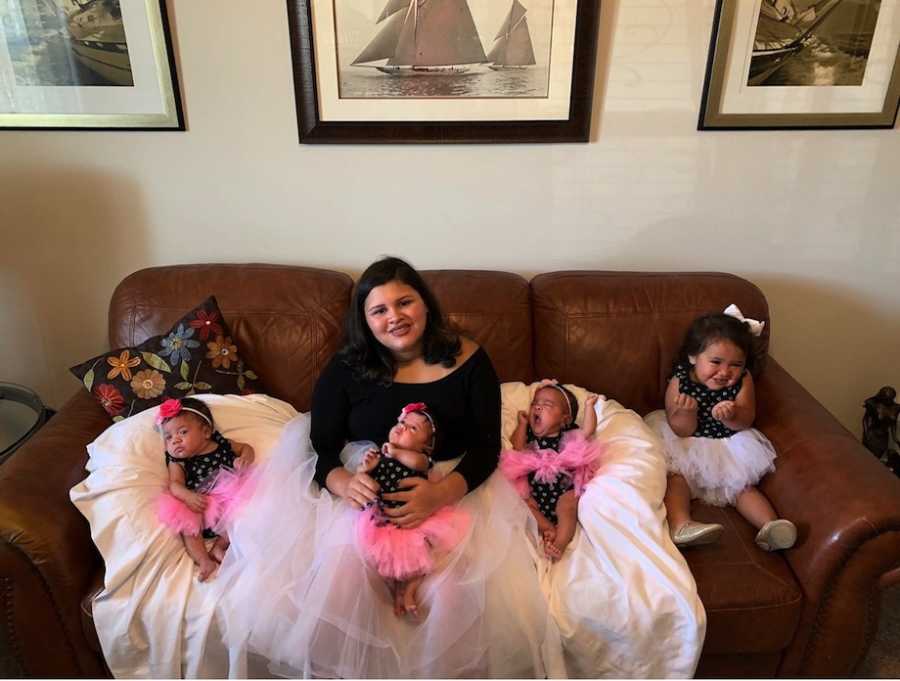
Her family of seven—Christine, her husband Talmage and their five daughters Natalia, Mila, Aria, Lilah and Sienna—did not become the quiet life she once imagined.
They became something far more unpredictable.
And for Christine, the three babies she once greeted with fear ultimately became inseparable from the three pregnancies she had once mourned.
She could never replace the children she lost.
But when her mother reminded her of those three miscarriages, it gave Christine a way to stop asking why the triplets had arrived.
From that point forward, she began asking a different question:
How was she going to fight to keep all three?