Doctors Thought Her Screaming Toddler Had a Stomach Bug — His Mom’s Demand for One X-Ray Saved His Life
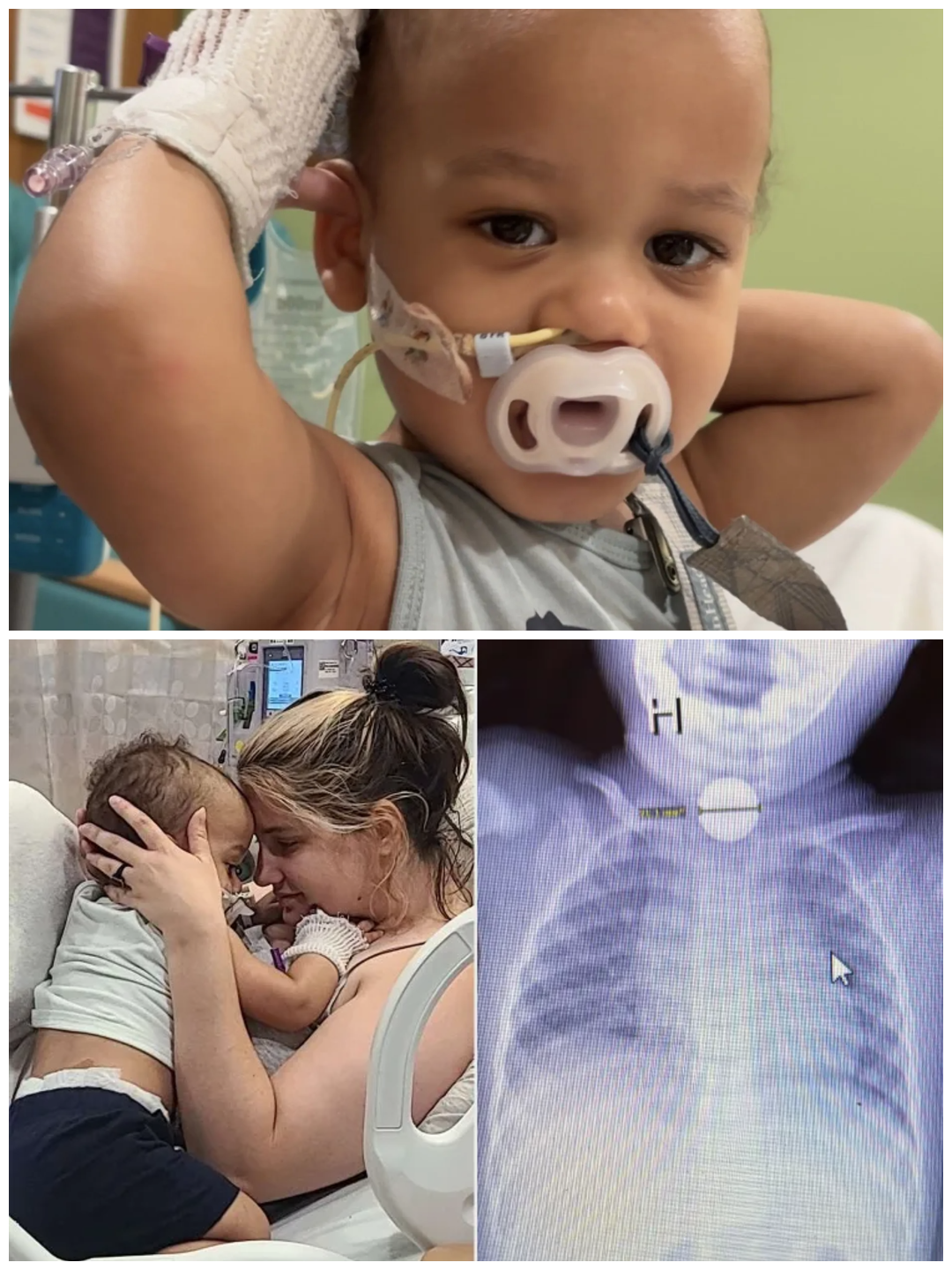
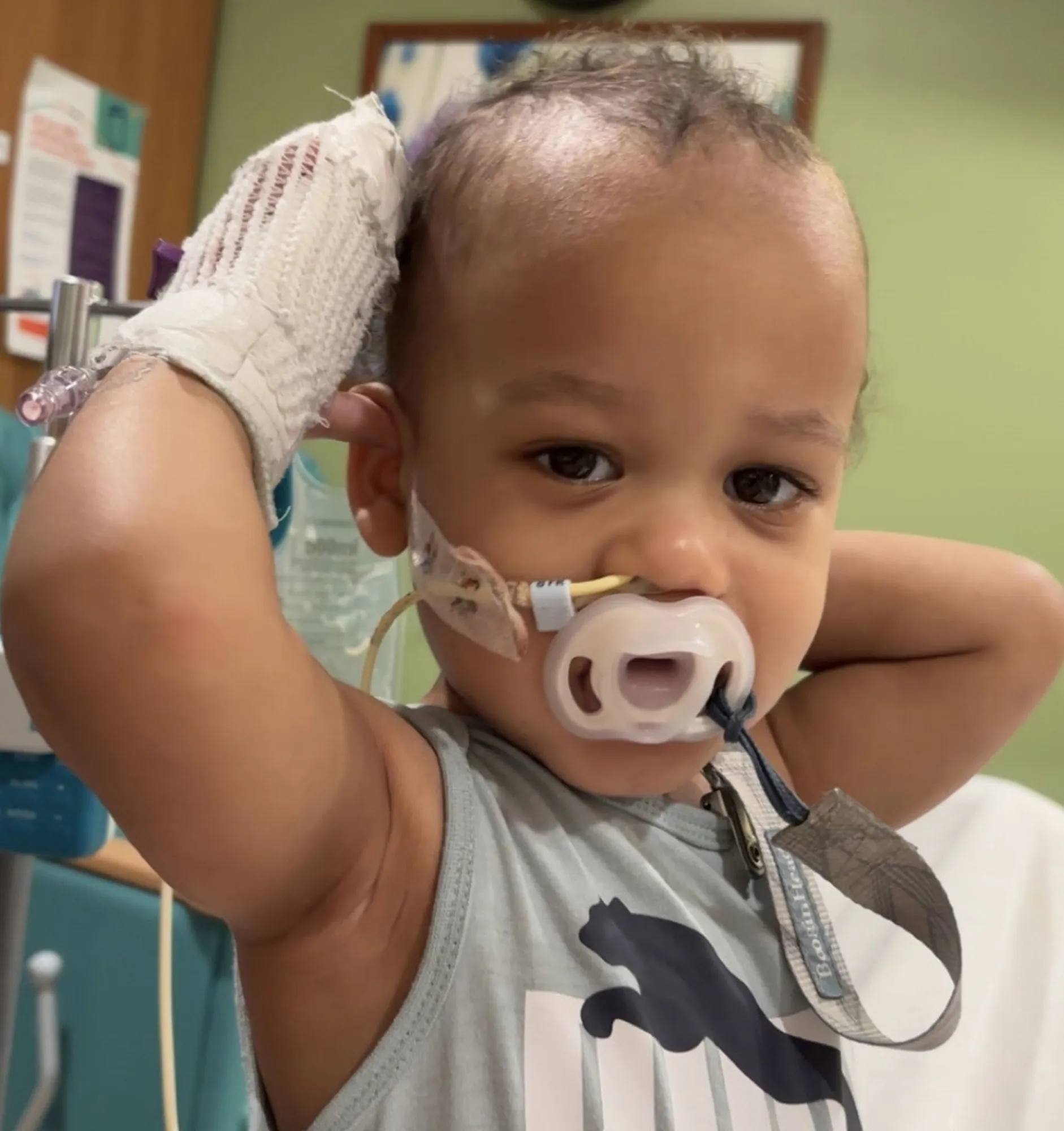
When 18-month-old Kai Dunn woke up screaming at 11 p.m., his mother immediately knew the pain was different from an ordinary childhood illness.
Kai was inconsolable. He was drooling heavily, and nothing his parents did seemed to calm him. Madeline Dunn and Kai’s father passed the toddler back and forth, desperately trying to comfort him before deciding they could no longer wait.
Dunn, 26, drove her son to a Texas emergency room as he cried throughout the journey.
Doctors initially believed Kai was suffering from a severe stomach virus.
His mother was not convinced.
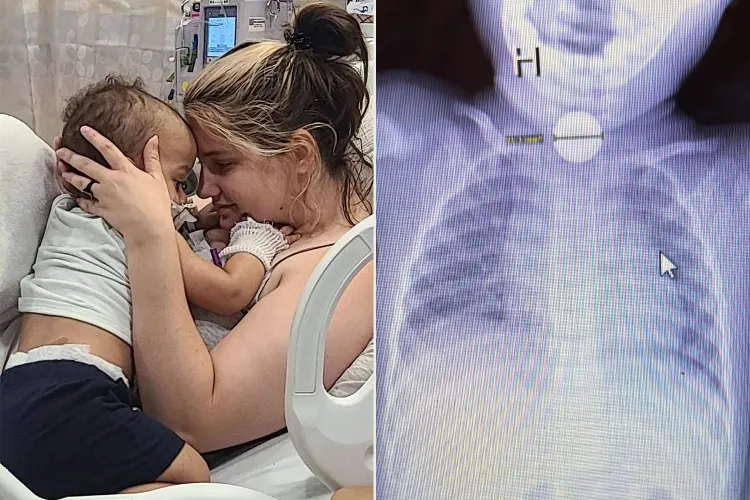
What happened next came down to one request: Dunn insisted that her son receive an X-ray. The image revealed something far more dangerous than a stomach bug — a button battery was lodged in Kai’s throat and was already causing serious internal damage.
A Mother’s Fear Suddenly Became Reality
Dunn had long worried about her young twins accidentally swallowing something they should not.
That fear was in the back of her mind when Kai became ill.
Although medical staff believed a stomach virus explained his symptoms, Dunn asked them to take an X-ray anyway.
She recalled being told the scan could be done largely to reassure her.
Instead, it changed the entire emergency response.
As Dunn returned toward Kai’s room after the imaging, she noticed doctors were already gathering around her son.
The X-ray was displayed nearby.
There, clearly visible in his throat, was a circular object.
Kai had swallowed a button battery.
The atmosphere changed instantly.
Medical workers treated the situation as a major emergency, giving Kai honey and preparing him for immediate surgery. Dunn had not known what her son had swallowed, but she said something inside her had told her not to leave without that scan.
The Battery Was Burning His Esophagus
Small button batteries can be found in many everyday products, including watches, remote controls and children’s toys.
Their size can make them particularly dangerous around toddlers.
In Kai’s case, the battery became stuck in his esophagus.
Once there, it began causing a chemical burn.
By the time doctors removed it, the damage was severe enough that a hole had been burned through part of his esophagus.
Kai survived the surgery, but his parents were not immediately told that he was out of danger.
Dunn repeatedly asked doctors whether her baby was going to live.
They could not promise her that he would.
The hole created by the battery carried the risk of infection, and doctors were concerned that an infection could spread beyond the esophagus.
For a mother who had entered the hospital thinking her son needed treatment for sudden pain, the situation had transformed into a fight for his life.
Doctors later told Dunn that her insistence on the X-ray had saved him.
Kai Needed a Feeding Tube While His Throat Healed
After surgery, Kai could not simply return to his normal routine.
The injury inside his throat needed time to close.
He required a feeding tube while his esophagus healed, and his family had to wait to learn whether the damaged tissue would recover without additional life-threatening complications.
Eventually, they received the news they desperately wanted.
The hole closed.
Kai became well enough to leave the hospital.
But going home did not mean his medical ordeal was finished.
The damage caused another problem: scar tissue built up as his esophagus healed, leaving the passage unusually tight.
That narrowing made continued treatment necessary.
Doctors began performing procedures to stretch Kai’s esophagus.
Dunn said her son was being placed under anesthesia every week while physicians used a balloon to widen the affected area.
Although Kai eventually had his feeding tube removed, his mother said he still faced an estimated eight to 10 additional procedures.
His Mom Still Doesn’t Know Where the Battery Came From
One question has remained unanswered for Dunn: exactly how did Kai get the battery?
She said she had no idea where the swallowed battery originated.
After the emergency, however, she began examining the toys around her home more closely.
What she found alarmed her.
Many of her toddlers’ toys contained button batteries.
The discovery transformed the experience into something she wanted other parents to hear about.
Dunn began urging families to inspect battery compartments carefully and make sure the covers are properly secured and tightly closed.
Before Kai’s emergency, button batteries had already been something she feared her children might swallow.
Afterward, that fear was no longer hypothetical.
One Extra Test Changed the Outcome
What makes Kai’s story particularly frightening is how easily his symptoms could initially resemble something less serious.
He woke suddenly in intense distress.
He cried.
He drooled.
And the first explanation offered to his mother was a stomach virus.
Nothing in that diagnosis satisfied Dunn’s instincts.
She did not know there was a battery lodged in her son’s throat. She could not see the internal burn that was developing. She simply knew that the child in front of her did not seem right.
So she kept asking.
The X-ray she requested exposed the hidden emergency before even more damage could occur.
There was no instant happy ending afterward.
Kai still endured emergency surgery, a feeding tube and repeated procedures. His esophagus suffered enough injury that treatment would continue long after he left the hospital.
But he survived.
For Dunn, that fact has become impossible to separate from the decision she made in the emergency room.
“We Got Lucky”
Kai’s experience left his mother looking differently at objects that had previously seemed ordinary.
A tiny battery hidden inside a child’s toy was capable of creating an emergency serious enough that doctors could not initially tell her whether her toddler would survive.
Now she wants other parents to pay closer attention before they ever face the same situation.
Her warning is simple: check toys containing button batteries and make sure children cannot reach them.
Kai’s recovery continues, with more procedures expected because of the scar tissue left behind in his esophagus.
Yet after everything — the late-night screaming, the frightening X-ray, emergency surgery and uncertainty over whether he would live — Dunn keeps returning to the same thought.
“Every single day I just keep thinking that we got lucky.”
For her family, luck arrived in the form of one mother refusing to ignore the feeling that something was wrong.
She asked for an X-ray to reassure herself.
Instead, it revealed the danger nobody had yet seen — and gave doctors the chance to save her son before it was too late.