7 Movies From the ’90s That Still Feel Impossible to Turn Off — From Fargo to The Matrix
Some movies survive because they are important. Others survive because people simply cannot stop watching them.
The 1990s produced an unusual number of films that managed to become both.
It was a decade when the Coen brothers could turn a disastrous kidnapping into a darkly funny crime classic, Michael Bay could transform Alcatraz into an enormous action playground, and the Wachowskis could make audiences question whether the world around them was real at all.
Nicolas Cage alone seemed to occupy several different corners of the decade, bouncing from airborne convicts to chemical weapons and one of the strangest identity swaps ever attempted in an action movie.
Decades later, these seven films continue to work because they offer more than nostalgia. Their performances remain magnetic, their concepts are immediately understandable, and their best scenes still demand attention even when viewers already know exactly what is coming.
7. Con Air
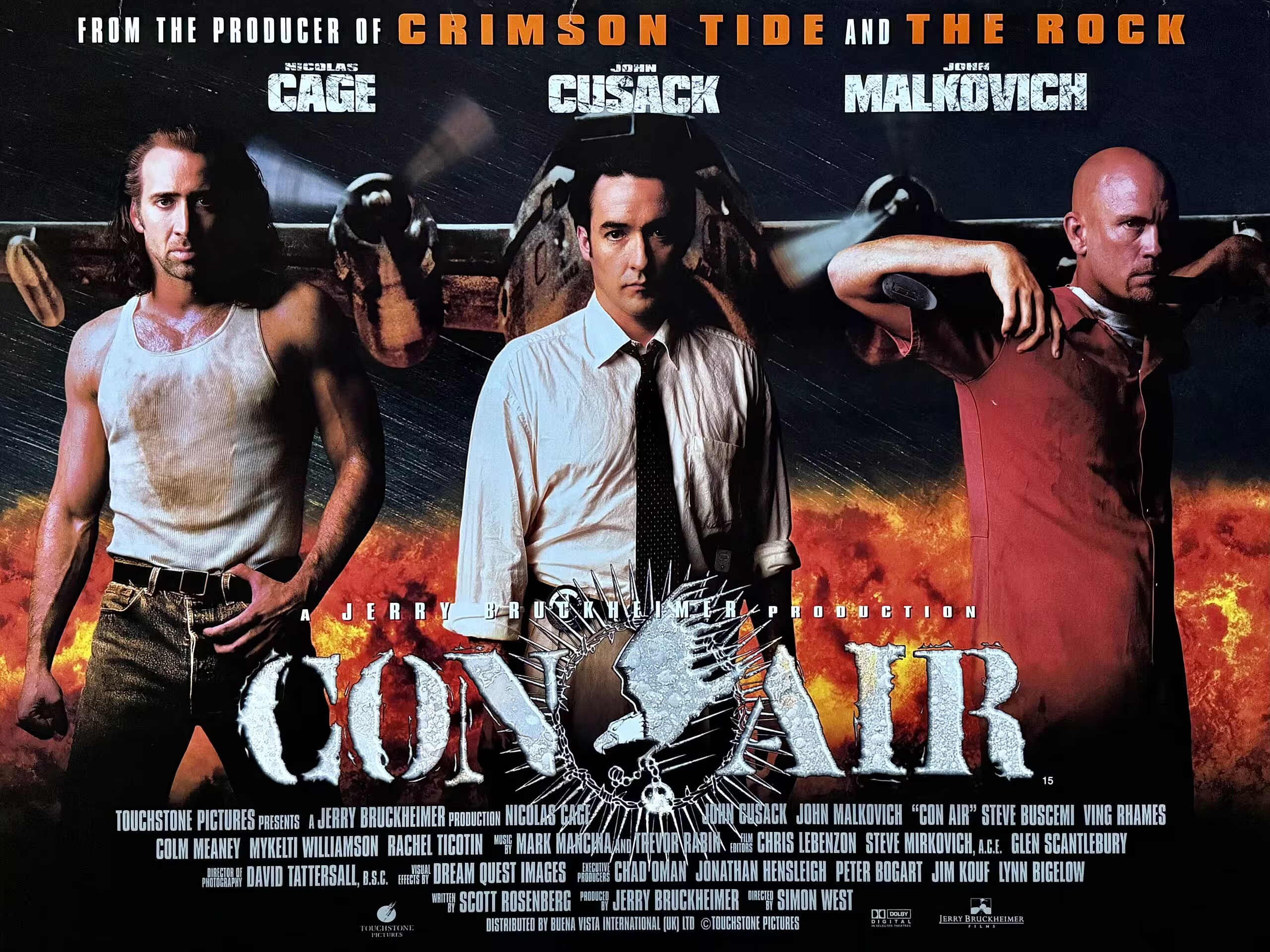
Few movies announce their intentions as clearly as Con Air.
A prisoner transport aircraft full of dangerous criminals is hijacked, leaving Nicolas Cage’s Cameron Poe trapped aboard while authorities scramble to stop the plane.
That premise alone is enough to support an action movie.
What makes Con Air so memorable is the collection of personalities packed inside the aircraft.
John Malkovich brings intimidating intelligence to Cyrus “The Virus” Grissom, while Steve Buscemi creates an entirely different kind of unease. Ving Rhames and Danny Trejo add to an ensemble designed to make the plane feel less like transportation and more like a pressure cooker waiting to explode.
Cage’s Poe works because he is comparatively grounded. He wants to survive, protect innocent people and finally get home.
The movie is loud and exaggerated, but it understands exactly what kind of entertainment it wants to provide.
That confidence has aged surprisingly well.
6. The Rock
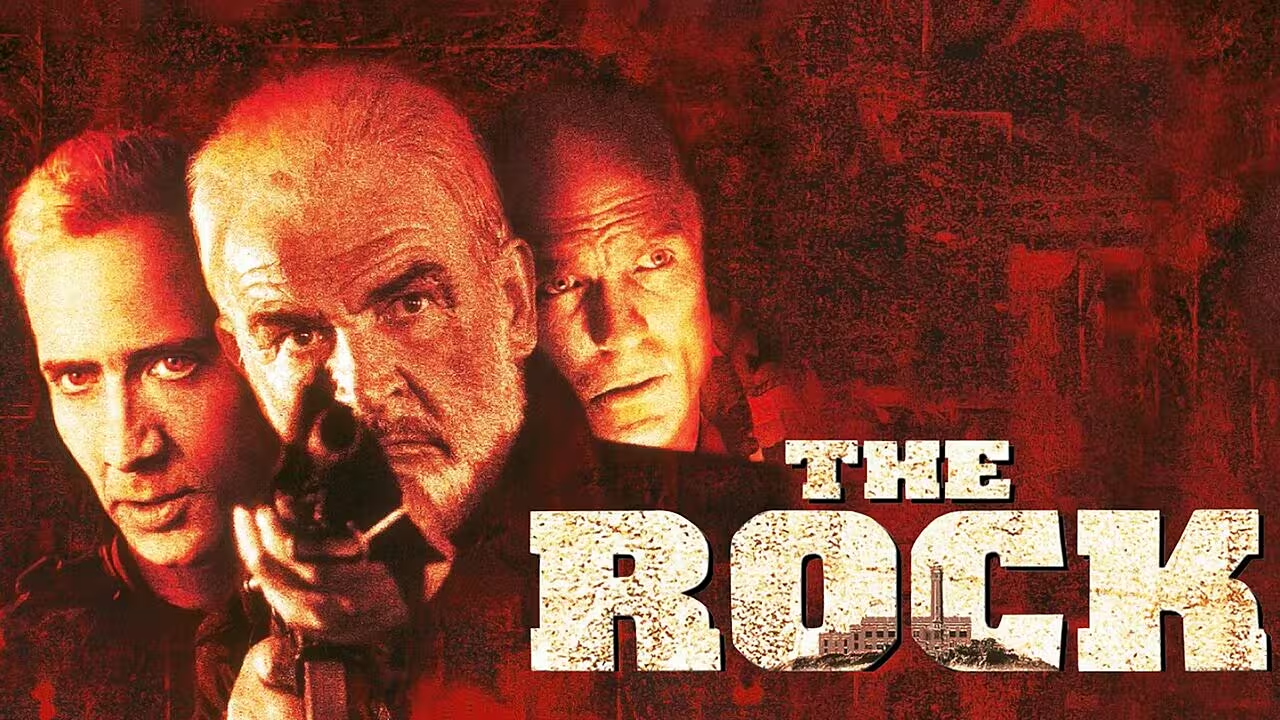
Before Michael Bay became synonymous with enormous explosions and blockbuster excess, The Rock showed how effective his style could be when paired with a tight premise and an unusually strong cast.
A group of rogue military men seize Alcatraz and threaten San Francisco with chemical weapons.
Stopping them requires an unlikely partnership.
Nicolas Cage plays chemical-weapons specialist Stanley Goodspeed, while Sean Connery is John Mason, a mysterious prisoner with intimate knowledge of Alcatraz.
Their contrast becomes much of the fun.
Goodspeed is nervous and intellectually equipped for the mission but hardly a conventional action hero. Mason carries himself like a man who has already survived several lifetimes of dangerous situations.
Then there is Ed Harris as General Hummel.
Rather than portraying him as a simple monster, the film gives him motivations that make the conflict more complicated. He is dangerous, but his anger grows from a grievance he believes has been ignored.
Add practical-looking action, sharp dialogue and Bay’s energetic visual style, and The Rock remains one of the decade’s easiest action films to revisit.
5. Face/Off
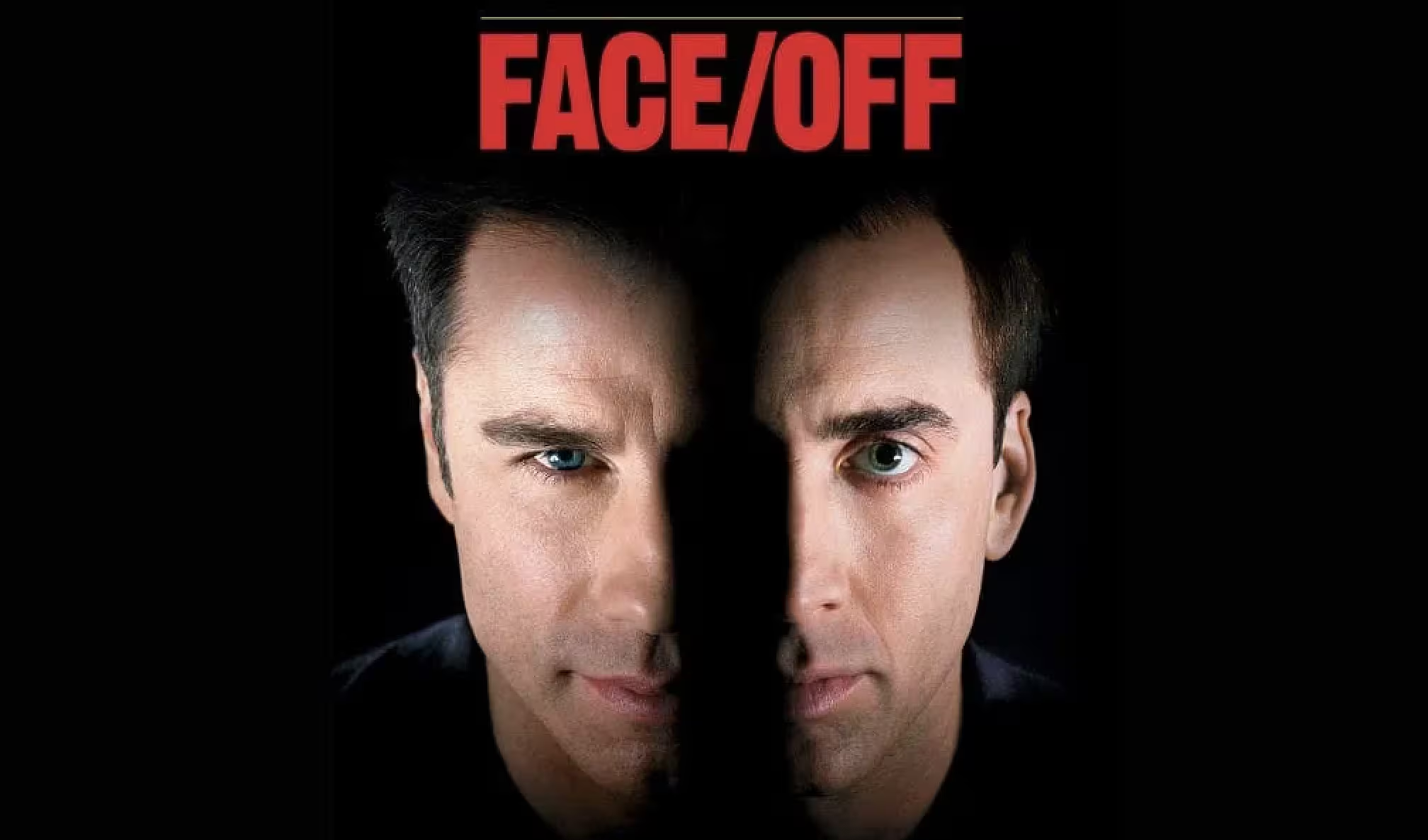
The premise should be ridiculous.
That is precisely why Face/Off works.
John Travolta plays FBI agent Sean Archer. Nicolas Cage plays terrorist Castor Troy. Through experimental surgery, the two men effectively exchange faces, forcing each actor to play not only his original character but a version of the other man pretending to be him.
Director John Woo refuses to approach the concept cautiously.
Everything is heightened.
The gunfights are bigger. The emotions are more intense. The characters stare at each other with operatic hatred. Cage and Travolta are given permission to push their performances far beyond ordinary realism.
Instead of collapsing under the absurdity, the movie embraces it.
The identity swap also gives the central rivalry an unusual psychological dimension. Archer does not merely have to stop his enemy. He has to watch that enemy wear his face, enter his life and interact with his family.
Very few action movies would attempt something this strange today without trying to make it ironic.
Face/Off believes in its madness completely.
That is why it remains so much fun.
4. The Silence of the Lambs

Many movie villains need violence to establish their threat.
Anthony Hopkins’ Hannibal Lecter barely needs to move.
In The Silence of the Lambs, young FBI trainee Clarice Starling, played by Jodie Foster, is sent to speak with the imprisoned killer in hopes that his understanding of criminal psychology can help investigators pursue another murderer.
The conversations between Clarice and Lecter become the film’s most unforgettable confrontations.
Lecter watches.
He listens.
Then he finds the most vulnerable part of the person standing across from him.
Hopkins’ controlled performance gives the impression that Lecter is constantly several moves ahead, even when he is physically confined.
Foster gives the movie its emotional center. Clarice needs his help but understands that every conversation gives Lecter another opportunity to examine her.
The result is more than a serial-killer thriller.
It is a psychological contest between two remarkably intelligent characters, and that tension remains potent no matter how many times the movie has been watched.
3. Fargo

Jerry Lundegaard believes he has a clever plan.
It is anything but.
William H. Macy’s desperate car salesman arranges for two criminals to kidnap his wife, hoping to manipulate his wealthy father-in-law into paying a ransom.
Then virtually everything goes wrong.
That disastrous scheme becomes the foundation of Fargo, the Coen brothers’ strange mixture of crime, violence and extraordinarily dry comedy.
The film keeps expanding beyond Jerry, introducing a collection of characters whose lives collide because of one increasingly uncontrollable decision.
What makes Fargo endure is its tonal balance.
It can be unsettling and funny almost simultaneously.
The snowy landscape feels beautiful and empty, creating an unusual visual backdrop for a story in which greed produces progressively worse consequences.
Rather than behaving like a traditional crime thriller, Fargo finds absurdity inside human desperation.
Its characters make terrible decisions, then make even worse ones while trying to repair the damage.
That remains painfully recognizable — and endlessly watchable.
2. Fight Club
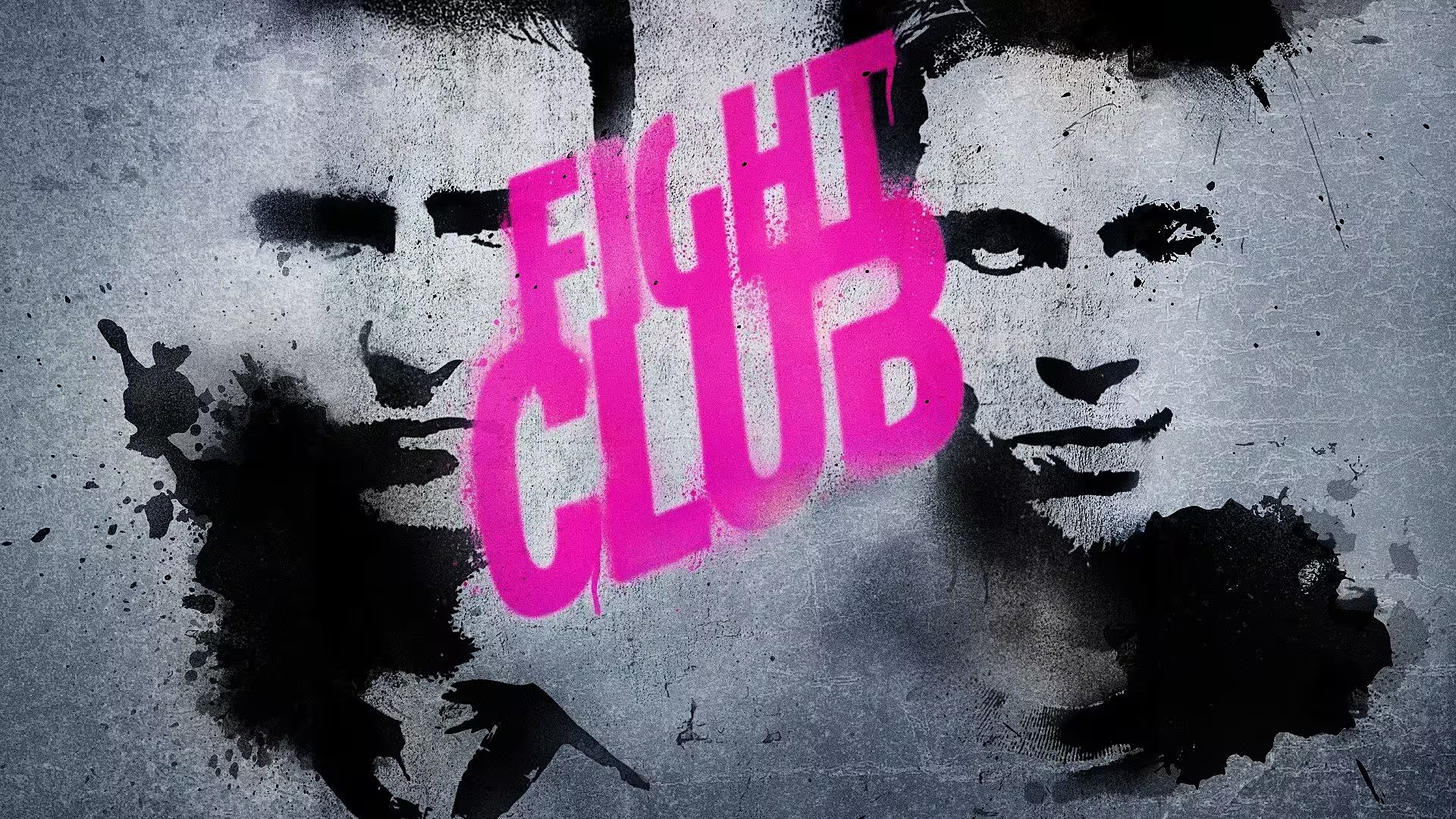
David Fincher’s Fight Club arrived near the end of the decade and almost immediately seemed designed to provoke arguments.
Edward Norton plays an unnamed narrator exhausted by his repetitive existence and consumer-driven lifestyle.
Then he meets Tyler Durden.
Played by Brad Pitt, Tyler is confident, rebellious and apparently everything the narrator is not.
What begins with underground fights eventually expands into something far more dangerous as Tyler’s philosophy attracts followers and turns into organized anarchy.
The movie’s visual energy is unmistakably Fincher, but its longevity comes from the questions underneath the violence.
How much of identity is built from possessions?
Why does comfort fail to make some people happy?
What happens when frustration finds a charismatic person willing to give it direction?
The film’s ideas are intentionally confrontational, and viewers have spent years arguing over exactly what it endorses and what it condemns.
That debate has helped Fight Club remain culturally alive rather than becoming merely another stylish late-’90s thriller.
And then there is the twist.
Even when you know it, rewatching the movie becomes an entirely different experience.
1. The Matrix
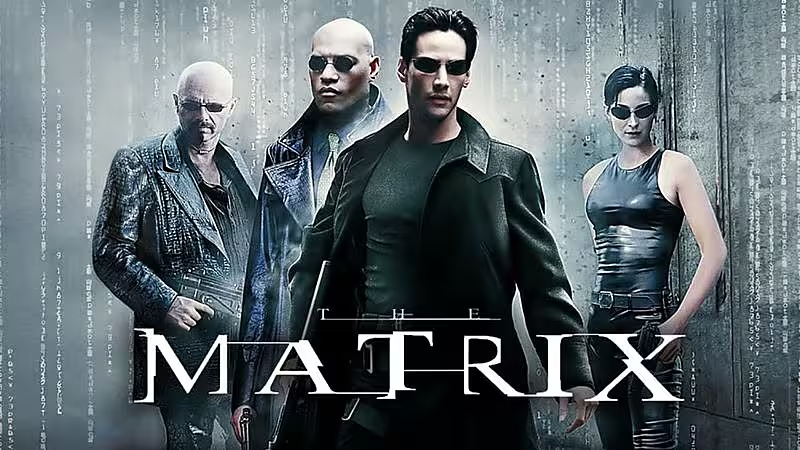
Then, in 1999, The Matrix asked a question that turned everyday reality into something suspicious.
What if the world you experience is not the real world at all?
Keanu Reeves plays Neo, a computer hacker who learns that humanity has been trapped inside a simulated reality while machines control the physical world.
From that premise, the Wachowskis created an extraordinary combination of philosophy, cyberpunk science fiction and martial-arts action.
The movie introduced visual ideas that were rapidly imitated, but its influence goes deeper than slow-motion gunfire or impossible leaps between buildings.
The Matrix made questions about technology, surveillance, control and artificial intelligence feel personal.
Neo is not simply trying to defeat a villain.
He is trying to understand the nature of the world itself.
Hugo Weaving’s Agent Smith gives that world a chilling enforcer, while Laurence Fishburne’s Morpheus offers Neo the possibility that everything he believes can be rewritten.
More than two decades later, many of the film’s central anxieties feel more immediate rather than less.
That is why The Matrix earns the top position.
The action still works. The imagery remains iconic. But the question underneath everything is what keeps pulling viewers back:
How certain are you that the reality you accept is the whole truth?
That is the secret shared by all seven movies.
Con Air and The Rock deliver blockbuster thrills without embarrassment. Face/Off turns an absurd concept into operatic action. Fargo finds comedy inside catastrophe. The Silence of the Lambs makes conversation terrifying. Fight Club invites debate long after its final scene.
And The Matrix still makes audiences look at the world around them a little differently.
Nostalgia may bring viewers back to these movies.
Quality is what keeps them there.