Elizabeth Olsen Grew Up With a Famous Last Name — Then Built a Marvel Career on Her Own Terms
Long before millions of moviegoers knew Elizabeth Olsen as Wanda Maximoff, her last name already meant something in Hollywood.
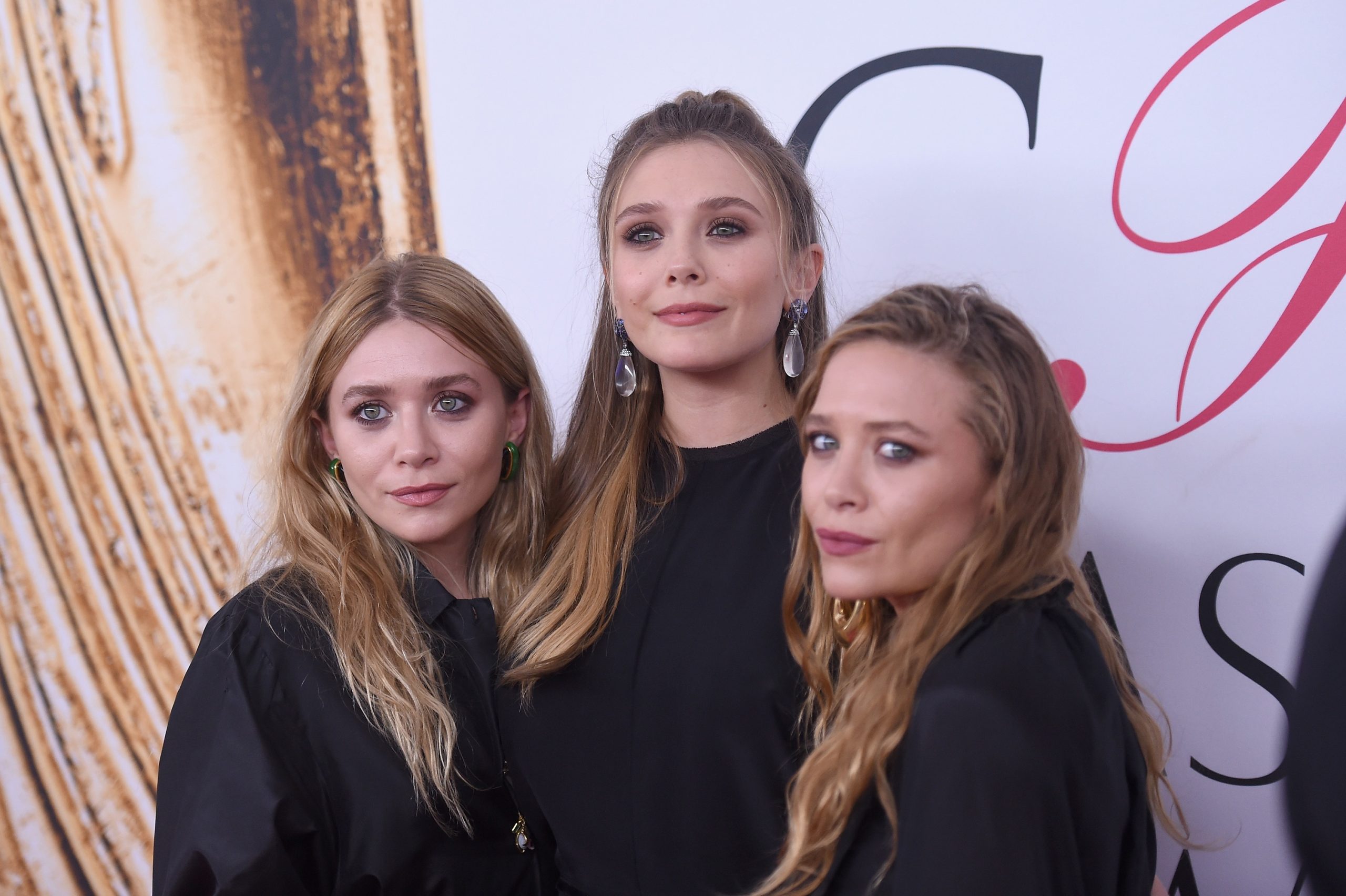
Her older sisters, twins Mary-Kate and Ashley Olsen, had been famous since infancy, sharing the role of Michelle Tanner on Full House before becoming two of the most recognizable child stars of the 1990s. By the time Elizabeth was old enough to think seriously about acting, she had already seen a version of celebrity that most aspiring performers could barely imagine.
And for a while, it made her wonder whether she wanted that life at all.
Instead of racing toward the opportunities that might have come with being an Olsen, Elizabeth took a slower route. She stepped away from childhood auditions, studied the craft seriously, disappeared into theater training and independent film, and eventually arrived in the Marvel Cinematic Universe with a career that looked very different from the one her sisters had built.
The irony is that the little sister who once worried about being defined by a famous family name would eventually become one of the most recognizable faces in the biggest film franchise of her generation.
Growing Up Close to Fame — and Seeing Its Cost
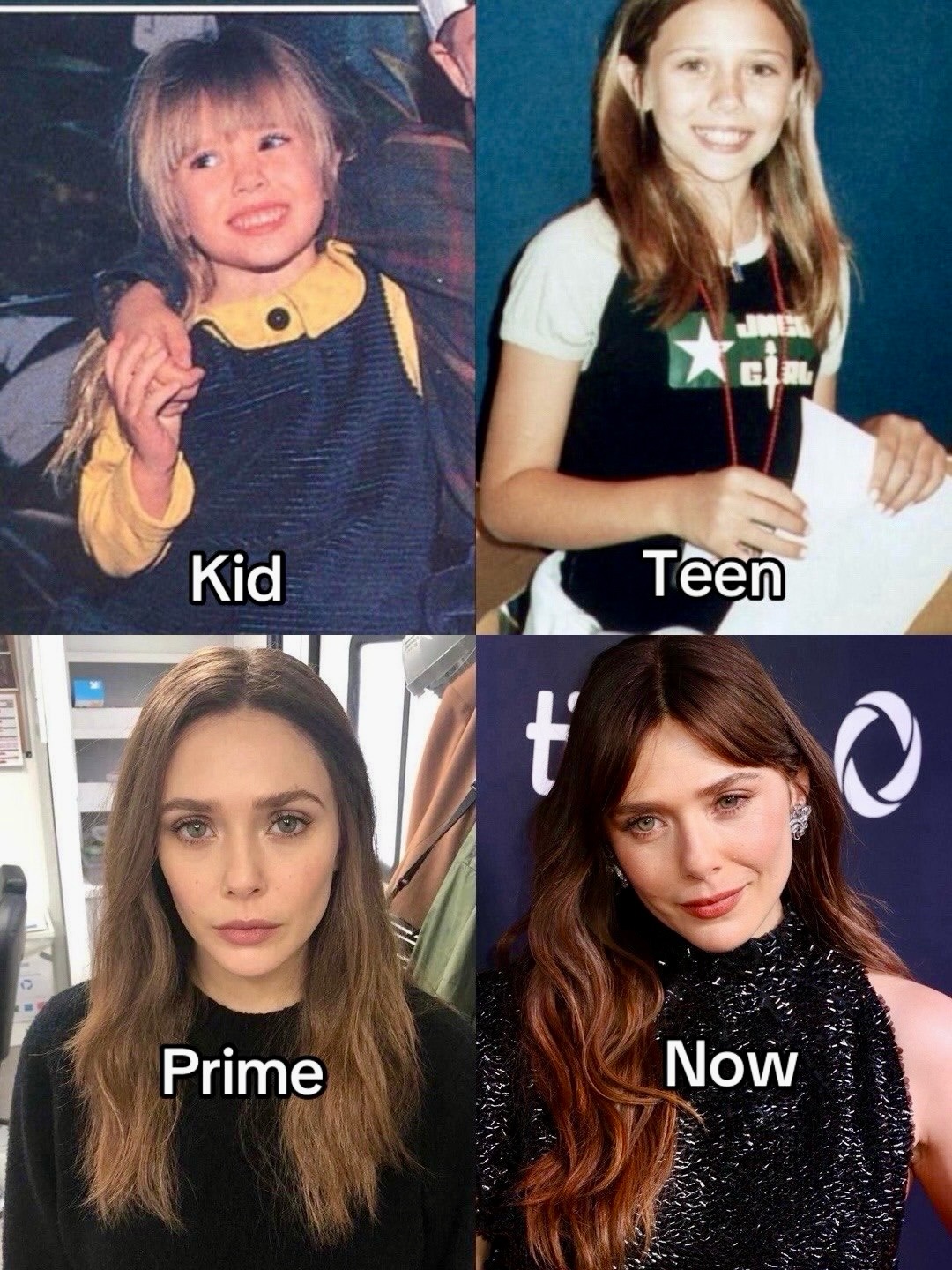
Born in California in 1989, Elizabeth was three years younger than Mary-Kate and Ashley. Her sisters had already begun appearing on Full House as babies, and their fame grew dramatically during Elizabeth’s childhood.
She occasionally appeared in projects connected to them when she was young, but acting was hardly an inevitable path.
Elizabeth has recalled being frightened by the paparazzi attention surrounding her sisters. As a child, she saw photographers following them and experienced the disruption that enormous fame could bring to ordinary family life.
She also loved ballet. When auditions began interfering with her dance classes, her father encouraged her to make a list of the advantages and disadvantages of pursuing acting. Ballet won.
By her early teens, Elizabeth was imagining a future far removed from movie sets. She has said she considered becoming an accountant or working on Wall Street, partly because wanting to become an actress felt almost embarrassing when acting was already so closely associated with her family.
The famous surname did not disappear, however.
It became something she had to decide how to carry.
She Wanted Training Before Fame
When Elizabeth eventually committed to acting, she approached it almost like an academic discipline.
She attended New York University’s Tisch School of the Arts, trained at the Atlantic Theater Company and spent time studying at the Moscow Art Theatre School in Russia. Rather than going directly from Hollywood childhood to Hollywood adulthood, she deliberately built years of formal training into the middle.
She has since acknowledged that nepotism exists and that she has always been aware that her family connections could affect how people viewed her opportunities. That awareness appears to have influenced how determined she was to establish herself through training and auditions rather than simply relying on the Olsen name.
In a later interview, she described studying acting as a way of legitimizing the profession for herself. She wanted it to feel like a discipline — something she had worked to learn rather than something she had inherited.
The distinction would become crucial when her breakthrough finally came.

The Movie That Changed How Hollywood Saw Her
Elizabeth Olsen did not introduce herself to adult audiences with a glossy studio vehicle built around her famous surname.
She arrived with Martha Marcy May Marlene.
The 2011 independent psychological drama cast Olsen as Martha, a young woman attempting to rebuild her life after escaping an abusive cult. The performance required her to convey fear, confusion and psychological instability while much of the character’s trauma remained beneath the surface.
When the film screened at the Sundance Film Festival, Olsen became one of its breakout performers. At 21, she was suddenly attracting serious attention not because she was Mary-Kate and Ashley’s younger sister, but because critics saw an actress capable of carrying a difficult film.
The significance of that moment is easy to miss now.
Before the red energy, superhero costumes and billion-dollar Avengers movies, Olsen’s professional identity was being formed in independent cinema.
She followed the breakthrough with roles across different genres, including Silent House, Liberal Arts and eventually the 2014 blockbuster Godzilla. Her career was expanding steadily.
Then another opportunity changed its scale completely.

Marvel Turned Wanda Into a Decade-Long Journey
Olsen first appeared as Wanda Maximoff in the mid-credits sequence of Captain America: The Winter Soldier in 2014 before taking a major role in 2015’s Avengers: Age of Ultron.
At first, Wanda was one character inside an enormous ensemble.
That would not remain true for long.
Through Captain America: Civil War, Avengers: Infinity War and Avengers: Endgame, Wanda’s story accumulated loss after loss. Her twin brother Pietro died. Her relationship with Vision became central to her life. Then she was forced to destroy Vision herself in an attempt to stop Thanos — only to watch Thanos reverse the moment and kill him again.
Those experiences eventually became the emotional foundation of WandaVision.
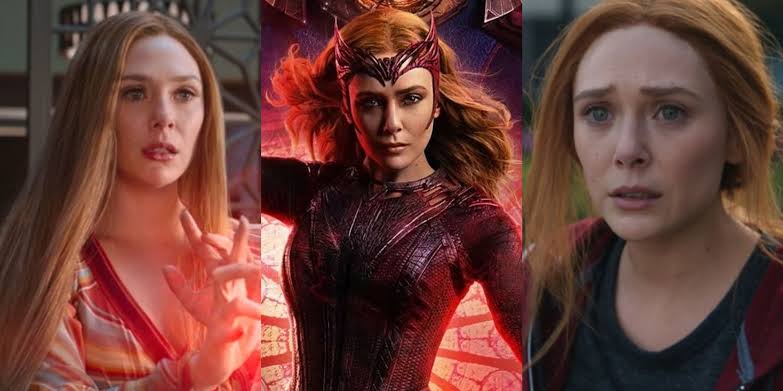
Released in 2021, the Disney+ series placed Olsen at the center rather than the edge of the MCU. Its unusual structure moved through different eras of American sitcom television while gradually revealing a story about grief, denial and Wanda’s attempt to construct an impossible domestic life with Vision.
The performance brought Olsen an Emmy nomination for Outstanding Lead Actress in a Limited or Anthology Series or Movie. WandaVision itself received 23 Emmy nominations.
The actress who had once broken through at Sundance playing a psychologically damaged young woman had found an unexpectedly similar emotional challenge inside a superhero franchise.

Scarlet Witch Made Her Famous — But It Didn’t Become Her Entire Career
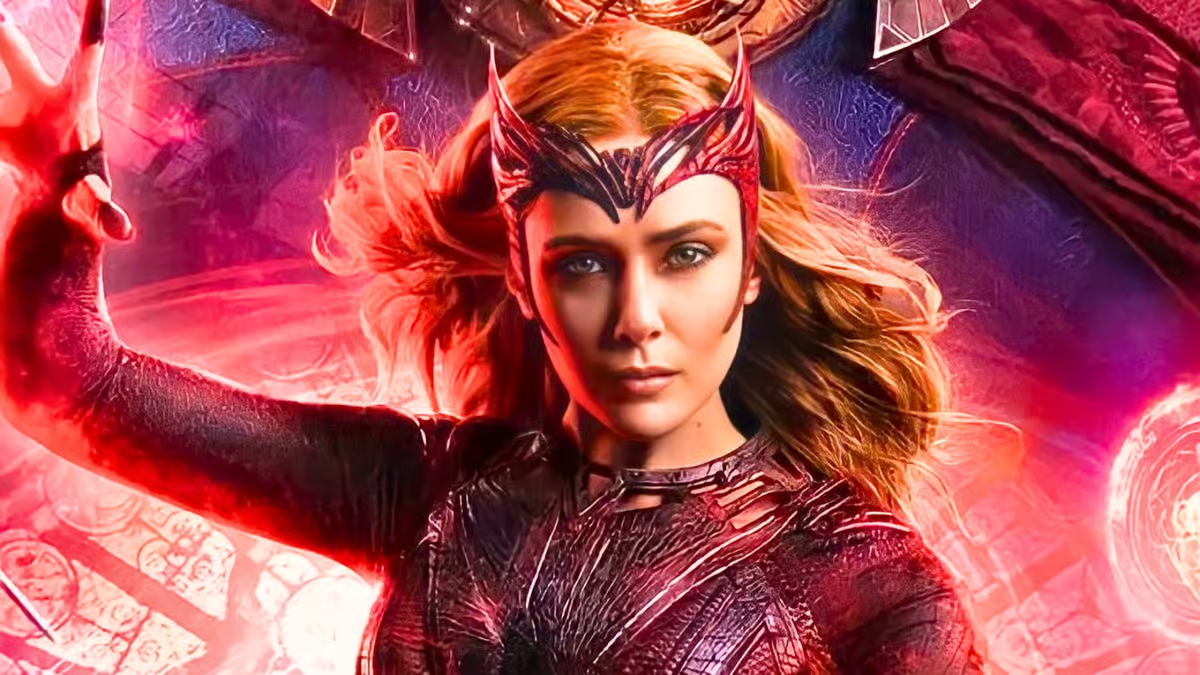
Olsen returned as Wanda in 2022’s Doctor Strange in the Multiverse of Madness, where the character’s grief and obsession took a far darker turn.
By then, Scarlet Witch had become inseparable from Olsen’s public identity.
But she continued choosing projects far removed from Marvel.
She starred in the Facebook Watch drama Sorry for Your Loss, played Candy Montgomery in HBO’s Love & Death, appeared alongside Carrie Coon and Natasha Lyonne in His Three Daughters, and returned to science fiction with The Assessment. In 2025, she starred opposite Miles Teller and Callum Turner in the afterlife romantic comedy Eternity.
Olsen has described joining Marvel as an important business decision, while also emphasizing that the smaller projects she chooses outside the franchise reveal another side of what interests her creatively.
That balance may explain why her career has resisted a simple transformation from “indie actress” into “superhero star.”
She became both.
The Olsen Name Means Something Different Now
Elizabeth Olsen has never pretended that she came into Hollywood without advantages.
Her sisters were famous before she entered elementary school. Their success made the Olsen surname internationally recognizable, and she has openly acknowledged the reality of nepotism.
But having an advantage and building a career are not the same thing.
What distinguishes her story is what happened after the door was visible.
She trained. She auditioned. She broke through in an unsettling independent drama rather than a family production. She spent years moving between intimate character studies and enormous studio films. Then, when Marvel finally gave Wanda Maximoff room to become more than another Avenger, Olsen delivered the performance that turned Scarlet Witch into one of the MCU’s most emotionally complicated characters.
More than a decade after Martha Marcy May Marlene, she still moves between those two worlds.
The little girl who once watched fame surround her family ultimately chose acting anyway — but she chose to approach it differently.
Today, Elizabeth Olsen does not need an introduction as someone’s younger sister.
For an entire generation of viewers, the Olsen they immediately recognize is Wanda Maximoff.