New DNA Study on Shroud of Turin Sparks Fresh Mystery — And Vatican Is Taking Notice

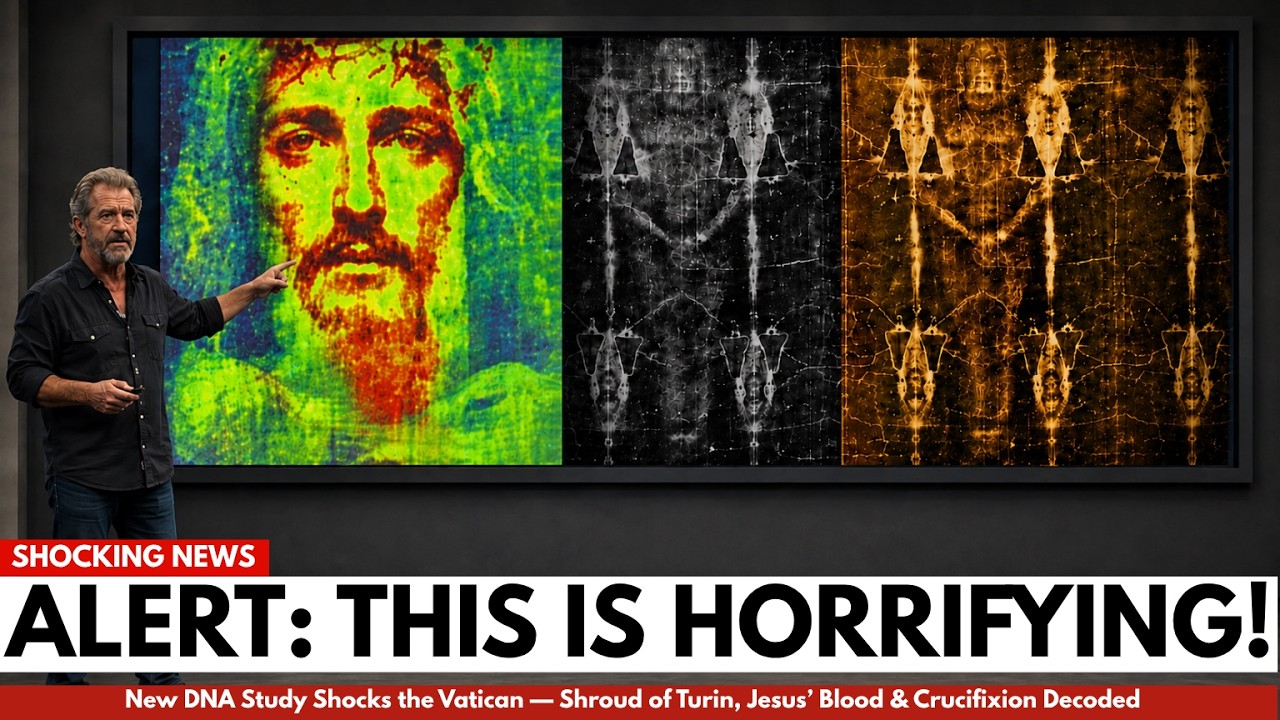
A centuries-old religious mystery has suddenly been thrust back into the spotlight after new DNA research uncovered surprising clues about the Shroud of Turin.
For generations, believers and skeptics have battled over one question: Is the mysterious cloth kept in Turin actually connected to the burial of Jesus Christ — or is it a medieval relic?
Now, scientists examining DNA traces found on the famous shroud say their findings may offer a new piece of the puzzle.
The research suggests that the cloth likely passed through the Middle East during its long and complicated history, while also carrying genetic traces connected to people from several different parts of the world.
But there is a catch.
The DNA evidence does not prove that the man depicted on the cloth was Jesus.
Instead, researchers say it provides clues about where the mysterious artifact may have traveled and the people who came into contact with it over the centuries.
One DNA finding has raised eyebrows
The latest findings build on research published in 2015 by geneticist Gianni Barcaccia of the University of Padua and colleagues.
That earlier analysis found that more than 55.6% of the human DNA traces corresponded to Near Eastern lineages, while Western European lineages represented less than 5.6%.
Perhaps the most unexpected finding was that approximately 38.7% of the genetic material was associated with Indian lineages.
Researchers say the Indian genetic traces could potentially be explained by centuries of historical contact and ancient textile trade.
One possibility involves linen or yarn originating from regions near the Indus Valley and subsequently making its way into the Mediterranean world.
That possibility has opened an entirely new chapter in the debate surrounding the shroud.
Was the mysterious cloth connected to the Middle East?

The latest research identified genetic lineages associated with the Near East, including haplogroup H33, which researchers say is prevalent in the region and particularly frequent among Druze populations.
Scientists say these findings are consistent with the possibility that the cloth spent part of its history in the Middle East.
But researchers are careful not to make the leap from “the cloth was in the Middle East” to “the cloth belonged to Jesus.”
Those are two very different claims.
The DNA traces could have come from countless people who touched, handled, transported or otherwise came into contact with the fabric throughout its history.
And then there is the bizarre microorganism clue
The DNA isn’t the only thing researchers found intriguing.
The reconstructed microbiome of the Shroud reportedly contains microorganisms commonly associated with human skin, along with fungi and halophilic archaea — microorganisms capable of surviving in extremely salty environments.
That discovery has raised another tantalizing possibility.
Researchers say the presence of salt-loving microorganisms could indicate that the cloth was preserved or stored at some point in a high-salinity environment.
One possible location discussed in connection with the findings is the region around the Dead Sea.
If correct, that could add another geographical clue to the complicated journey of the artifact.
The India connection gets even more intriguing
Researchers have also explored whether ancient textile trade could explain the presence of Indian genetic material.
The study points to historical connections between India and the Mediterranean, including the movement of fine textiles and linen.
The researchers noted that the ancient Greek term “Sindôn,” associated with fine linen, has been discussed in connection with Sindh, a region historically known for textiles.
That does not establish that the Shroud was manufactured in India.
Instead, scientists say the evidence raises the possibility that some of the material — or people who came into contact with it — could have had connections to the region.
What does this mean for Jesus?
This is where the mystery remains unsolved.
The Shroud of Turin has long been one of Christianity’s most controversial relics.
The cloth bears a faint image of a man appearing to have suffered severe physical trauma, leading many believers to associate it with the crucifixion of Jesus.
But its authenticity has never been universally accepted.
The new DNA research does not establish the identity of the person whose image appears on the cloth.
Nor does it independently prove that the Shroud dates to the first century.
Instead, the researchers’ findings point toward a complicated history involving contact with people from different geographic regions and possible exposure to environments in the Middle East.
That distinction is crucial.
The Vatican weighs in
The findings have nevertheless attracted attention from the Catholic Church.
Vatican News described the research as evidence suggesting that the Shroud passed through the Middle East, highlighting the Near Eastern genetic material and microorganisms associated with highly saline environments.
For believers, the findings may appear to fit part of the traditional story surrounding the relic.
For skeptics, however, the same evidence can be interpreted differently: a centuries-old piece of cloth displayed to thousands of people could naturally accumulate DNA from numerous populations over time.
And that is precisely why the debate is unlikely to end here.
The mystery is far from solved
The Shroud of Turin remains caught between faith, history and science.
The latest DNA research adds another intriguing piece to that puzzle — evidence suggesting the cloth had contact with populations from the Near East and potentially India, while also showing signs of exposure to a saline environment.
But one question remains stubbornly unanswered:
Whose image is actually on the cloth?
For now, science cannot provide a definitive answer.
And that unresolved mystery may be exactly why the Shroud of Turin continues to fascinate the world centuries after it first became one of Christianity’s most controversial relics.
Source: feji.io