Johnny Cash Had Already Recorded “The Gambler” — Then Kenny Rogers Made It His Own
There are some songs so tightly connected to one singer that it is difficult to imagine anyone else touching them first.
“The Gambler” is one of those songs.
The opening guitar. The train ride. The mysterious gambler offering advice to a stranger. And, of course, the famous lesson about knowing when to hold on, when to walk away and when to run.
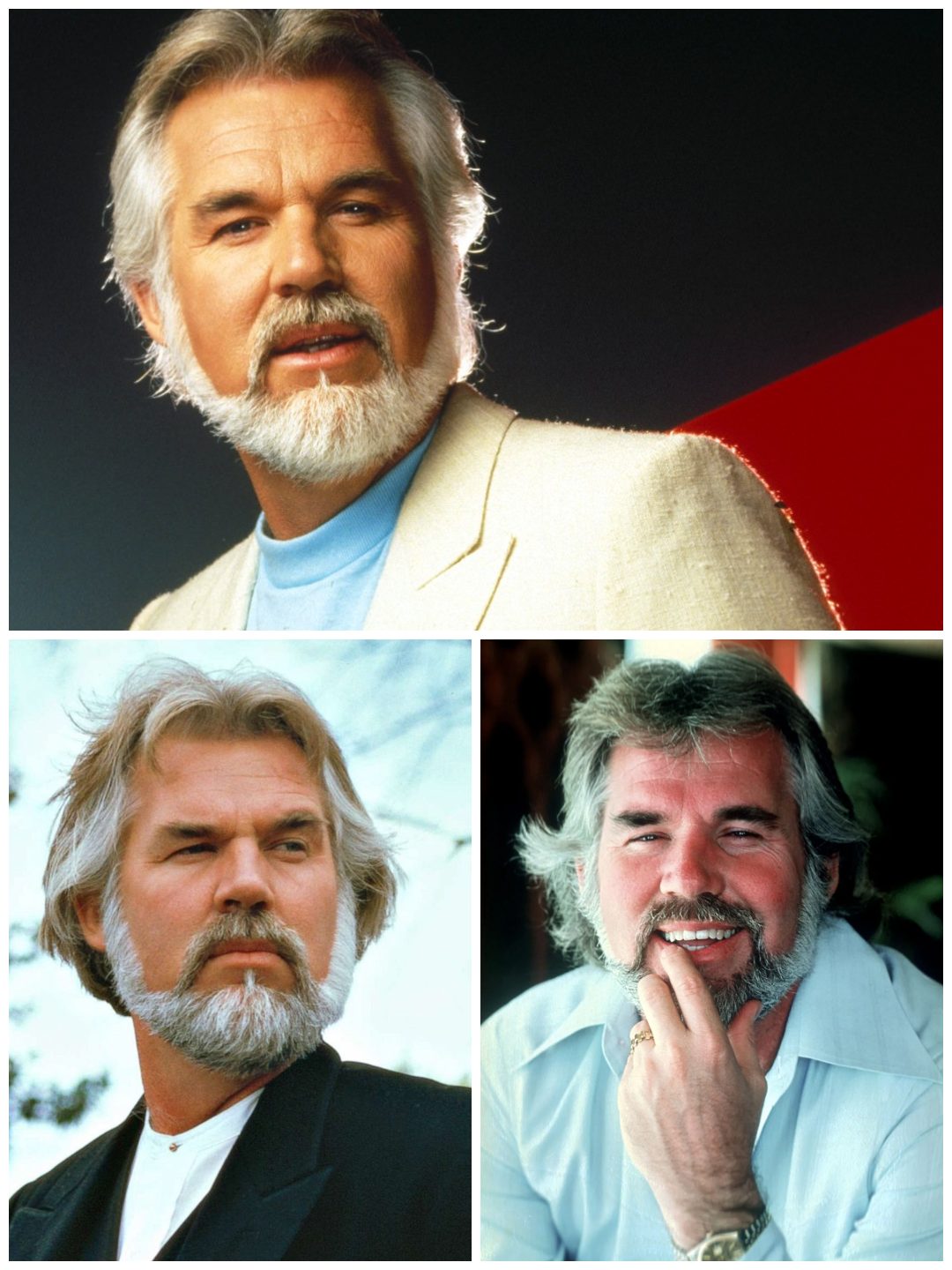
For millions of listeners, the song is Kenny Rogers.
It became one of the defining recordings of his career, gave him a nickname that followed him for decades and eventually inspired a series of television movies in which Rogers himself played the gambler.
But Kenny Rogers was not the first singer to record it.
He was not even the second.
Before Rogers transformed “The Gambler” into a country standard, Bobby Bare had recorded it.
Songwriter Don Schlitz had recorded his own version.
And then one of the biggest names in country music took a turn with it:
Johnny Cash.
That raises an irresistible question.
How did a song that had already been sung by the Man in Black end up becoming permanently associated with Kenny Rogers instead?
Don Schlitz Had a Great Song Nobody Seemed Able to Turn Into a Hit
The story began with songwriter Don Schlitz.
He wrote “The Gambler” in 1976, years before the song became a piece of country-music history.
Its strength was already there.
Rather than simply writing a catchy chorus, Schlitz created a complete miniature story.
The narrator meets an older gambler while both men are traveling on a train. The gambler studies him, offers advice and eventually delivers a philosophy that can apply to cards or almost anything else in life.
The imagery was simple enough to understand immediately.
The metaphor was much larger.
That combination should have made “The Gambler” an obvious hit.
Instead, Schlitz spent roughly two years watching the song struggle to find the right home.
A great composition does not automatically become a great record.
Sometimes the missing ingredient is timing.
Sometimes it is promotion.
And sometimes a song simply has not yet met the singer whose voice makes listeners believe it belongs to him.
“The Gambler” had to pass through several hands before that happened.
Bobby Bare Got There Before Kenny Rogers
Country singer Bobby Bare was among the first established artists to record the song.
Bare already had a respected career and was known for material that could be clever, narrative-driven and unconventional.
On paper, that made him a natural fit for Schlitz’s story.
But his recording did not turn “The Gambler” into the phenomenon it would later become.
That does not mean the song failed.
It meant its journey was still unfinished.
Schlitz himself also recorded the composition.
As the writer, he obviously understood exactly what the lyrics were trying to say.
Yet his version did not break through as a major hit either.
By this point, the situation could have become frustrating.
The song had been written.
It had been recorded.
People in Nashville had heard it.
But the enormous potential later audiences would recognize had not yet been unlocked.
Then Johnny Cash recorded it.
Even Johnny Cash Didn’t Claim the Song
Today, Johnny Cash performing “The Gambler” sounds almost inevitable.
The entire song seems built for him.
A nighttime train.
A weathered stranger.
Gambling.
Hard-earned wisdom.
Death waiting quietly at the end of the story.
Those were exactly the kinds of images Cash could make convincing.
And he did record the song.
That fact alone surprises many listeners because “The Gambler” is so deeply identified with Rogers that Cash’s connection feels like an alternate history.
Imagine if Cash’s recording had become the major hit.
The gambler might have become another figure inside the Man in Black mythology.
Perhaps generations would hear the song and automatically picture Cash instead.
But that did not happen.
Cash recorded it, yet his version did not become the definitive one.
The song was still waiting for its moment.
Then Kenny Rogers heard it.
Rogers Recognized What the Others Had Missed
By the late 1970s, Rogers was already moving into an enormously successful phase of his solo career.
He had a voice made for storytelling.
It was warm, weathered and conversational.
He did not have to oversell a lyric.
He could sound like someone sitting across the table telling you something that had really happened.
That quality was perfect for “The Gambler.”
Rogers recorded the song in 1978 with producer Larry Butler.
This time, everything connected.
The arrangement gave the story room to breathe.
Rogers delivered the verses without sounding as though he were performing a dramatic monologue.
He sounded as though he remembered the train ride.
When the chorus arrived, the advice felt less like a songwriting hook and more like something worth remembering.
The same words that had existed for years suddenly felt inseparable from the singer delivering them.
And audiences responded.
“The Gambler” Became Bigger Than a Hit Single
Rogers’ recording reached No. 1 on the country chart and became one of the signature songs of his career.
But the impact went far beyond chart position.
“The Gambler” altered Kenny Rogers’ public identity.
People began calling him “The Gambler.”
The character from the song became associated with Rogers himself.
The success eventually led to the 1980 television movie Kenny Rogers as The Gambler, with Rogers playing Brady Hawkes.
The movie was successful enough to produce sequels, extending one three-minute country song into an entire screen franchise.
Few recordings become that closely tied to a performer.
Rogers already had major songs and would have many more.
But “The Gambler” became shorthand for Kenny Rogers.
That is extraordinary considering how many people had already touched it.
Why Did Rogers’ Version Win?
There is no mathematical answer.
Johnny Cash was certainly capable of singing story songs.
Bobby Bare was a respected interpreter.
Schlitz himself knew the composition better than anyone.
But sometimes the definitive version of a song comes from a combination of performer, production and timing that cannot be planned.
Rogers arrived at exactly the right moment.
His career was expanding beyond traditional country audiences.
His voice had enough roughness to make the gambler believable but enough warmth to make the advice comforting.
Most importantly, he did not seem separate from the story.
He disappeared into it.
Listeners were not thinking about Don Schlitz’s long struggle to place the song.
They were not thinking about earlier recordings.
They were listening to Kenny Rogers tell them about a night on a train.
That was enough.
The Song Ultimately Changed Both Men’s Careers
Rogers received one of the defining records of his life.
Schlitz finally received the breakthrough his song deserved.
“The Gambler” became one of the most celebrated compositions in country music and helped establish Schlitz as a major songwriter.
He would go on to write or co-write numerous country hits.
But none would become quite as universally recognizable as the song that had taken so long to find its singer.
That may be the greatest irony.
“The Gambler” did not succeed because nobody recognized its potential.
Plenty of talented people did.
It was recorded repeatedly.
Even Johnny Cash gave it a shot.
The difference was that Kenny Rogers made audiences stop hearing it as merely a good song.
They began hearing it as his song.
A Song Can Have Many Singers — But Only One Definitive Voice
Music history is filled with famous recordings that were not the first versions.
Sometimes an earlier performance disappears completely.
Sometimes it becomes a fascinating footnote.
“The Gambler” belongs in that second category.
Don Schlitz wrote it.
Bobby Bare recorded it.
Schlitz recorded it.
Johnny Cash recorded it.
Then Kenny Rogers stepped to the microphone.
After that, ownership changed in the only way that really matters to an audience.
Not legally.
Emotionally.
Rogers became the gambler.
The song gave him a nickname, television movies and one of the most recognizable moments of his career.
And decades later, many listeners remain surprised to discover that Johnny Cash had already sung the very same words.
Sometimes being first does not make a song yours.
Sometimes you have to be the singer who makes everyone forget there was ever another version.