Steven Spielberg Was Filming E.T. When 6-Year-Old Drew Barrymore Suddenly Said Something He Had to Keep
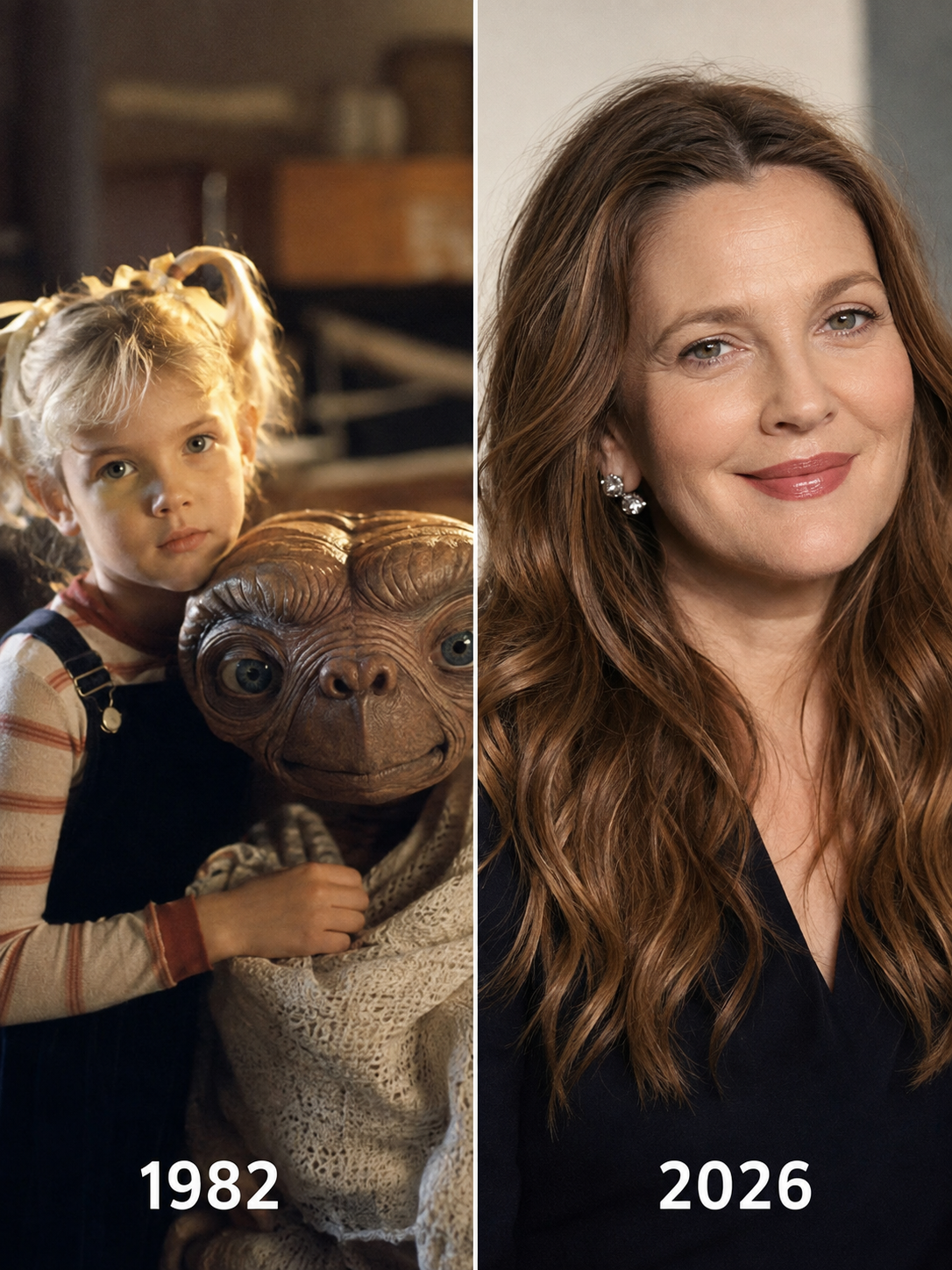
When Drew Barrymore appears in E.T. the Extra-Terrestrial, she does not feel like a tiny performer carefully delivering memorized lines.
She feels like a little girl who has genuinely discovered something impossible in her house.
As Gertie, the younger sister of Elliott, Barrymore stares at E.T., screams when she first encounters him, talks to him, dresses him up and gradually accepts the strange visitor as though having an alien in the family might simply be another childhood adventure.
Barrymore was only 6 years old while making Steven Spielberg’s 1982 classic.
Yet Spielberg later recalled that she was not the kind of child actor who simply waited for an adult to tell her exactly what to do.
She talked. She reacted. She invented things.
And when one of those spontaneous reactions came out while the camera was rolling, Spielberg liked it enough to leave it in the movie.
Spielberg Knew Almost Immediately That Barrymore Was Different
Barrymore’s unpredictability had been obvious from the beginning.
Even during her audition, Spielberg remembered her behaving less like a nervous child trying to impress a famous director and more like someone who had arrived ready to have a conversation with him.
She began asking him questions.
In other words, the audition started turning into an interview in the opposite direction.
That confidence was part of what made her appealing for Gertie.
Spielberg did not need Gertie to feel overly polished. Elliott’s little sister had to behave like a believable child inside a story asking audiences to believe in something extraordinary.
Barrymore’s imagination helped.
She was not simply reciting dialogue about an alien creature.
She responded to the idea of E.T. with the unpredictable logic of a real 6-year-old.
Once filming began, Spielberg discovered that those reactions could sometimes be more useful than anything adults had planned in advance.
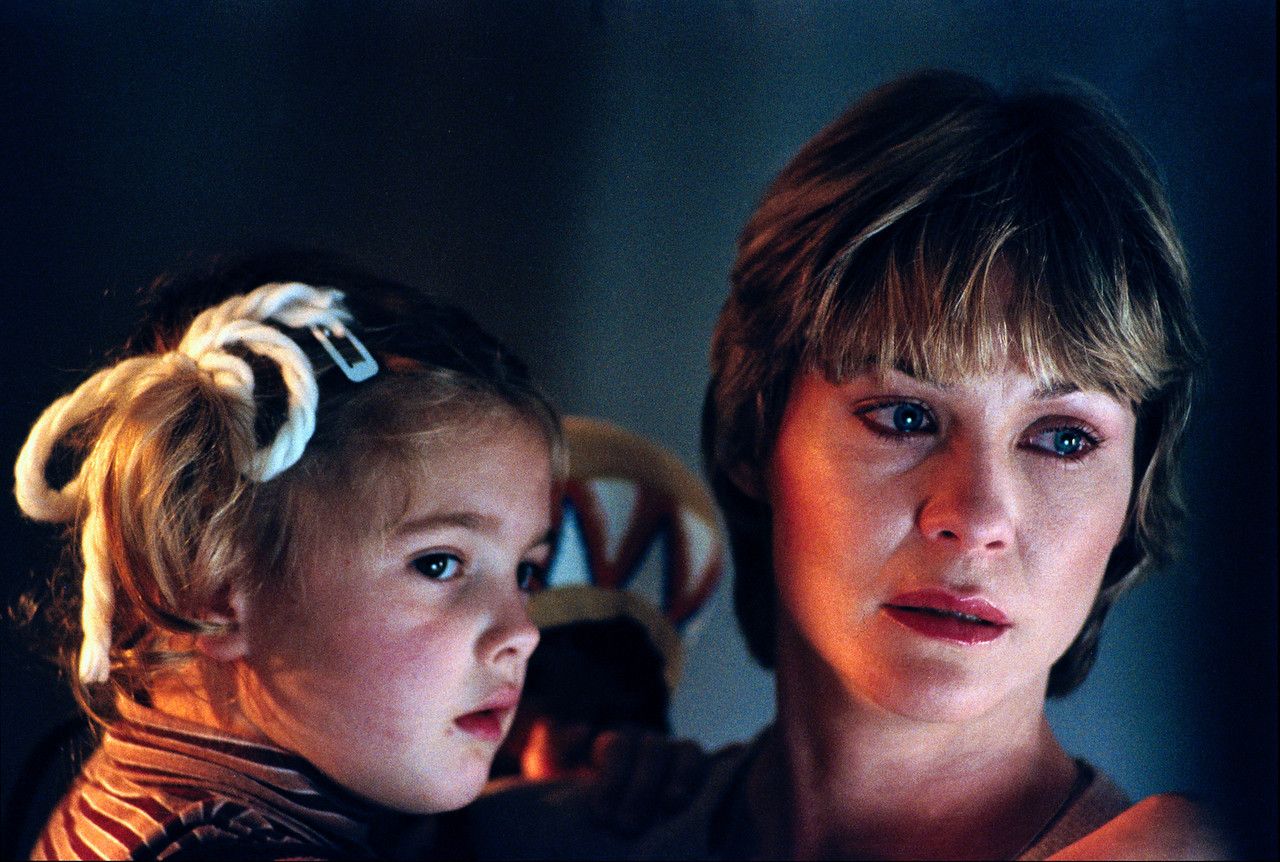
Spielberg Let His Young Cast Behave Like Children
That approach mattered throughout E.T.
The movie may contain spaceships, government agents and one of cinema’s most famous extraterrestrials, but much of its emotional power comes from how seriously Spielberg treats the children.
The story is largely experienced from their point of view.
Elliott does not encounter E.T. as a scientific discovery. He encounters him as a lonely creature who needs a friend.
Gertie does not analyze what E.T. is either.
She simply looks at him and reacts.
Spielberg gave his young actors room for those kinds of responses rather than forcing every moment into a rigid performance.
Barrymore took advantage of that freedom perhaps more naturally than anyone.
Decades later, Spielberg described her as “irrepressible” and said she created quite a bit of her own dialogue while they were filming.
One particular moment captured exactly why he valued that spontaneity.
Barrymore Looked at E.T. and Said, “I Don’t Like His Feet”
The answer to the mystery is wonderfully small.
While looking at E.T., Barrymore spontaneously said:
“I don’t like his feet.”
Spielberg kept it.
The line appears when Gertie is studying the strange creature, and it works because it sounds exactly like something a little kid might suddenly decide is the most important thing about meeting an alien.
Not the fact that extraterrestrial life exists.
Not how E.T. reached Earth.
Not whether anyone should call a scientist.
His feet.
Spielberg recalled in 2025 that Barrymore came up with a lot of dialogue herself, and that spontaneous material was valuable enough to survive into the finished movie.
The feet line had actually been remembered as an example of Barrymore’s improvisation long before that conversation. Production recollections surrounding the film also identify the remark as something that came directly from her rather than from the scripted dialogue.
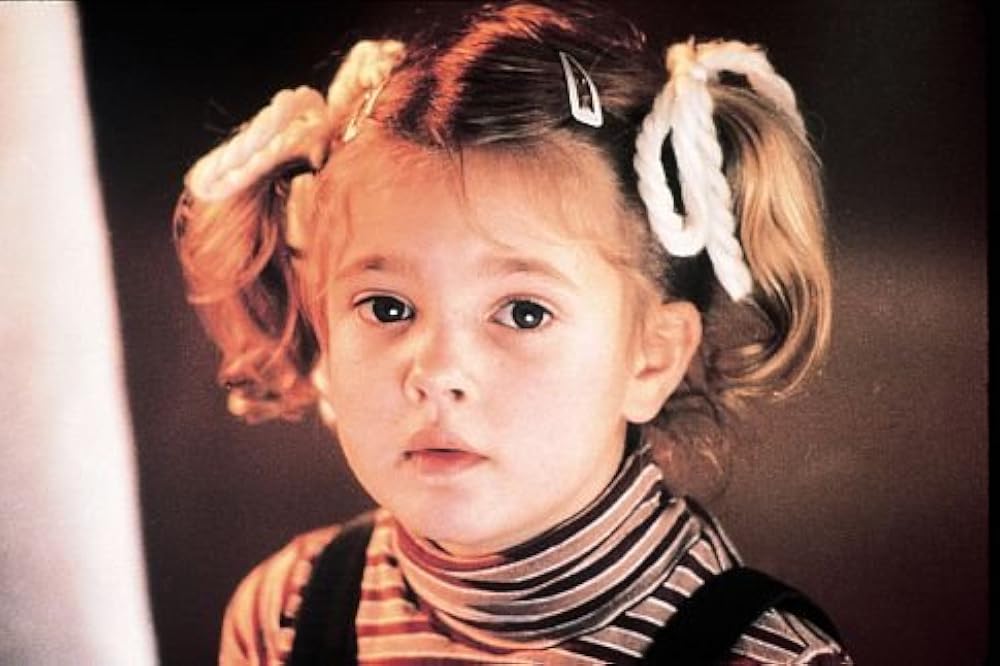
The Line Works Because It Sounds Nothing Like Movie Dialogue
There is no grand joke hidden inside “I don’t like his feet.”
That is why it is funny.
An adult screenwriter trying to create a cute child might have written something more obviously clever.
Barrymore simply reacted.
Gertie sees this wrinkled, unfamiliar creature standing in front of her, looks down and finds one particular feature objectionable.
Elliott dismisses her complaint almost immediately.
The exchange lasts only a few seconds.
But it gives Gertie something extremely difficult to manufacture: the feeling that she is thinking independently of the screenplay.
That quality appears throughout Barrymore’s performance.
Gertie does not seem aware she is participating in a science-fiction story destined to become one of the biggest movies in history.
She behaves like a child whose brother has brought home the strangest possible new friend.
For Spielberg, those unscripted reactions were not mistakes that had to be corrected.
They were material.
Even the Screenwriter Recognized What Barrymore Was Giving Them
Melissa Mathison’s screenplay already provided the emotional foundation of E.T., but Spielberg later remembered Barrymore’s spontaneous contributions making an impression on the adults around her.
When Barrymore said something unexpectedly useful, the filmmakers could recognize the difference between a child going off script and a child accidentally giving the scene something better.
That distinction requires a director willing to listen.
Spielberg could have stopped Barrymore and asked her to return precisely to the written dialogue.
Instead, when the reaction felt truthful, he used it.
That philosophy extended beyond one line.
Other recollections from the production describe the young actors being allowed to improvise in ways that kept scenes rooted in a child’s perspective.
It helped make E.T. unusual.
The children are not merely smaller characters functioning inside an adult adventure.
Their way of seeing the world becomes the movie’s language.
Barrymore’s Age Became an Advantage
At 6, Barrymore could not have approached Gertie with decades of acting technique.
But she had something the film needed more.
She could believe.
People who worked on E.T. have recalled just how seriously Barrymore sometimes treated the alien character while filming. That sense of imagination blurred the line between acting opposite a movie creation and responding as a child might respond to something she wanted to believe was alive.
Spielberg did not try to remove that quality.
He protected it.
That helps explain why Gertie remains so memorable despite being surrounded by larger elements of the story.
Elliott carries the emotional journey.
E.T. became the icon.
But Gertie repeatedly brings the movie back to the simple, funny honesty of childhood.
Barrymore’s improvised line about the feet is a perfect example.

More Than 40 Years Later, Spielberg Still Remembered It
By the time Spielberg and Barrymore discussed E.T. again in 2025, their lives looked very different.
Barrymore was no longer the unknown 6-year-old sitting in front of him. She had lived an entire Hollywood career after Gertie.
Spielberg had made decades of films after E.T., including some of the biggest movies ever released.
Yet he could still remember what the little girl brought to his set.
That is perhaps the best measure of the moment.
“I don’t like his feet” is not the line people quote when they summarize E.T. It is not “E.T. phone home.” It is not attached to the bicycle crossing the moon or the farewell that closes the film.
It is simply a small reaction from a 6-year-old looking at an alien.
But Spielberg recognized something real in it and kept the cameras rolling.
More than four decades later, that tiny piece of Drew Barrymore’s childhood imagination is still sitting inside E.T. — exactly where she left it.