Gloria Steinem Resisted Marriage for Decades — Then Married at 66 With Four Guests and 95-Cent Rings
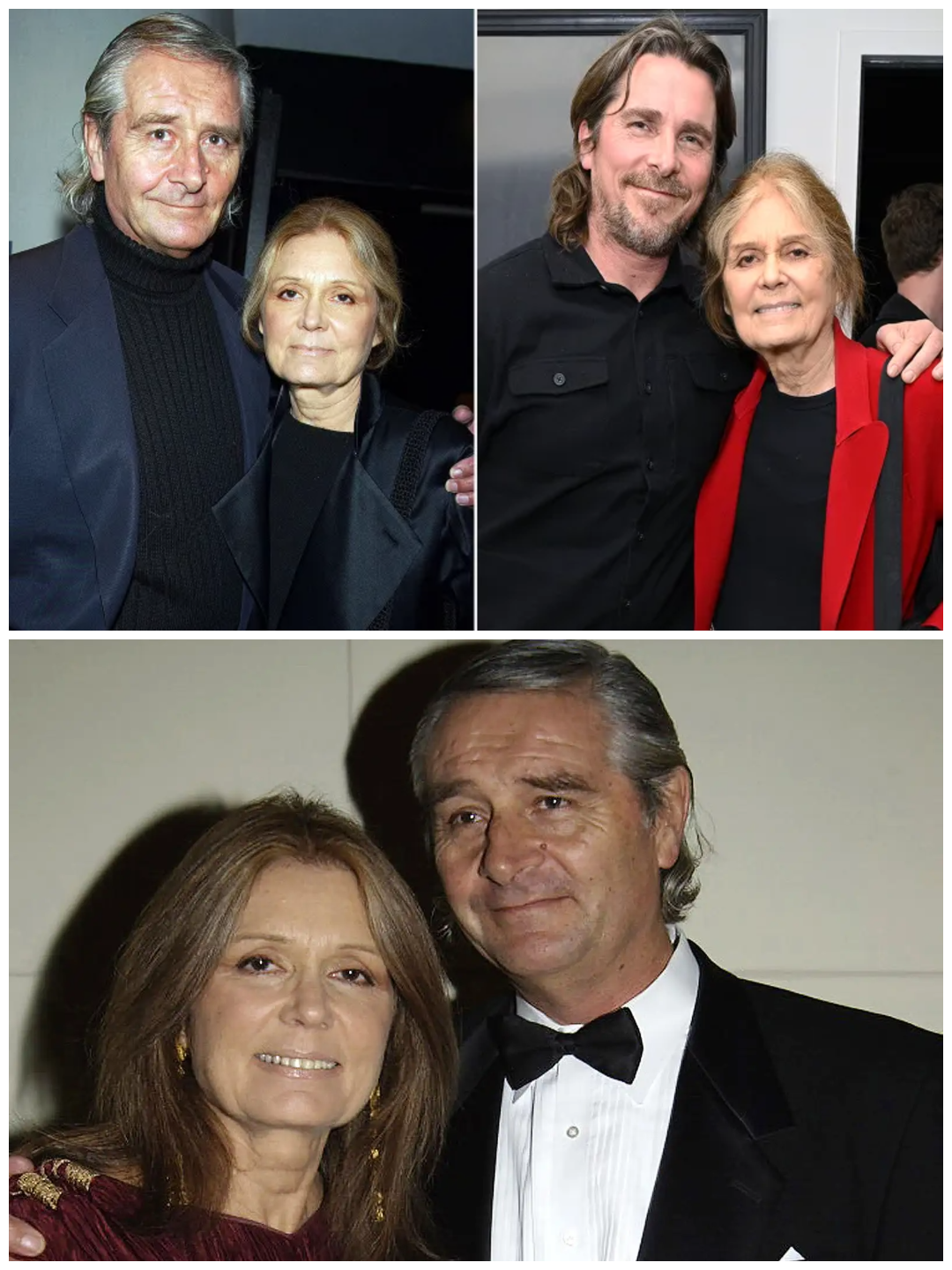
For decades, Gloria Steinem was one of the women Americans were least likely to imagine walking down an aisle.
She had spent much of her public life criticizing the inequalities built into traditional marriage, especially the ways married women historically lost legal, financial and social independence.
Then, at 66, she surprised almost everyone.
On Sept. 3, 2000, Steinem married environmental activist and businessman David Bale, the father of actor Christian Bale.
There was no huge celebrity wedding.
No elaborate gown.
No expensive rings.
The ceremony in Oklahoma had only four guests, incorporated Cherokee elements and included beaded rings that reportedly cost just 95 cents each.
For a woman whose name had been associated for decades with questioning conventional marriage, the news immediately produced one obvious question:
Had Gloria Steinem changed her mind?
Her answer was much more interesting.
Steinem said she had not changed.
Marriage had.
She Had Never Expected to Get Married
When the wedding was announced, Steinem openly admitted that she had not expected marriage to become part of her own life.
“Though I’ve worked many years to make marriage more equal, I never expected to take advantage of it myself,” she said at the time.
That sentence captured the apparent contradiction.
Steinem had not spent decades arguing that affection or long-term relationships were bad.
Her criticism focused on an institution that historically gave husbands and wives unequal rights.
For generations, marriage could affect a woman’s name, finances, legal identity, property and ability to live independently in ways it did not affect men.
To Steinem, that was the problem.
She later summarized her decision bluntly:
“I didn’t change. Marriage changed.”
She explained that decades of legal reform had altered what marriage could mean for women. By 2000, she believed it was possible to create a marriage based on equality rather than dependence.
Then She Met David Bale
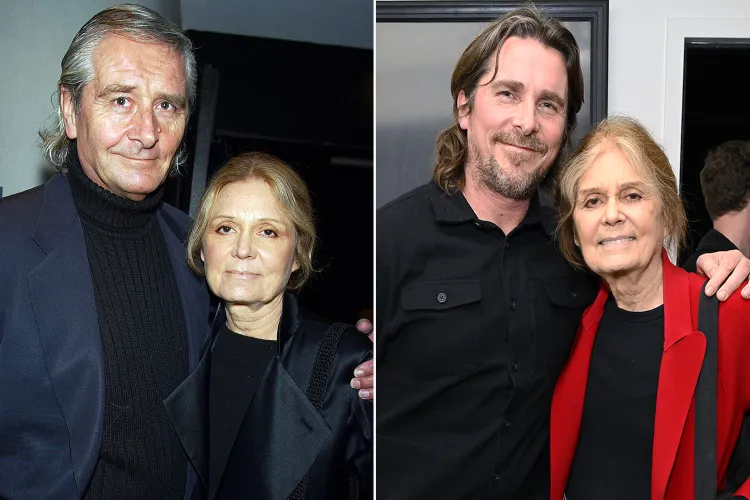
Steinem met David Bale in Los Angeles in October 1999 at a benefit connected to Voters for Choice, an organization with which she was deeply involved.
Bale was a South African-born businessman and activist with strong interests in environmental and animal-welfare causes.
He was also the father of four children, including Christian Bale.
The pair quickly connected.
David reportedly admired Steinem’s work long before they became romantically involved. After their marriage, he spoke openly about being struck by her intelligence, warmth and humor.
Within less than a year of meeting, they decided to marry.
For Steinem, the relationship appears to have challenged expectations she had formed over decades.
She later described the experience not as surrendering independence but as discovering that intimacy and independence did not have to cancel each other out.
Their Wedding Looked Nothing Like a Traditional Celebrity Ceremony
If Steinem was going to marry, she certainly was not going to stage a conventional society wedding.
The ceremony was held in Oklahoma at the home of her longtime friend Wilma Mankiller, the former principal chief of the Cherokee Nation.
Only four guests attended.
Mankiller and her husband, Charlie Soap, participated in a ceremony containing both civil and Cherokee elements, while a judge was present to make the marriage legally valid.
Steinem reportedly wore jeans.
The couple deliberately avoided some of the language traditionally associated with marriage.
Instead of emphasizing “husband” and “wife,” they preferred the idea of being partners.
Then there were the rings.
Rather than exchanging expensive pieces of jewelry, Steinem and Bale exchanged simple beaded rings reported at the time to have cost 95 cents each.
The entire ceremony seemed designed to strip marriage down to what mattered to them.
Two people making a commitment.
Very little spectacle.
Very little tradition simply for tradition’s sake.
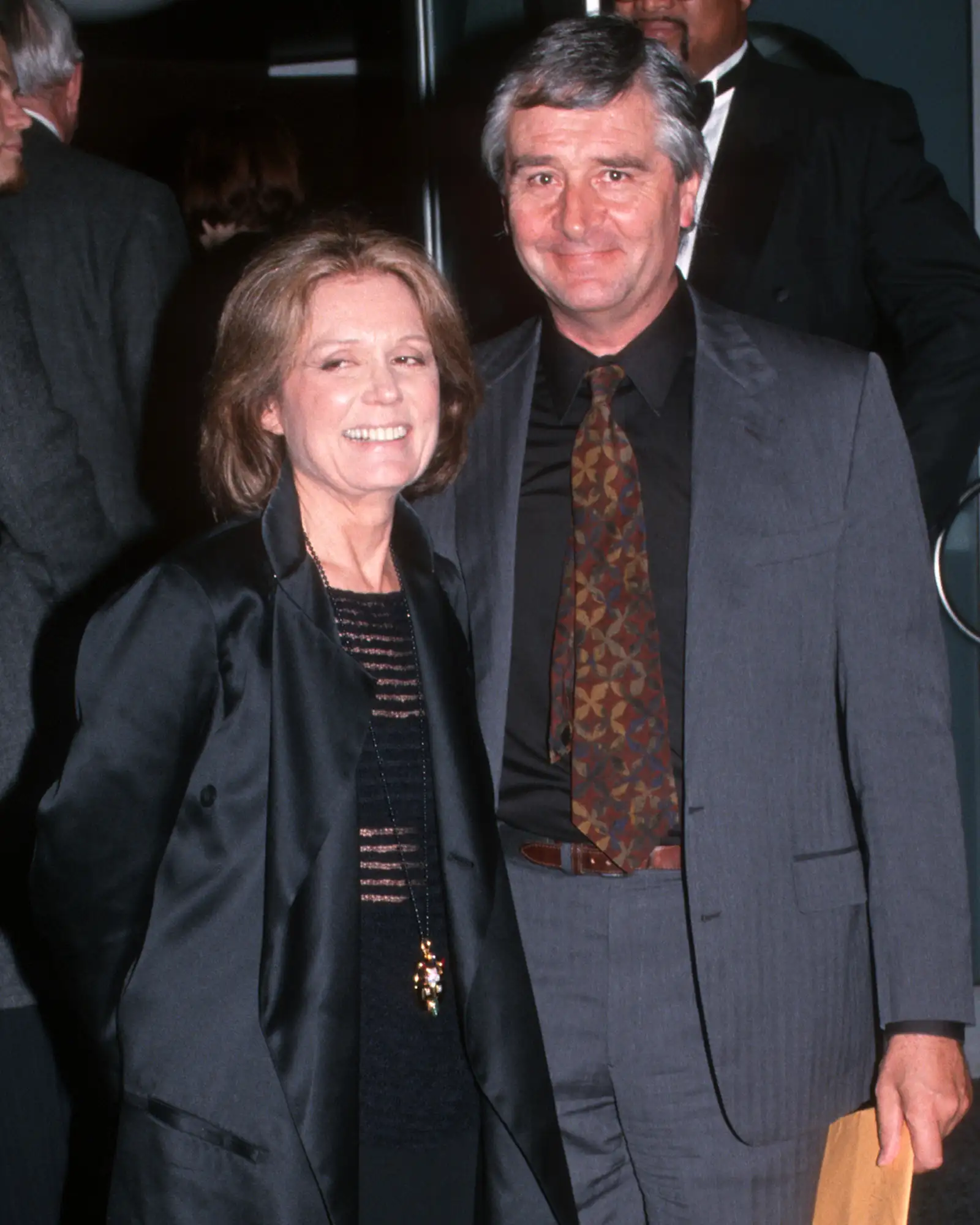
Why Did She Finally Say Yes?
Love was obviously central to the decision.
But there was also a practical element.
David Bale needed legal permission to remain in the United States, and Steinem later acknowledged that his immigration status was part of the circumstances surrounding their decision to marry.
Still, she resisted reducing the marriage to paperwork.
They wanted to be together.
They loved each other.
And by that point in her life, Steinem believed marriage no longer required her to surrender the independence she had spent decades defending.
That distinction explains why she did not consider the wedding a repudiation of feminism.
In fact, she argued that it demonstrated the opposite.
Feminism, she said after the ceremony, was about having the freedom to choose what was right at different moments in a woman’s life.
At one stage of her life, marriage had not been right for her.
At 66, with David Bale, it was.
Critics Still Saw a Contradiction
Not everyone accepted that explanation immediately.
Steinem had become such a powerful symbol of female independence that her marriage inevitably generated headlines.
Some people treated it almost as though a lifelong opponent of marriage had suddenly surrendered.
But that interpretation frustrated Steinem.
Years later, she pointed out that the legal framework surrounding marriage had changed enormously during the decades of the women’s movement.
“If I had married when I was supposed to get married,” she explained, she would have faced restrictions involving her name, residence, credit and other civil rights.
Those restrictions no longer applied in the same way.
The institution she was entering at 66 was not identical to the one she had resisted as a young woman.
For Steinem, that was evidence of progress, not hypocrisy.
She Even Avoided Calling Him Her “Husband”
The unconventional attitude continued after the wedding.
Steinem later said that she and Bale never felt completely comfortable describing themselves with the traditional labels “husband” and “wife.”
Instead, they sometimes referred to each other as “the friend I married.”
The phrase sounded almost perfectly Steinem.
It acknowledged the legal marriage without allowing the institution to swallow the individual relationship.
She remained Gloria Steinem.
He remained David Bale.
Neither person had to become primarily an extension of the other.
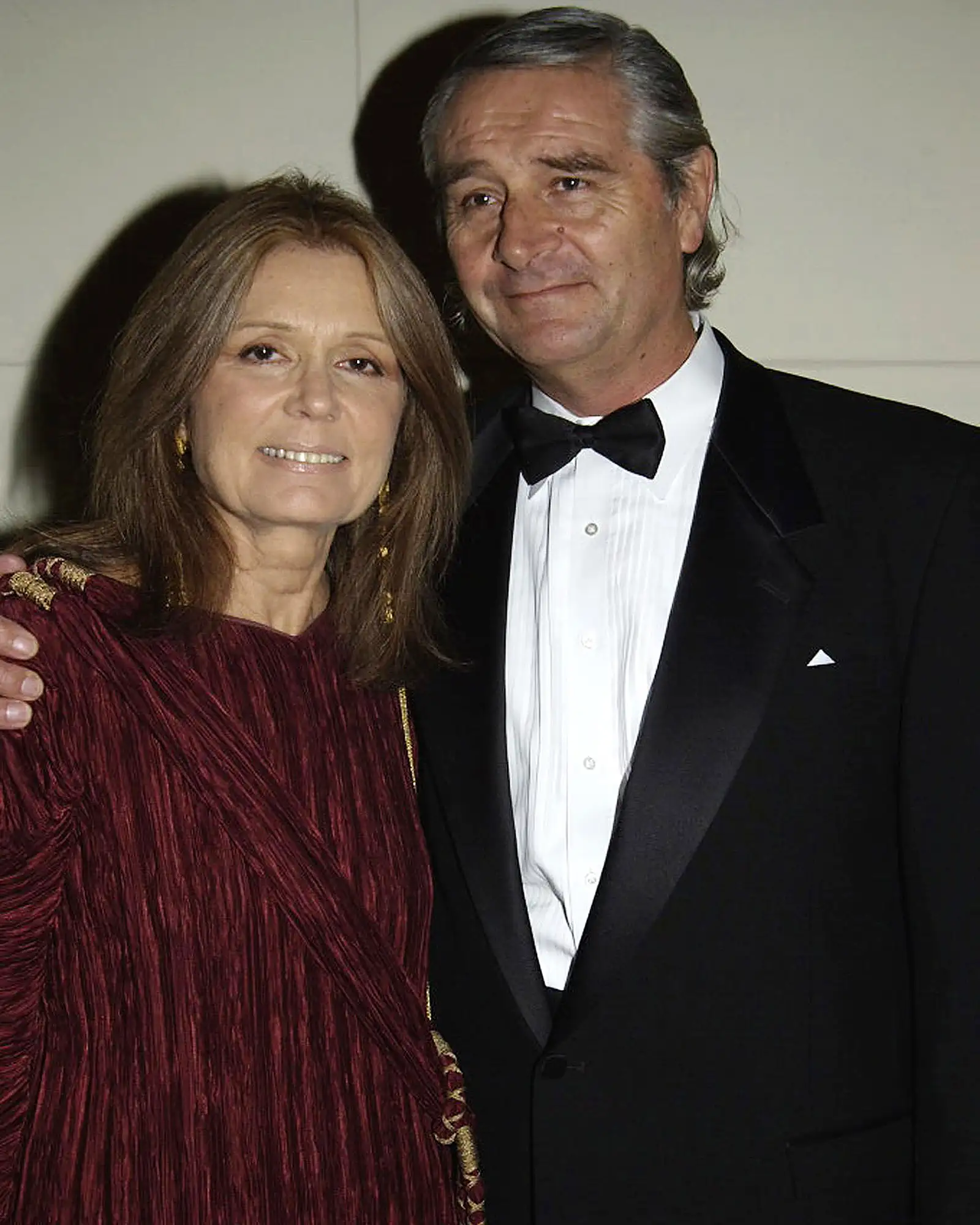
Their Marriage Was Tragically Short
Steinem and Bale had only about three years together as a married couple.
David was diagnosed with brain lymphoma and died in December 2003 at age 62.
Steinem cared for him during his illness.
She never remarried.
But she continued speaking warmly about the relationship and what it had taught her.
The marriage that once shocked people became an important chapter of her personal life.
It also produced one of the clearest explanations of what Steinem had actually been arguing for all along.
She was not demanding that women reject marriage.
She was demanding that they be able to enter it without losing themselves.
Four Guests, Two 95-Cent Rings and One Big Change
Looking back, the details of the wedding almost seem symbolic.
One of the most famous feminists in America finally married at 66.
The ceremony had four guests.
She wore no extravagant bridal costume.
The rings cost less than a dollar each.
And traditional labels were deliberately minimized.
But the most important part was not how unusual the wedding looked.
It was why Steinem believed she could finally have one.
She did not tell the world that decades of criticism had been a mistake.
She argued that those decades of criticism and activism had helped change the institution itself.
That was the twist people often missed.
Gloria Steinem did not believe marriage had defeated her.
She believed women had spent decades changing marriage enough that she could finally choose it on her own terms.