Bill Maher Turned His Dolly Parton Tribute Into a Joke About Her Body — and Viewers Say He Crossed a Line
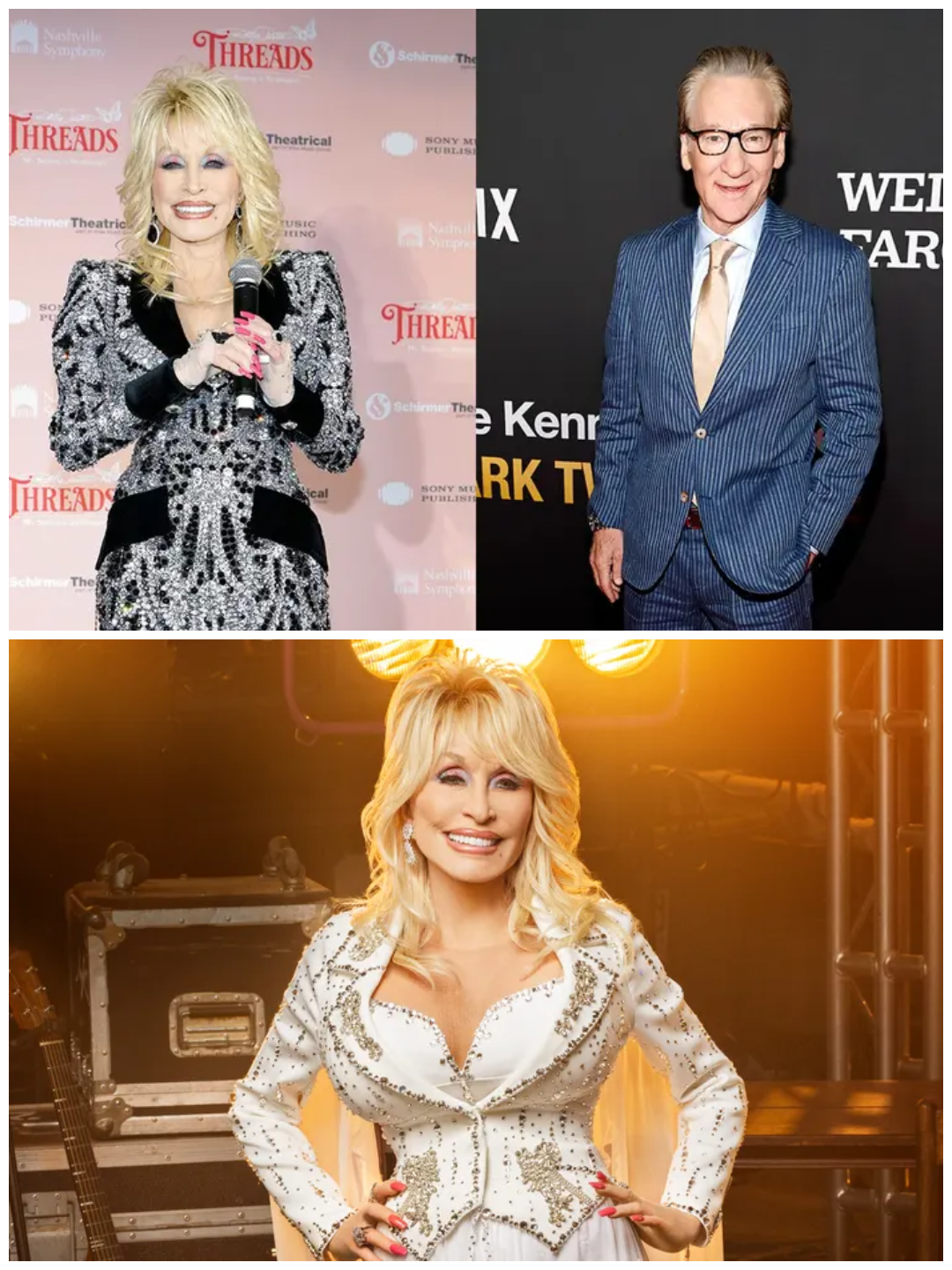
Bill Maher has spent decades building a career around saying things other television hosts might avoid.
But only three days after Dolly Parton’s death, one joke on Real Time with Bill Maher left some viewers asking whether his usual irreverence had gone too far.
During the Aug. 28 episode of his HBO show, Maher opened by running through what he described as a difficult and eventful week.
There were wars, political disputes and other major stories competing for attention.
Yet, Maher observed, much of America seemed focused on one loss above everything else.
Dolly Parton.
“All America could really talk about this week was how sad it is we lost Dolly Parton,” Maher said.
He then listed some of the public tributes that had appeared after the country legend’s death: landmarks illuminated in her honor, displays of hearts and buildings turned pink.
Then came the punchline.
“The Sphere in Las Vegas added a nipple.”
The studio audience laughed and applauded.
Online, the response was considerably less comfortable.
The Joke Was an Obvious Reference to Dolly’s Famous Figure
There was little ambiguity about what Maher meant.
Las Vegas’ Sphere is an enormous round entertainment venue.
Dolly had spent decades being famous not only for her songs, wigs and rhinestones, but also for her exaggerated hourglass image.
Maher combined the two.
It was a quick visual joke about Dolly’s breasts.
Under ordinary circumstances, it might have sounded like exactly the kind of gag Dolly herself could have made.
But these were not ordinary circumstances.
Parton had died on Aug. 25 at 80.
The joke aired only three days later, while fans, relatives and fellow musicians were still posting tributes and publicly mourning her.
For critics, that timing changed everything.
What might have been harmless teasing when Dolly was alive now sounded to them like reducing a newly deceased woman to one of the physical features people had commented on throughout her career.
Mediaite documented sharp reactions, with critics describing Maher’s tribute as crude, charmless and insensitive. Variety journalist Marlow Stern dismissed it as an especially poor Parton tribute, while other viewers accused Maher of mocking the scale of public grief surrounding her death.
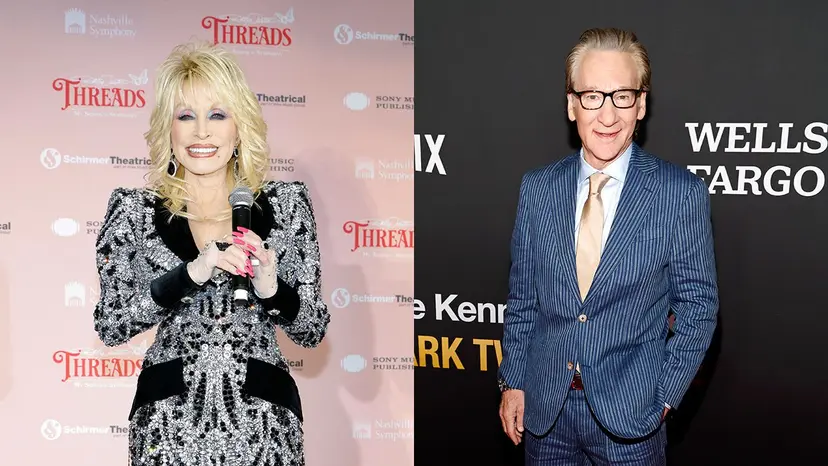
Some Viewers Objected to More Than the “Nipple” Line
For some critics, the problem was not only the body joke.
It was the setup.
Maher had just discussed serious international and political events before saying that Americans nevertheless seemed consumed by sadness over Dolly.
Some viewers interpreted that framing as dismissive — almost as though the country was paying too much attention to the death of an entertainer while more consequential events were happening elsewhere.
Extra noted that critics took issue with both the crude punchline and the apparent suggestion that Dolly’s death had become a distraction from bigger news.
That interpretation is open to debate.
Maher’s monologues routinely work by contrasting major events with celebrity or cultural stories.
Pointing out how much attention Dolly received could just as easily be understood as acknowledging how unusually beloved she was.
But once the observation ended with a joke about her breasts, some viewers heard the entire segment differently.
Instead of honoring why millions of people cared about Dolly, they felt Maher was laughing at the people who cared.
But Dolly Herself Made These Jokes Constantly
There is another side to the controversy, and it matters.
Dolly Parton was perhaps one of the least embarrassed celebrities in American history when it came to jokes about her own appearance.
She talked openly about cosmetic surgery.
She joked about her breasts.
She joked about her wigs.
She joked about the amount of makeup she wore.
She routinely got to the punchline before anyone else could.
In a 2008 interview cited after the Maher controversy, Dolly joked that she was not sure whether she supported her breasts or they supported her, while openly acknowledging that cosmetic enhancement had become part of her public persona.
That self-awareness was fundamental to Dolly’s appeal.
She knew she looked outrageous.
She intended to.
The peroxide-blond hair, enormous wigs, long nails, high heels, rhinestones and exaggerated silhouette were not things critics discovered about her.
They were things she deliberately constructed.
And she spent decades laughing about them.
That raises a fair question:
If Dolly herself would probably have laughed at a joke about her figure, is the joke automatically disrespectful simply because it came from Bill Maher?
Self-Deprecation and Permission Aren’t Exactly the Same Thing
This is where the debate becomes more interesting than simply deciding whether the joke was funny.
A person making jokes about her own body is not necessarily the same thing as someone else making those jokes immediately after she dies.
Dolly had control over her humor.
When she joked about plastic surgery or her chest, she was often turning something that could have been used to embarrass her into something she owned.
She controlled the punchline.
Maher was making the joke after Dolly was no longer there to laugh, respond or turn it around.
For critics, that difference mattered.
Their argument was not necessarily that no comedian should ever joke about Dolly’s appearance.
It was that there is a difference between joking with Dolly and joking about Dolly during the first days of mourning.
Supporters of Maher’s style could make the opposite case.
Dolly had deliberately made humor about her appearance part of her public persona for decades. Treating her as suddenly too sacred for the same kind of joke might erase something genuinely important about who she was.
Neither interpretation requires pretending Dolly was humorless.
The disagreement is about timing.
The Studio Audience Clearly Didn’t Think the Line Was Off-Limits
One part of the reaction also complicates claims that the joke simply failed.
Inside the Real Time studio, it landed.
The audience responded with laughter, applause and cheers after Maher delivered the Sphere line.
Online reaction was much harsher.
That split says something about modern comedy controversies.
A joke can succeed perfectly well with the audience in the room and still look dramatically different once a short clip circulates without the atmosphere of a live comedy monologue.
Maher’s audience knew the format.
They had just heard jokes about politics, international conflict and other serious subjects.
Irreverence was expected.
People encountering the Dolly clip separately were more likely to see only this:
A beloved woman had just died.
A male comedian was already making a joke about her breasts.
Those are very different contexts.
Dolly’s Death Produced an Unusually Emotional Response
Maher was correct about one thing: the reaction to Dolly’s death was enormous.
Tributes came from musicians, actors, politicians and ordinary fans.
Landmarks honored her.
People gathered at places associated with her career.
Her songs surged back into public attention.
The intensity of that response reflected how unusually broad Dolly’s appeal had become.
She was not remembered only as the woman who sang “Jolene” or wrote “I Will Always Love You.”
She was remembered for the Imagination Library, disaster relief, charitable giving and an ability to remain culturally beloved across political and generational divides.
That level of affection is precisely why Maher’s joke became controversial.
Had it involved a celebrity audiences felt less protective of, the same punchline might have disappeared after one night.
With Dolly, people cared enough to argue about it days later.
Did Bill Maher Cross the Line?
That depends on where someone believes the line should be.
Maher did not launch into a vicious attack on Dolly.
He did not criticize her career or her philanthropy.
He made a brief joke based on one of the physical characteristics Dolly herself had joked about for decades.
But he made it three days after her death.
And he made it during a segment ostensibly acknowledging the extraordinary grief surrounding her passing.
That timing was enough for many viewers to decide the joke was tasteless.
Others can reasonably point out that treating Dolly’s flamboyant image as untouchable would hardly reflect the woman who spent her life laughing at it herself.
The disagreement therefore comes down to something surprisingly simple.
Dolly Parton loved a joke.
But after she died, who gets to decide when it is appropriate to start telling them again?
Bill Maher apparently believed three days was enough.
A lot of Dolly’s fans did not.