Gloria Steinem Never Had Children — And Near the End of Her Life, She Explained Why She Never Regretted It

For most of Gloria Steinem’s adult life, strangers seemed to think one question required an explanation.
Why didn’t she have children?
Steinem became one of the most recognizable feminist activists in America, spent decades writing and organizing, married for the first time at 66 and lived well into her 90s.
But motherhood was one path she never took.
And when she was asked about it again late in life, her answer was remarkably clear.
No, she did not regret it.
Not secretly.
Not because she had missed her chance.
Not because she wished she could go back and make a different choice.
In a 2025 conversation, Steinem reflected on why motherhood had never become part of her life and offered one possible explanation that reached all the way back to childhood.
Her mother was unwell.
Her parents separated when Gloria was young.
And while still a child herself, Steinem found herself helping care for an adult.
Years later, she said she had noticed something about children who are forced into that kind of role early.
Sometimes, after spending childhood looking after grown-ups, they simply do not want to do it again.
She Was Asked Directly: Do You Regret It?
By 2025, Steinem had been fielding versions of the question for decades.
During an appearance on Bobbi Brown’s I Am Me series, the subject came up directly.
Steinem was asked whether not having children was a regret.
Her answer was immediate:
No.
She explained that she had actually tried, at times, to make herself feel regret because society had taught women that they were supposed to want motherhood.
But the feeling never appeared.
That answer was consistent with things Steinem had been saying for years.
Long before she reached old age, she had already made clear that she did not view a child-free life as incomplete.
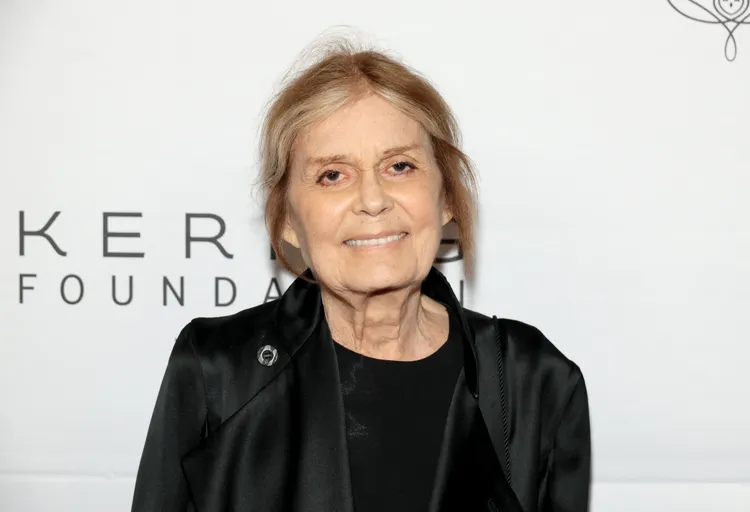
Childhood May Have Played a Role
When Steinem tried to understand her own choice, however, she sometimes returned to her mother.
Gloria’s parents divorced when she was young.
Her mother, Ruth, struggled with serious health problems, and Gloria took on responsibilities that normally would not belong to a child.
She helped look after her.
That experience stayed with her.
In the later interview, Steinem said she had observed that people who spend childhood caring for adults — whether because a parent is ill, struggling with addiction or otherwise unable to function normally — may not want to repeat a caregiving role later.
She was careful not to present this as a perfect psychological formula.
Raising a child, she acknowledged, is obviously not the same thing as a child caring for an impaired adult.
But she believed the experience could affect what someone wants from adulthood.
She Had Been Saying Something Similar for More Than 40 Years
What makes the late-life interview especially interesting is that this was not a new explanation invented in retrospect.
As early as 1983, Steinem told The Washington Post that caring for her mother may have influenced her lack of desire for children.
She said that after spending years feeding, nurturing and looking after another human being, she may have felt that she had already experienced a version of that responsibility.
Even then, she described trying to force herself to feel regret because she believed women were expected to want children.
She could not.
The regret simply was not there.
That consistency matters.
Steinem was not suddenly rewriting her past at 90.
For decades, she had been describing essentially the same tension: society told her motherhood was supposed to be inevitable, while her own feelings told her otherwise.
For Years, She Assumed Children Would Simply Happen
Steinem did not necessarily grow up with a carefully planned decision never to become a mother.
In fact, she later said that as a younger woman, she simply assumed marriage and children were things that eventually happened to everyone.
Her response was to postpone them.
Not now.
Maybe later.
Then later kept moving further away.
She eventually came to understand that there was another option.
She could simply choose not to have children.
Steinem credited the women’s movement with helping her recognize that women did not all have to follow the same life script.
For her, that realization appears to have been liberating.
She did not need to produce a dramatic reason why motherhood was wrong.
She only needed to recognize that it was not right for her.
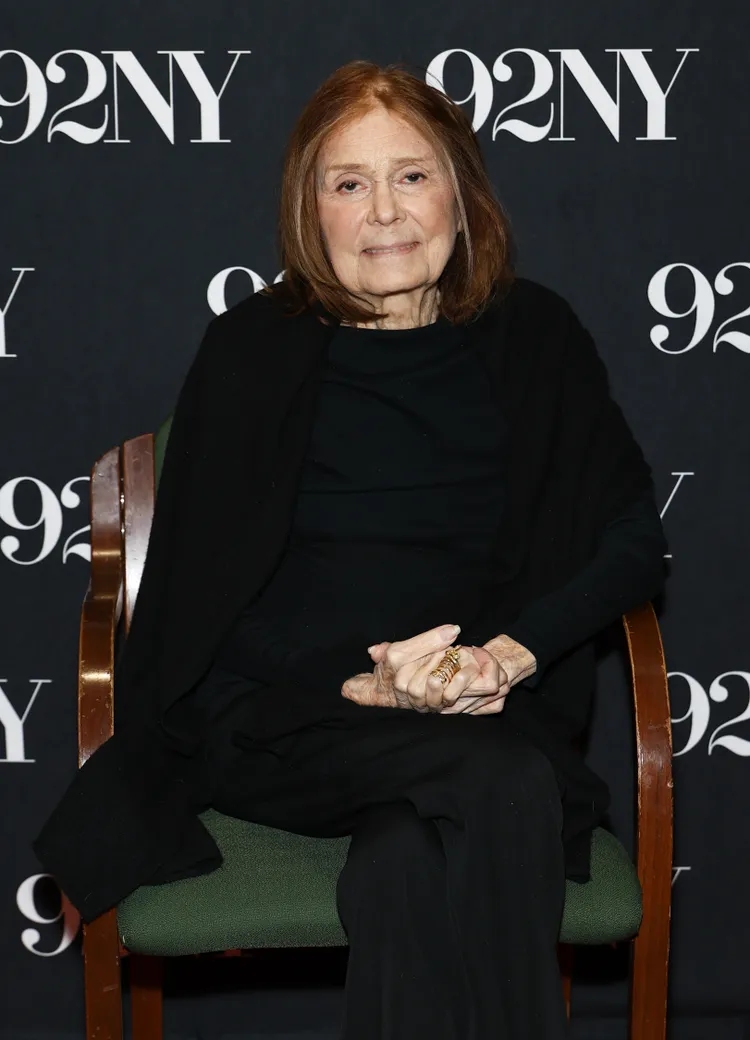
She Resisted the Idea That Biology Was Destiny
Steinem frequently challenged the assumption that the ability to have children automatically created an obligation to do so.
Her point was not anti-motherhood.
Quite the opposite.
She repeatedly expressed admiration for women raising children, particularly those doing so with little support.
But she rejected the idea that every woman needed to become a mother in order to have a meaningful or complete life.
That distinction ran through much of her feminism.
Choice mattered.
A woman choosing motherhood should be supported.
A woman choosing not to become a mother should not be treated as though she had failed some essential test of womanhood.
Steinem’s own life became one example of that second possibility.
Her Answer Was Not “I Hate Children”
This is another important part of the story.
Steinem never framed her decision as hostility toward children.
She did not claim motherhood was undesirable for everyone.
She did not argue that career and family could never coexist.
Her point was personal.
She simply never felt compelled to have children herself.
In one long oral-history interview, she explained that once she understood motherhood was genuinely a choice, she realized she was already happy.
She even suggested that living openly without children could itself serve a useful purpose by showing other women that fulfillment could take more than one form.
That was very different from declaring that one path was superior.
Steinem spent much of her career fighting against precisely that kind of rigid prescription.
Her Mother’s Life Had Shaped Her in Other Ways Too
Steinem’s relationship with her mother influenced far more than the question of children.
Ruth had once worked as a journalist but struggled with mental illness and had difficulty maintaining the independent life she might otherwise have wanted.
Watching her mother’s circumstances helped shape Gloria’s understanding of how limited women’s choices could be.
Later accounts of Steinem’s childhood describe a young girl who learned early to become useful, responsible and attentive to another person’s needs.
That experience likely contributed to many different parts of the adult she became.
Her activism.
Her independence.
Her concern with women’s autonomy.
And, possibly, her decision not to become a parent.
But Steinem herself resisted making the explanation too neat.
At other points, when asked whether caring for her mother fully explained her choice, she essentially said: maybe partly — but perhaps she simply never wanted children.
That uncertainty makes her answer more believable, not less.

Did She Ever Wonder If She Had Made the Wrong Choice?
Apparently not in the way people expected.
Steinem acknowledged that society made her feel she was supposed to regret it.
She knew the question would follow her.
She knew some people assumed that an older woman without children must eventually feel lonely or incomplete.
But when asked directly, she continued to reject that assumption.
She had relationships.
Friends.
A marriage later in life.
Decades of political work.
Communities that stretched across generations and countries.
Her life did not resemble the conventional family structure she had been expected to build as a young woman.
She did not regard that as a failure.
The Answer Was Simpler Than People Expected
Gloria Steinem spent decades being asked to justify a choice that men were rarely asked to explain with the same intensity.
Why no children?
Was it feminism?
Was it career ambition?
Was it childhood?
Was she sorry?
Near the end of her life, her answer remained remarkably uncomplicated.
She was not sorry.
Caring for her unwell mother while still a child may have helped shape what she wanted later.
Being forced into an adult caregiving role early may have made her less interested in taking on another one.
But Steinem never insisted that one childhood experience explained everything.
Sometimes, she suggested, the answer was simply that she never felt the desire strongly enough.
For a woman who spent her life arguing that women should be able to choose their own futures, that may have been the most fitting answer of all.
Gloria Steinem did not have children.
And after more than nine decades of life, she still did not believe she had chosen wrong.