Dolly Parton’s 46-Year-Old Movie Just Beat Every Other Show on Linear TV — Then It Took No. 1 on Apple TV Too
Forty-six years after Dolly Parton made her movie debut, Americans suddenly turned one of her oldest films into one of the hottest things on television.
ABC aired the 1980 workplace comedy 9 to 5 as a tribute to Parton following her death on Aug. 25, 2026.
What happened next was far bigger than a nostalgic rerun.
The film surged all the way to No. 1 on The Wrap Report’s linear television chart for the week, pushing ahead of contemporary programs including America’s Got Talent, Wheel of Fortune, Jeopardy! and American Ninja Warrior. The ranking is based on Samba TV viewing trends from a panel of more than 3 million U.S. households, weighted to the U.S. Census.
And television was only half the story.
9 to 5 also shot to the top of Apple TV’s U.S. movie purchases and rentals chart, overtaking considerably newer releases including Toy Story 5.
A movie released when Jimmy Carter was still president had suddenly become one of the most in-demand films in America again.
ABC Gave Fans a Place to Remember Dolly
In the days immediately following Parton’s death, fans rushed back to the work that had made her famous.
Her music surged.
Classic performances resurfaced online.
Old interviews were shared again.
And television networks began revisiting her film career.
ABC placed 9 to 5 in its Sunday-night schedule as a tribute.
The choice made sense.
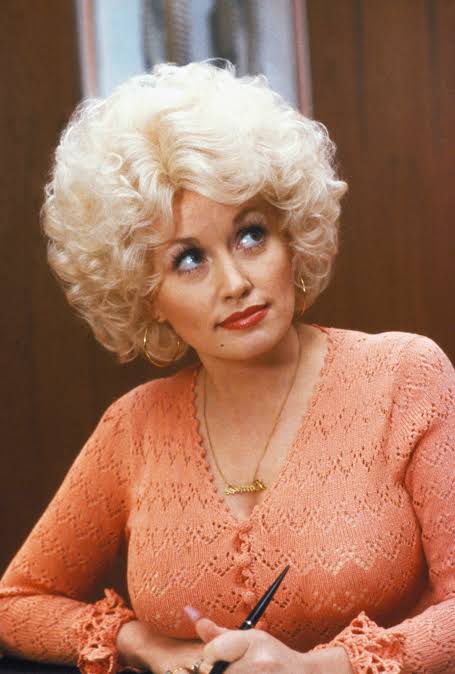
Although Dolly had already become a major country and crossover music star by 1980, 9 to 5 was her first feature film.
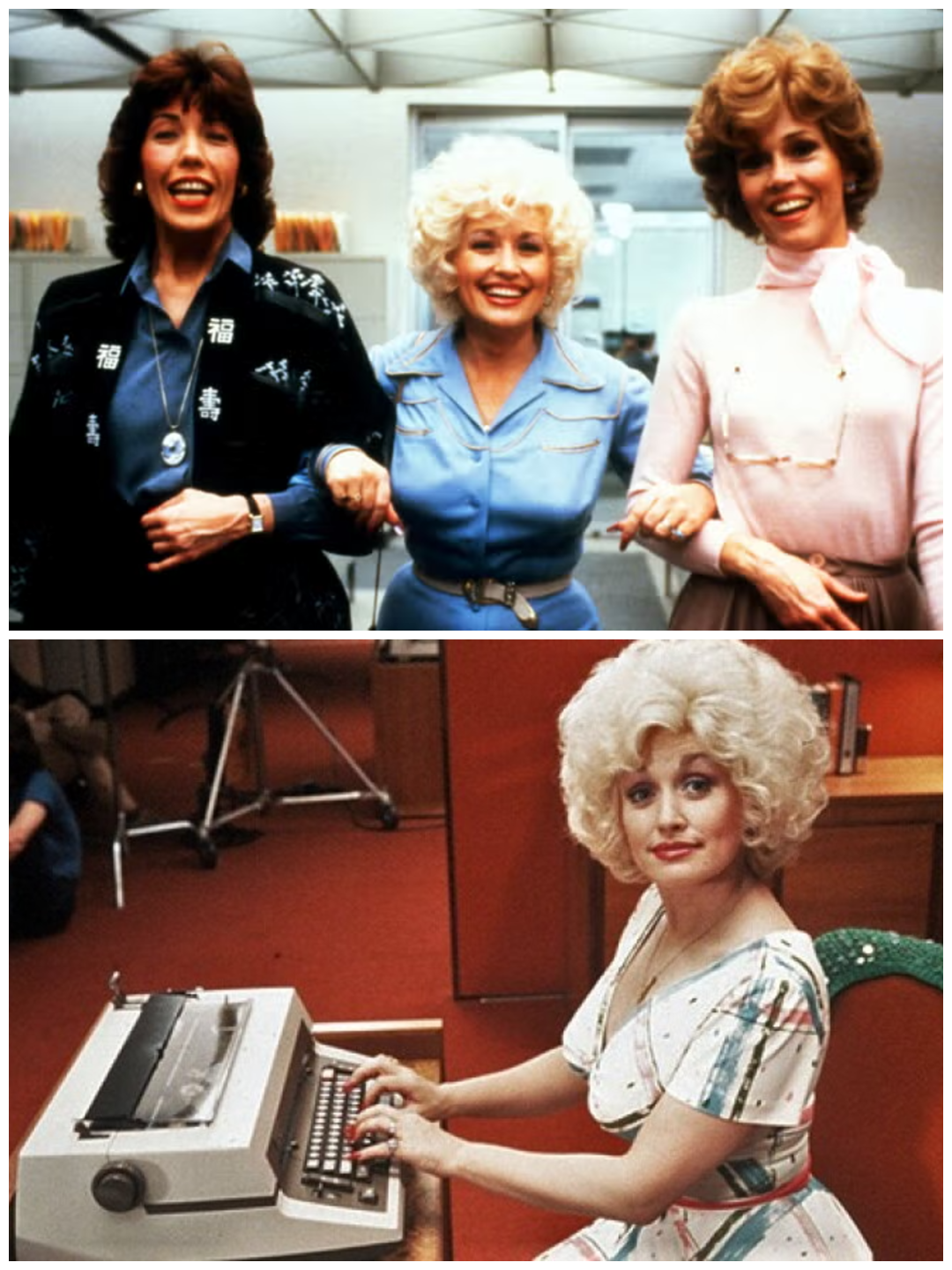
She starred alongside Jane Fonda and Lily Tomlin as Doralee Rhodes, Judy Bernly and Violet Newstead, three office workers dealing with a sexist, dishonest boss played by Dabney Coleman.
The film blended workplace frustration, female friendship and broad comedy.
Dolly also wrote and performed its title song.
Nearly half a century later, millions of viewers apparently wanted to see it again.
According to TheWrap, Dolly’s renewed popularity pushed the movie to the top of the linear chart and displaced America’s Got Talent from No. 1.
This Wasn’t Just People Leaving the TV On
The Apple TV numbers make the resurgence even more interesting.
Viewers were not only watching the movie because ABC happened to broadcast it.
They were actively seeking it out elsewhere.
As of Sept. 1, 9 to 5 ranked first among movies purchased and rented through Apple TV in the United States.
Second place belonged to Toy Story 5, one of 2026’s major new releases.
That is a remarkable comparison.
One movie was released this summer.
The other premiered in 1980.
Yet in the immediate aftermath of Dolly’s death, viewers chose the older movie.
The result suggests something larger than simple curiosity about a celebrity who had just died.
People were returning to a film that had become closely tied to Dolly’s identity.
And It Wasn’t Only 9 to 5
The surge spread through Parton’s filmography.
According to chart reporting cited by Parade, several of her other movies entered the VOD Top 15 as audiences revisited her acting career.
The Best Little Whorehouse in Texas, released in 1982, climbed to No. 4.
Steel Magnolias, the beloved 1989 drama in which Dolly played hairstylist Truvy Jones, reached No. 11.
And the 1992 romantic comedy Straight Talk rose to No. 14.
That makes the response particularly striking.
Fans were not simply searching for the one Dolly film receiving an ABC tribute broadcast.
They were moving through her catalog.
For an entertainer remembered primarily as one of country music’s greatest songwriters, her movies were suddenly having their own major revival.
9 to 5 Had Been a Huge Deal the First Time Too
The film was hardly an obscure title being rediscovered for the first time.
When 9 to 5 arrived in theaters in December 1980, it became a major commercial success.
It reportedly earned roughly $103 million domestically and became one of the year’s biggest movies, behind only The Empire Strikes Back.
For Dolly, the stakes had been particularly high.
She had never acted in a feature film before.
Jane Fonda and Lily Tomlin were experienced actresses.
Dolly was entering an entirely different industry.
Yet she approached the job with characteristic intensity.
Parton later recalled that she memorized the entire script rather than just Doralee’s lines because, as a newcomer, she assumed that was what actors were supposed to do.
The result helped establish her as much more than a singer trying acting as a side project.
She received a Golden Globe nomination for her performance.
The title song became a No. 1 Billboard Hot 100 hit and earned an Academy Award nomination for Best Original Song.
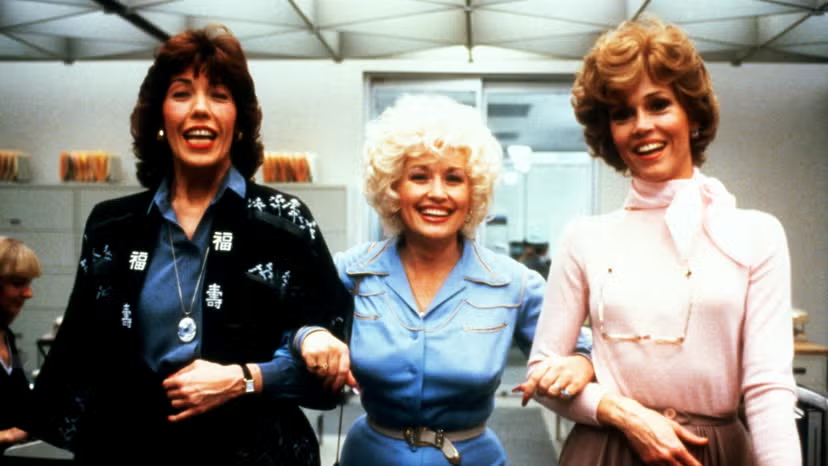
Doralee Also Looked a Lot Like Dolly
There was another reason the role worked.
Doralee Rhodes played directly with the assumptions people already made about Dolly.
She was glamorous.
Blond.
Curvy.
Friendly.
And frequently underestimated.
In the movie, her boss falsely allows coworkers to believe he is having an affair with her, damaging Doralee’s reputation around the office.
Eventually, she confronts him.
The role allowed Dolly to turn stereotypes surrounding her real-life appearance into part of the character.
Doralee looked like someone people might dismiss.
She turned out to be far tougher than expected.
That dynamic followed Dolly throughout her career.
The enormous hair, rhinestones and jokes about her figure invited people to underestimate her.
Then came the songwriting, business decisions and sharp self-awareness.
Forty-six years later, Doralee still feels unmistakably connected to the public persona audiences loved.
The Three Women Stayed Connected for Decades
The movie also created relationships that lasted long after filming ended.
Dolly, Jane Fonda and Lily Tomlin remained friends across the decades.
Fonda and Tomlin eventually reunited professionally on Grace and Frankie, and Dolly later joined them for the show’s final season, giving fans a long-awaited 9 to 5 reunion.
After Dolly’s death, both women publicly mourned their former costar.
Tomlin shared a photograph of herself with Parton accompanied simply by “no words” and a broken-heart emoji.
That history makes the current resurgence feel less like audiences randomly selecting an old comedy and more like revisiting a piece of Dolly’s life.
Why 9 to 5 Again?
Part of the answer is recognition.
The movie contains Dolly at a moment when she was expanding rapidly beyond country music.
But there may be another reason.
Its central frustrations have aged surprisingly well.
Women being underestimated at work.
Unequal treatment.
A terrible boss abusing his authority.
Workers imagining what their office might look like if they actually controlled it.
Those ideas do not require viewers to understand 1980 to recognize them.
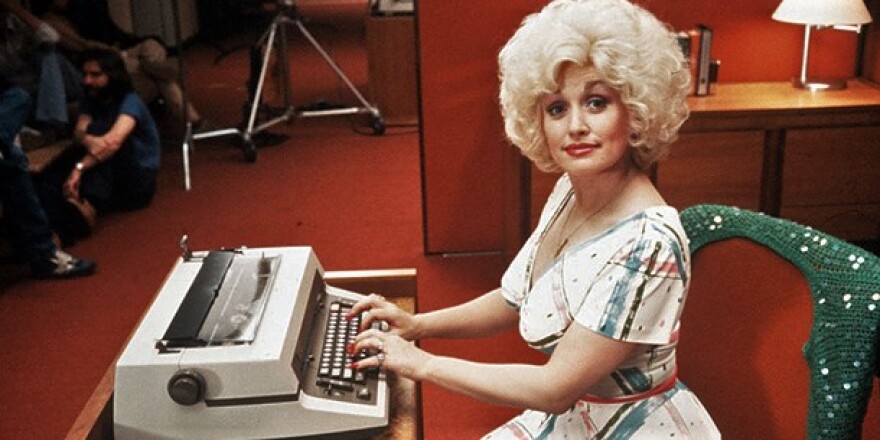
The clothes, typewriters and hairstyles may belong to another era.
The workplace anger does not.
That gives 9 to 5 something many nostalgia titles lack: it can feel comfortably old-fashioned and strangely current at the same time.
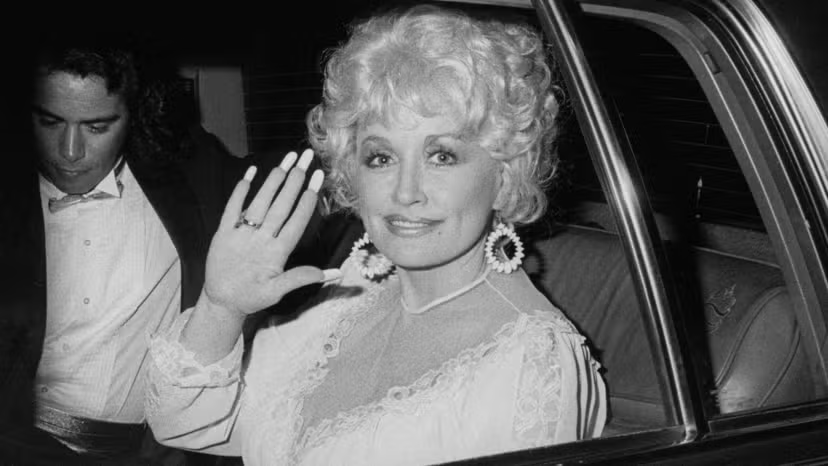
A 46-Year-Old Movie Became No. 1 Again
The rankings will change.
A different television program will eventually lead the linear chart.
Another movie will replace 9 to 5 on Apple TV.
But the moment itself says something remarkable about Dolly Parton’s reach.
She died at 80 after a career spanning generations.
Within days, Americans were not merely listening to the songs everyone already knew.
They went back to her movies.
They bought and rented them.
They watched ABC rerun a comedy that first appeared in theaters 46 years ago.
And for that week, 9 to 5 beat every other program on The Wrap Report’s linear television ranking.
Then it showed up at No. 1 on Apple TV too.
Dolly Parton’s first movie had already been a hit once.
Nearly half a century later, America made it one again.