Armored BearCat Intervention, Deadly Freeway Shootout, and Judicial Failure in the Fall of a Violent Fugitive
Armored BearCat Intervention, Deadly Freeway Shootout, and Judicial Failure in the Fall of a Violent Fugitive
The relentless manhunt for the gunman who assassinated Riverside County Sheriff’s Deputy Isaiah Cordero culminated in an extraordinary display of tactical coordination, a hail of gunfire beneath a freeway overpass, and mounting public outrage over systemic judicial leniency. Newly released multi-agency pursuit footage and dispatch records reveal the climactic final stages of a cross-county operation that mobilized armored combat-grade rescue vehicles, over seventy patrol cruisers, and an inevitable lethal confrontation on a Southern California freeway.
The pursuit took on an increasingly hazardous dimension as the fleeing suspect navigated heavy rush-hour traffic across Riverside and San Bernardino counties. Despite riding on deflated rubber from prior spike strip strikes, the black pickup truck continued maneuvering aggressively through congested lanes and darting onto narrow emergency shoulders. Recognizing the severe danger to hundreds of trapped civilian commuters, pursuit supervisors recognized that standard patrol sedans were inadequate for direct vehicle-to-vehicle immobilization against an armed, erratic cop-killer.
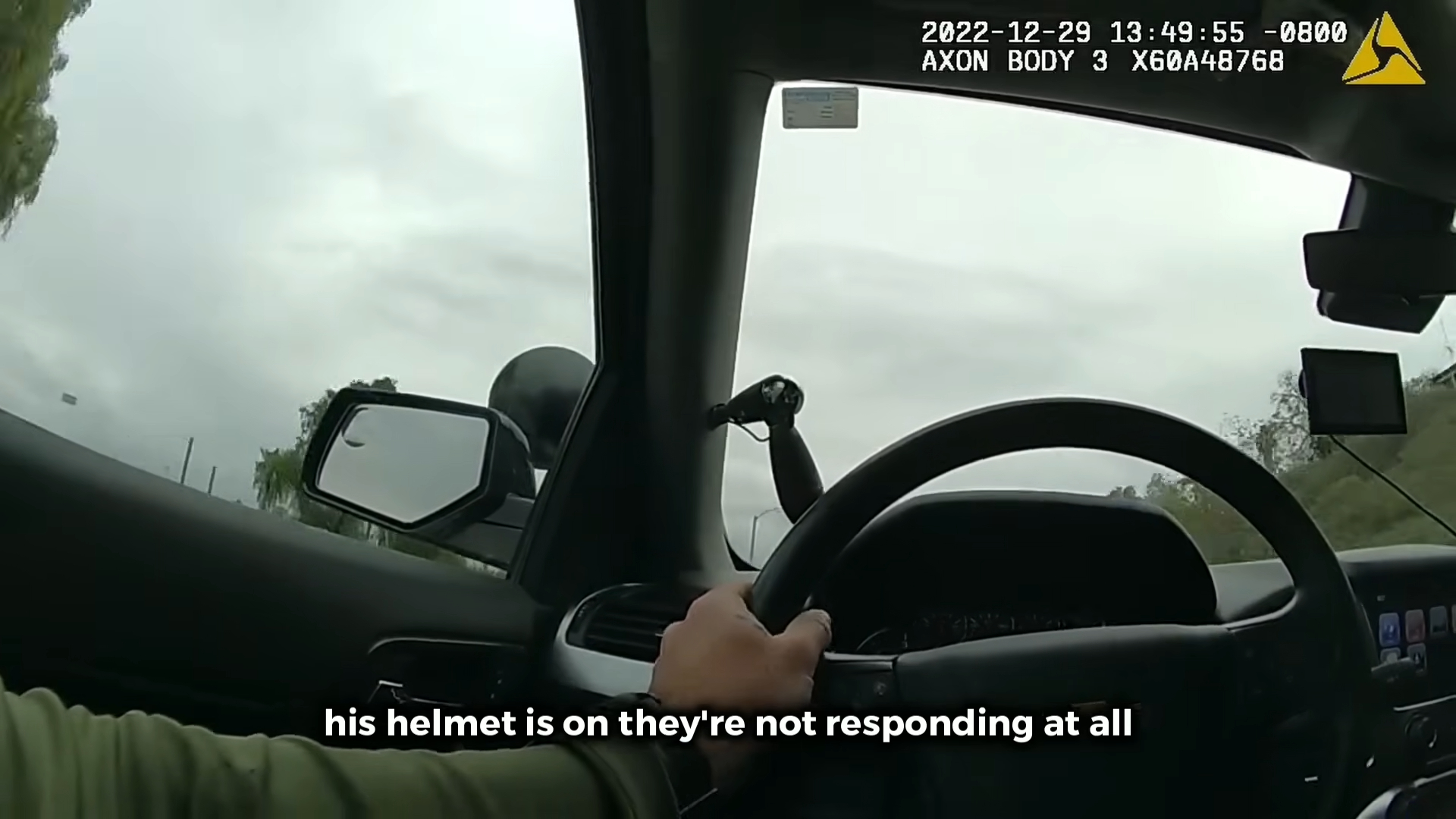
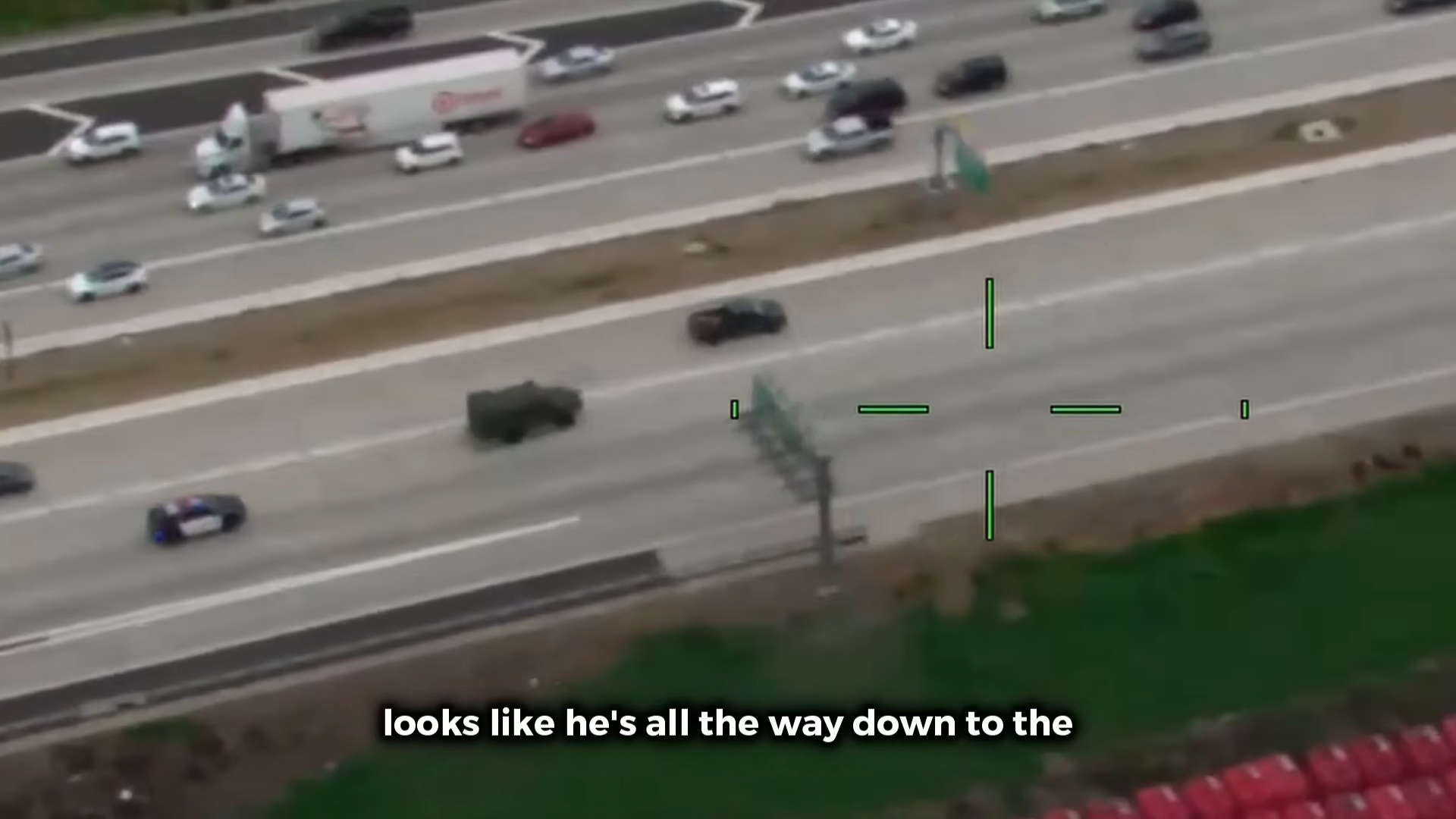
Tactical commanders made the decisive call to deploy heavy armored BearCat rescue vehicles to spearhead the pursuit convoy. Engineered with reinforced steel plating and high-torque drivetrains, the tactical vehicles moved into forward positions, shadowing the suspect’s evasive lane transitions along State Route 60. As the truck cut around civilian vehicles along the highway shoulder near concrete retaining walls, BearCat operators maintained a tight perimeter, preparing to execute a high-impact precision intervention technique the instant civilian traffic cleared sufficiently to minimize collateral harm.
As the chase pressed eastbound toward Jurupa Valley, mechanical friction took a catastrophic toll on the fugitive’s vehicle. With the rubber tires completely shredded away, the truck’s exposed metal wheel rims ground relentlessly into the grooved highway pavement. Thick clouds of acrid smoke, burning metal, and showers of sparks billowed from beneath the undercarriage as the rims disintegrated into jagged fragments.
Despite the vehicle slowing to speeds between 30 and 40 miles per hour on bare alloy, the fugitive showed no intention of yielding. In response, law enforcement orchestrated a logistical operation of staggering scale. More than seventy marked and unmarked patrol cruisers formed a multi-layered pursuit package stretching across the freeway corridor. To protect the public, dispatchers coordinated with secondary units to seal off freeway on-ramps and off-ramps ahead of the motorcade, successfully halting incoming traffic and creating a sterile corridor. Field supervisors strategically reordered the formation, ordering standard patrol cars to drop back and establish perimeter containment while specialized tactical units pushed forward behind the armored BearCats.
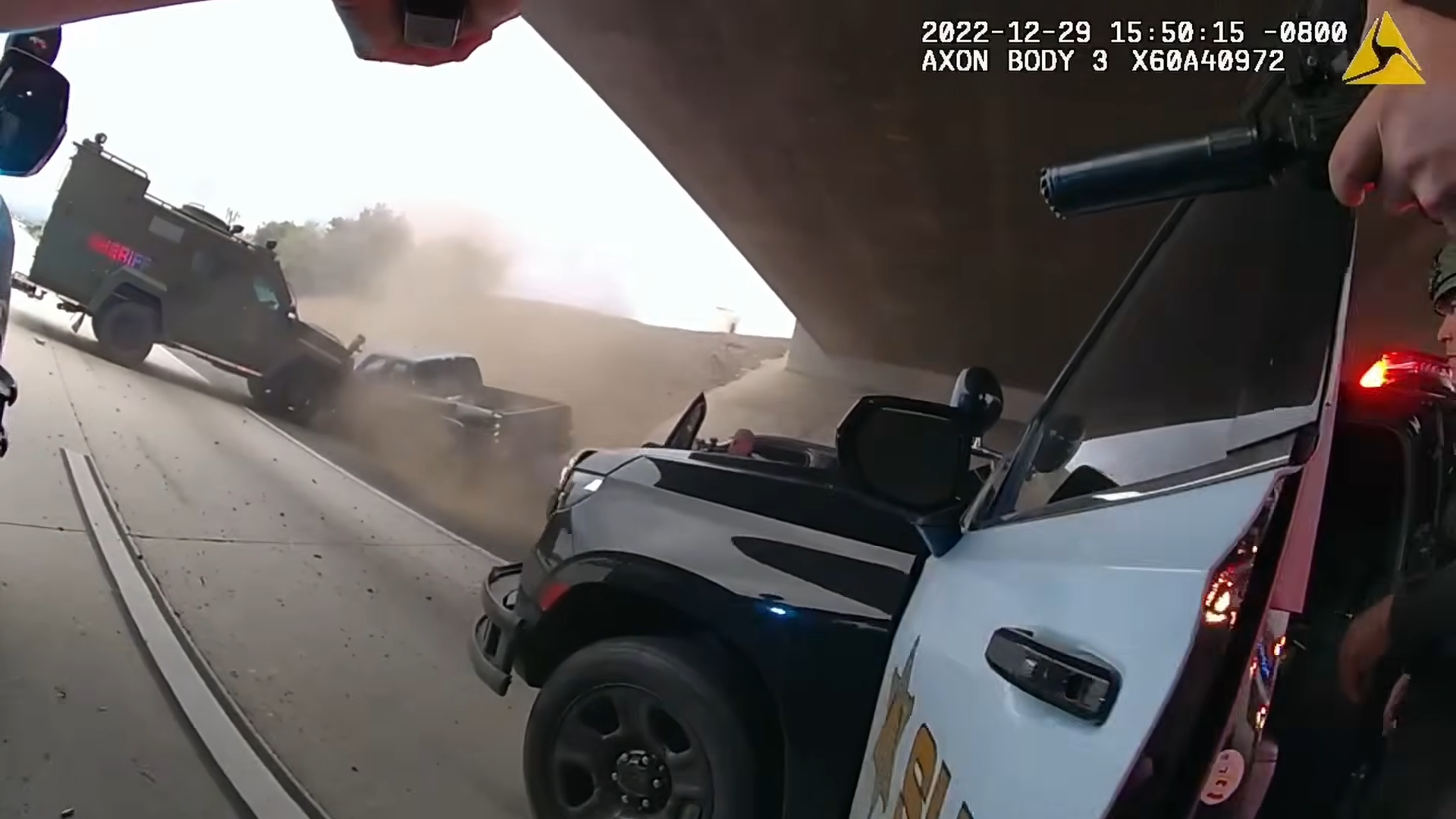
The protracted chase reached its catastrophic climax as the disintegrating truck crossed the bridge near the highway center divider. Slowing to approximately 15 miles per hour, the truck collided with the concrete barrier and drifted across traffic lanes directly underneath a freeway overpass. With nowhere left to run, the armed driver made a desperate final stand.
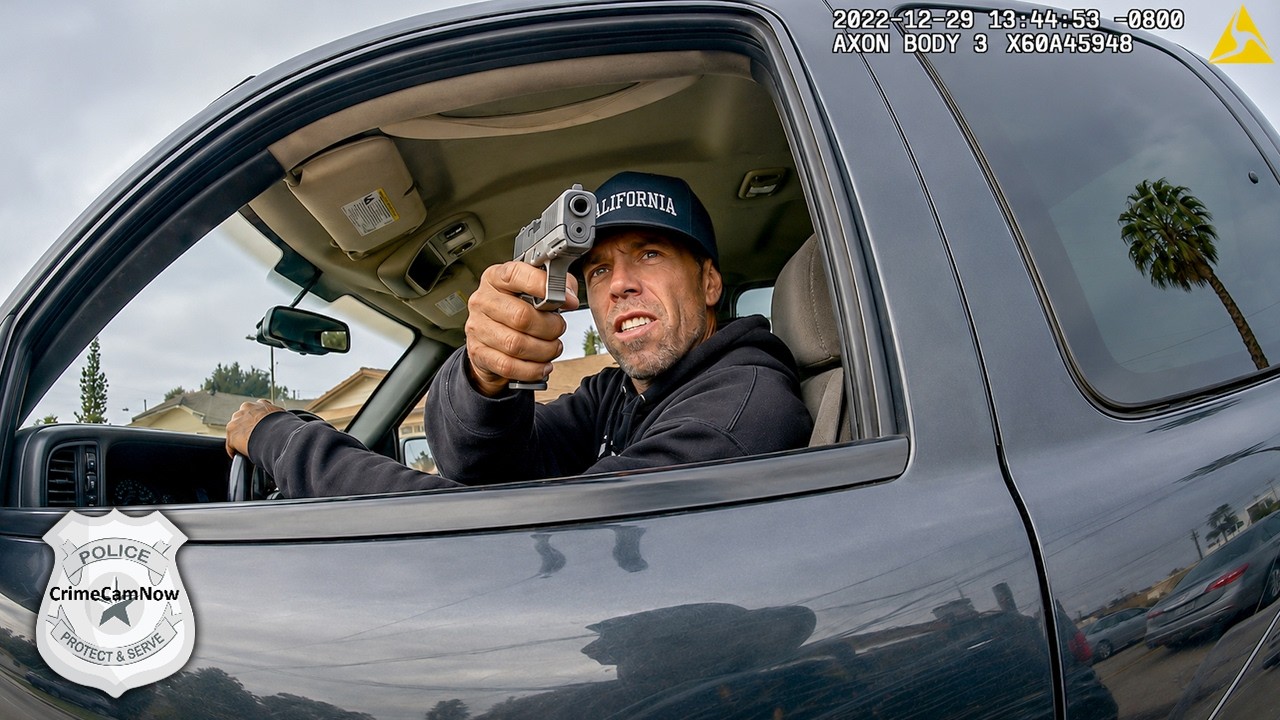
Before tactical teams could fully exit their vehicles, the suspect brandished a semi-automatic handgun through the vehicle window and opened fire directly on pursuing deputies. Facing an active, imminent threat of mass casualties beneath the overpass, multiple officers returned fire with overwhelming, pinpoint accuracy. A barrage of return fire pierced the truck’s cab, instantly neutralizing the shooter. Officers advanced cautiously behind the bullet-resistant shield of the BearCat, deploying tactical cover before declaring the suspect down and clearing the weapon.
Paramedics and tactical personnel converged on the disabled pickup, but the gunman was pronounced dead at the scene from multiple gunshot wounds. Formal identification soon revealed the perpetrator as 44-year-old William Shae McKay, a San Bernardino County resident whose extensive criminal history quickly ignited a firestorm of controversy surrounding the state’s judicial sentencing practices.
Investigation into McKay’s background unveiled a violent criminal dossier stretching back over two decades. His record was marred by convictions for armed robbery, felony kidnapping, and multiple counts of assault with a deadly weapon—including a prior incident in which he stabbed a California Highway Patrol canine. Most critically, law enforcement leaders disclosed that McKay had recently been convicted of a serious felony that qualified under California’s “Three Strikes” law as a third strike offense. By statutory guidelines, that conviction carried a mandatory minimum sentence of 25 years to life in state prison.
Yet, McKay was walking free on the afternoon he murdered Deputy Cordero. Rather than remanding the violent habitual offender into state custody without bail pending final sentencing, a San Bernardino County Superior Court judge intervened to dramatically reduce his bail amount. That judicial ruling allowed McKay to post bond and walk out of jail. When McKay subsequently failed to appear for his formal sentencing hearing, he was rearrested—only for the judicial system to once again permit his release into the community.
The revelation transformed the tragedy from a somber line-of-duty loss into a blistering indictment of progressive court rulings. At an emotional press briefing, Riverside County Sheriff Chad Bianco directed sharp condemnation at the decision that enabled a violent felon to roam free with a firearm, emphasizing that Deputy Cordero’s life was needlessly sacrificed due to a broken judicial apparatus that prioritized leniency over community safety.
Deputy Isaiah Cordero, 32, had served the Riverside County Sheriff’s Department with distinction since 2014, working eight years in correctional assignments before fulfilling his long-standing dream of becoming a motor enforcement deputy. Later that evening, a solemn procession of dozens of motorcycle officers and patrol vehicles escorted the fallen deputy’s flag-draped casket to the coroner’s office, leaving behind a grieving community and renewed national scrutiny over judicial decisions that place violent offenders back on American streets.