Baseball Was Xavier Taylor’s Favorite Place to Be. Then a Routine Warm-Up Changed Everything
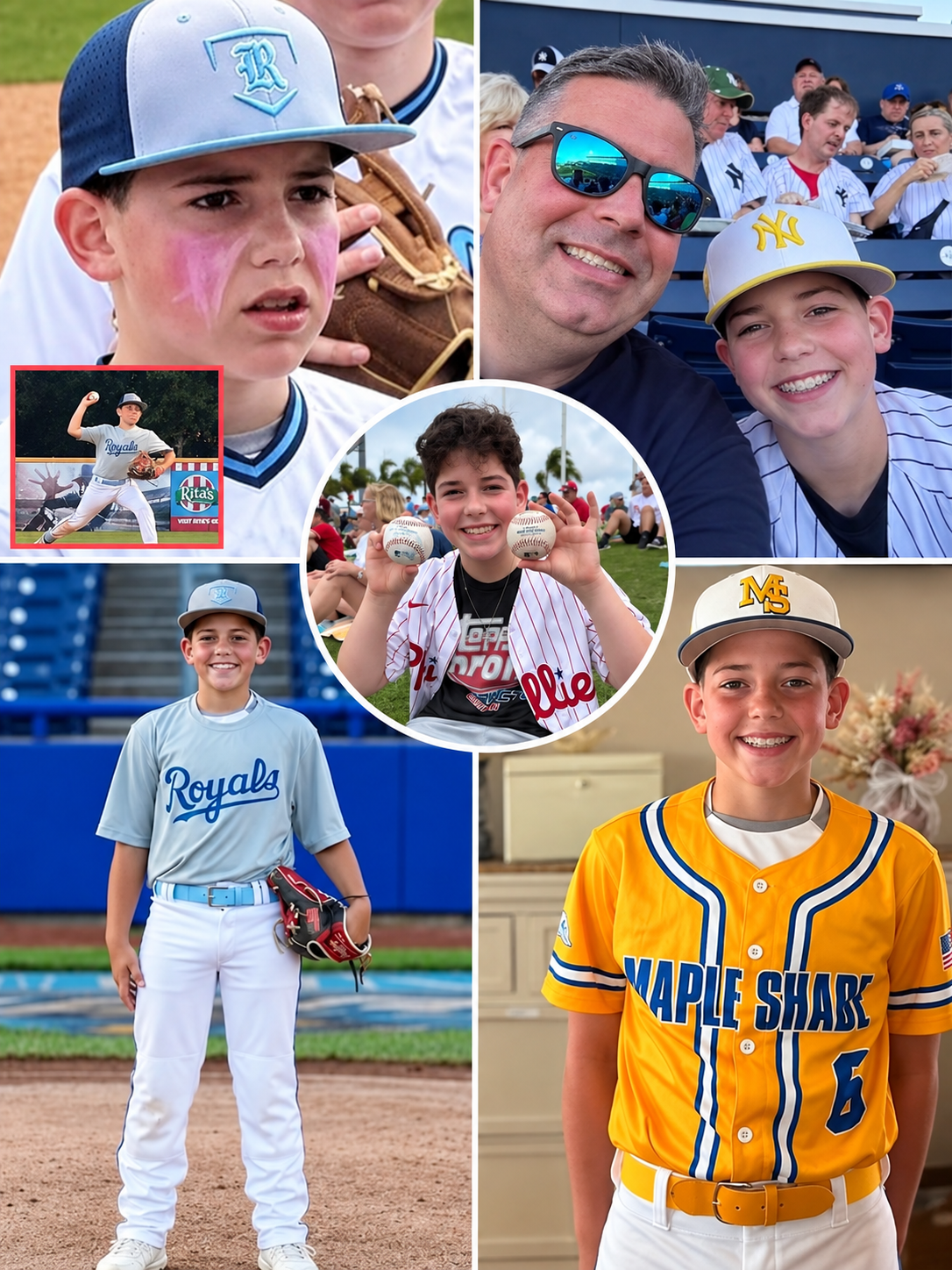
Xavier Taylor did not simply play baseball.
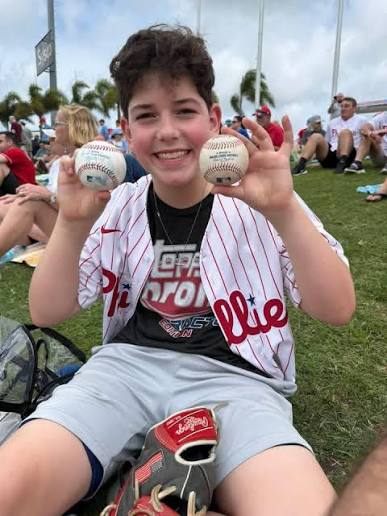
At 12 years old, the Maple Shade, New Jersey, boy played on three different teams. He collected and sold baseball cards. On a spring training trip to Florida, he managed to gather more than 200 player autographs.
His father, Greg Taylor, said Xavier was “obsessed” with the game and happiest when he was on a baseball field.
Then, on May 26, the place where Xavier spent so much of his childhood became the scene of an accident that changed everything.
He was warming up before a game at Fellowship Columbia Bank Field in Maple Shade when an errant throw struck him in the neck as he was walking back toward the dugout.
Xavier collapsed.
His father, a retired firefighter, rushed to help him. Greg later said his son went into cardiac arrest after being hit. Xavier was airlifted to Cooper University Hospital in Camden and admitted to intensive care in extremely critical condition, requiring a ventilator.
The circumstances made the accident particularly difficult for those around him to comprehend.
This was not an injury suffered while diving for a line drive, colliding with another player or attempting some unusually dangerous play.
The game had not even started.
It happened during one of baseball’s most ordinary rituals: players throwing the ball back and forth before taking the field.
Greg Taylor described what happened as a freak accident and publicly emphasized that there was no one to blame. The ball had simply gotten away from another player and struck Xavier in the wrong place at the wrong moment.
For a boy whose days revolved around baseball, the randomness of that moment is especially painful.
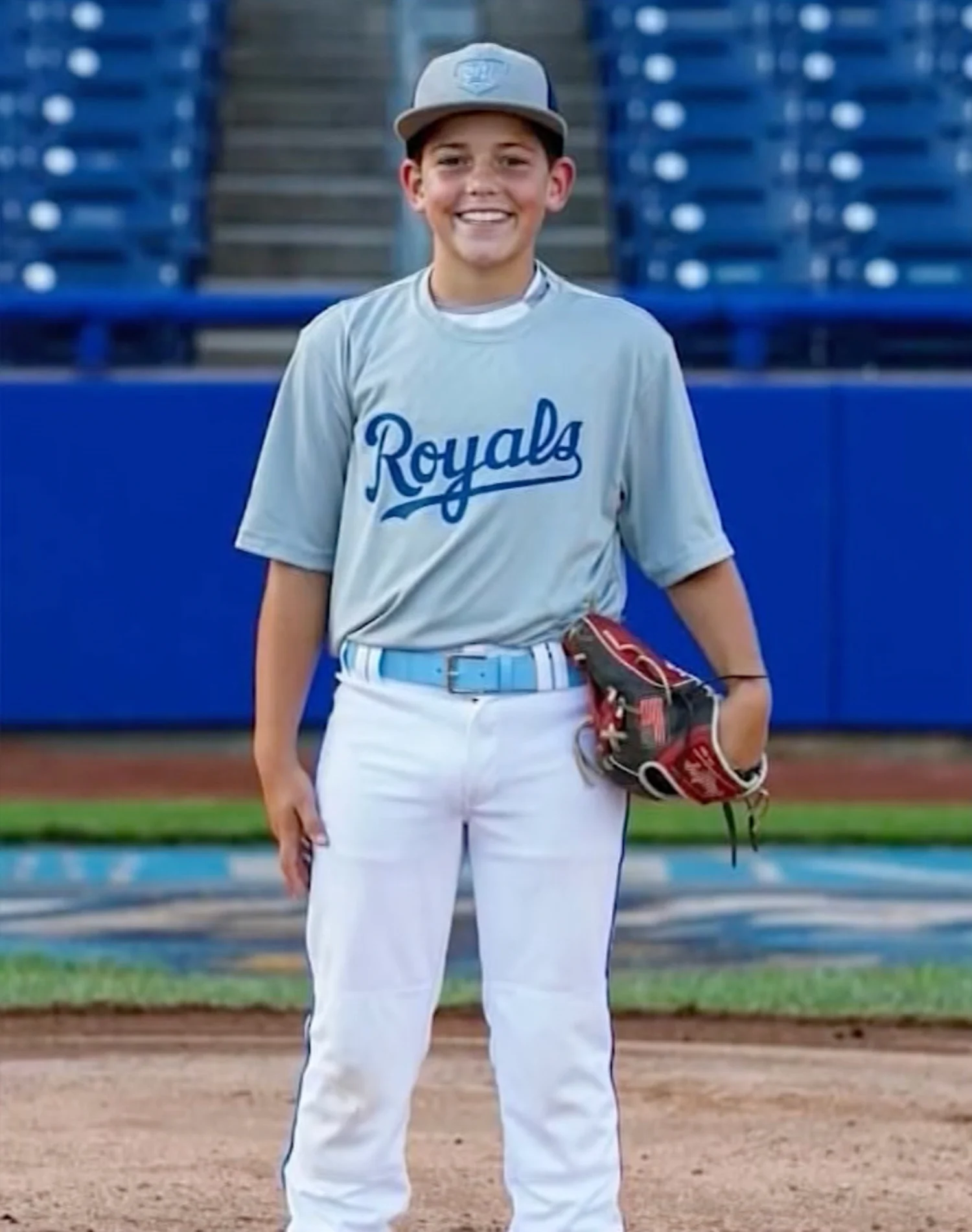
Xavier pitched and played shortstop. He competed for multiple teams rather than limiting the game to a single season or league. Baseball cards extended the sport beyond the field, and the hundreds of autographs he collected during spring training reflected how deeply the game had become part of his world.
After the accident, that same baseball world began surrounding him.
Two days later, hundreds of people returned to Fellowship Columbia Bank Field.
But this time they were not there to watch Xavier play.
They gathered for a prayer vigil.
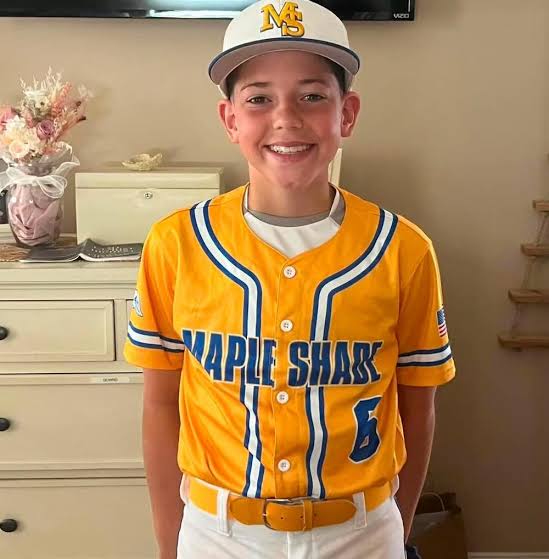
Friends, neighbors, teammates and other community members carried candles. Many wore shirts bearing Xavier’s jersey number, 6. His number was also painted prominently on the grass at the field where he had collapsed.
The transformation of the ballpark was striking.
Only days earlier, it had been the place Xavier arrived expecting to play another game.
Now it had become a place where people stood together hoping he would someday be able to return.
The support quickly spread beyond Maple Shade.
Youth baseball programs elsewhere in New Jersey and in other states posted messages for Xavier, organized fundraisers and found their own ways to stand with the Taylor family. Some players wrote his number on their arms or faces. A wider “Bats Out for Xavier” effort encouraged families to leave baseball bats outside their homes as a sign that the youth baseball community was thinking about him.
Major League Baseball connections appeared as well.
The Philadelphia Phillies and other professional baseball organizations showed support, and Phillies catcher Garrett Stubbs visited Xavier at the hospital. Players from the Tampa Bay Rays also sent messages. On June 3, the Ben Franklin Bridge and Camden City Hall were illuminated in blue in his honor.
The Maple Shade Youth Baseball program also had to reconsider what came next.
The accident occurred in the middle of a season built around games still to be played, but the normal rhythm of youth baseball suddenly felt different. The organization canceled the remainder of its Majors division season while postponing some related events, even as other parts of the program continued.
For Xavier’s family, however, the focus remained at Cooper University Hospital.
In the days after the accident, Greg spoke openly about the seriousness of his son’s condition while continuing to express hope for his recovery. Xavier remained on a ventilator through subsequent public updates.
On June 13, his father and brother threw a ceremonial first pitch at a Little League game while wearing shirts reading “Shade Strong for Xavier.” Greg again thanked the community for the extraordinary amount of support surrounding his family.
Nearly two weeks later, that support was still continuing.
On June 26, members of a local Jeep group organized a parade through Camden that ended outside Cooper University Hospital. Family members, teammates and residents gathered along the route.
The following day, 6abc reported that Xavier remained in critical condition — one month after the baseball struck him during warm-ups.
No later reliable public report located as of September 17 provides a definitive outcome for his recovery.
That uncertainty matters.
Xavier’s story should not be written as though its ending is already known.
What is known is how completely baseball shaped his life before May 26, and how quickly the sport’s community reshaped itself around him afterward.
A field where Xavier once went to pitch, field ground balls and prepare for games became the place where hundreds stood with candles.
The number 6, once simply his jersey number, became a symbol people wore in his support.
Bats that normally belonged in dugouts and equipment bags appeared outside homes as messages for a hospitalized boy many of those families had never met.
There is a painful irony in all of it.
Xavier loved baseball enough to play for three teams, collect its cards and spend a trip chasing hundreds of autographs.
He was happiest on the field, his father said.
And it was during an ordinary warm-up on that same kind of field that one stray baseball changed the course of his young life.
The game Xavier loved brought him to Fellowship Columbia Bank Field that afternoon.
Afterward, the people who loved the game too kept returning there — no longer just to play, but to make sure Xavier and his family knew that his place in their baseball community had not been forgotten.