DESCENDANTS 5 — They inherited the throne… but not the peace.
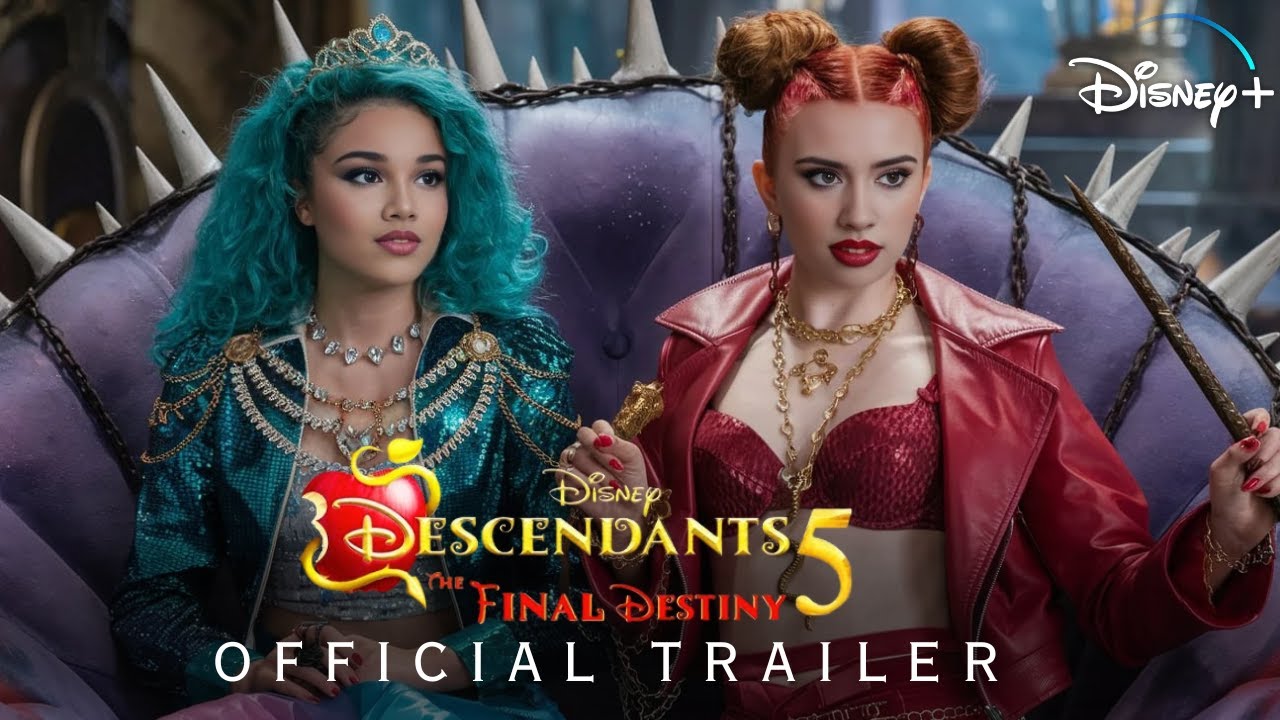
The world of Auradon has always shimmered with the illusion of harmony—a kingdom built on second chances, where the children of villains were promised a future free from the shadows of their past. But Descendants 5 dares to peel back that illusion, revealing something far more fragile beneath the glitter: a legacy that was never truly buried.
This time, the story doesn’t begin with rebellion—it begins with silence. A strange, creeping stillness settles over Auradon, as if the magic that once protected it is beginning to hesitate. The new generation of leaders, heirs of both heroes and villains, find themselves facing a truth no one prepared them for: peace is not something you inherit. It’s something you fight to keep.
At the center of it all is a new protagonist, one who carries a name that echoes loudly in both fear and admiration. Torn between expectation and identity, they embody the very conflict the film seeks to explore—what happens when your past defines you before you even have a chance to choose who you are? It’s a quieter, more introspective journey than previous entries, but one that cuts deeper.
What makes Descendants 5 stand out is its willingness to mature alongside its audience. The bright colors and catchy rhythms are still there, but they feel layered now—almost deceptive. Beneath every musical number lies tension, every smile hiding uncertainty. The film understands that growing up means realizing the world isn’t as neatly divided as heroes and villains.

The return of familiar legacies adds weight to the narrative, but they no longer dominate it. Instead, they linger like ghosts—reminders of choices made, mistakes repeated, and cycles that threaten to continue. The film subtly asks: can a new generation truly break free, or are they destined to rewrite the same story with different names?
Visually, the film leans into contrast more than ever before. Auradon is no longer just a glowing paradise—it flickers, shadows creeping into its golden halls. The Isle, once a place of exile, begins to feel strangely alive again, as if it’s calling something back. This duality mirrors the characters themselves, caught between light and darkness in ways that feel more human than ever.

And then there’s the music—still infectious, still unforgettable, but now carrying an emotional weight that lingers long after the final note. The songs don’t just entertain; they reveal. They question loyalty, identity, and the cost of rewriting destiny. You don’t just hear them—you feel them.
What’s most surprising, though, is how personal this installment feels. Beneath the fantasy, Descendants 5 is a story about pressure—the kind that comes from living up to a legacy you didn’t ask for. It’s about the quiet fear of becoming someone you were never meant to be, and the courage it takes to choose differently.
The stakes may not be louder, but they are heavier. Instead of a single villain to defeat, the characters are forced to confront something far more complex: themselves. And in doing so, the film shifts from a tale of good versus evil to something far more compelling—a struggle for identity in a world that refuses to let you forget where you came from.

By the time the final act unfolds, it becomes clear that this isn’t just another chapter—it’s a turning point. The story doesn’t tie everything neatly together. Instead, it leaves you with questions, with possibilities, with the unsettling sense that the future of Auradon is far from certain.
Descendants 5 isn’t just about наследство—it’s about what you choose to do with it. And in a world built on fairy tales, it dares to ask a very real question: what if happily ever after was never guaranteed?