Man Allegedly Tried to Sell a Tiger Cub to an Undercover Officer—Then Called It “Just a Kitten”
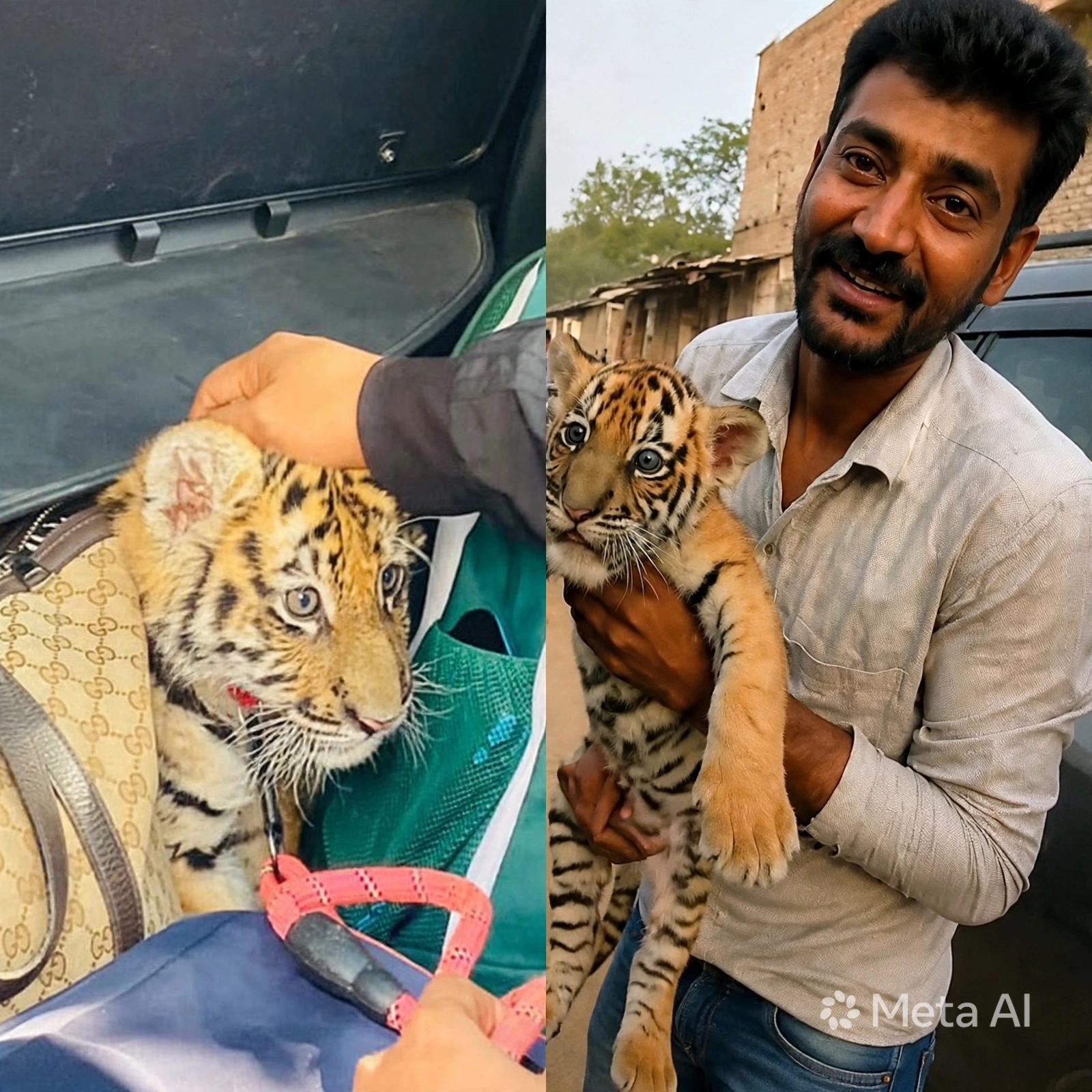
A suspicious offer to the wrong customer
What reportedly began as an ordinary street encounter quickly turned into a bizarre confrontation involving an undercover police officer, an alleged wildlife seller and a young tiger.
According to an account circulating online, a man approached someone he believed was a tourist and offered to sell him a rare animal at what he described as a special price.
The stranger appeared to be an easy customer—someone unfamiliar with the area who might be interested in owning an unusual exotic pet.
But the potential buyer was allegedly not a tourist at all.
He was an undercover police officer.
And the animal being offered was not an ordinary household pet. It was reportedly a tiger cub.
The animal hidden behind the sales pitch
The man was reportedly carrying the young animal while attempting to negotiate a deal.
At first glance, a tiger cub can appear small, playful and harmless. However, its distinctive striped coat, muscular body and large paws make it difficult to mistake for a domestic cat.
According to the online account, the seller confidently presented the cub as a valuable animal and appeared convinced that he had found a willing buyer.
The situation changed the moment the supposed tourist revealed his identity as a police officer.
Faced with the possibility that the attempted sale had been exposed, the seller reportedly abandoned his original sales pitch and offered an explanation that stunned those following the story.
He allegedly claimed the animal was “just a kitten.”
An explanation that raised even more questions
The description immediately appeared difficult to accept.
Although tigers belong to the cat family, a tiger cub is a wild animal—not a domesticated kitten suitable for life inside an ordinary home.
Tigers are among the largest cats in the world. Even when they are young, they possess physical characteristics and behavioral needs that are completely different from those of common household pets. Adult tigers are powerful predators equipped with strong jaws, sharp teeth and agile bodies.
The alleged attempt to redefine the cub as a kitten may have sounded humorous, but it also highlighted the seriousness of the encounter.
Questions remain about where the animal came from, how it had been transported and whether other wildlife may have been involved.
The circulating report does not identify the alleged seller, the police agency involved or the location of the encounter. It also does not provide details about possible charges or explain where the tiger cub was taken afterward. Those details would require confirmation from an official police or wildlife authority.
The darker reality behind exotic-animal sales
Behind the unusual excuse lies a much larger international problem.
Wildlife trafficking is not limited to animal skins, horns, bones or other body parts. Live animals are also captured, bred, transported and sold to people seeking exotic pets, private collections or tourist attractions.
Young animals can be particularly valuable to traffickers because their size and appearance make them easier to transport and more attractive to inexperienced buyers.
A tiger cub may appear manageable during the first months of its life. However, it will eventually grow into a large carnivore requiring specialized food, secure facilities, professional veterinary care and enough space to express its natural behavior.
An ordinary home cannot safely or humanely meet those needs.
WWF estimates that only about 5,574 tigers remain in the wild. The organization identifies poaching, trafficking and habitat loss among the continuing threats facing the species.
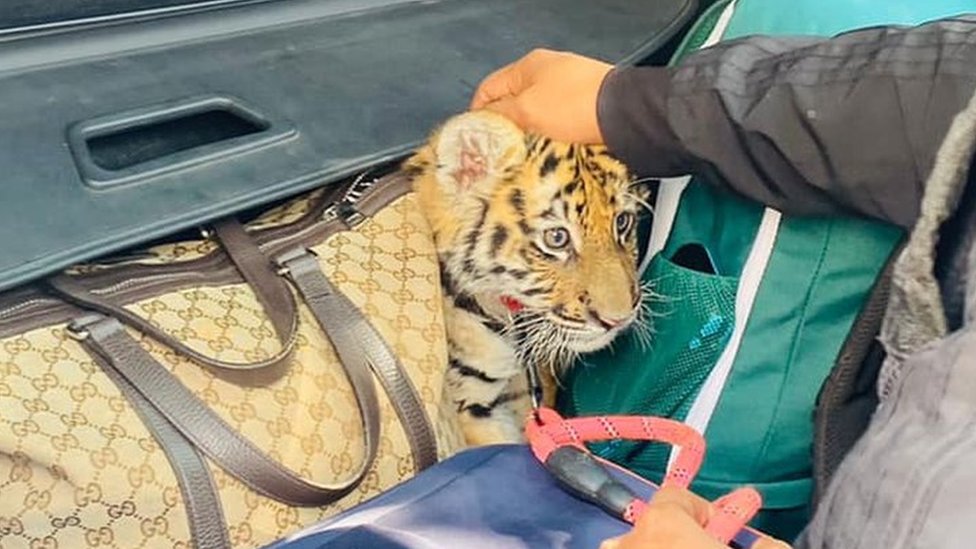
From a cute cub to a powerful predator
The exotic-pet trade often depends on buyers focusing on how an animal looks when it is young rather than what it will become.
Tiger cubs can attract attention through photographs and social-media videos. Their playful behavior may resemble that of domestic cats, encouraging some people to believe they can be raised like conventional pets.
That image changes rapidly as the animal grows.
Depending on the population and sex, adult tigers can weigh hundreds of pounds. They are solitary territorial predators whose instincts cannot simply be removed through human handling.
Even an animal raised around people can become dangerous without intending to attack. A playful movement from a tiger may cause severe injury because of the animal’s strength, teeth and claws.
The challenge is not only protecting people. Tigers kept in unsuitable conditions may experience chronic stress, nutritional problems, lack of exercise and poor veterinary care.
When owners can no longer control them, the animals may be abandoned, confined permanently or transferred repeatedly between facilities.
Undercover operations can expose hidden markets
Investigators frequently use undercover officers when suspected illegal transactions would otherwise be difficult to observe.
A seller may avoid openly advertising an endangered animal or may communicate only with people believed to be trusted buyers. By posing as a customer, an investigator may be able to document the offer, identify other people involved and determine where the animal originated.
Similar cases have resulted in real arrests.
In January 2023, authorities in Phoenix accused a 25-year-old man of advertising a tiger cub online and offering to sell it to undercover officers for $20,000. Police later reported finding an alligator and multiple snapping turtles while searching his home. The animals were transferred to state wildlife officials. That documented case is separate from the unidentified encounter described in the circulating report.
International enforcement operations also show the scale of the wider market. During Operation Thunder 2024, authorities reported seizing nearly 20,000 live animals and arresting hundreds of suspects in cases involving protected wildlife and plants.
What happens to a rescued tiger cub?
When a live wild animal is recovered, removing it from the seller is only the first step.
Wildlife professionals must determine its health, age, origin and immediate care requirements. The animal may need to be examined for dehydration, malnutrition, disease or injuries caused by confinement and transportation.
Authorities must also decide where it can be placed safely.
Releasing a captive cub directly into the wild is generally not a simple solution. An animal that has spent significant time around humans may lack the skills needed to hunt and survive independently. It may also have become too accustomed to people.
Depending on the circumstances, rescued animals may be transferred to an accredited zoo, wildlife sanctuary, rehabilitation facility or specialized government center.
The long-term outcome depends heavily on the animal’s condition and history.

A strange excuse with a serious meaning
The claim that a visibly striped tiger cub was “just a kitten” is the detail that made the reported encounter spread online.
It is easy to understand why people reacted with disbelief. The explanation sounds almost too absurd to be real.
But focusing only on the humor risks overlooking the animal at the center of the story.
The cub was not merchandise, a status symbol or a harmless novelty. It was a living wild animal whose future may have depended on whether the attempted transaction was stopped.
The case also serves as a warning to potential buyers. Purchasing an exotic animal does not rescue it from trafficking. The money can instead reward sellers and create demand for more animals to be captured or bred.
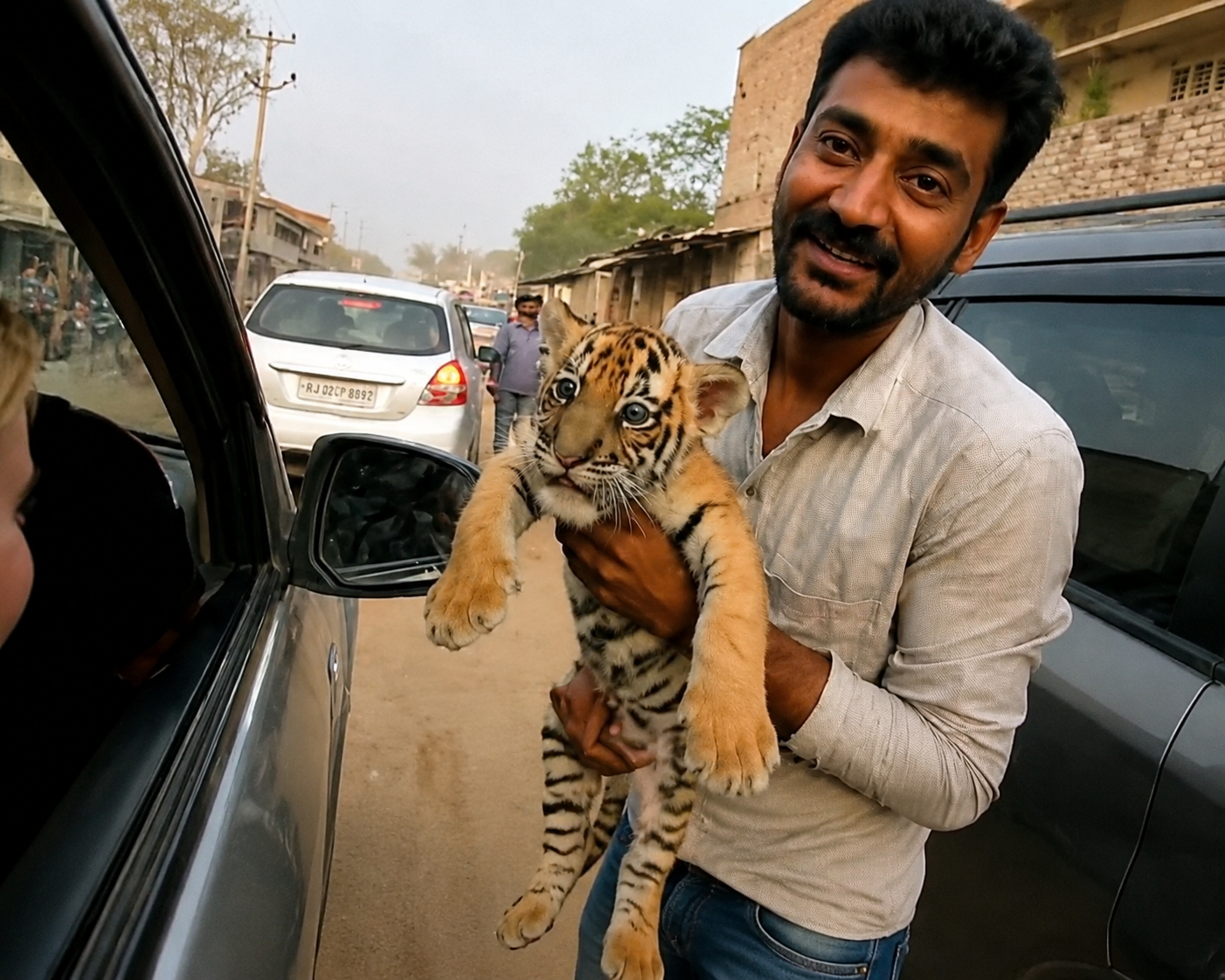
Questions the public still deserves answered
Because key identifying information is absent from the original account, several important questions remain unresolved:
Where did the encounter take place?
Was the alleged seller arrested or charged?
How did he obtain the tiger cub?
Was he acting alone, or was he connected to a wider wildlife-trading network?
Most importantly, where is the cub now?
Until an identified law-enforcement agency releases supporting information, the precise circumstances of the viral story should be treated cautiously.
The broader danger, however, is well documented. Live wild animals continue to be trafficked, and young animals remain especially vulnerable because their appearance can disguise the suffering and danger behind the trade.
What reportedly began as an unusual offer to a supposed tourist may therefore represent something much larger—a hidden market in which endangered animals are treated as products.
The seller may have called the tiger “just a kitten.”
But the encounter, and the global trade it appears to reflect, is anything but harmless.