The Blind Daughter Married to a Beggar—But the Truth About Him Changed Everything
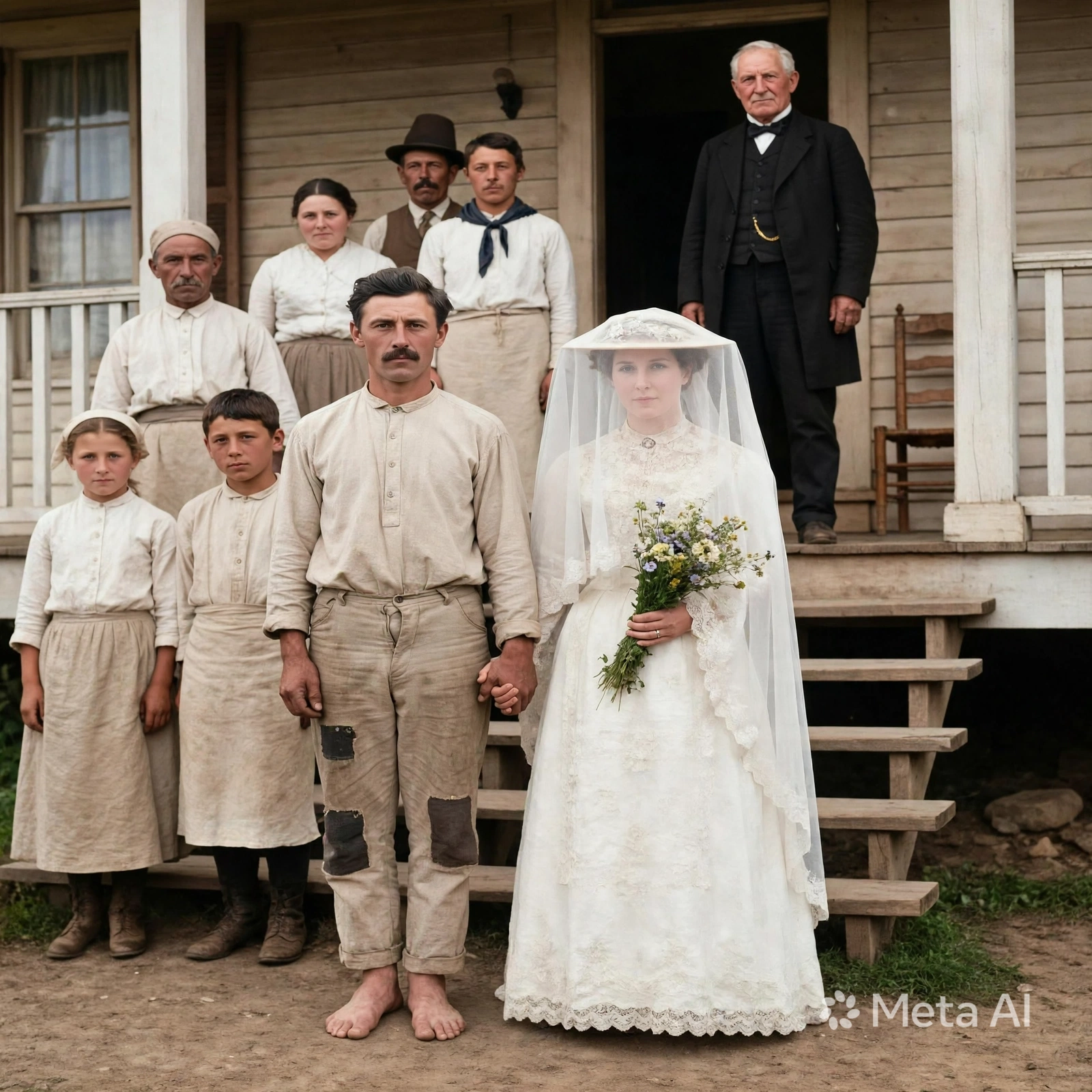
The daughter her family refused to see
Zainab had been blind since birth, but the darkness surrounding her life did not come from her inability to see.
It came from the people who could see her perfectly—and still chose to treat her as though she had no value.
She was born into a family that cared deeply about appearances. Her father wanted neighbors to admire his home, praise his children and speak respectfully of his name. Zainab’s two younger sisters fit easily into the life he wanted to display. They were dressed beautifully, introduced proudly to visitors and praised throughout the village.
Zainab was different.
Whenever guests arrived, her father sent her to another room. If relatives asked about her, he claimed she was resting or feeling unwell. He did not want anyone to see the daughter he regarded as an embarrassment.
Yet Zainab had not always lived without love.
Her mother had treated her blindness not as a tragedy, but as one part of who she was. She guided Zainab’s hands across unfamiliar objects, described the colors of flowers and taught her to recognize the world through sound, touch and imagination.
“You may not see with your eyes,” her mother often told her, “but your heart understands things many people never notice.”
Those words became the foundation of Zainab’s strength.
But when Zainab was five years old, her mother became ill and died.
The warmth inside the family home disappeared with her.
Her father’s grief slowly turned into bitterness. Instead of protecting Zainab, he blamed her for the unhappiness he felt. He stopped speaking to her with affection. At meals, she was often left alone. When her sisters received new clothing or gifts, Zainab was expected to remain silent and grateful for whatever she was given.
Over the years, she learned to survive without asking for much.
She memorized every corner of the house. She identified relatives by their footsteps and recognized emotions through changes in their voices. She learned to hide her tears because crying only brought more criticism.
But a quiet hope remained inside her.
She believed that somewhere in the world, there might be one person willing to see beyond her blindness.
A marriage arranged as a punishment
When Zainab turned 21, her father entered her room carrying a folded piece of fabric.
She was sitting on the floor, reading a Braille book that had belonged to her mother. The book was one of the few possessions that made her feel connected to the woman who had once protected her.
Her father placed the fabric in her lap.
“You are getting married tomorrow,” he announced.
For several moments, Zainab could not respond.
Marriage had never been discussed with her. Her father had never asked about her hopes or whether she wanted a family of her own. She had grown accustomed to believing that no one would ever choose her.
“To whom?” she finally asked.
“A man who sits near the mosque,” her father replied. “He begs for money.”
The words struck her like an insult.
“A beggar?”
“You are blind, and he is poor,” her father said coldly. “At least someone will take responsibility for you.”
Zainab understood what he truly meant.
This was not an effort to secure her future. Her father simply wanted her gone.
The wedding took place the following day with almost no preparation. There were no joyful decorations, no music and no celebration of two people beginning a life together.
Villagers gathered mostly to watch.
Some laughed openly. Others whispered about the strange marriage between a blind woman and a beggar. They spoke as though the couple were not standing close enough to hear every cruel remark.
After the ceremony, Zainab’s father handed her a small bag of clothing. He then placed her hand into the hand of the man she had just married.
“She is your responsibility now,” he said.
Then he walked away without saying goodbye.
The man everyone called worthless
Zainab’s husband was named Yusha.
She knew almost nothing about him. According to the villagers, he begged near the mosque and lived in a damaged house beyond the edge of the village. His clothes were old, his possessions were few and no one treated him with respect.
As they walked toward his home, Zainab prepared herself for another life of rejection.
She expected Yusha to resent her. Perhaps he had agreed to the marriage only because her father had offered him something. Perhaps she had simply been transferred from one unloving household to another.
But before they reached the house, Yusha spoke gently.
“My home is not much,” he said. “But you will be safe there.”
Zainab turned toward his voice.
Safe.
It was a simple promise, but no one had made it to her in years.
Yusha’s home was small. The walls were cracked, the roof was old and there was almost no furniture. Yet the place felt different from her father’s large house.
It was poor, but it was not cruel.
Yusha carefully guided her through every part of the home. He explained where the cups were kept, how many steps separated the sleeping area from the door and which sections of the floor were uneven.
That evening, he prepared tea and placed the cup gently into her hands.
When night came, he gave Zainab the only good blanket in the house.
“You need it more than I do,” he told her.
Hours later, Zainab woke and realized that Yusha was sleeping near the entrance instead of beside her.
“Why are you lying there?” she asked.
“To make sure no one enters without passing me first,” he answered.
A man who possessed almost nothing was offering her protection.
A man mocked by the entire village had shown her more consideration in one day than her family had shown her in years.
For the first time since her mother’s death, Zainab felt valued.
A life built on dignity instead of wealth
In the weeks that followed, Yusha continued surprising her.
He never treated Zainab as helpless. He did not make decisions without consulting her or speak to her as though blindness had taken away her intelligence.
He asked what she thought.
He wanted to know which foods she liked, what stories she remembered and what dreams she had hidden during her years of isolation.
At first, Zainab struggled to answer. No one had ever shown interest in her opinions.
Yusha encouraged her to take part in their daily life. He taught her the path around the house and showed her how to identify different plants by touch and scent. When they walked together, he described everything she could not see.
One morning, they stood near a river.
“The sunlight is touching the water,” Yusha said. “It looks like thousands of small pieces of gold floating together.”
“What color is the sky?” Zainab asked.
Yusha paused.
“Today, it looks like a peaceful song.”
Zainab laughed.
“A song does not have a color.”
“Perhaps not,” he replied. “But some things are understood better through feeling than sight.”
Through Yusha’s descriptions, Zainab began building a world in her imagination.
He told her about mountains rising beyond the village, birds crossing the morning sky and stars appearing after sunset. He described flowers, changing seasons and the way clouds moved before rain.
Zainab could not see those things with her eyes, but she began to experience them through his words.
More importantly, she began discovering herself.
The woman who had spent years speaking quietly started laughing again. She sang while preparing meals. She told stories from her childhood and spoke openly about her feelings.
Yusha did not give her luxury.
He gave her respect.
Over time, respect became trust—and trust became love.
The question Yusha refused to answer
One evening, Zainab and Yusha sat outside their home while the village grew quiet.
She reached for his hand.
“Were you always a beggar?” she asked.
Yusha became silent.
“No,” he eventually replied.
His voice carried a pain Zainab had never heard before.
She waited for him to explain, but he changed the subject. Zainab did not pressure him. He had respected her boundaries, and she chose to respect his.
Still, the answer remained in her thoughts.
Yusha spoke with unusual knowledge. He understood business, land ownership and the behavior of powerful men. Although villagers treated him as ignorant, he carried himself with calm discipline.
Sometimes people who passed their home greeted him with a mixture of recognition and fear.
Zainab sensed that the torn clothes and simple home concealed a much larger story.
She did not know that the truth was about to reveal itself.
A frightening encounter at the market
One afternoon, Zainab decided to visit the village market alone.
It was the first time she had attempted such a long journey without Yusha. He explained the route carefully: three turns, a large tree near the road, the sound of a fountain and then the voices of the merchants.
“You can do this,” he told her.
Those four words meant more than he realized.
Her father had spent years telling her what she could not do. Yusha was the first person who encouraged her to discover what she could.
Zainab followed the route slowly, listening for each landmark.
Halfway to the market, someone suddenly grabbed her arm.
The grip was hard and unfamiliar.
“Let me go!” she cried.
The stranger laughed.
“So this is where you have been hiding,” he said.
Zainab froze. She did not recognize the voice, but the man seemed to know something about her.
Before she could pull away, another voice came from behind them.
“Take your hand off her.”
The command was calm, but it carried unmistakable authority.
The stranger immediately released Zainab.
She heard something unexpected in his breathing.
Fear.
The man who had grabbed her was afraid of Yusha.
Zainab had heard her husband speak gently, patiently and lovingly. But now his voice belonged to someone accustomed to being obeyed.
The confrontation ended quickly. The stranger backed away and disappeared into the crowd.
But Zainab knew that Yusha could no longer avoid telling her the truth.
The secret behind the beggar’s clothes
Yusha had not been born into poverty.
Years earlier, he had belonged to a wealthy and respected family. He had controlled valuable land, successful businesses and resources that gave him influence throughout the region.
People had once welcomed him into their homes and competed for his attention.
Then members of his own family betrayed him.
Through deception and manipulation, they took control of his property and destroyed his reputation. People who had once praised him disappeared as soon as his wealth was gone.
Yusha could have devoted the rest of his life to revenge.
Instead, the experience changed the way he understood the world.
He realized that much of the respect he had received was never genuine. People had admired his possessions, not his character. When the possessions vanished, their loyalty vanished with them.
Yusha walked away from his former life.
He began living simply and helping people whom society ignored. He shared food with the hungry, defended those who had no protection and offered assistance without demanding recognition.
At times, he accepted money near the mosque, but he also redistributed what he received to people who needed it more.
The villagers saw torn clothing and assumed failure.
They called him a beggar because they measured human worth through wealth.
They never asked who he had been—or why he had chosen that life.
Zainab finally understood why Yusha had treated her differently.
He knew what it meant to lose value in the eyes of others.
Both of them had been rejected for reasons that revealed more about society than about themselves.
Zainab had been dismissed because she could not see.
Yusha had been dismissed because he appeared to own nothing.
Together, they had created a home richer in dignity than the houses of those who mocked them.
The village suddenly changed its judgment
News of Yusha’s past spread quickly.
The same villagers who had laughed at the wedding began treating the couple differently. People who once ignored Zainab now wanted to congratulate her. Those who had refused to speak to Yusha suddenly addressed him with respect.
Their behavior exposed an uncomfortable truth.
Nothing important about Zainab or Yusha had changed.
Only the villagers’ knowledge of Yusha’s former wealth had changed.
He was still the same man who had prepared tea for his wife, offered her his only blanket and slept near the door to protect her.
Zainab was still the same intelligent and compassionate woman who had endured years of rejection.
But now that people believed Yusha had once been powerful, they considered him worthy of respect.
Zainab refused to be impressed by their sudden kindness.
She had learned the difference between people who valued a person’s heart and people who valued only status.
The father who returned too late
Eventually, Zainab’s father heard the story.
He had arranged the marriage believing he was removing a burden from his household. Now the village was speaking with admiration about the daughter he had hidden away.
He visited Zainab and Yusha’s home.
For the first time in years, he spoke to his eldest daughter with softness. He attempted to explain that grief had made him bitter and that he had not understood how deeply his actions had hurt her.
Perhaps he expected immediate forgiveness.
But Zainab was no longer the frightened young woman he had handed over after the wedding.
She was confident, loved and fully aware of her own worth.
She listened until her father finished speaking.
Then she answered calmly.
“I was born blind,” she said. “But I was never blind to kindness.”
Her father lowered his head.
“The people who could see my eyes never saw my heart,” she continued. “The man you believed was beneath us was the first person who treated me as an equal.”
Her words contained no cruelty.
She did not need revenge. Her life had already proven how wrong her father had been.
The deepest blindness had never belonged to Zainab.
It belonged to those who judged her without recognizing her humanity.
What Zainab and Yusha truly discovered
Some villagers later told the story as though its greatest surprise was that a beggar had once been wealthy.
But that was not the real discovery.
Yusha’s former fortune did not make him worthy of Zainab’s love. His kindness had already done that.
Zainab did not become valuable because she married a man with a hidden past. She had always been valuable, even when her family refused to recognize it.
Their marriage transformed both of their lives because each saw what others had ignored.
Yusha saw a capable, thoughtful woman rather than a blind burden.
Zainab saw a compassionate man rather than a poor beggar.
They built a life based not on beauty, money or public approval, but on trust.
Their home remained simple, but it was filled with laughter. Yusha continued helping people who had been rejected, while Zainab became a source of comfort and wisdom for women who felt powerless in their own families.
Together, they proved that a person’s worth cannot be measured by what is visible from the outside.
Eyes can recognize expensive clothing and beautiful faces while missing cruelty.
They can notice poverty while failing to see generosity.
They can identify disability while overlooking strength.
Zainab had lived her entire life without physical sight, yet she understood people more clearly than those who judged her.
And Yusha, the man everyone dismissed as a beggar, possessed a form of wealth no betrayal could take from him.
He knew how to love without humiliation.
He knew how to protect without controlling.
He knew how to give without asking to be praised.
The marriage that began as a punishment became Zainab’s path toward freedom.
The husband her family considered worthless became the first person to show her what dignity felt like.
And the woman everyone called a burden became proof that the greatest blindness is not the inability to see.
It is the refusal to recognize the value of another human being.