Every Morning He Drew Smiling Faces in the Sand. Then One Day, He Drew a Sad Face—and Everyone Froze
The Orangutan Who Made Thousands Smile
Visitors arrived at the zoo expecting to see playful orangutans swinging through ropes and climbing towering structures.
Instead, many found themselves captivated by something far quieter.
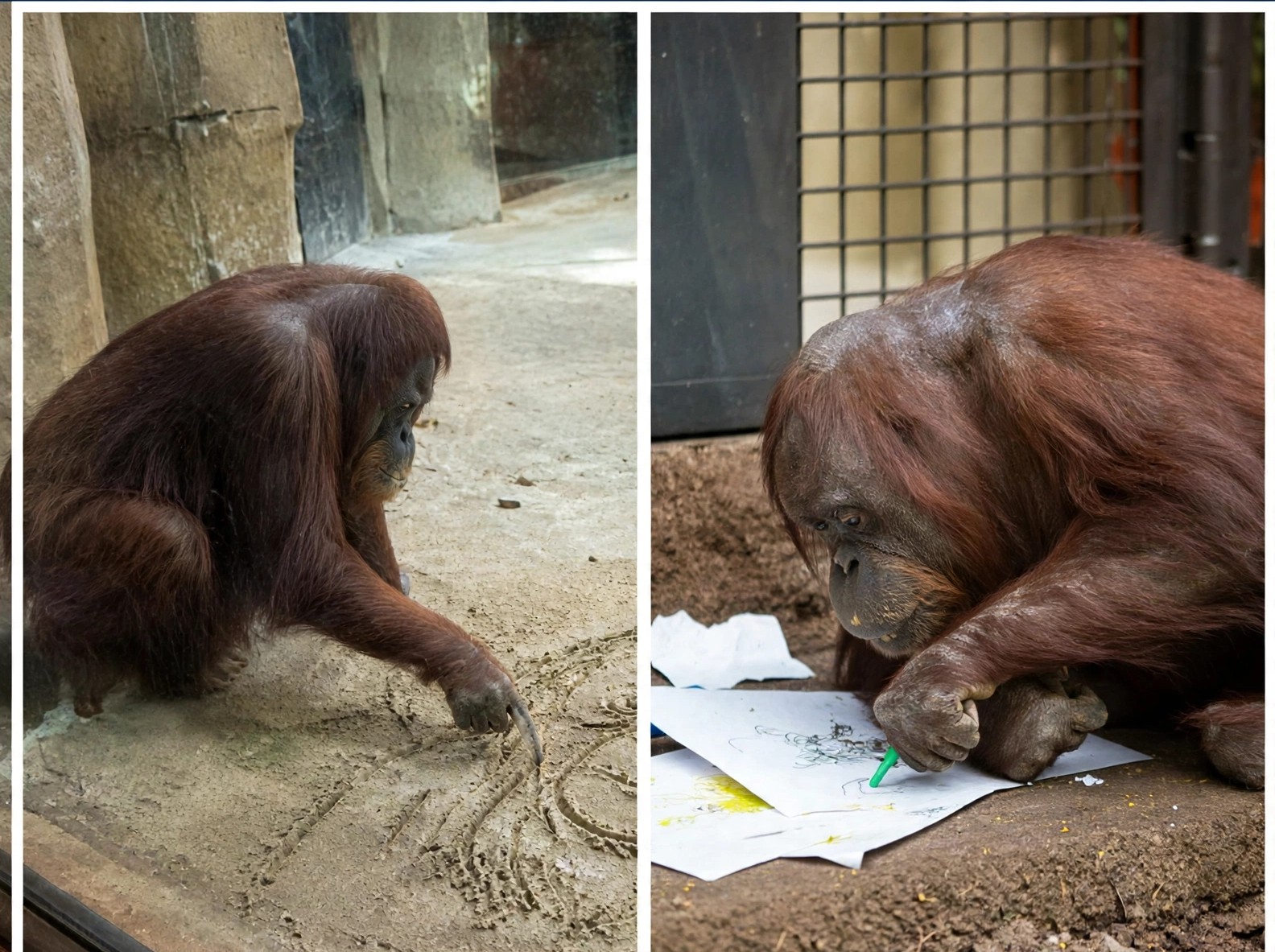
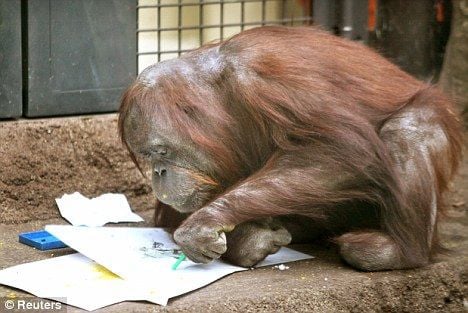
Every morning, before the crowds grew large, an orangutan named Kito would sit on the sandy floor of his enclosure and gently trace shapes with a single finger. His favorite drawings were simple—small circles, tiny eyes, and wide smiling mouths.
The cheerful faces appeared one after another, only to disappear when the wind blew across the sand or a keeper smoothed the ground for the next day.
For children, it became the highlight of every visit.
Parents often lifted toddlers onto their shoulders so they could watch Kito create another smiling face. Cameras clicked, laughter echoed through the exhibit, and the gentle ape became one of the zoo’s most beloved residents.
To many visitors, the drawings looked like a charming habit.
To the keepers who knew him best, they had become part of Kito’s daily routine.
Until one morning, everything changed.
A Drawing No One Expected
As the gates opened, one keeper noticed Kito already sitting quietly in his usual spot.
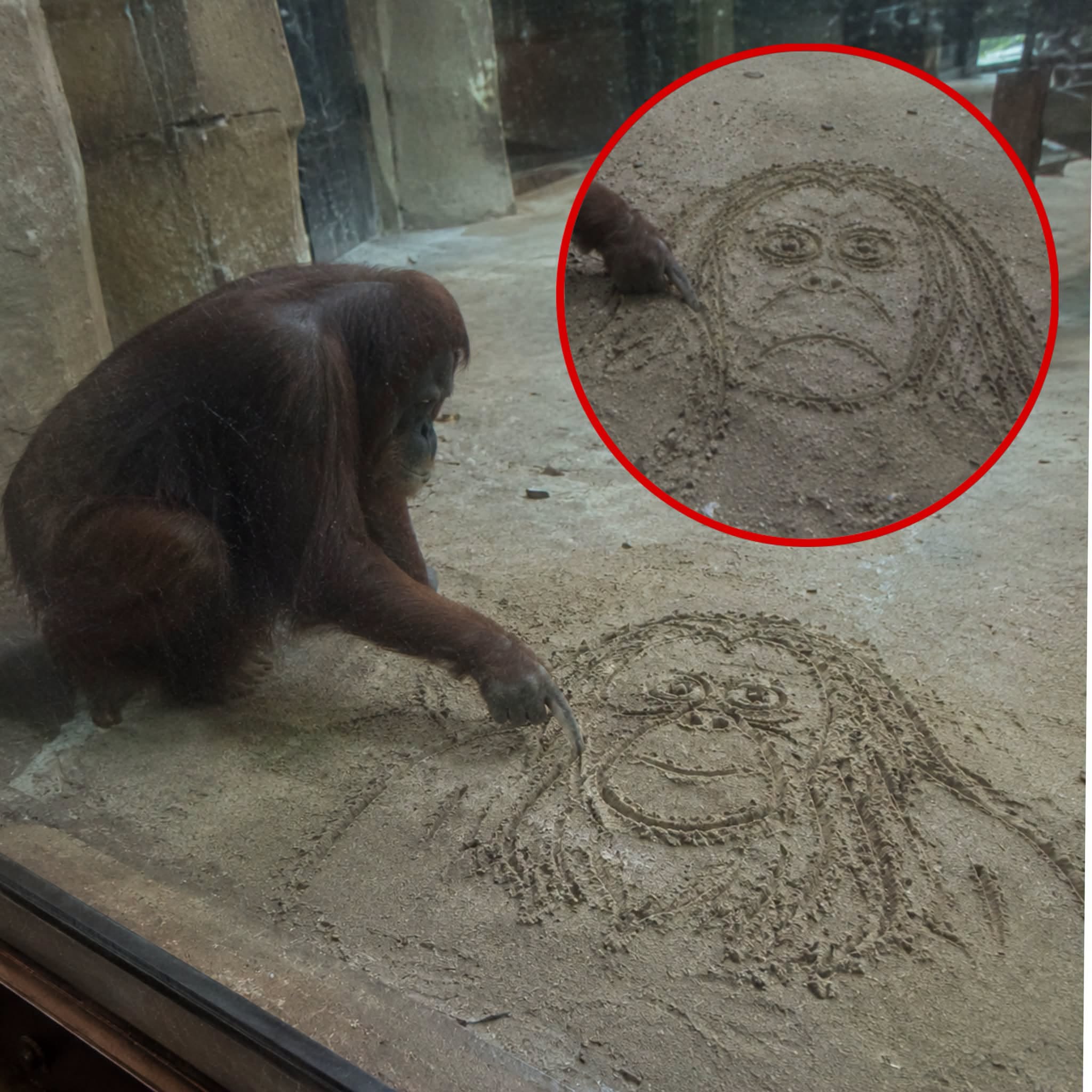
He drew only one face.
It wasn’t smiling.
The tiny figure wore a downturned mouth and empty-looking eyes.
At first, staff assumed nothing of it.
Perhaps he was simply experimenting with something new.
Someone even joked that everyone has a bad day once in a while.
But as the morning continued, another change became impossible to ignore.
Kito wasn’t greeting visitors.
He wasn’t climbing.
He wasn’t interacting with the enrichment toys he normally enjoyed.
Instead, he remained seated, staring silently at the drawing in the sand.
The Warning Signs
Over the following days, Kito’s unusual behavior continued.
He ate less than usual.
He ignored his favorite treats.
He spent long periods alone, turning away even from the keepers who had cared for him for years.
The once-curious orangutan who eagerly watched people through the viewing glass now barely acknowledged anyone.
Experienced animal care staff understood that subtle behavioral changes often reveal serious health problems long before obvious physical symptoms appear.
Concern quickly replaced curiosity.
Veterinarians began a thorough series of medical examinations, hoping they had noticed the changes early enough.
The results left everyone devastated.
A Silent Battle
According to the veterinary team, Kito was suffering from a serious internal illness that had progressed much further than anyone had realized.
Although orangutans are known for masking pain—a survival instinct common among many wild animals—his body had been struggling for weeks.
The keepers couldn’t stop thinking about the sad face he had drawn.
Had he been trying to communicate that something was wrong?
No one could answer that question with certainty.
Scientists continue to study the remarkable intelligence and emotional awareness of great apes, but understanding exactly what an animal intends to express remains extraordinarily difficult.
Still, those closest to Kito couldn’t ignore the timing.
His behavior had changed long before medical tests revealed the full extent of his illness.
Fighting for Recovery
The veterinary team immediately began treatment.
For weeks, Kito received constant monitoring, specialized nutrition, medication, and supportive care.
His keepers spent extra time with him every day, encouraging him to eat and providing familiar enrichment activities to keep him mentally engaged.
Progress came slowly.
Some mornings he appeared stronger.
Other days he barely moved.
Staff members admitted that every small improvement felt like a victory.
Every setback felt heartbreaking.
Visitors who had followed Kito’s story left handwritten cards, children’s drawings, and messages of hope outside the exhibit.
The orangutan who had spent years bringing joy to strangers was now surrounded by people hoping he could find the strength to recover.
The Morning Everyone Remembered
Then, after weeks of treatment, something remarkable happened.
One quiet morning, Kito walked to the familiar patch of sand where he had spent so many mornings drawing.
Several keepers paused their work, watching from a distance.
Slowly, he reached out with one finger.
For a moment, no one spoke.
The memory of the sad face was still fresh in everyone’s mind.
This time, Kito carefully traced another small face into the sand.
It was smiling.
Beside it, he drew a second.
Then a third.
One keeper later recalled that tears immediately filled several eyes.
Whether the drawings carried intentional meaning or were simply the return of a comforting routine, they symbolized something everyone had desperately hoped to see.
Kito was beginning to feel like himself again.
More Than Just a Drawing
Experts caution against assigning human emotions or intentions to animal behavior without scientific evidence.
Even so, great apes are among the most intelligent creatures on Earth. They demonstrate problem-solving skills, emotional complexity, strong family bonds, and sophisticated forms of communication that researchers continue to explore.
For Kito’s caregivers, the drawings became a powerful reminder of how closely attentive observation and compassionate care are connected.
The smallest behavioral change—a missing smile in the sand—had prompted questions that ultimately led to life-saving medical attention.
A Lesson That Stayed With Everyone
Today, Kito’s story continues to resonate with animal lovers around the world.
Whether his drawings reflected emotion, routine, or something science has yet to fully understand, they reminded countless people that communication isn’t always spoken aloud.
Sometimes, it appears in the quietest gestures.
A single line drawn in the sand.
A smile that suddenly disappears.
And, perhaps most importantly, the hope that one day it returns.
For the keepers who cared for Kito, that simple smiling face wasn’t just another drawing.
It was the most beautiful message they could have received.