When Children Faced the Fire: The Courage of Birmingham’s Young Protesters That Forced a Nation to Look Again
- NgoPhong
- July 29, 2026
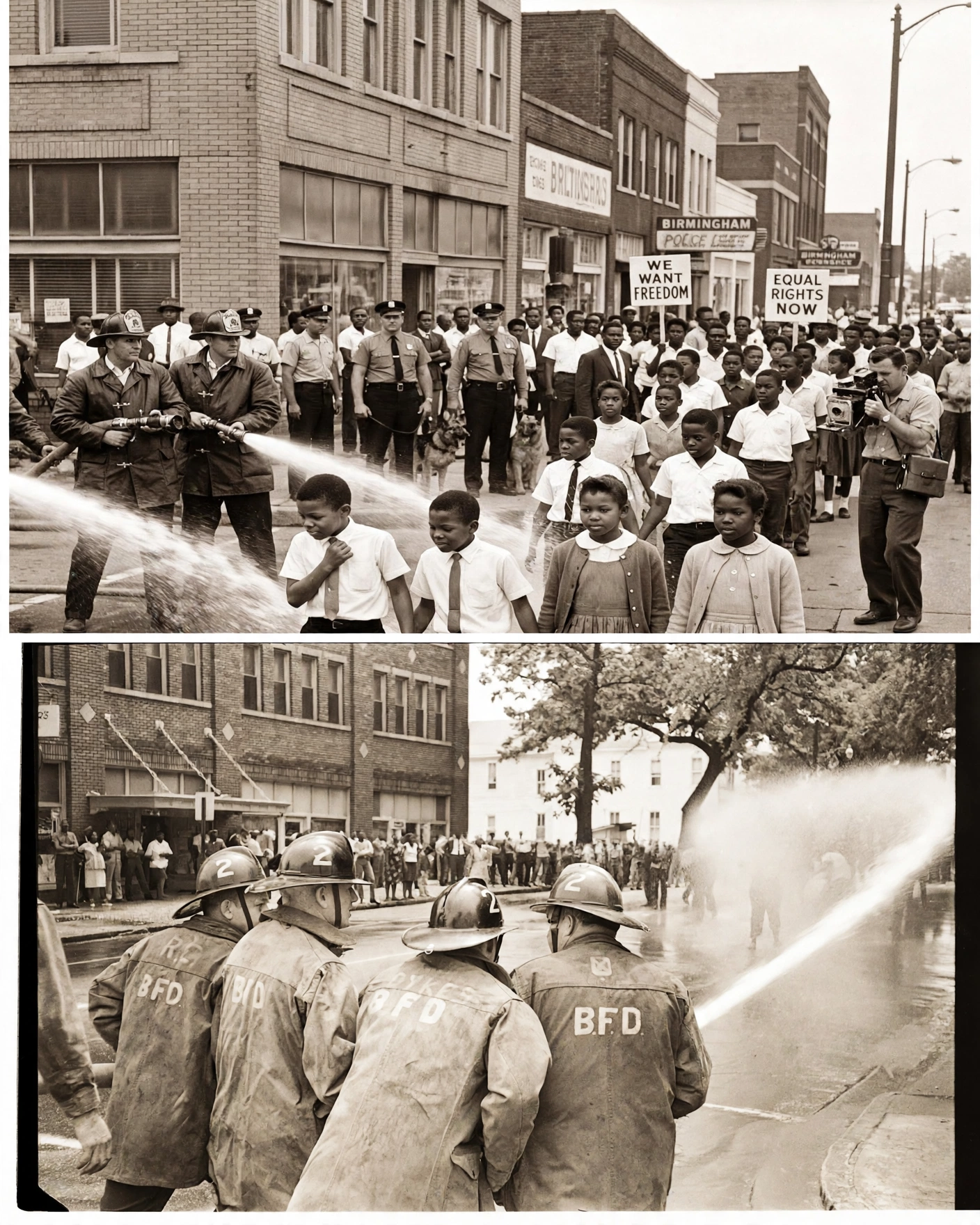
The water hit with the force of a wall.
It knocked children off their feet, sent bodies sliding across pavement, and left clothes clinging to skin. Yet they kept coming—walking forward into the blast, again and again, as if the pain itself could not stop them.
In the spring of 1963, in Birmingham, Alabama, some of the youngest participants in the American civil rights movement stepped into a confrontation that would change the course of history. They were not soldiers. They were students—some barely teenagers—who chose to face fire hoses, police dogs, and arrest in the fight against segregation.
What happened on those streets would soon reach the entire world.
Birmingham at the time was one of the most segregated cities in the United States. Racial divisions shaped nearly every part of daily life. Public spaces, schools, and businesses were separated by law and enforced through intimidation and violence.
For years, activists had been pushing for change.
Leaders like Martin Luther King Jr. and organizations such as the Southern Christian Leadership Conference worked alongside local figures to challenge segregation through nonviolent protest. But progress was slow, and resistance from local authorities remained strong.
Among those authorities was Public Safety Commissioner Eugene “Bull” Connor, whose response to demonstrations was often aggressive.
By early 1963, a new strategy began to take shape.
Adult protesters had already faced repeated arrests, filling jails and limiting the movement’s ability to continue demonstrations. Organizers realized that without new participants, momentum could stall.
The solution was both bold and controversial.
They turned to the city’s youth.
High school students, and even younger children, were invited to join the protests. Many attended workshops where they learned the principles of nonviolence—how to remain calm, how to protect one another, and how to stand firm in the face of intimidation.
Then they took to the streets.
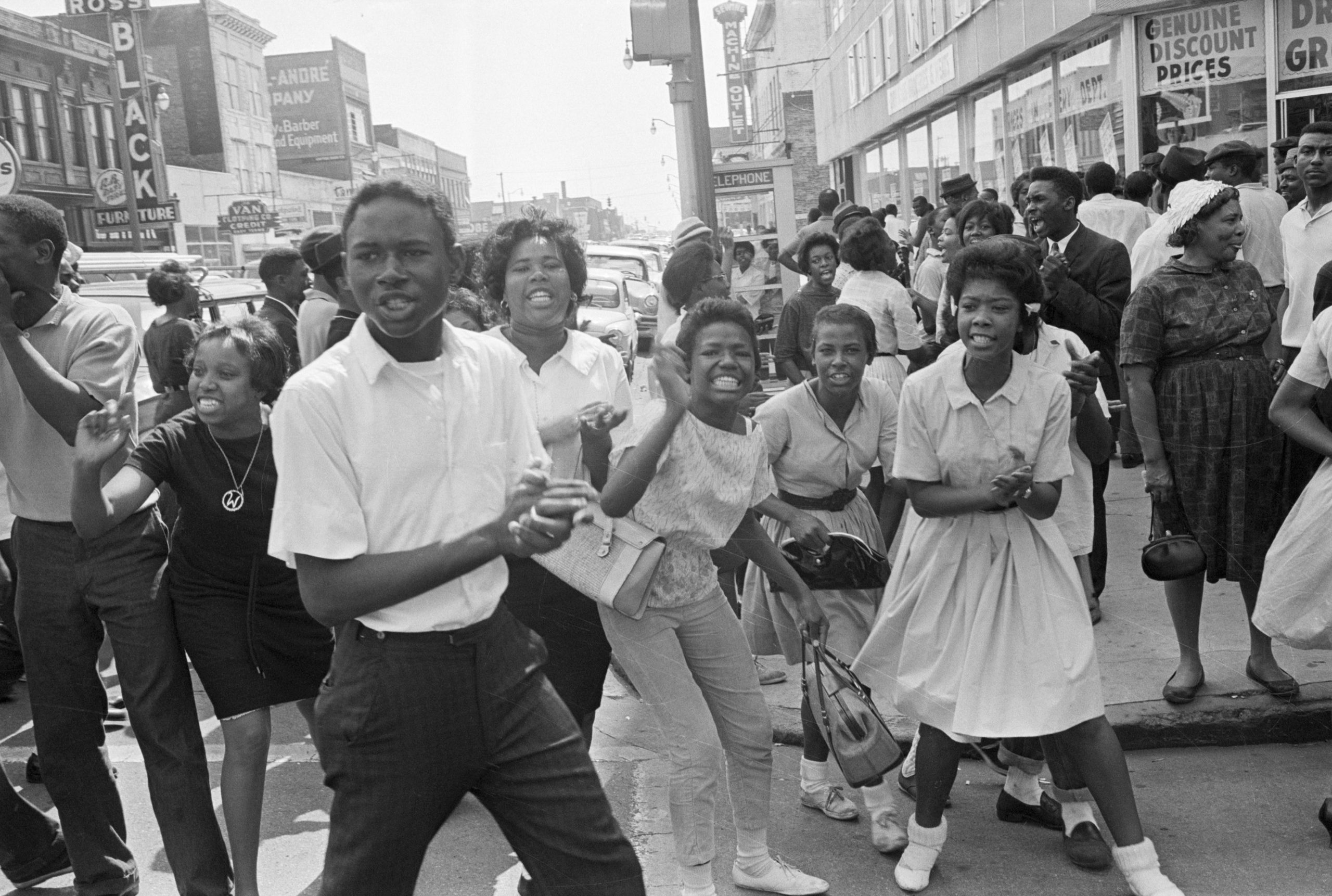
What followed became known as the Children’s Crusade.
Hundreds, then thousands, of young people marched through Birmingham, singing, praying, and demanding change. They knew the risks. They had seen what happened to adults who protested before them.
Still, they came.
Police responded quickly.
Arrests began almost immediately. Children were taken away in police wagons, filling detention centers to capacity. When the numbers kept growing, authorities escalated their response.
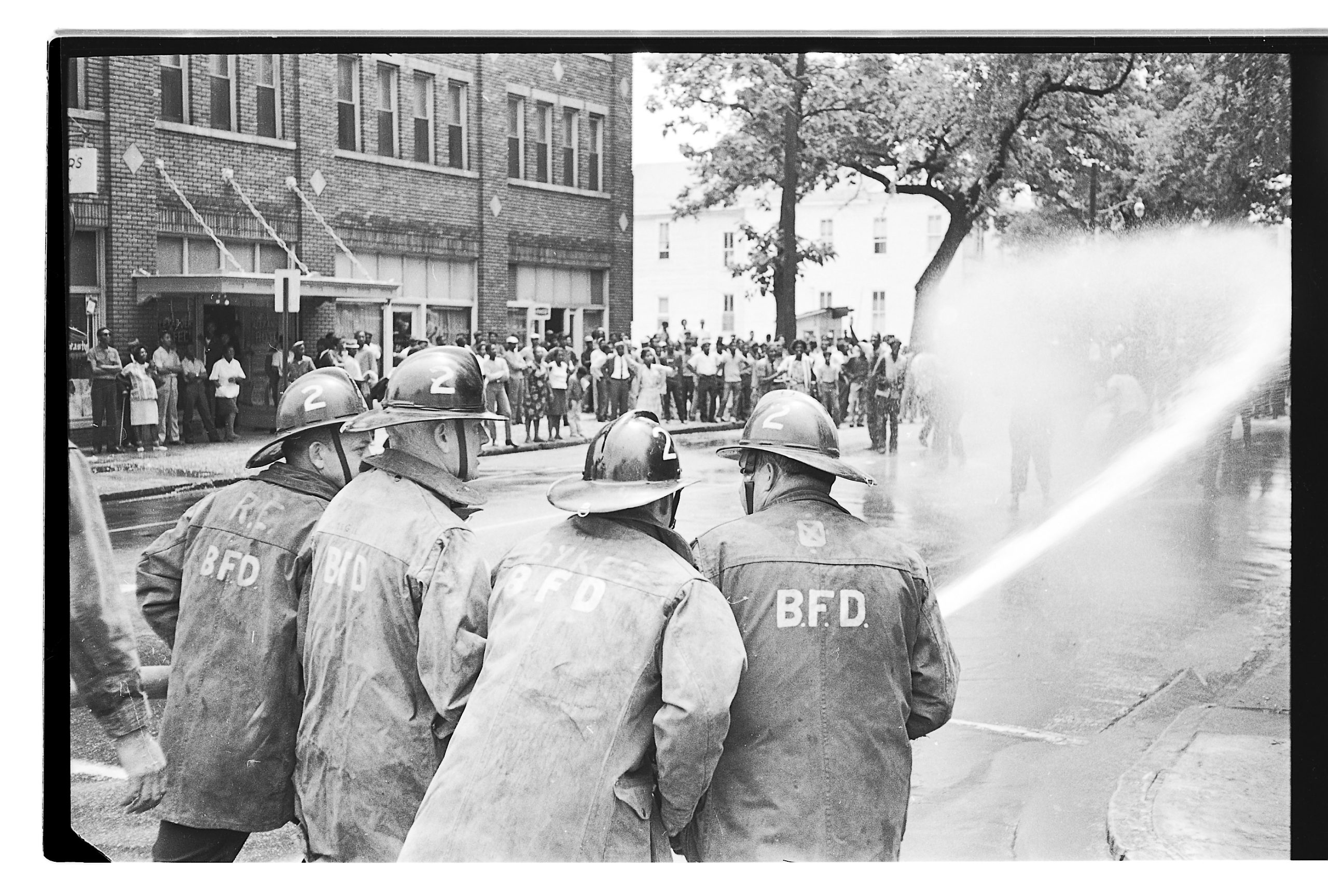
That’s when the fire hoses were turned on.
Powerful streams of water—designed to break through barriers—were aimed directly at the protesters. The force was strong enough to knock people down, tear clothing, and send bodies rolling across the ground.
Police dogs were also brought in, adding another layer of fear.
Yet even as the pressure increased, the children did not disappear.
They returned.
Again and again, they walked into the same streets, facing the same dangers. Their presence transformed the protests. What had once been a struggle led primarily by adults became something more visible, more emotional, and more difficult for the country to ignore.
The images that emerged from Birmingham told the story.
Photographs and television footage showed young faces confronting overwhelming force. They showed children being pushed back by water, pulled away by officers, and standing their ground in ways that defied expectations.
Those images spread quickly.
Across the United States—and beyond—people watched what was happening. The contrast was impossible to ignore: children demanding basic rights, met with methods that looked more like punishment than law enforcement.
Public reaction began to shift.
For many Americans who had remained distant from the civil rights struggle, Birmingham became a turning point. The events forced a broader conversation about segregation, justice, and the role of government in maintaining—or dismantling—inequality.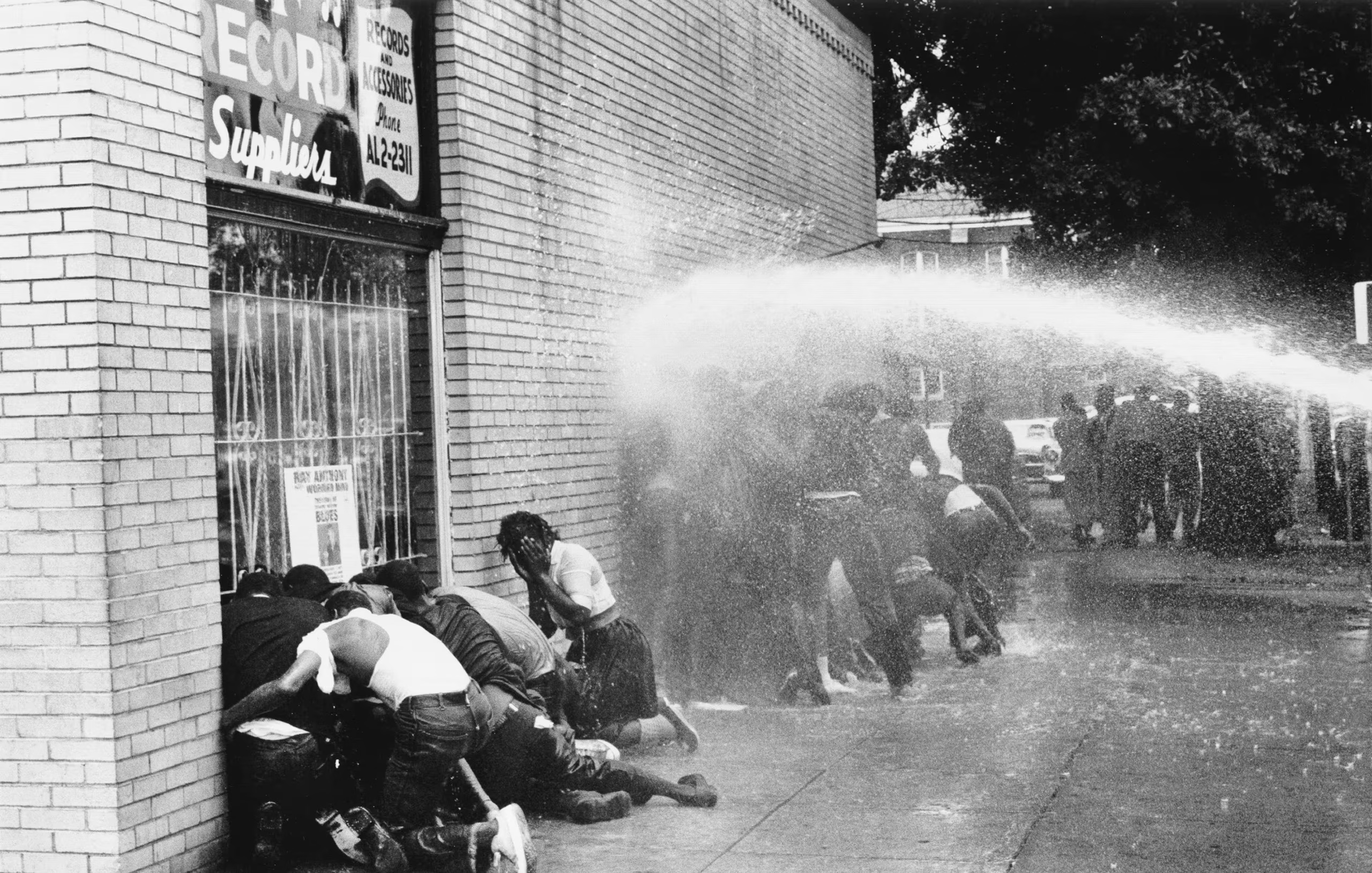
The protests continued.
Jails filled. Demonstrations grew. Pressure mounted not only on local officials but also on national leaders. The situation in Birmingham became impossible to contain within city limits.
Eventually, negotiations began.
Local business leaders and civil rights organizers reached agreements to begin desegregating certain public facilities and improving opportunities for Black residents. While the changes were not immediate or complete, they marked a significant step forward.
The impact did not stop there.
The events in Birmingham played a major role in building momentum for broader legislative action. Just months later, the conversation around civil rights intensified at the national level, contributing to the passage of landmark laws aimed at ending segregation.
But behind those outcomes were the children who had walked into danger.
Many of them had never before taken part in a protest. Some had never spent a night away from home, yet they found themselves in jail cells, surrounded by uncertainty. Others faced fear from their families, who worried about the risks but could not deny the importance of the cause.
Their courage was not abstract.
It was real, immediate, and deeply personal.
They stood in places where adults had already been beaten, arrested, and threatened. They chose to act in a moment when inaction would have been easier—and safer.
And in doing so, they helped change the direction of a nation.
Today, the story of Birmingham’s young protesters remains one of the most powerful chapters in the civil rights movement. It is remembered not only for the events themselves but for what they revealed about the strength of collective action.
The children did not carry weapons.
They carried conviction.
They did not seek confrontation.
They sought justice.
And when they stepped forward—into water, into fear, into history—they made it impossible for the world to look away.
Their actions remind us that change does not always begin with power or authority.
Sometimes, it begins with those who have the least—and the courage to stand anyway.