Teen’s First Lasso Throw Pulls Drowning Man From Montana’s Raging Yellowstone River
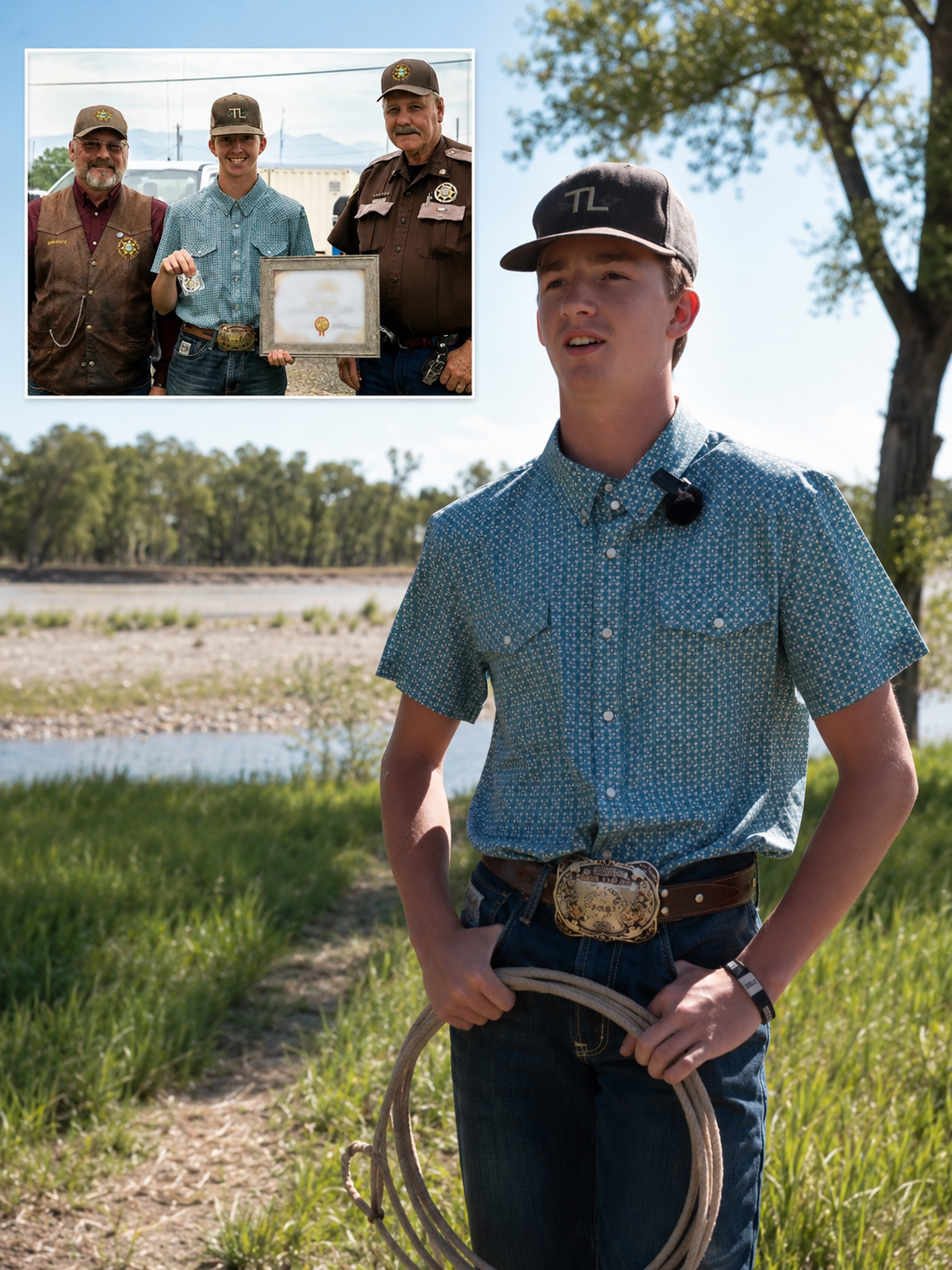
The man was being swept down the Yellowstone River, clinging to a cooler as the current carried him farther from safety.
Running beside him along the riverbank was 14-year-old Jory Thomas, desperately searching for a way to stop what was unfolding.
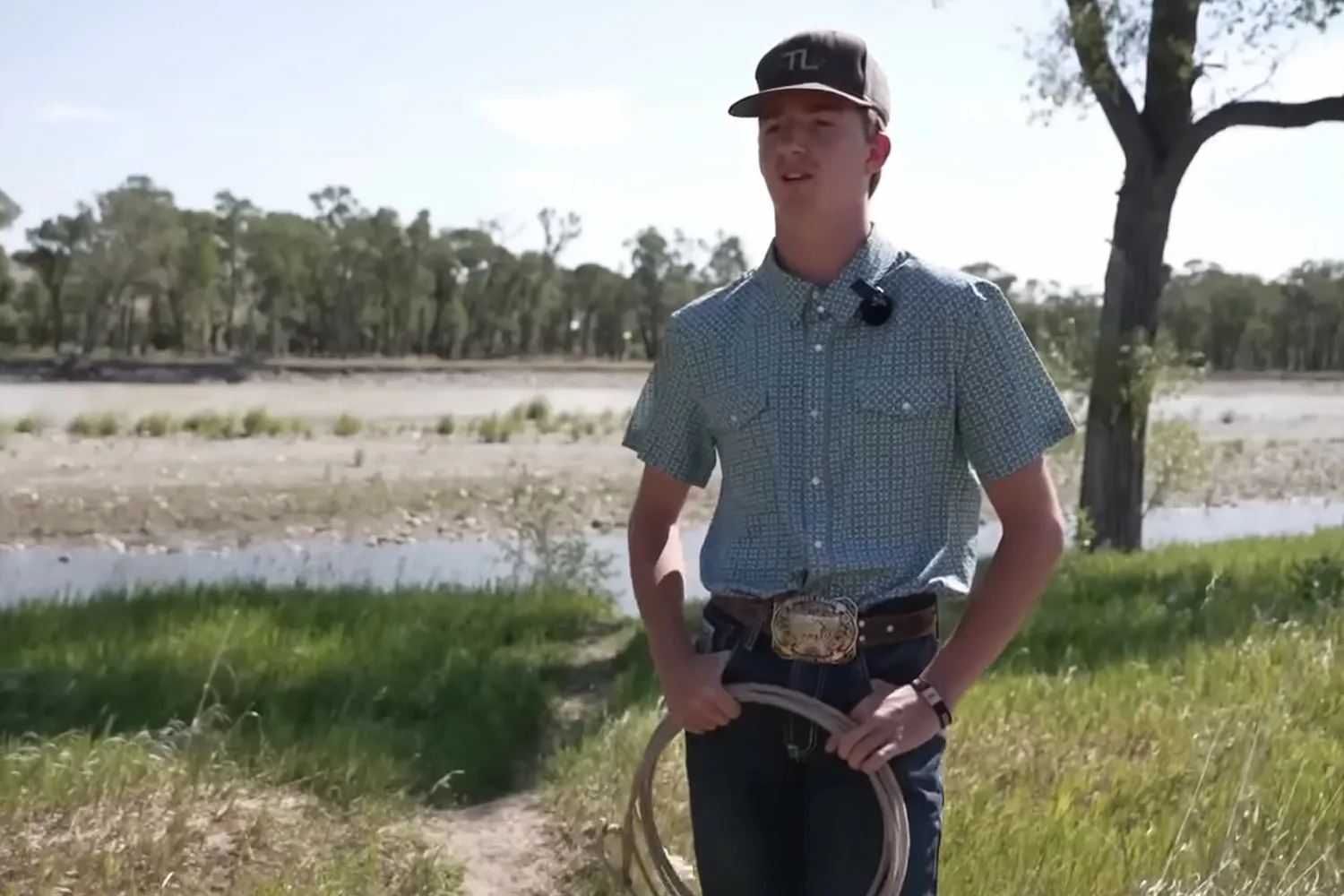
The Montana teenager had no rescue equipment and little time to make a decision. What he did have was a lariat—the thick rope he had recently begun using to catch cattle.
Jory raised it, aimed at the stranger in the river and threw.
The loop reached the man on the first attempt.
What began as a family camping trip near Greycliff, Montana, quickly became a life-or-death emergency on Sunday, July 5, 2026. By the time first responders arrived, the teenager had already used his developing rodeo skills to pull a struggling man through chest-deep water and toward safety.
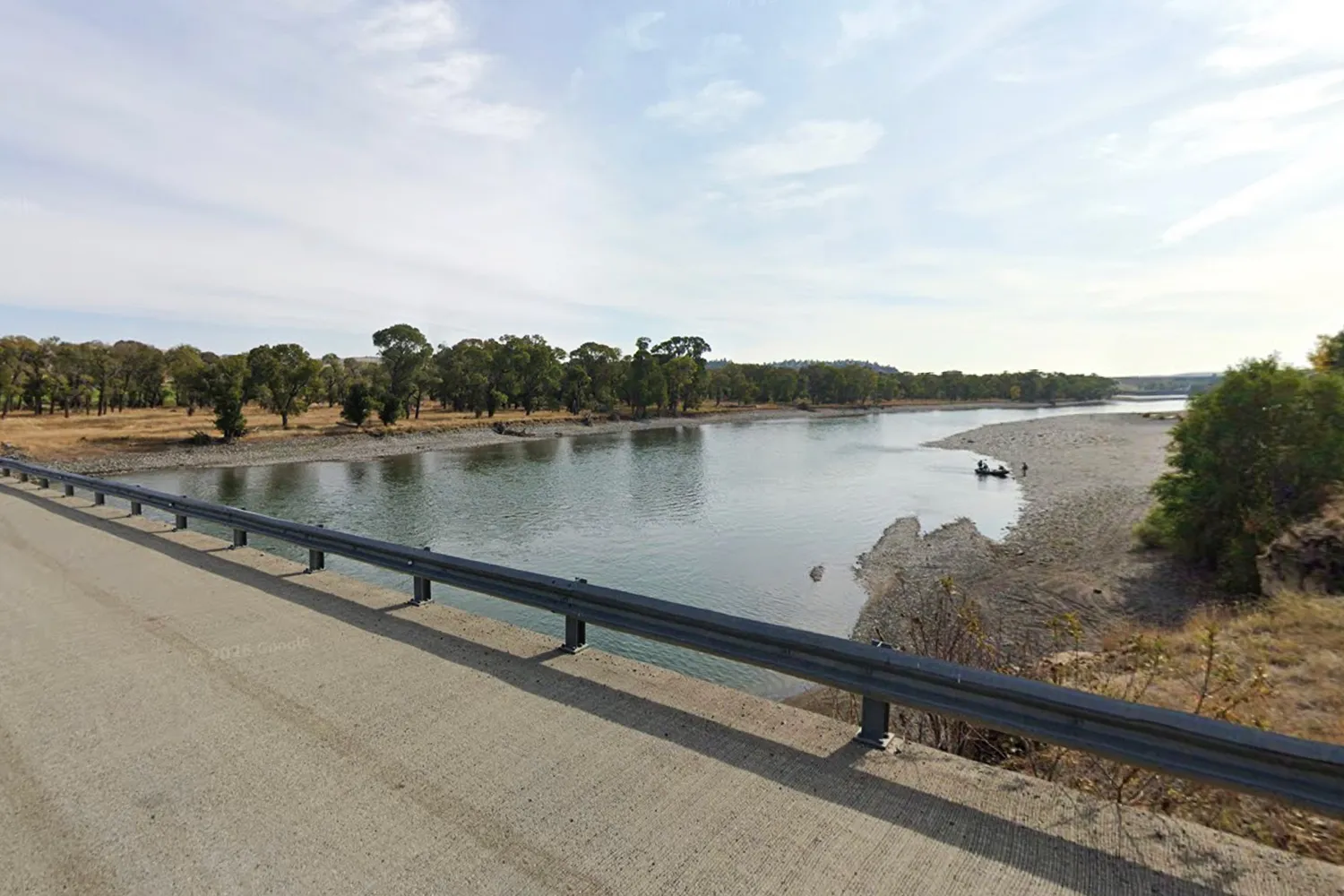
Jory had been camping with his family during the Fourth of July weekend near the Yellowstone River, roughly 70 miles west of Billings.
His family regularly visited the campground several times during the summer. The location was familiar, and there was no reason to expect that this particular visit would become different from all the others.
Then Jory heard people shouting for help.
A raft and a paddleboard had collided with a bridge pillar, throwing four people into the water. Three managed to reach land, but the fourth person remained trapped in the river.
The man stayed afloat by holding onto a cooler, but the fast-moving current was carrying him downstream.
Jory immediately began moving along the bank so he could keep pace with him.
Before running, he emptied his pockets. He brought the lariat with him and watched the man’s position as the distance between them shifted.
The current was strong, and the victim was traveling quickly. Jory later explained that he could think about only one thing: getting the man out before he disappeared farther down the river.
The teenager reached a position alongside him and prepared to cast the rope.
It was a skill Jory had practiced with livestock, not people. He had only recently become serious about roping, attending cattle brandings and steadily improving his ability to control the lariat.
There was no guarantee the method would work in rushing water. The target was moving, the river was unpredictable, and a missed throw could cost valuable time.
Jory threw anyway.
The loop connected on his first try.
With the man secured, the teenager began pulling him toward the riverbank. He moved slowly through water that rose to his chest, maintaining control of the rope as the current continued to push against them.
The task required more than strength. Jory had to remain calm enough to avoid losing his footing, dropping the rope or allowing the man to be swept away again.
He continued until emergency personnel arrived and took over the rescue.
Only after the danger had passed did the significance of the moment fully begin to settle in.
Jory told his family that he believed he had just saved someone’s life.
His grandmother, Sandy Thomas, and the others around him confirmed what had happened. The teenager’s quick reaction, accurate throw and determination had helped bring a drowning man out of the Yellowstone River alive.
For his family, the response was remarkable but consistent with the person they already knew.
Sandy described her grandson as someone whose natural instinct is to assist others. Helping, she said, has always been part of his character.
The rescue also depended on an unusual coincidence.
Although Jory frequently visited the campground, his grandmother said he had never brought his lariat with him on previous trips.
On the day a man was swept into the river, however, the rope happened to be there.
Jory himself appeared surprised that a tool he associated with cattle had become lifesaving equipment.
He had expected roping to help him with ranch work. He had not imagined using those same skills to rescue a person from a river.
His growing interest in the technique had begun only that year. Through brandings and practice with cattle, he had become more accurate and confident.
That practice mattered when there was no room for a second guess.
A missed throw might have forced him to retrieve the rope and try again while the current continued carrying the man downstream. Instead, the lasso reached its target immediately.
The rescue soon drew attention throughout the community.
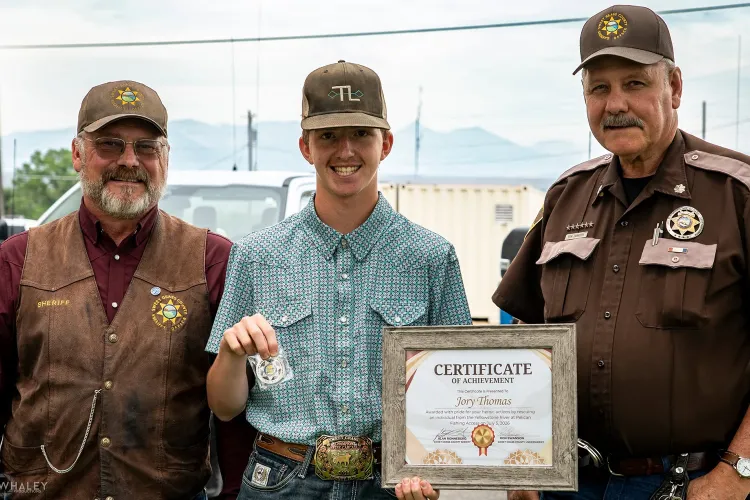
On July 21, Sweet Grass County Sheriff Alan Ronneberg and Undersheriff Ron Swanson presented Jory with a Certificate of Achievement honoring his actions.
Less than a week later, on July 27, U.S. Sen. Steve Daines recognized the teenager as Montanan of the Month and submitted a statement about him for the Congressional Record.
Daines praised Jory’s ability to remain composed under pressure and said the teenager displayed courage far beyond his age. He also described him as an example of the helpful and resilient spirit associated with Montana.
The recognition turned a quiet family camping trip into a story celebrated well beyond the riverbank.
Yet Jory did not present himself as someone seeking praise.
He said he was simply glad he had been there and able to help. His comments reflected the same focus that had guided him during the emergency: someone was in danger, and he possessed something that might save him.
That direct response may have been the most important part of the rescue.
River emergencies can develop with frightening speed. A person who appears close to shore can be carried away within moments, while anyone attempting to help risks becoming trapped in the same conditions.
Jory did not recklessly leap into deep water without a plan. He ran alongside the victim, used the equipment available to him and created a connection from the bank before pulling the man through shallower water.
His lariat became a rescue line.
The same rope designed to loop around cattle allowed the teenager to reach someone he could not safely grab with his hands. A skill learned through ranching gave him the control necessary to act under pressure.
The man’s name and later condition were not publicly detailed, but the outcome was clear: he reached safety, and Jory’s intervention played a decisive role.
For those who witnessed the event, the image was unforgettable—a 14-year-old racing beside one of Montana’s most famous rivers, matching the movement of a drowning stranger before casting a single lifesaving throw.
The certificates and public honors recognized the bravery of that moment.
But the rescue itself happened before there was time to think about awards, headlines or praise. It happened because Jory heard cries from the river, saw a man being swept away and refused to stand still.
He had brought his lariat to the campground for the first time.
Minutes later, it was wrapped around a stranger whose life depended on Jory holding the other end.