Tom Hanks Grew Up in a Family Pulled Apart—Then He Built the Home He Had Always Needed
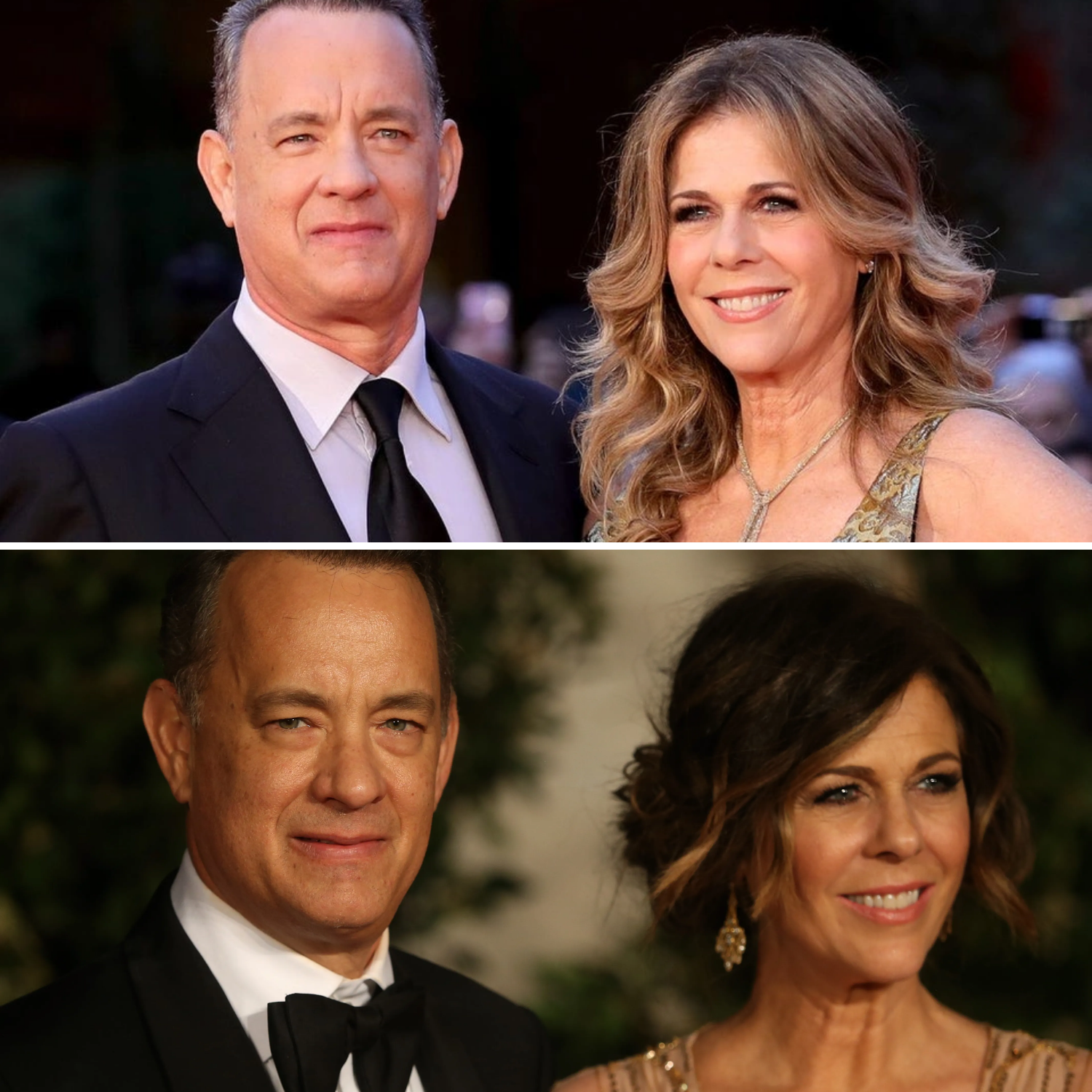
Long before audiences came to see Tom Hanks as Hollywood’s dependable everyman, stability was something he knew largely by its absence.
His parents divorced when he was five. The separation divided the four Hanks children between two households, and Tom spent much of his childhood moving with his father, Amos, a restaurant worker whose employment repeatedly took the family to new places.
Homes changed. Stepparents entered and left. The adults around him formed new relationships, while the children learned to adjust.
Decades later, Hanks would become famous for portraying men audiences instinctively trusted—devoted fathers, loyal friends, principled leaders and ordinary people trying to do the right thing. Away from the screen, however, the lasting family life associated with him was not something he had inherited fully formed.
It was something he learned to build.
At the center of that transformation was actress, producer and singer Rita Wilson, whom Hanks married in 1988. Their relationship has endured through international fame, parenthood, illness and the pressures that have ended many Hollywood marriages.
By 2026, they had been married for 38 years.

A Childhood Without a Permanent Center
Hanks was born in Concord, California, in 1956, the third of four children. When his parents, Amos Mefford Hanks and Janet Marylyn Frager, divorced in 1960, the family was split.
Tom and his older siblings, Sandra and Larry, generally lived with their father. Their younger brother, Jim, remained with their mother.
Amos worked in restaurants and frequently relocated. Hanks later described a childhood filled with moves, new schools and changing family arrangements. By the time he was 10, he had already experienced life with multiple stepmothers.
The upheaval did not mean he was entirely without care, but it left him with a persistent sense of loneliness. He learned to observe new environments quickly, understand unfamiliar people and entertain himself. Those habits would eventually serve him as an actor.
Theater became a place where change could be transformed into possibility. Onstage, different identities and circumstances were expected. The child accustomed to entering unfamiliar rooms discovered that performance could turn watchfulness into a strength.
Yet his desire for connection followed him into adulthood.
Hanks married actress Samantha Lewes when he was 21. They had two children, Colin and Elizabeth. Hanks later reflected that becoming a husband and father so young was connected partly to his desire to quiet the loneliness he had carried since childhood.
The marriage ultimately ended in divorce. Hanks found himself confronting the painful possibility that instability could repeat across generations, even when a person desperately wanted a different outcome.
Then Rita Wilson came into his life.
Meeting the Woman Who Understood Him
Hanks and Wilson first encountered each other professionally when she appeared on his television comedy Bosom Buddies in 1981. Their connection deepened several years later while they worked together on the 1985 film Volunteers.
By then, Hanks’s first marriage was ending. He and Wilson eventually became a couple and married on April 30, 1988.
That year also marked a major turning point in his career. Big established him as a leading film actor and earned him his first Academy Award nomination. Greater successes followed, including A League of Their Own, Sleepless in Seattle, Philadelphia, Forrest Gump, Apollo 13, Saving Private Ryan and Cast Away.
As Hanks’s professional life expanded beyond anything he had known as a child, Wilson helped create a stable emotional center away from the cameras.
Hanks has said that his relationship with her taught him a deeper understanding of unconditional love. He entered not only a marriage but Wilson’s close Greek and Bulgarian American family, whose traditions and enduring ties offered a contrast to the fractured structure of his early years.
The couple welcomed two sons, Chet and Truman. Together, they created a blended family that also included Colin and Elizabeth.
It was not a perfect domestic picture, and neither Hanks nor Wilson has presented it that way. Careers required travel. Four children moved through different stages of life. Hanks’s fame brought constant attention, while both partners continued pursuing creative work.
Their achievement was not avoiding difficulty. It was continuing to return to the relationship when difficulty arrived.
Why Liking Each Other Still Matters
When discussing the longevity of their marriage, Wilson has resisted complicated formulas.
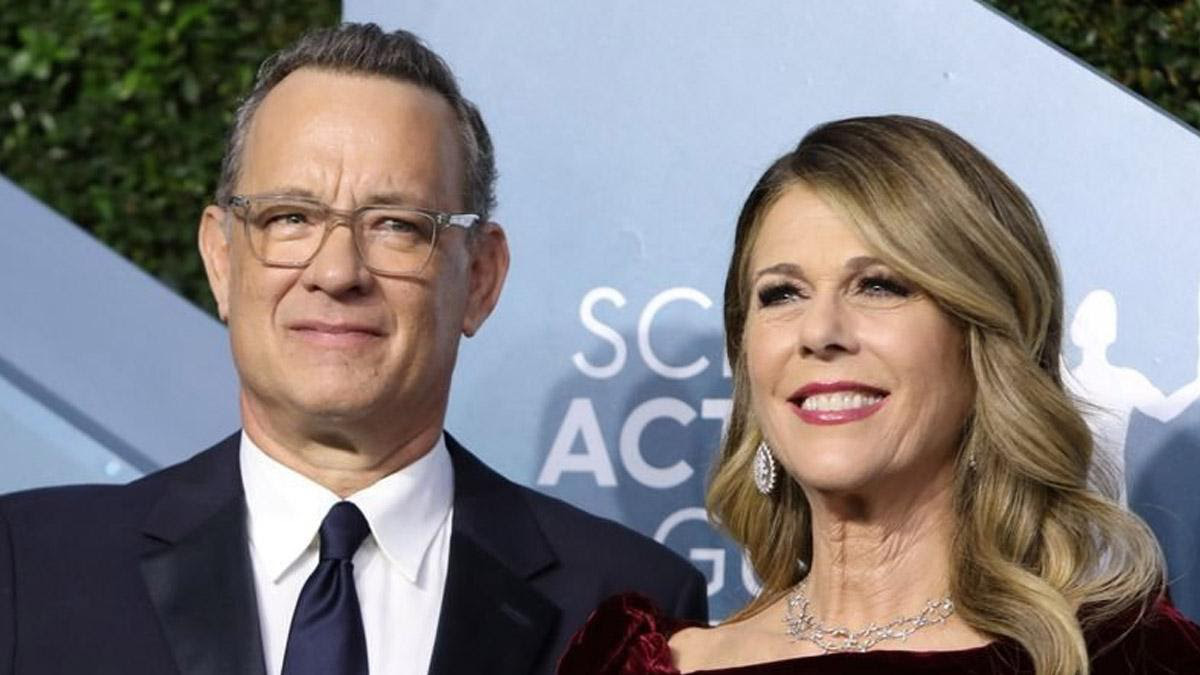
One of its foundations, she has explained, is that she and Hanks genuinely like each other. They enjoy talking, sharing ordinary moments and making one another laugh. Friendship remains underneath the romance.
Wilson has also emphasized that a long marriage does not exist in a permanent state of perfection. It changes as the people inside it change. Problems must be addressed repeatedly rather than defeated once and forgotten.
Hanks has made a similar point. He has suggested that meeting the right person matters, but lasting love also depends on timing, maturity and the willingness to build a shared life rather than expecting marriage to operate by itself.
Their public image may be warm and affectionate, but their longevity was created largely in private—through parenting decisions, career compromises, disagreements, reunions after long workdays and the countless routines that never appear on a red carpet.
That commitment became especially visible when Wilson faced a frightening medical crisis.
The Diagnosis That Tested Their Security
In 2015, Wilson announced that she had been diagnosed with breast cancer.
She had been closely monitoring an underlying condition known as lobular carcinoma in situ, which can indicate an increased risk of developing breast cancer. After an initial test did not find cancer, Wilson sought a second medical opinion. Additional examination detected invasive lobular carcinoma.
She underwent a bilateral mastectomy and reconstructive surgery.
For Wilson, the diagnosis introduced the kind of uncertainty that can make professional success feel suddenly irrelevant. She later described feeling frightened and shocked as she faced major treatment and questions about what would come next.
Hanks accompanied her to medical appointments, watched movies with her and tried to make her laugh. His role was not to pretend that the danger was small or offer grand speeches that could remove it. He stayed close during the appointments, the surgery and the recovery.
Wilson later announced that she was cancer-free.
She also became an advocate for second opinions, stressing that another pathologist’s assessment had changed the course of her treatment. Her experience turned into a public reminder that patients should feel empowered to seek further evaluation when facing a life-altering diagnosis.
Years afterward, Wilson said cancer had given her a renewed appreciation for life. The fear had been real, but so was the clarity that followed it: time was limited, and the people she loved mattered more than the distractions that once seemed urgent.
The marriage revealed itself not through the glamorous image of two stars standing together at an awards ceremony, but through one spouse sitting beside the other in a doctor’s office.
A Partnership That Kept Evolving
Hanks and Wilson have repeatedly worked together as well as supported each other’s independent careers.
Wilson appeared alongside him in films including Volunteers and Sleepless in Seattle. As a producer, she helped bring My Big Fat Greek Wedding to the screen and later worked on projects including the Mamma Mia! films. She also developed a recording career, releasing multiple albums and performing as a singer-songwriter.
Hanks became one of the most celebrated actors of his generation, winning consecutive Best Actor Oscars for Philadelphia and Forrest Gump. Yet Wilson’s career was never simply an extension of his. Their partnership allowed room for separate ambitions.
They also endured another public health scare in March 2020, when both tested positive for COVID-19 while Hanks was working in Australia. At a moment of worldwide uncertainty, they isolated and recovered together before returning home.
Through those episodes, their marriage continued to rest on the same elements they had described for years: affection, humor, respect and an active commitment to remain present.
In May 2026, Wilson offered a playful detail when discussing the secret of their 38-year marriage. She pointed to the ordinary intimacy of sharing a bathroom—a place where they talk through plans, exchange details about their day and laugh together.
The answer was humorous, but its meaning was serious. Their relationship had been maintained in small daily conversations, not only in dramatic declarations.
Building a Different Future
Tom Hanks could not change the childhood that shaped him.
He could not reunite the household divided by his parents’ divorce, erase the repeated moves or give his younger self the permanence he had wanted. His own first marriage also ended, bringing another period of disruption to a family with children.
But those experiences did not dictate the rest of his life.
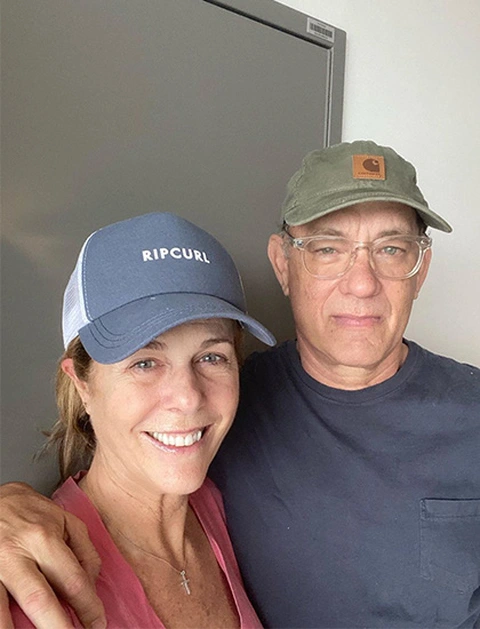
With Wilson, he built a home defined not by the absence of challenges but by the decision to face them together. Their family experienced fame, divorce’s lingering consequences, blended relationships, cancer and the complicated realities of raising children under public attention.
Still, they stayed engaged with one another.
The dependable men Hanks played made him beloved around the world. Yet the stability people came to associate with him was not merely an acting quality. It reflected a personal journey from a boy repeatedly adapting to other people’s decisions to an adult deliberately creating continuity.
His past showed him how easily a family could be pulled apart.
His marriage showed him that a different kind of family could be built—slowly, imperfectly and through the repeated choice to remain.