A 17-Year-Old Died From a Rare Brain-Eating Amoeba. Officials Now Believe They Know Where He Was Exposed
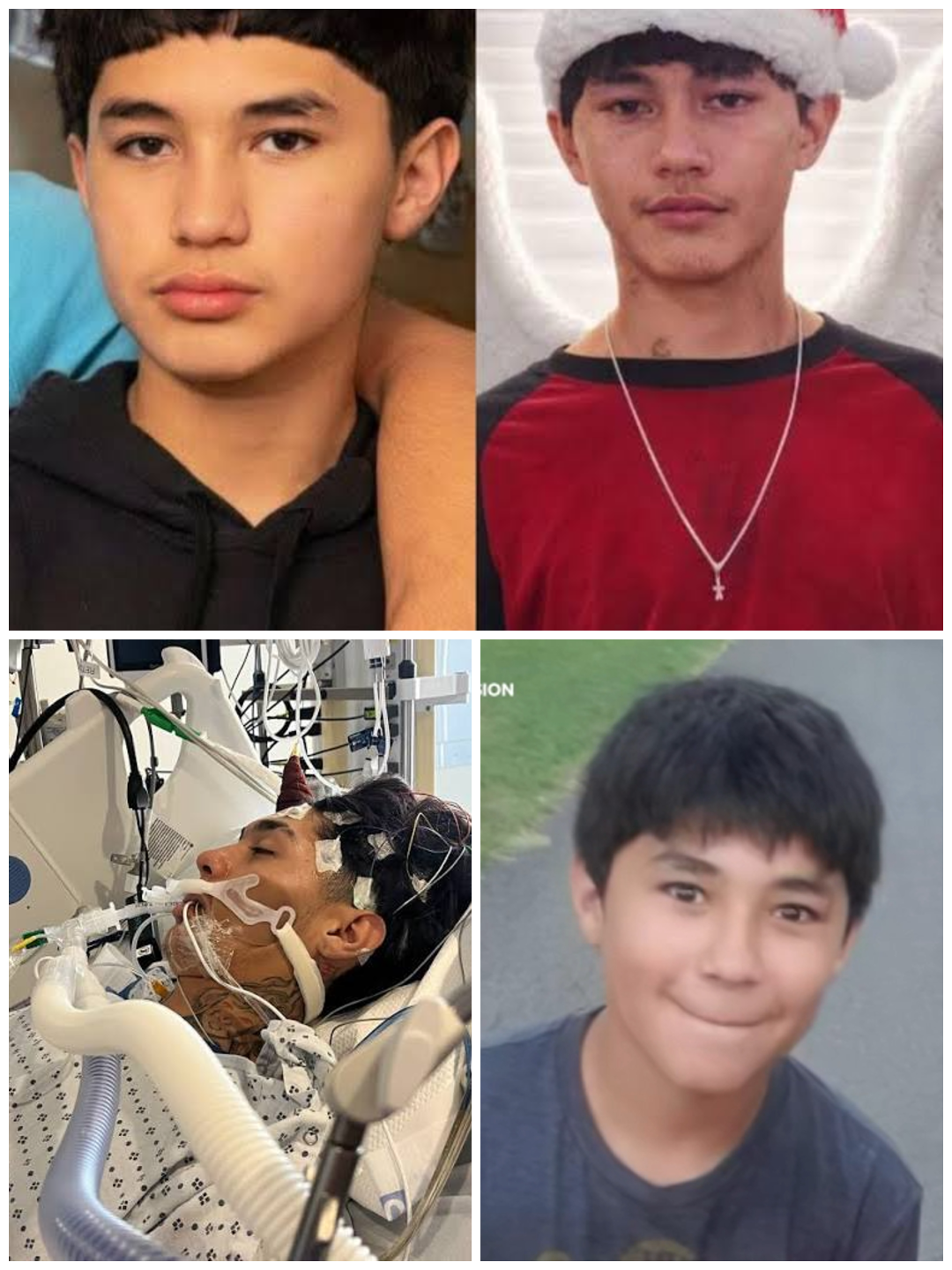
For weeks, the family of 17-year-old Moises Ponce Mendoza was left with a devastating question: Where had a healthy teenager encountered an amoeba so rare that most people will never come close to seeing a case in their lifetime?
Moises, of Burlington, North Carolina, died on Aug. 31 after contracting Naegleria fowleri, a microscopic organism that can cause primary amebic meningoencephalitis, or PAM, a rapidly progressing and usually fatal brain infection.
His mother, Monica Mendoza, had been asking for answers since her son became critically ill.
Now, investigators believe they may have found the most likely source.
In a report released Sept. 15, North Carolina health officials said the evidence points to a water feature at a community organization in Durham County. Moises had visited the site during the likely exposure period and was reported to have splashed water from the feature onto his face.
Environmental testing later detected Naegleria fowleri there.
But investigators stopped short of saying the mystery has been solved completely.
The public-health investigation “cannot conclusively determine” where Moises was exposed, officials said. Instead, based on interviews, his movements and laboratory testing, the Durham water feature emerged as the most probable location.
For Monica Mendoza, the finding provides part of the answer she had been seeking.
It also raises new questions about how long the risk may have existed and whether the tragedy could have been prevented.
It Began With a Severe Headache
Before his illness, Moises was described by his mother as a teenager full of life.
Then came the headaches.
Monica wrote that her son developed severe head pain and was taken to a Burlington hospital. According to her account, he was evaluated and sent home.
His condition quickly became worse.
By the following morning, Monica had left work and taken him for emergency care at UNC, where doctors eventually identified the rare infection.
From that moment, she wrote, the family’s life changed completely.
Moises fell into a coma as doctors fought an infection few physicians ever encounter. He remained hospitalized for nine days before dying on Aug. 31.
Naegleria fowleri is often referred to as a “brain-eating amoeba,” though technically it is a free-living microscopic organism found naturally in warm freshwater.
The infection does not occur simply from drinking contaminated water.
The danger comes when water containing the amoeba enters the nose. From there, the organism can travel to the brain, causing severe inflammation and destruction of brain tissue.
Cases are extraordinarily rare. Only 167 infections were reported nationwide between 1962 and 2024, according to federal data cited by state health officials.
That rarity made tracing Moises’ exposure especially difficult.

Investigators Began Reconstructing His Contact With Water
After the diagnosis, health officials interviewed Moises’ family to identify every place where he might have come into contact with warm freshwater during the possible exposure period.
Several locations were considered.
The family reported swimming activity and other possible freshwater exposures. Investigators examined those locations and collected environmental samples with assistance from federal specialists.
One visit eventually stood out.
On Aug. 13, Moises accompanied family members to El Futuro, a community-based organization in Durham. Outside the facility was a garden water feature designed like a small man-made creek.
Monica later said her daughter told her that Moises had gotten water from the feature on his face.
That seemingly ordinary moment would become one of the most important pieces of the investigation.
State officials confirmed that Moises had contact with the feature during the likely exposure window, including splashing water onto his face.
For Naegleria fowleri, that matters.
An infection can occur whenever contaminated water enters the nose. Although cases are more commonly associated with swimming, diving or other activities that force water into the nasal passages, health officials say even less forceful contact — including splashing — can potentially create an exposure route.
Tests Found Evidence of the Amoeba
The water feature was closed by the Durham County Department of Public Health on Aug. 28 while testing was underway.
It has remained closed.
Samples collected from the location were later analyzed, and testing detected Naegleria fowleri associated with the site.
Investigators found evidence of the organism in samples connected to the water feature, including material from its storage tank and rocks. Officials also concluded the water feature had not been effectively disinfected.
That finding significantly narrowed the investigation.
Other possible exposure sites had been examined, but the Durham feature provided the strongest combination of evidence: Moises had been there during the relevant period, he had reportedly splashed the water onto his face, and environmental testing detected the amoeba.
For those reasons, officials identified it as the most likely source of his infection.
Still, they emphasized that epidemiological investigations of this kind cannot always establish the exact moment of exposure with complete certainty.

New Questions About the Water Feature
The investigation has also uncovered another issue.
Durham County health officials said the organization had not completed the required application, evaluation and permitting process for the water feature.
Permitted pools and water features in the county are subject to inspections and other public-health requirements.
Officials are now working with state authorities to determine what will happen to the feature, which remains closed.
The organization has said it is cooperating with public-health investigators and expressed sympathy for Moises and his family.
It has also said the feature had been maintained with chlorine treatments and power washing and operated through a recirculating water system.
But state investigators concluded that the water was not being effectively disinfected.
That distinction has become particularly important to Moises’ family.
The question is no longer simply where the amoeba might have come from.
It is also how a potentially dangerous organism came to be present in a man-made feature at a place where visitors could interact with the water.
His Mother Wanted Answers
Long before officials identified the Durham site as the most likely source, Monica Mendoza had been trying to understand how her son’s condition could have deteriorated so quickly.
She described the shock of watching severe headaches turn into a medical emergency, then a coma.
After his death, her search for answers did not end.
She has called for further investigation and accountability surrounding the circumstances that led to her son’s infection.
The new findings bring her family closer to understanding what may have happened.
But they do not erase the questions surrounding the water feature itself.
How long had Naegleria fowleri been present there?
Were other visitors exposed?
Could earlier testing, permitting or different maintenance procedures have identified the problem sooner?
Health officials have not said how long the amoeba may have been present, and the investigation does not establish that everyone who interacted with the water faced the same risk.
In fact, infections remain exceptionally rare even though people encounter warm freshwater every day.
But for Moises, investigators now believe a simple act — splashing water onto his face during a family visit — may have been the moment that led to a fatal infection.

A Possible Answer, But Not the End of the Questions
For nearly two weeks after Moises died, his family knew what had killed him but not where he had encountered it.
The Sept. 15 findings changed that.
Officials now have a location they believe is the most likely source, environmental evidence showing the amoeba was present and a timeline placing Moises in contact with the water during the relevant period.
The water feature remains closed.
For his mother, that may provide one answer.
But the larger question — whether something could have been done differently before her 17-year-old son ever touched that water — is likely to remain at the center of the case.
A teenager who began with what seemed like a severe headache was gone within days.
Now, the investigation has shifted from trying to determine where he was exposed to understanding how the conditions that allowed that exposure may have developed in the first place.