Andrew Garfield’s 10 Best Movies Ranked: The Role That Beat Spider-Man, Scorsese and Two Oscar-Nominated Performances

Andrew Garfield has spent much of his career playing men who are reaching for something they may never receive.
Eduardo Saverin wants loyalty from the friend building Facebook beside him. Desmond Doss wants to serve his country without betraying his faith. Jonathan Larson wants enough time to create the musical that will finally prove he belongs.
Even Garfield’s Peter Parker is defined less by his powers than by the people he cannot save.
That emotional openness has made Garfield an unusual leading man. He can carry a superhero blockbuster, but his most memorable performances often depend on vulnerability rather than physical strength. He cries without protecting his image, allows silence to expose his characters and makes idealism feel both beautiful and dangerous.
His career includes two Academy Award nominations, major franchise success and collaborations with directors including David Fincher, Martin Scorsese and Lin-Manuel Miranda.
These are Andrew Garfield’s 10 best movies, ranked by the quality of the film, the strength of his performance and the role’s lasting importance.
10. We Live in Time (2024)
Garfield and Florence Pugh supply the emotional center of this nonlinear romantic drama about Tobias and Almut, a couple whose relationship unfolds across love, parenthood and serious illness.
The film moves back and forth through their lives rather than presenting events chronologically. That structure occasionally weakens the momentum, but Garfield’s performance gives the scattered memories a consistent emotional foundation.
Tobias is gentle without being passive. Garfield plays him as a man attempting to remain supportive while confronting the possibility that love cannot protect his family from loss.
His chemistry with Pugh makes the movie work even when the screenplay pushes too aggressively for tears. The performance is especially effective in its quieter moments, when Tobias realizes that devotion does not give him control over Almut’s choices.

9. The Amazing Spider-Man (2012)
Garfield’s first Spider-Man movie gave Peter Parker a more restless, wounded energy than previous screen versions.
His Peter is intelligent, sarcastic and still shaped by abandonment. The mystery surrounding his parents drives him toward Dr. Curt Connors, while his relationship with Gwen Stacy gives the story its warmth.
Garfield and Emma Stone create a natural romantic chemistry that prevents the movie from feeling like a mechanical franchise restart. Their conversations are awkward, playful and emotionally believable.
The film’s villain and unfinished mythology are less successful, but Garfield makes Peter’s transformation compelling. He treats Spider-Man’s humor as both confidence and protection, allowing the teenager beneath the mask to remain visible.
The role turned Garfield into an international star, even though the franchise’s later problems briefly left his version of the hero without a proper conclusion.

8. Boy A (2007)
Before Hollywood knew what to do with him, Garfield delivered a remarkable early performance as Jack Burridge, a young man trying to rebuild his life after spending years in juvenile custody for a terrible childhood crime.
Jack is released with a new identity and encouraged to begin again. He finds work, friendship and romance, but the possibility that his past will become known hangs over every ordinary interaction.
Garfield does not ask the audience to forget what Jack did. Instead, he captures the terror of someone who understands that society may never allow him to become more than his worst act.
The performance won Garfield a BAFTA Television Award and revealed the qualities that would define his later work: nervous physicality, emotional transparency and sympathy complicated by moral uncertainty.
Boy A remains one of the clearest demonstrations of his talent before fame reshaped his career.
7. Never Let Me Go (2010)
Based on Kazuo Ishiguro’s novel, Never Let Me Go follows three young people raised for a future they gradually discover has already been decided for them.
Garfield plays Tommy beside Carey Mulligan’s Kathy and Keira Knightley’s Ruth. Tommy grows from an emotionally volatile child into a man desperate to believe that genuine love might save him from his fate.
His most unforgettable scene arrives when hope finally collapses. Garfield releases Tommy’s grief in a raw roadside scream that expresses years of fear, anger and powerlessness.
The film’s restraint makes that explosion even more devastating.
Garfield understands that Tommy’s tragedy is not simply death. It is the realization that the system never intended to recognize his humanity, no matter how deeply he loved or how desperately he tried to prove he possessed a soul.
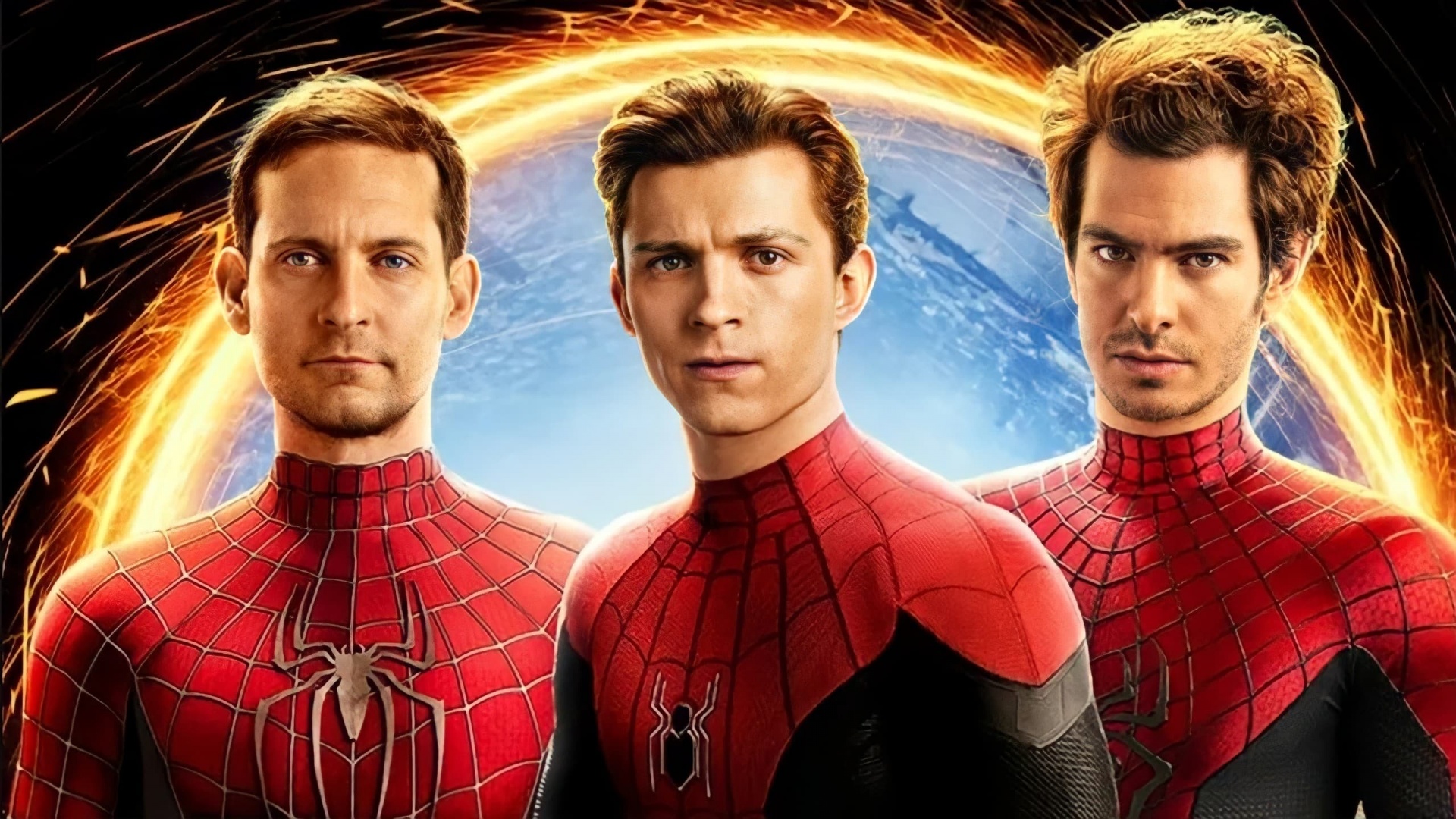
6. Spider-Man: No Way Home (2021)
Garfield’s return as Peter Parker became one of the film’s best-kept secrets and most emotionally satisfying surprises.
He appears alongside Tom Holland and Tobey Maguire as alternate versions of Spider-Man drawn into the same universe. What could have been a nostalgic stunt instead gives Garfield the closure his earlier franchise never received.
His Peter is older, lonelier and still carrying guilt over Gwen Stacy’s death. Garfield conveys that history through small pauses and changes in expression rather than lengthy explanation.
The emotional payoff comes when he saves MJ from falling. After catching her, Peter looks at her with relief and grief at the same time. He has not erased the past, but he has prevented another version of it.
The moment allowed audiences to reconsider Garfield’s Spider-Man and reminded viewers that the problem had never been his performance.
5. 99 Homes (2014)
Garfield plays Dennis Nash, a struggling single father whose family is evicted during the American foreclosure crisis.
Desperate to regain his home, Dennis begins working for Rick Carver, the ruthless real-estate operator who removed him from it. Michael Shannon gives Carver frightening authority, while Garfield portrays the moral damage of becoming useful to the system that destroyed his family.
Dennis initially believes each compromise is temporary.
Garfield lets the character’s confidence grow as the money arrives, even while shame accumulates underneath. The performance captures how economic desperation can turn a victim into an accomplice without transforming him into a simple villain.
99 Homes is both a tense thriller and an angry examination of financial collapse. Garfield keeps its political argument human by making every decision feel connected to a father’s fear of failing his family.
4. Hacksaw Ridge (2016)
Garfield earned his first Academy Award nomination for playing Desmond Doss, the real-life Army medic who served during World War II while refusing to carry a weapon.
Doss’ Seventh-day Adventist faith makes him a target during training. Fellow soldiers view his refusal to use a gun as cowardice, but he remains committed to serving as a medic.
The second half of the film places him inside the brutal Battle of Okinawa, where he repeatedly returns to rescue wounded men.
Garfield prevents Doss from becoming a flawless patriotic symbol. His gentleness feels vulnerable, while his conviction sometimes appears almost impossible to understand.
The performance succeeds because Garfield treats courage as endurance rather than aggression. Doss does not conquer fear. He continues moving through it, asking to save one more soldier each time exhaustion should make another rescue impossible.

3. Silence (2016)
Martin Scorsese’s religious drama gave Garfield one of the most physically and spiritually demanding roles of his career.
He plays Sebastião Rodrigues, a 17th-century Portuguese Jesuit priest who travels to Japan searching for his missing mentor. There, Christians are being tortured and forced to renounce their faith.
Rodrigues begins with confidence in his mission and in his own capacity for sacrifice. That certainty slowly collapses as authorities make other people suffer because he refuses to publicly reject Christianity.
Garfield lost significant weight for the role and spent months preparing spiritually. Yet the performance’s power comes from more than physical transformation.
He portrays faith becoming pride, then doubt, then something quieter and more difficult to define. The character’s greatest crisis is not whether God exists, but why God remains silent while innocent people suffer.
Silence received a restrained response upon release, but it has grown in stature as one of Scorsese’s most challenging works.
2. The Social Network (2010)
Garfield did not play Facebook’s founder, but he gave David Fincher’s film its broken heart.
As Eduardo Saverin, he begins as Mark Zuckerberg’s closest friend and the company’s early financial partner. As Facebook expands, Eduardo is gradually pushed aside by Mark and Sean Parker.
Garfield makes Eduardo intelligent, loyal and imperfect. His anger does not come only from losing money or ownership. It comes from realizing that the person he trusted no longer considers their friendship valuable.
The confrontation after Eduardo discovers that his shares have been drastically diluted remains one of Garfield’s defining scenes. He enters soaked from the rain, smashes Mark’s laptop and delivers his anger with the force of someone recognizing a betrayal too large to repair.
Jesse Eisenberg’s controlled performance makes Mark fascinating. Garfield makes the cost of Mark’s ambition painful.
More than a decade later, the film remains one of the sharpest dramas about technology, power and the loneliness hidden inside success.
1. Tick, Tick… Boom! (2021)
Garfield’s best film performance required him to become a singer.
He plays Jonathan Larson, the composer who would later create Rent, during the period before success when he was struggling to finish an ambitious musical while approaching his 30th birthday.
Larson feels time moving faster than his career. Friends are choosing stability, the AIDS crisis is devastating his community and years of work have not yet produced the breakthrough he believes should already have arrived.
Garfield reportedly had little formal singing experience before preparing for the role. Under Lin-Manuel Miranda’s direction, he developed enough vocal confidence to carry the film’s musical demands without losing the desperation beneath the songs.
His Jonathan can be inspiring, selfish, loving and exhausting. He neglects relationships because he believes the work cannot wait, yet the audience understands why creation feels like survival to him.
Garfield won a Golden Globe and received his second Academy Award nomination.
The performance ranks first because it brings together everything he does best: nervous energy, humor, physical commitment, grief and an almost painful openness.
He does not simply play a gifted artist waiting to be discovered.
He plays a man terrified that time will run out before anyone understands what he was trying to give them.

The Hero Beneath Every Role
Garfield’s filmography includes superheroes, soldiers, priests, struggling fathers and ambitious artists. The settings change dramatically, but many of his characters face the same question.
What remains when belief is tested by loss?
Peter Parker cannot save everyone. Rodrigues cannot receive the answer he demands from God. Eduardo cannot preserve a friendship that has become inconvenient. Jonathan Larson cannot stop the clock.
Garfield’s strength is allowing these men to break without making them weak.
Spider-Man made him famous, but his greatest performances occur when there is no mask left to protect the person underneath.
That is why Tick, Tick… Boom! stands above the rest.
It turns Andrew Garfield’s defining quality—his willingness to appear emotionally unguarded—into the entire reason the movie lives.