At Least 5 Dead and More Than 80 Missing After Passenger Ferry Bursts Into Flames Near Popular Philippine Tourist Destination
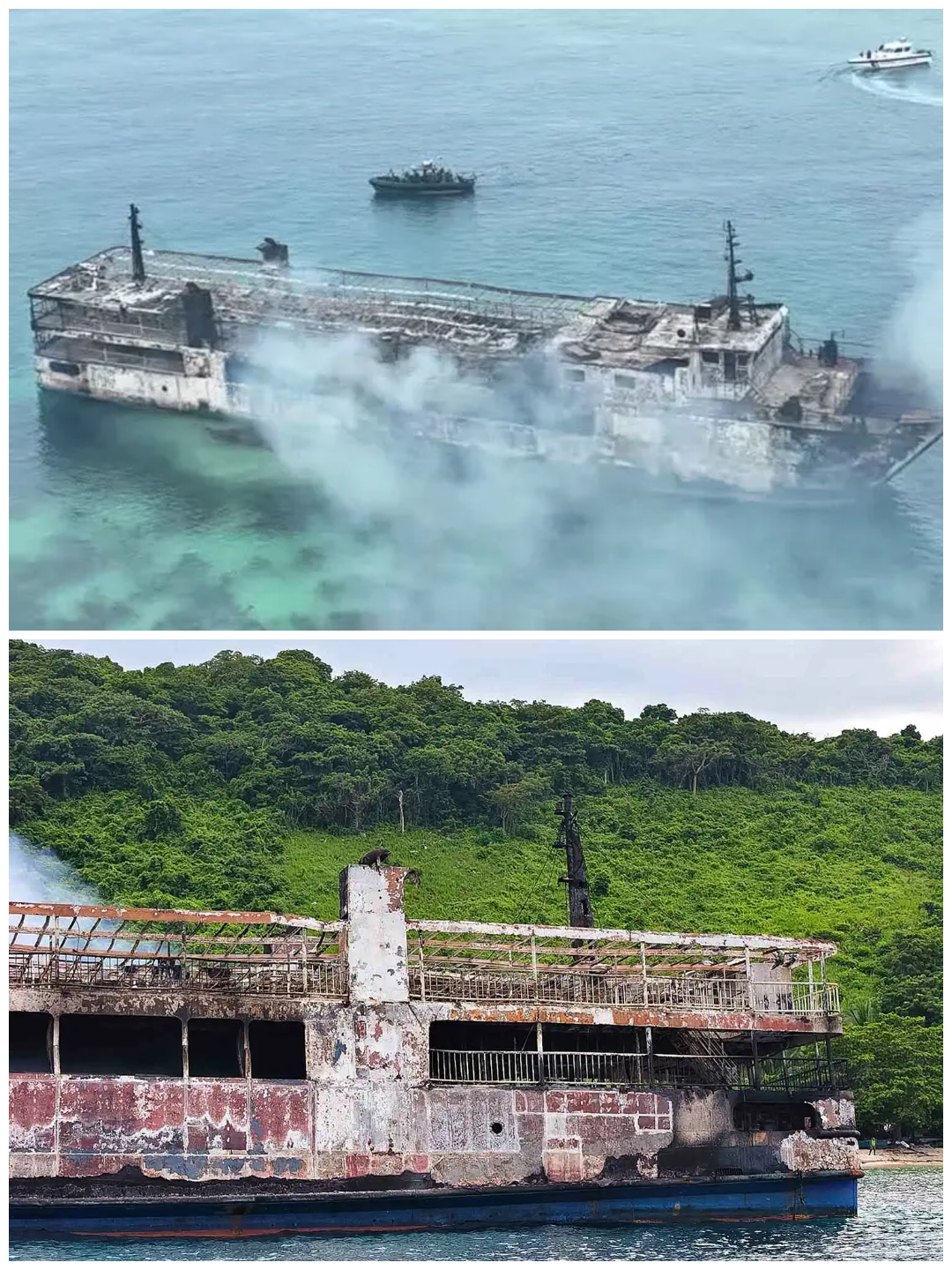
A passenger ferry was approaching one of the Philippines’ most famous tourist destinations when passengers reportedly heard a powerful explosion.
Within minutes, the vessel was engulfed in flames.
Some people jumped into the sea without life jackets. Rescue boats raced toward the burning ship in darkness. By the following morning, thick smoke was still rising from its blackened remains.
At least five people have died and more than 80 remained unaccounted for after the MV June Aster, carrying 134 passengers and crew, caught fire Wednesday evening, Sept. 9, while traveling toward Coron in Palawan.
According to the Philippine Coast Guard, the vessel’s manifest listed 117 passengers and 17 crew members.
Early Thursday, authorities said 42 people had been rescued and five fatalities confirmed, leaving 87 people still being located or identified based on the manifest. Later reports placed the number of rescued people at 43. Officials cautioned that the numbers could change as the search continued.
The cause of the fire remains under investigation.
But one survivor’s account has given investigators an important clue.
A Loud Explosion — Then the Fire Spread
The MV June Aster was traveling from the Manila area to Coron, a Palawan destination known internationally for its turquoise lagoons, limestone cliffs, diving and island-hopping tours.
The ferry was nearing Coron when the emergency began at roughly 6:45 p.m. local time Wednesday.
Philippine Coast Guard spokesperson Commodore Noemie Cayabyab said a survivor described hearing a loud explosion from the vessel’s cargo hold before flames rapidly spread through the ship.
Authorities have not determined what caused that explosion.
The cargo included several vehicles, among them five motorcycles, an electric vehicle, a forklift and a pickup truck, along with general cargo.
Investigators have not publicly concluded that any of those vehicles caused the fire, and officials have warned against drawing conclusions before a full examination of the vessel can be conducted.
For passengers on board, however, the emergency appears to have escalated extremely quickly.
Some survivors rescued from the water were not wearing life jackets.
Cayabyab said that could indicate that passengers jumped overboard as the flames spread rather than waiting to evacuate through normal procedures.
Rescuers Faced Fire, Smoke and Dangerous Seas
The response quickly expanded beyond the Coast Guard.
Two larger Coast Guard vessels and several smaller boats were deployed, while military rescue teams, government agencies, fishermen, private volunteers and resort operators joined the effort.
A military aircraft was also placed on standby.
The conditions were difficult.
The Associated Press reported that rough seas and strong currents complicated the search. After the ferry issued its distress signal, currents carried the vessel farther away from shore.
It had been approximately four nautical miles from Barangay Turda when the distress call was issued, but later drifted to more than seven nautical miles offshore.
Images from the nighttime rescue showed one of the most frightening aspects of the disaster: survivors in small boats and in the water while the ferry continued burning behind them.
Coast Guard personnel threw life jackets toward people awaiting rescue.
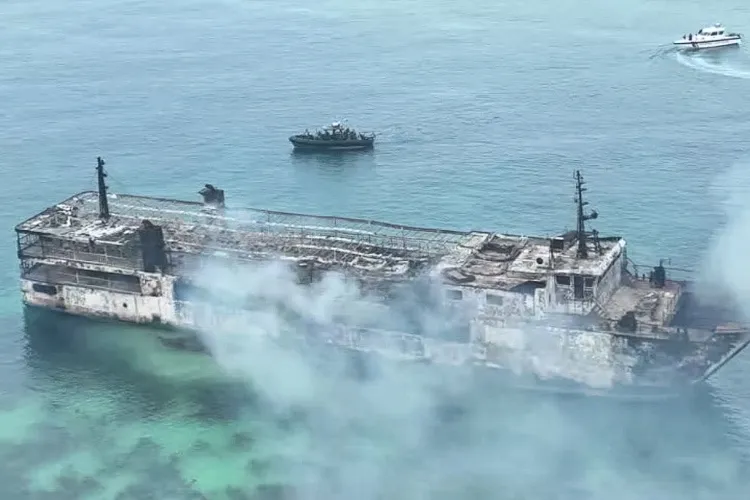
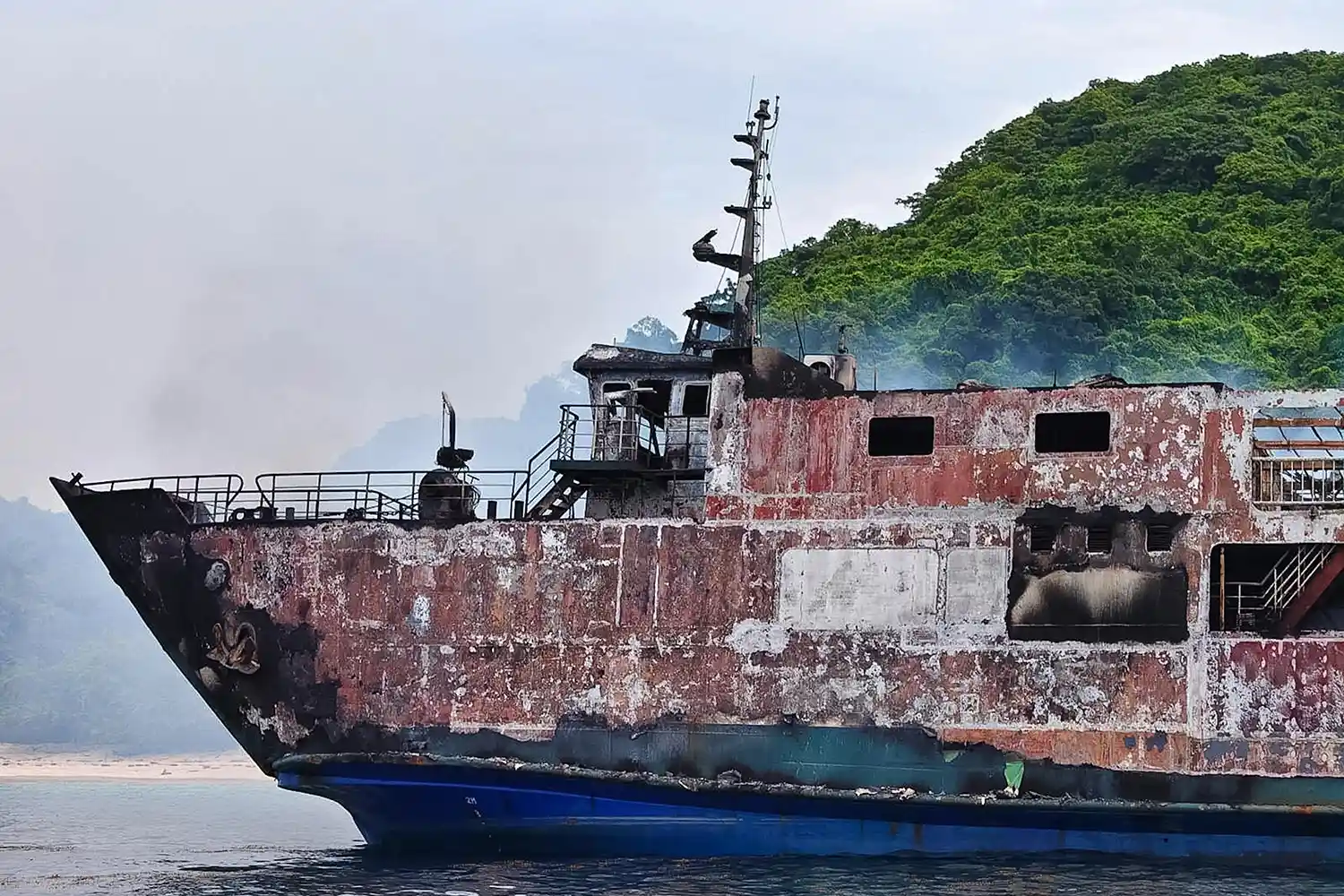
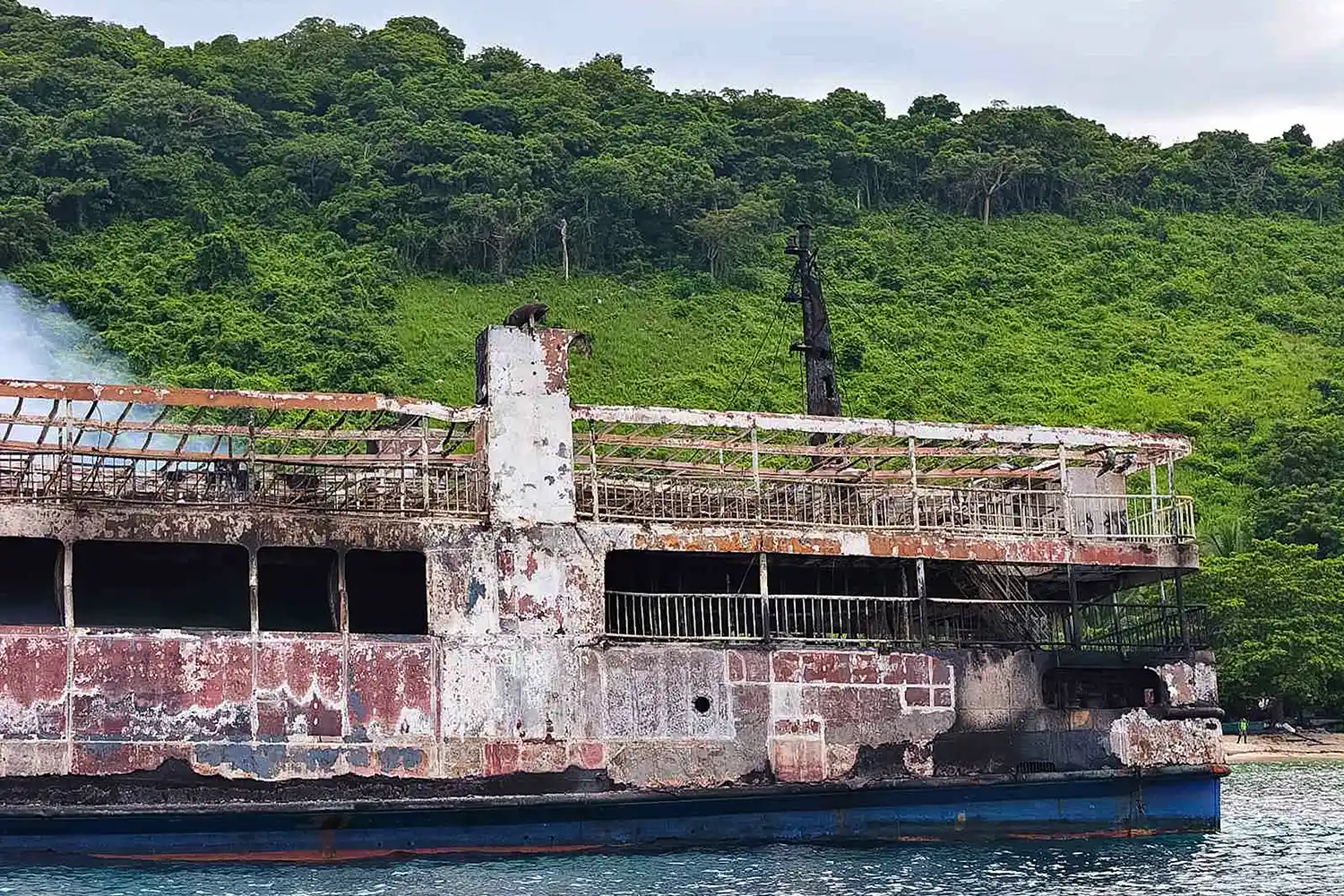
By Thursday, the vessel remained afloat but was badly burned and listing, with smoke continuing to rise from it.
The extreme heat created another problem.
Reuters reported that rescuers initially could not safely board the vessel because of heavy smoke, high temperatures and concerns about additional explosions.
That left rescuers searching the surrounding waters while waiting for conditions aboard the ferry to become safe enough for closer inspection.
Families Wait for Answers
As rescuers worked offshore, families faced another agonizing problem: determining whether their relatives were among those rescued.
Local authorities in Coron established hotlines so people could check whether missing relatives had been taken to hospitals or evacuation facilities.
An early medical update said that among the first 42 people rescued, six had already been discharged, 33 remained hospitalized and three were in critical condition and had been transferred to Culion Sanitarium and General Hospital.
Meanwhile, people recovered from the ferry were being brought to a covered court in Barangay Turda, where local authorities could provide assistance and work to identify them.
That identification process is especially important because officials have emphasized that the number of people officially listed as missing may continue to fluctuate as survivor lists, hospital records and the passenger manifest are reconciled.
For families waiting for news, every new rescue could change the picture.
The Ferry Had Passed Safety Inspections
One question emerged almost immediately after the fire: Was the ferry safe to sail?
According to the Coast Guard, the MV June Aster had passed required safety inspections before the voyage.
The ship had a maximum capacity of approximately 330 people, Reuters reported, far above the 134 passengers and crew listed on the voyage manifest.
That suggests the vessel was not overloaded according to the official manifest.
Still, Coast Guard officials said the investigation will examine possible violations, including passenger numbers and whether proper life jackets were available and provided.
The discovery of survivors without life jackets has become one of the issues investigators are examining.
Authorities are also trying to determine exactly where the fire started and why it spread.
When asked whether investigators were considering possibilities such as sabotage or terrorism, Cayabyab stressed that it was far too early to reach such a conclusion.
No cause had been established.
Ferry Company Says It Is Cooperating
Atienza Inter-Island Ferries, the company identified as the vessel’s operator, said it was devastated by the incident and was cooperating with government authorities.
The company said it had mobilized available resources to assist with the emergency and expressed sympathy for passengers, crew members and their families.
The disaster is particularly significant in the Philippines, where ferries are an essential part of everyday transportation.
With more than 7,600 islands, the country depends heavily on passenger vessels to connect communities that cannot easily be reached by road.
But the Philippines also has a long and painful history of maritime disasters.
Previous accidents have been linked to combinations of severe weather, overcrowding, poor vessel maintenance and inconsistent enforcement of safety regulations.
The MV June Aster investigation will now attempt to establish whether any similar factors played a role — or whether Wednesday’s fire had an entirely different cause.
The Search Is Far From Over
For now, investigators can wait.
The rescuers cannot.
More than 80 people remained unaccounted for in the first major updates Thursday morning, turning the waters surrounding Coron into the center of an urgent search operation.
Coast Guard vessels, military teams, fishermen and private boats continued looking for anyone who may have escaped the ship and remained in the water or drifted toward nearby coastal areas.
Authorities have also alerted surrounding communities to watch for survivors who may reach shore.
What began as an ordinary passenger journey toward one of the Philippines’ most beautiful destinations had transformed, within minutes, into a desperate fight to escape a burning ship.
Five deaths had already been confirmed.
Dozens had been rescued.
And for the families of those still missing, the most important number remained the one that authorities were racing to reduce:
the number of people who had not yet been found.