August’s Journey Back to Sight: A 3-Year-Old’s Fight Against Bilateral Retinoblastoma
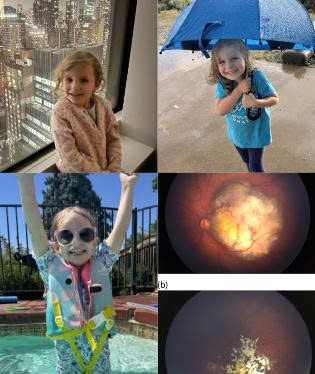
At just 3 years old, August is an energetic little girl with a vivid imagination and a remarkable ability to find joy in everyday moments. She loves being outdoors, collecting rocks, playing with bubbles, and digging in water and dirt with her sand bucket and shovel. She spends time with her older sister, often pretending to be a mommy or dressing up as princesses such as Rapunzel, Moana and Anna from Frozen.
August is also thoughtful and deeply aware of her emotions. Her mother, Holly, describes her as kind, loving and incredibly resilient. She remembers everything, cares about how her family feels and is always ready to give hugs.
But August’s childhood took an unexpected turn when she was still a baby.
Before her diagnosis, August frequently tripped, hit her head and became startled by unfamiliar sounds. At 15 months old, she was diagnosed with bilateral retinoblastoma, a rare form of childhood eye cancer affecting both retinas. By the time her family learned that she had the disease, both of her retinas had detached, leaving August essentially blind.
Retinoblastoma develops in the retina, the light-sensitive tissue at the back of the eye. It is most often diagnosed in very young children, particularly before age 5. When the disease affects both eyes, it is known as bilateral retinoblastoma and is strongly associated with changes involving the RB1 gene. Bilateral disease is generally considered an indicator of a potentially heritable form of retinoblastoma, although genetic testing is needed to determine a child’s specific genetic status.
One of the most recognizable warning signs is leukocoria, sometimes called a “white pupil,” which can appear in photographs when one pupil reflects white rather than the typical red color. Other possible signs include crossed eyes, eye redness or pain, and an eye that appears larger than normal. Because early diagnosis can improve the chances of preserving the eye and vision, awareness of these signs and timely eye examinations are important.
For August, treatment meant not only confronting the disease but also traveling far from home.
About a month after treatment began, August needed to begin seeing a specialist in New York, thousands of miles from her home in Washington state. The appointments were essential and could not be missed. When the family temporarily lost access to flight charity assistance, Alex’s Lemonade Stand Foundation’s Travel For Care program stepped in to fund round-trip airline tickets, helping August continue receiving the specialized care she needed.
“Traveling to New York so frequently is normal to her and her sister, they don’t know it any other way,” Holly said. “Alex’s Travel For Care program has helped our family in a big way. We are so extremely grateful, and the experience is only positive.”
Over the following two years, August continued her treatment and monitoring. Today, her family has a reason to celebrate: August has regained vision in both eyes.
She can see her sister and her parents again and experience the world around her like other children her age. Her doctors and family are still learning about the extent of her visual deficits as she grows, but her parents are proud of how far she has come.
“She’s my hero because she is optimistic, resilient, adaptable and accepting,” Holly said.
August has now flown to New York 22 times for her eye appointments. She may not enjoy the eye drops or the mask used before her examinations, but she looks forward to choosing a “prize” afterward. Even when difficult circumstances separate her from her sister, August focuses on the moment when they will be together again.
Her mother says August has learned to recognize pain while also understanding that it can be temporary. When she gets hurt, she reminds herself that her “boo-boo” will heal soon. She talks about her feelings, seeks comfort from her parents and sister, and continues to find small moments of happiness along the way.
For children with retinoblastoma, treatment and follow-up can extend well beyond the initial diagnosis. Depending on the disease and whether the eyes can be preserved, treatment may involve chemotherapy delivered systemically or directly to the eye, cryotherapy, thermotherapy and other specialized approaches. Children with heritable disease may also require frequent examinations because new tumors can develop for several years after the initial diagnosis.
Genetic counseling and testing can also play an important role. Changes in the RB1 gene can occur as part of a heritable form of the disease, and identifying an RB1 variant can help doctors determine appropriate surveillance and help families understand potential risks for relatives.
Holly believes parents should allow children to express their emotions and talk about their experiences rather than trying to hide difficult feelings.
She also encourages families facing a childhood cancer diagnosis not to be afraid to ask for help.
“I think the first year is the hardest for the parents,” Holly said, adding that connecting with other parents who have gone through similar experiences was especially helpful. “And don’t be afraid to ask for financial assistance. This is the time when it is OK to ask for help.”
For August’s family, financial assistance made it possible to continue traveling for specialized care without carrying the entire burden alone.
As August continues to be monitored, Holly hopes her daughter’s story will help raise awareness about retinoblastoma, encourage earlier detection and make it easier for families to access experienced specialists, even when those doctors are far from home.
“My hope is that families have the option to seek care anywhere so they have access to experienced providers with high success rates, and they don’t have to worry about the financial burdens of traveling to seek specialized care,” Holly said. “It needs to be easier for the sake of our children’s lives.”
August’s journey is not over. But at 3 years old, after facing a disease that once left her essentially blind, she can now see her family, play with her sister and explore the world around her again—a reminder of the resilience a child can show even in the most difficult circumstances.
source: https://www.alexslemonade.org/hero/august-daniels