Dolly Parton Left a Final Letter for Millions of Children — And Signed It With the Words Everyone Knows
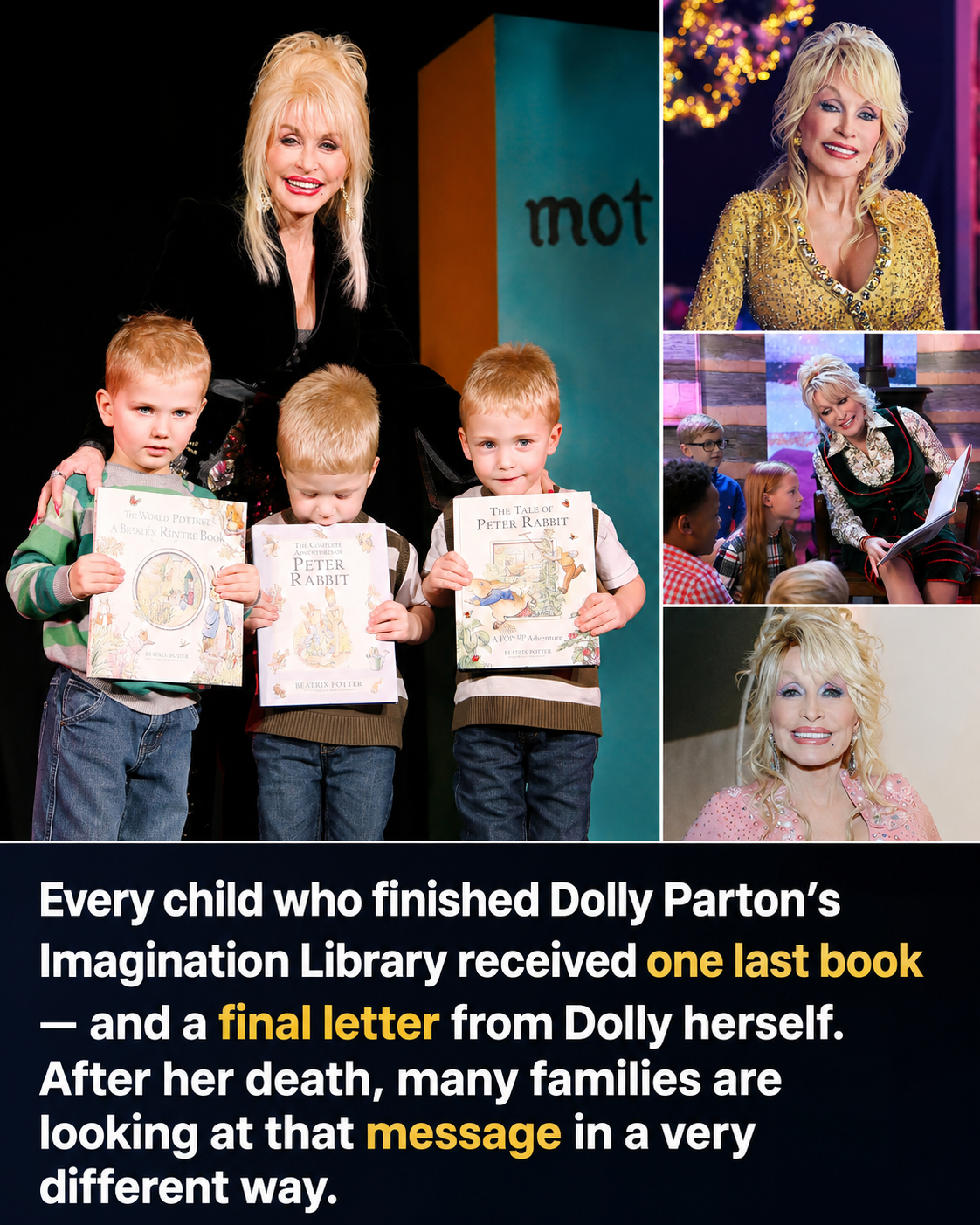
For millions of children, Dolly Parton did not first enter their lives through “Jolene,” 9 to 5 or a movie.
She arrived in the mailbox.
Month after month, a new book appeared with the child’s name on it — free of charge — through Dolly Parton’s Imagination Library.
The deliveries began when children were babies and continued until they reached age 5.
Then came one final package.
Inside was their last Imagination Library book.
But Dolly did not simply allow the program to end with a child aging out of it.
She left something else behind.
A personal message.
For years, children “graduating” from the program have received a letter from Dolly encouraging them to keep reading long after the monthly books stop arriving. She reminds them that books can take them places, help them learn and give them the confidence to dream about what they might become.
And at the very end of that message, Dolly chose a sign-off almost no fan could read without hearing a melody.
“I Will Always Love You,
Dolly.”
Since Parton’s death on Aug. 25, 2026, at age 80, that letter has taken on an entirely different emotional meaning.
The children receiving it in the years ahead will be reading words Dolly prepared long before she was gone.
The Books Started Arriving Before Children Could Even Read
Dolly launched the Imagination Library in 1995.
The original idea was simple.
Children in her home county in East Tennessee would receive a free book every month from birth until they entered kindergarten.
There would be no test.
Families would not have to prove that a child was already interested in books.
The goal was to put books inside homes early enough that reading could become part of childhood itself.
The program was deeply personal for Dolly.
Her father, Robert Lee Parton, had grown up without the opportunity for much formal schooling and struggled with reading and writing throughout his life.
Dolly often described him as extremely intelligent despite those limitations.
His experience stayed with her.
If children could receive books before school even started, she believed, perhaps some of the barriers her father experienced could be prevented for another generation.
What began as a local program eventually expanded far beyond Tennessee.
Millions of children across several countries began receiving the books.
Hundreds of millions of copies were mailed.
And Dolly became known to many families not primarily as a country star, but simply as “the Book Lady.”
Then Comes the Last Book
Every Imagination Library child eventually reaches the same milestone.
They turn 5.
They are preparing for kindergarten or have reached the age when the monthly deliveries end.
In the United States, the traditional graduation book has been Look Out Kindergarten, Here I Come! by Nancy Carlson.
The title fits the moment.
A child who began receiving books as a baby is now preparing to enter school.
But Dolly understood that ending the program could feel strangely abrupt.
For years, a package had appeared every month.
Then suddenly, no more Dolly books.
So the final delivery includes something meant to bridge the gap between receiving books and choosing them for yourself.
Dolly’s letter tells the child that this is not the end of reading.
It is the beginning of doing it independently.
Dolly Wanted Them to Visit the Library Next
The message encourages children to keep books in their lives even after the Imagination Library stops delivering them.
Dolly reminds them that libraries are waiting.
There are always more stories.
More things to learn.
More places a book can take them.
The message is written with the same simple optimism that powered the program from the beginning.
She does not tell children they need to become great scholars.
She does not turn reading into a competition.
Instead, she presents books as treasures.
Something enjoyable.
Something worth holding onto.
And something capable of changing what a child imagines is possible.
That was always the larger idea behind the Imagination Library.
Dolly was not simply trying to increase the number of books in a house.
She wanted to increase the number of possibilities inside a child’s head.
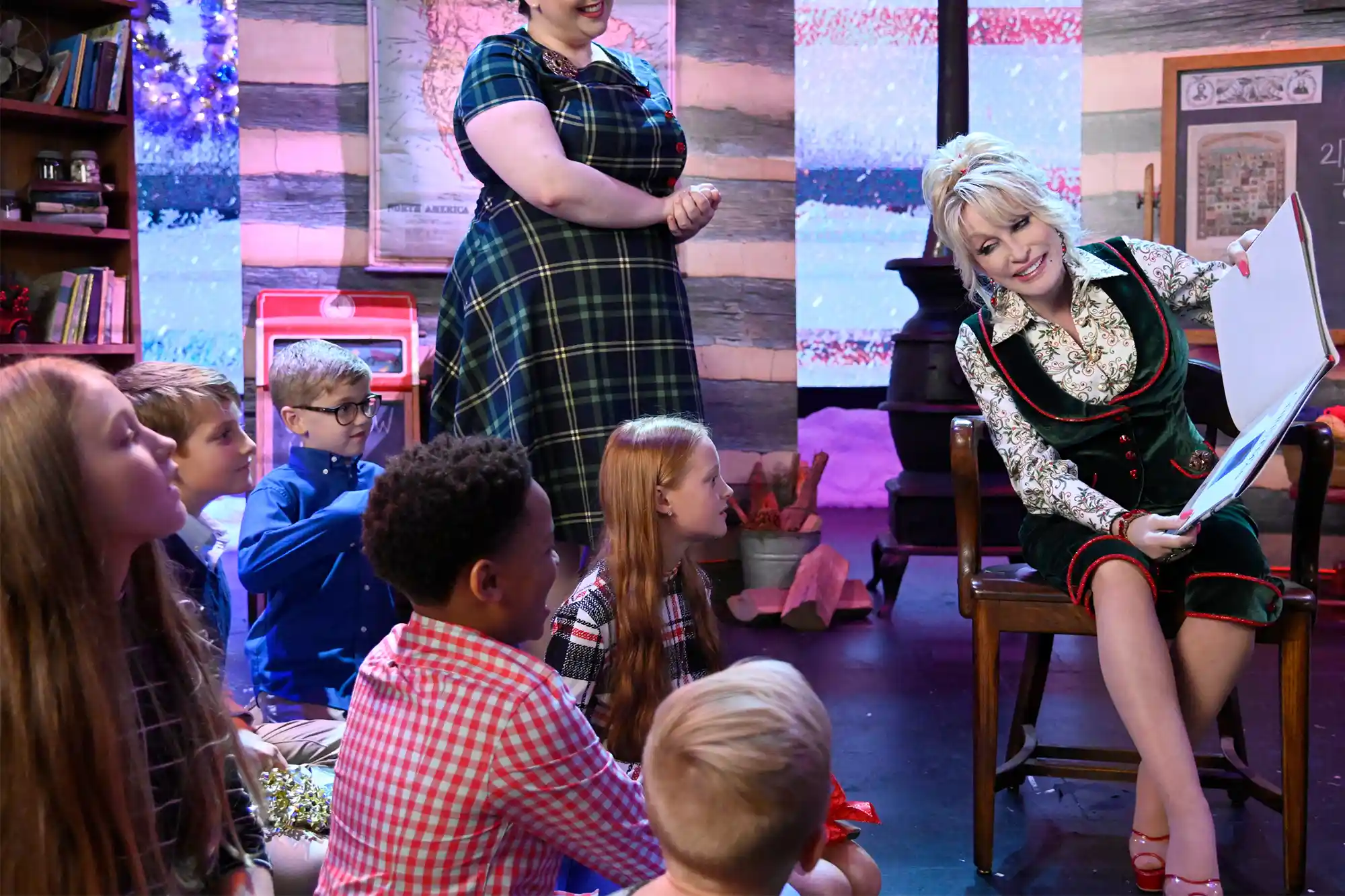
The Letter Also Carries Lessons From Dolly’s Own Family
The message goes beyond reading.
Dolly tells the young graduates to dream big.
She encourages them to learn as much as they can.
And she reminds them to care about the people who care about them.
Those ideas came directly from the world Dolly grew up in.
The Parton family had very little money, but Dolly repeatedly credited her parents with giving their children other things: imagination, music, faith, stories and the belief that their circumstances did not have to determine the limits of their dreams.
That made her an unusually appropriate person to write to a 5-year-old about possibility.
Dolly had started life in a one-room cabin in the Smoky Mountains.
She became one of the most successful songwriters and entertainers in American history.
When she told children that they could dream beyond what they currently saw around them, she was not offering an abstract slogan.
Her own life had been built around exactly that idea.
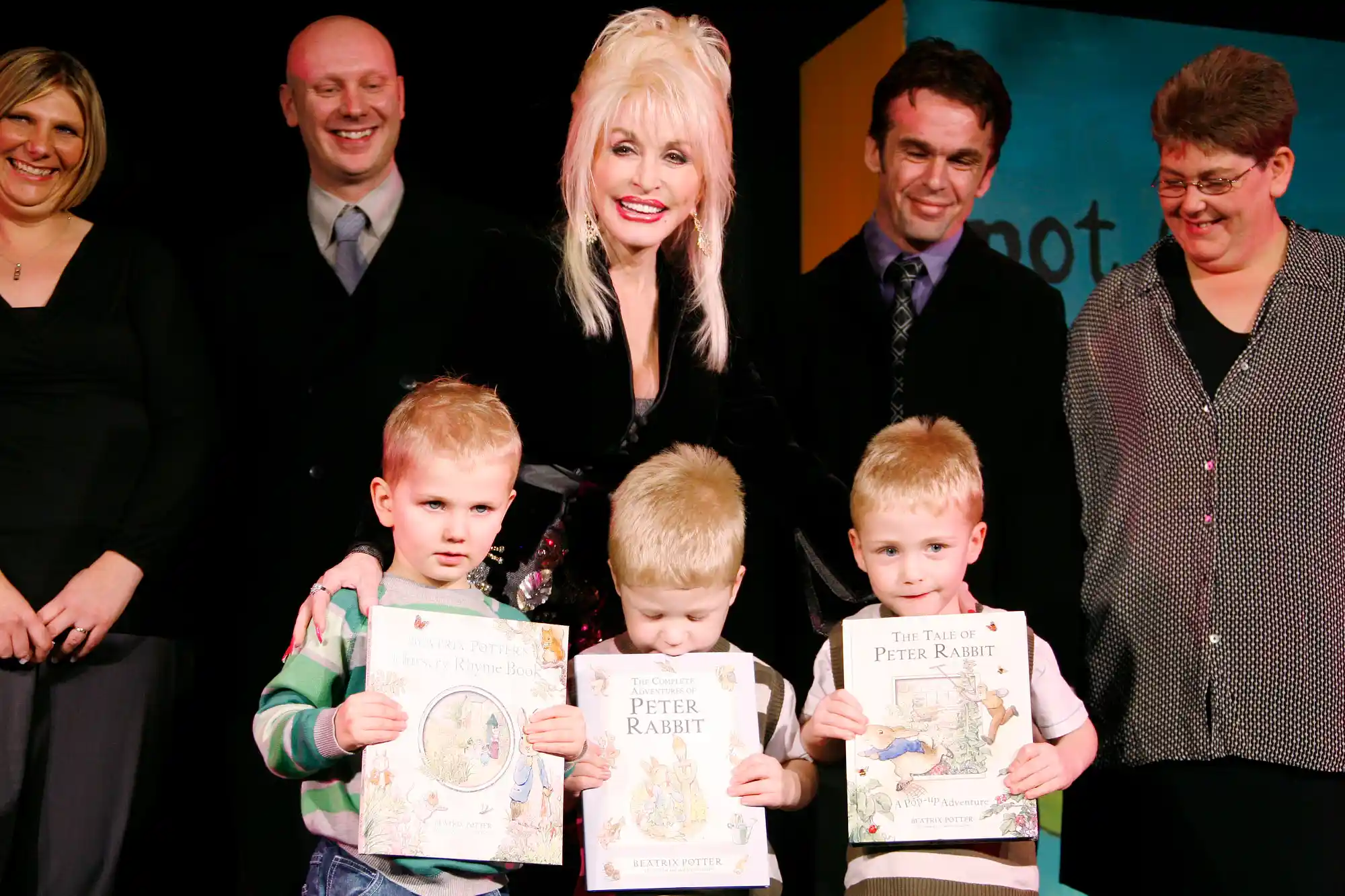
Then She Used Her Most Famous Goodbye
The ending is what gives the letter its extraordinary emotional power now.
Dolly could have signed it simply:
Love, Dolly.
Instead, she chose words tied to one of the most important songs of her career.
“I Will Always Love You.”
Dolly originally wrote the song decades earlier as a farewell to Porter Wagoner when she decided to leave their professional partnership.
It was not originally about death.
It was not even primarily a romantic breakup song.
It was about leaving someone while still carrying affection and gratitude for what they had meant to you.
Years later, Whitney Houston transformed the song into a worldwide phenomenon through The Bodyguard.
But the words always remained Dolly’s.
Now they appear at the bottom of a letter sent to children at another moment of departure.
Their monthly relationship with the Imagination Library is ending.
Dolly tells them to continue forward.
And then she says goodbye with the line that followed her for most of her life.
After Dolly’s Death, the Letter Reads Differently
When Dolly was alive, the sign-off was playful and affectionate.
Parents could recognize the song reference immediately.
Children might understand it only years later.
Now there is another layer.
Dolly is no longer here to write a new message to each generation.
She does not need to.
She already wrote one.
Children turning 5 next year, and in the years after that, can still receive the advice she wanted them to hear.
Keep reading.
Keep learning.
Keep dreaming.
Care for the people who love you.
The monthly book may be ending, but the habit should not.
That is why the resurfaced letter feels more significant than a typical celebrity message.
It was designed from the beginning to outlast the moment in which it was written.
Perhaps This Is One of Dolly’s Most Personal Legacies
Dolly Parton left behind an enormous catalog of songs.
She left businesses.
Dollywood.
Movies.
Books.
An entertainment legacy that will continue to generate new projects for years.
But the Imagination Library operated on a different scale.
Its impact happened one child at a time.
One book arriving at one house.
One parent reading beside one bed.
One child eventually realizing that the books belonged to them.
Then, at age 5, one final letter.
Dolly once spoke about the Imagination Library as one of the achievements that made her father especially proud.
That may explain why she treated the program as more than ordinary philanthropy.
It connected the child she had been, the father she loved and children she would never personally meet.
And she made sure there was a goodbye waiting for them.
Millions of children may never have met Dolly Parton.
Many will grow up long after her death.
But when their final Imagination Library book arrives, they can still open a letter containing advice from the woman who started sending them books before they were old enough to read.
And at the bottom, Dolly leaves them with the same promise America had already heard her sing for decades:
“I Will Always Love You.”