Dolly Parton Wrote One of Her Most Beloved Songs on the Back of Porter Wagoner’s Dry-Cleaning Receipt
Some songs begin in expensive studios.
Others start with a carefully prepared notebook, a piano, or hours of deliberate writing.
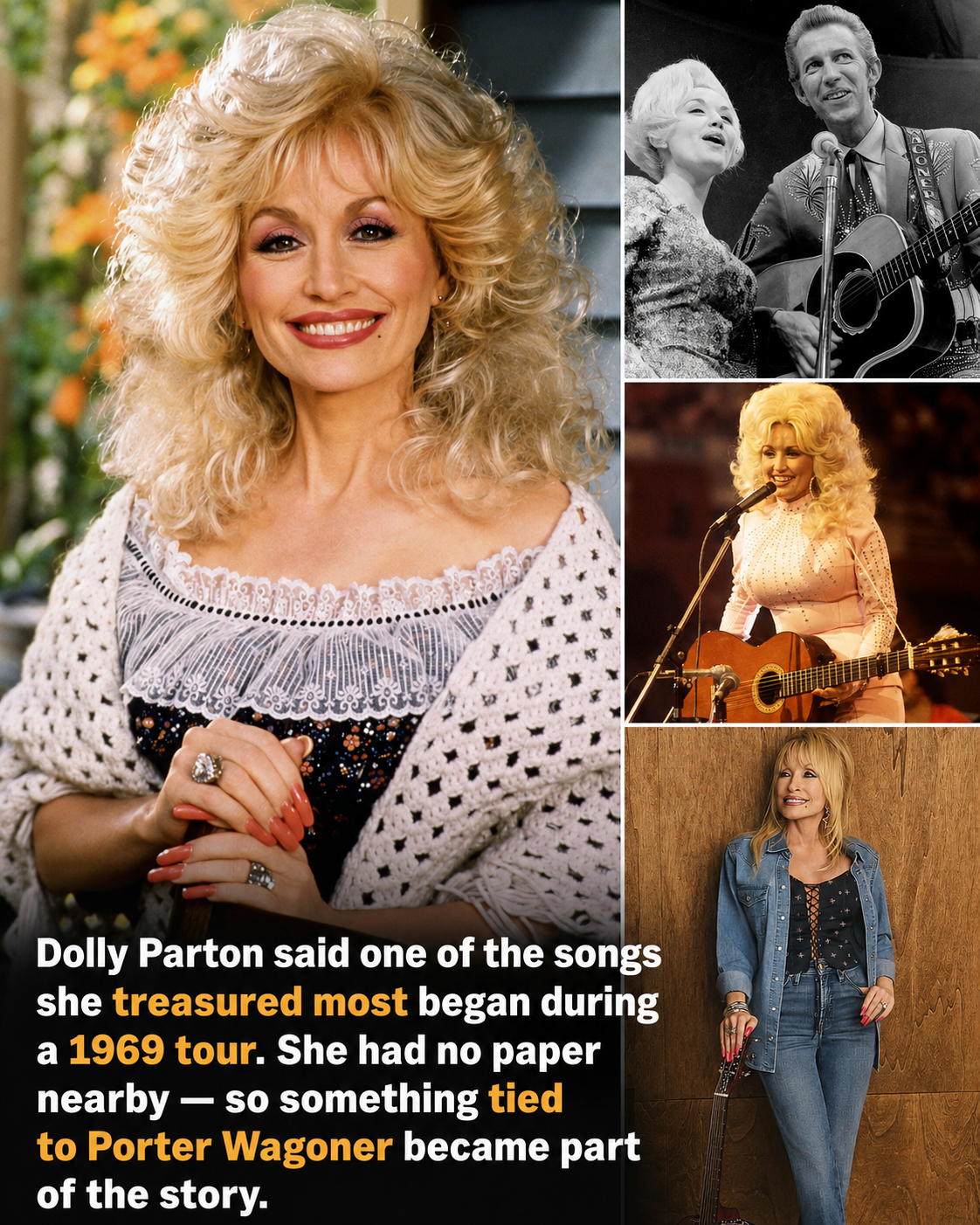
One of Dolly Parton’s most treasured songs began in a much less glamorous way.
When the idea for “Coat of Many Colors” came to her while she was traveling in 1969, Dolly reportedly had no proper paper nearby. She needed somewhere to capture the words before they disappeared.
So she used what she could find.
The back of a dry-cleaning receipt belonging to Porter Wagoner.
It was an ordinary piece of paper attached to an ordinary errand, yet it ended up carrying the first words of a song that would become one of the most personal and enduring compositions of Dolly Parton’s career.
For an artist who has written thousands of songs, “Coat of Many Colors” has always stood apart.
And the unlikely object on which it began somehow makes its story even more fitting.
The Song Came From Dolly’s Childhood
“Coat of Many Colors” was rooted in Dolly’s memories of growing up in rural Tennessee.
Parton was raised in a large family with very little money. Material possessions were limited, but the stories she later told about her childhood often emphasized something else: imagination, family love and the ability to find dignity in circumstances that other people might see only as poverty.
The song centers on a coat Dolly’s mother made for her from pieces of fabric.
The family could not simply go out and buy a new coat.
Instead, her mother stitched together scraps to create one.
While she worked, Dolly’s mother connected the coat to the biblical story of Joseph and his coat of many colors. For young Dolly, that story transformed the garment.
She did not see it as a symbol of having less.
She saw it as something special.
Something made specifically for her.
Something created by someone who loved her.
That emotional distinction would eventually become the heart of the song.
Then Came the Bus Ride
By 1969, Dolly’s life looked very different from the childhood she was writing about.
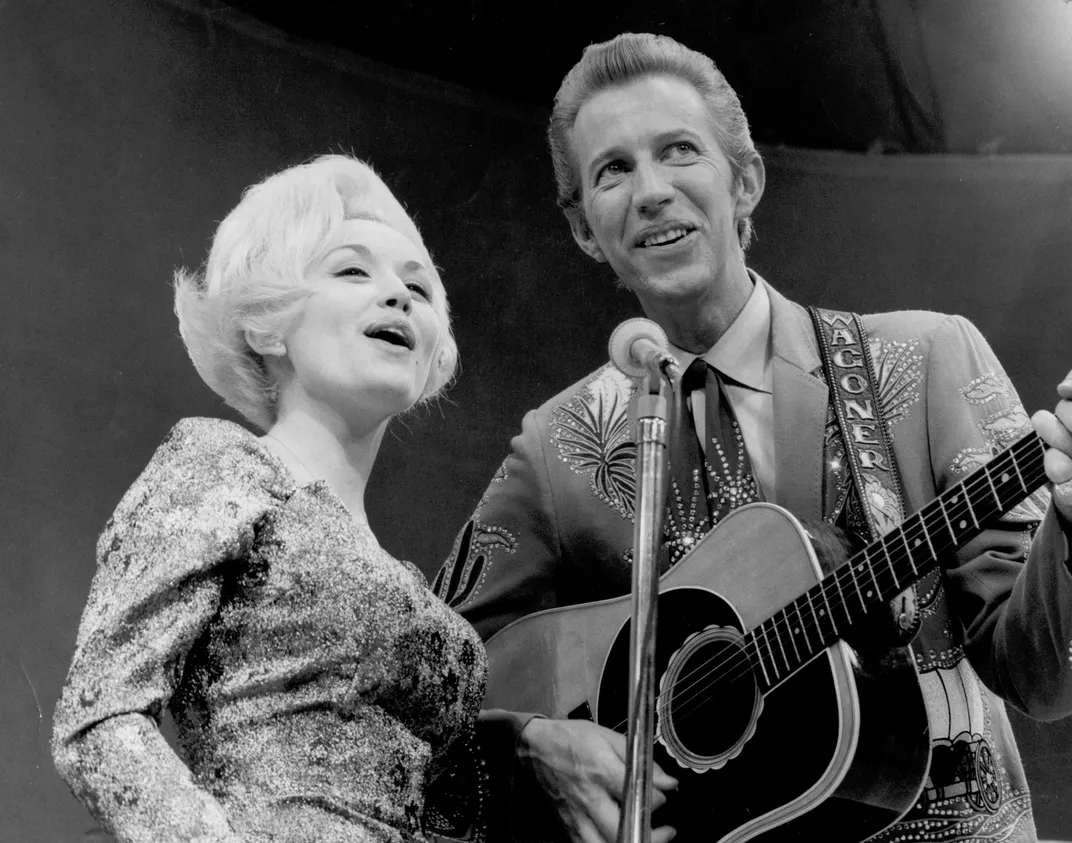
She was already performing professionally and working closely with Porter Wagoner, the country music star who had brought her onto his television program and helped expose her to a much larger audience.
Dolly and Porter spent significant amounts of time traveling.
Like many touring musicians, they lived through long stretches of buses, backstage rooms, hotels and performance venues.
It was during one of those trips that the idea for “Coat of Many Colors” reportedly arrived.
For songwriters, inspiration does not necessarily respect schedules.
An idea can appear in the middle of the night, while driving, during a conversation or when there is absolutely nothing convenient nearby to write on.
Dolly suddenly needed paper.
She did not have any.
Porter Wagoner did.
Sort of.
Nearby was one of his dry-cleaning receipts.
So Dolly turned it over and began writing on the back.
A Dry-Cleaning Receipt Became Part of Country Music History
There is something wonderfully unpolished about the image.
One of America’s most prolific songwriters, creating what would become one of her signature songs, not in a leather-bound notebook but on the reverse side of a receipt for someone else’s clothes.
That receipt became the emergency canvas for Dolly’s memory.
The story mattered enough that she did not want to wait until later.
Songwriters often describe the fear of losing an idea if it is not recorded immediately. A melody, phrase or image that feels unforgettable in one moment can vanish surprisingly quickly.
Dolly did not take the risk.
The dry-cleaning slip was available.
That was enough.
And because she used it, the beginning of “Coat of Many Colors” survived.
Why the Song Meant So Much to Her
Dolly has written many songs that became larger commercial hits.
She has written love songs, heartbreak songs, comedy songs, character songs and crossover hits.
But “Coat of Many Colors” has remained especially meaningful because it was directly connected to her own life.
It was not simply inspired by poverty.
It was about how a child understands love.
In the song, young Dolly proudly wears the coat to school, believing the story her mother told her makes it precious.
Her classmates see something different.
They laugh.
To them, the coat reveals that her family cannot afford better clothes.
But Dolly’s sense of value does not come from what the coat costs.
It comes from who made it.
That difference became one of the song’s most powerful ideas.
A thing does not need to be expensive to be valuable.
And wealth is not always measured in money.
For Dolly, that theme was not abstract.
It came from her own experience.
The Humiliation Became the Meaning
The emotional tension in “Coat of Many Colors” works because both perspectives exist at once.
The children at school see scraps.
Dolly sees love.
They see poverty.
She sees something handmade by her mother.
That contrast could easily have produced a bitter song.
Instead, Dolly turned it into something warmer.
She acknowledged the pain of being mocked without allowing the cruelty of others to define the memory.
In Dolly’s version of the story, the coat remains precious.
The people laughing at it are the ones who fail to understand its value.
That reversal is one reason the song has continued to resonate with listeners far beyond country music.
Many people recognize the feeling of owning something humble that carries enormous emotional importance.
A toy.
A photograph.
A recipe.
A piece of clothing.
An object that means almost nothing financially but everything personally.
Dolly captured that idea in a few minutes of music.
The Receipt Fits the Song Almost Perfectly
The origin story also mirrors the message of “Coat of Many Colors” in an unexpected way.
The song is about creating something valuable out of materials other people might overlook.
Dolly’s mother used scraps of fabric and turned them into a coat filled with meaning.
Years later, Dolly used the back of a dry-cleaning receipt and turned it into the beginning of a song.
Neither object was glamorous.
Neither started with obvious value.
Yet both became part of something lasting.
That parallel is difficult to miss.
A discarded-looking piece of paper helped preserve a song about a garment made from discarded-looking pieces of cloth.
In both cases, the real value came from what someone created with what they had.
More Than an Old Country Song
“Coat of Many Colors” eventually became one of Dolly Parton’s defining songs.
It helped reinforce the image that has followed her throughout her career: the glamorous entertainer who never stopped talking about where she came from.
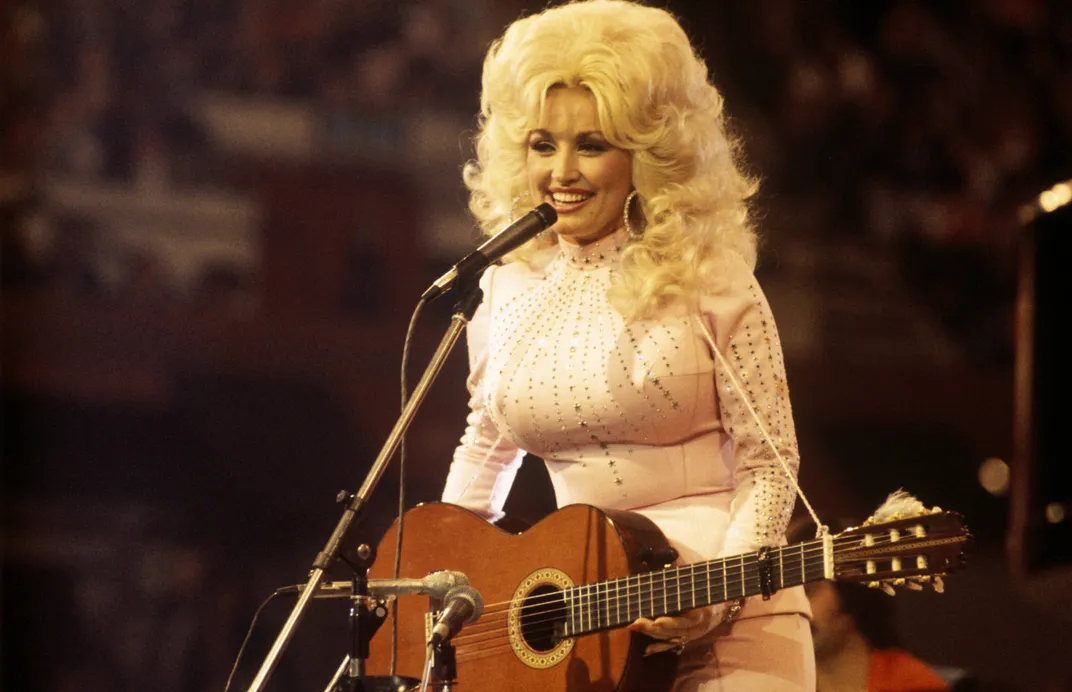
Dolly could stand onstage in rhinestones, elaborate wigs and brightly colored costumes while singing about childhood poverty without seeming contradictory.
In many ways, that contrast became central to who she was.
She understood hardship.
She also understood imagination.
And she never treated humble beginnings as something that needed to be erased.
That is why the strange little detail about the receipt feels so memorable.
A more polished origin story might have involved a recording studio or a beautiful notebook.
Instead, one of Dolly Parton’s favorite songs began because she urgently needed somewhere to write.
Porter Wagoner happened to have a dry-cleaning receipt nearby.
Dolly flipped it over.
And on that unlikely scrap of paper, she began preserving one of the most important stories of her life.