Pauletta Turned Down Denzel Washington Twice—Four Decades Later, They Are Still Choosing Each Other
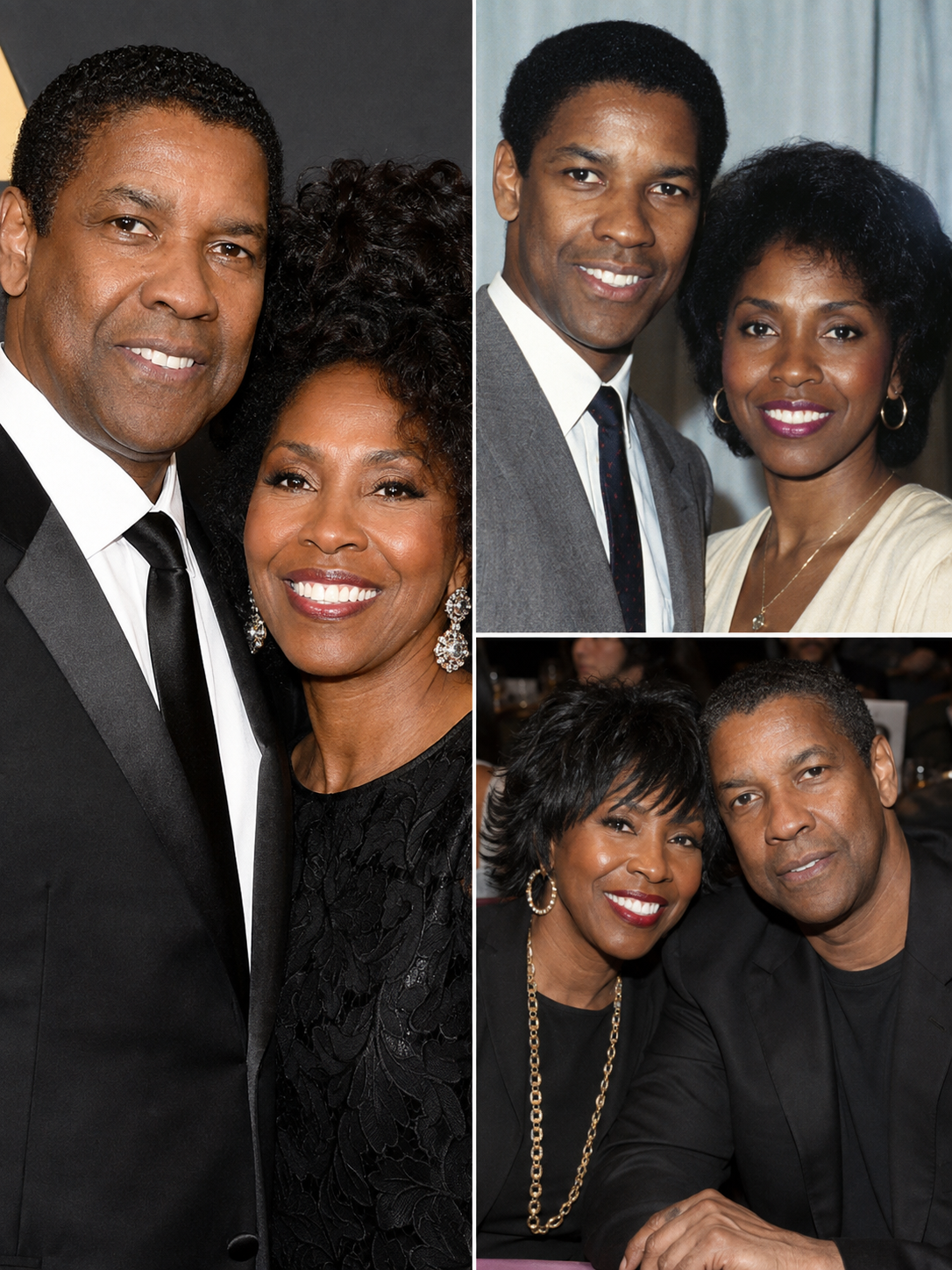
Before Denzel Washington became one of Hollywood’s most celebrated actors, he had to convince Pauletta Pearson that he was ready to become her husband.
Once was not enough.
Neither was twice.
As the couple later recalled while laughing through a joint interview, Pauletta rejected Denzel’s first two marriage proposals. He remembered the story differently at first, insisting that she had turned him down only once. Pauletta corrected him immediately.
“It was twice,” she said.
On the third attempt, she finally agreed.
That playful disagreement has become one of the most memorable stories from a marriage that has lasted far longer than either of them could have predicted when they were young actors trying to establish themselves. Denzel and Pauletta married on June 25, 1983. By June 2026, they had reached their 43rd anniversary.
Their life together has included two Academy Awards for Denzel, decades of stage and screen work for Pauletta, four children and the gradual creation of a family deeply connected to filmmaking.
But Pauletta has never described those 43 years as a fairy tale sustained by luck.
For her, the explanation is less glamorous and more demanding: marriage requires work, sacrifice, faith and a continuing decision to remain committed.
A Meeting on the Set of Wilma
Denzel and Pauletta first crossed paths while working on Wilma, a 1977 television movie about Olympic track star Wilma Rudolph.
Denzel appeared in the production as Rudolph’s husband, Robert Eldridge. Pauletta also had a role in the film. Although that project brought them into the same professional orbit, their relationship did not begin immediately.
They connected more personally after seeing each other again at a party. Their early courtship included an inexpensive first date that both remembered for an awkward disagreement over who would pay for the cab.
At the time, neither could have known how sharply their careers—and their lives—would change.
Denzel was still at the beginning of his screen career. His major breakthrough would come through the television medical drama St. Elsewhere, followed by performances in films such as Cry Freedom, Glory, Malcolm X, Training Day and Fences.
Pauletta was building a career of her own as an actress, singer and classically trained pianist. Her work would later include appearances in Philadelphia, Beloved, Genius and the television series She’s Gotta Have It.
When Denzel began asking her to marry him, however, Pauletta was not persuaded simply because he was ambitious or charming.
She said no.
Then she said no again.
The details of each proposal have remained largely private, but their humorous retelling suggested that Pauletta wanted certainty before making a lifelong commitment. Denzel persisted, and his third proposal finally produced the answer he wanted.
They married in 1983, six years after meeting.
Four Children and a Home Beyond the Spotlight
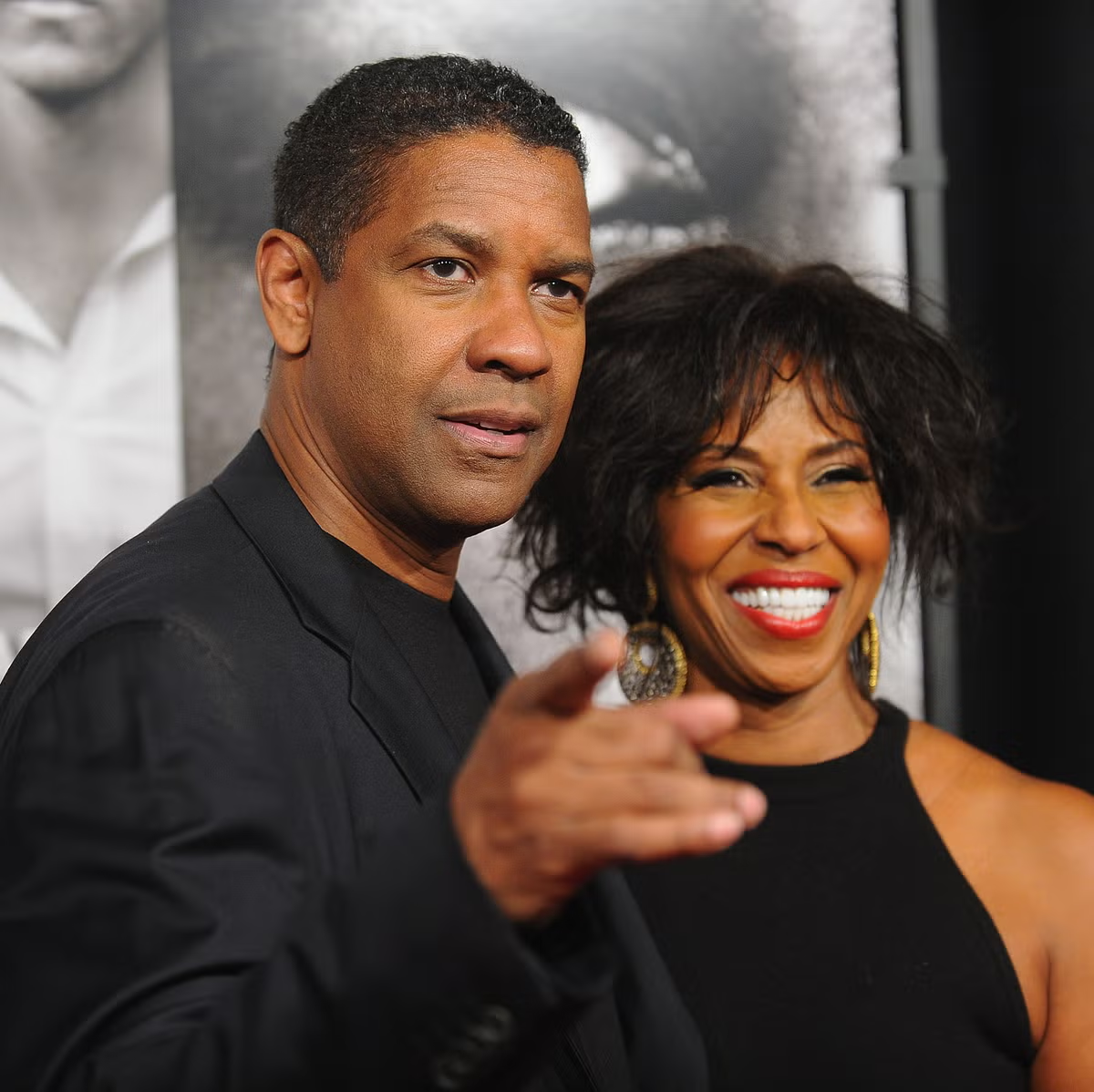
The Washingtons welcomed their first child, John David, in 1984. Their daughter Katia arrived in 1986, followed by twins Malcolm and Olivia in 1991.
As Denzel’s career grew, the family had to navigate the unusual pressures created by fame, travel and long production schedules. Pauletta often provided stability at home while continuing to pursue her own creative work.
Denzel has repeatedly acknowledged the scale of her contribution.
He has described Pauletta as the most important person in his life and credited her with making their house a home. In public reflections on their marriage, he has spoken about her sacrifices, spiritual strength and unwavering love.
Those comments recognize a reality frequently hidden behind the success of a major star. Denzel’s career required long periods away from home and an intense commitment to his work. Pauletta helped preserve the family structure that allowed their children to grow beyond the shadow of his fame.
She has nevertheless resisted the idea that one spouse deserves all the credit or that a long marriage can be reduced to a simple formula.
When asked about the secret to staying together, Pauletta has said there is no secret. The relationship endured because both people worked at it. Faith, prayer and commitment mattered, but so did the willingness to confront the ordinary difficulties that accumulate over decades.
She has also spoken honestly about sacrifice.
A lasting partnership, in her view, cannot survive if each person is concerned only with individual fulfillment. At different moments, one spouse may have to step forward while the other provides support. That balance can shift repeatedly as careers, children and personal needs change.
Their marriage was not strong because those compromises were painless. It was strong because they continued making them.
Renewing a Promise in South Africa
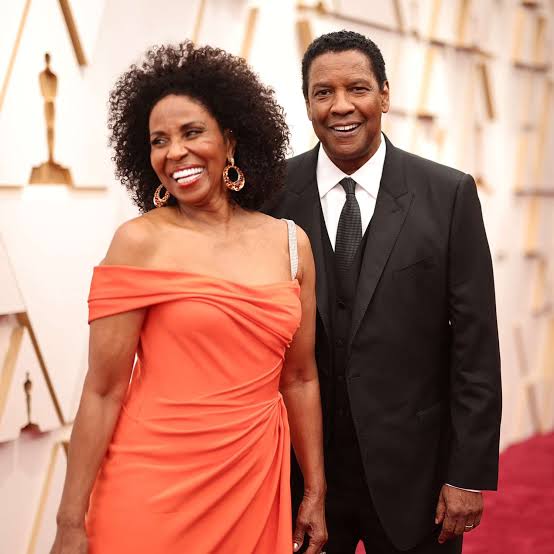
In 1995, after 12 years of marriage, Denzel and Pauletta renewed their vows in South Africa.
Archbishop Desmond Tutu officiated the ceremony.
The renewal carried particular meaning for a couple whose lives had been transformed since their first wedding. By then, Denzel had become an internationally recognized actor and an Oscar winner. They were also parents of four children and understood marriage in ways they could not have when he was still trying to persuade Pauletta to accept his proposal.
The ceremony did not mark the end of the work required to sustain their relationship. Instead, it reaffirmed a promise they would continue testing through changing careers, parenthood and public scrutiny.
Denzel has often used practical language when discussing marriage. He has joked that the key to staying married is doing what his wife tells him, but beneath the humor is his acknowledgment that Pauletta’s judgment has been central to their family.
He has also connected the durability of their marriage to faith. Both have spoken about prayer as an important part of their home and the values they tried to pass to their children.
Yet faith did not replace effort. It helped guide it.
The Washington Children Enter Hollywood
Over time, Denzel and Pauletta’s story expanded beyond the marriage itself.
All four of their children entered creative professions, transforming the Washington name from the identity of one famous actor into something closer to a family enterprise.
John David Washington initially pursued professional football before following his parents into acting. He found wider recognition through the HBO series Ballers and later starred in films including BlacKkKlansman, Tenet, Malcolm & Marie and The Creator.
Katia Washington moved behind the camera, building a career in production. Her credits have included major projects such as Django Unchained, Fences, The Birth of a Nation and The Woman King.
Olivia Washington became an actress, working on stage and appearing in film and television projects including The Butler, Mr. Robot and I’m a Virgo.
Malcolm Washington pursued directing and filmmaking. His feature directorial debut, The Piano Lesson, made the family connection especially visible.
The adaptation of August Wilson’s play starred John David, featured Olivia and Pauletta, and counted Denzel and Katia among its producers. Malcolm directed and co-wrote the film.
What could have been presented as Denzel’s family joining his world instead became an example of the parents stepping behind the next generation.
Malcolm has credited his mother as a crucial creative and emotional force within the family. While Denzel’s achievements were visible to the world, Pauletta helped cultivate the environment from which all four children emerged.
Denzel expressed that idea powerfully while celebrating Malcolm’s work, saying Pauletta had “watered the soil” from which their children grew.
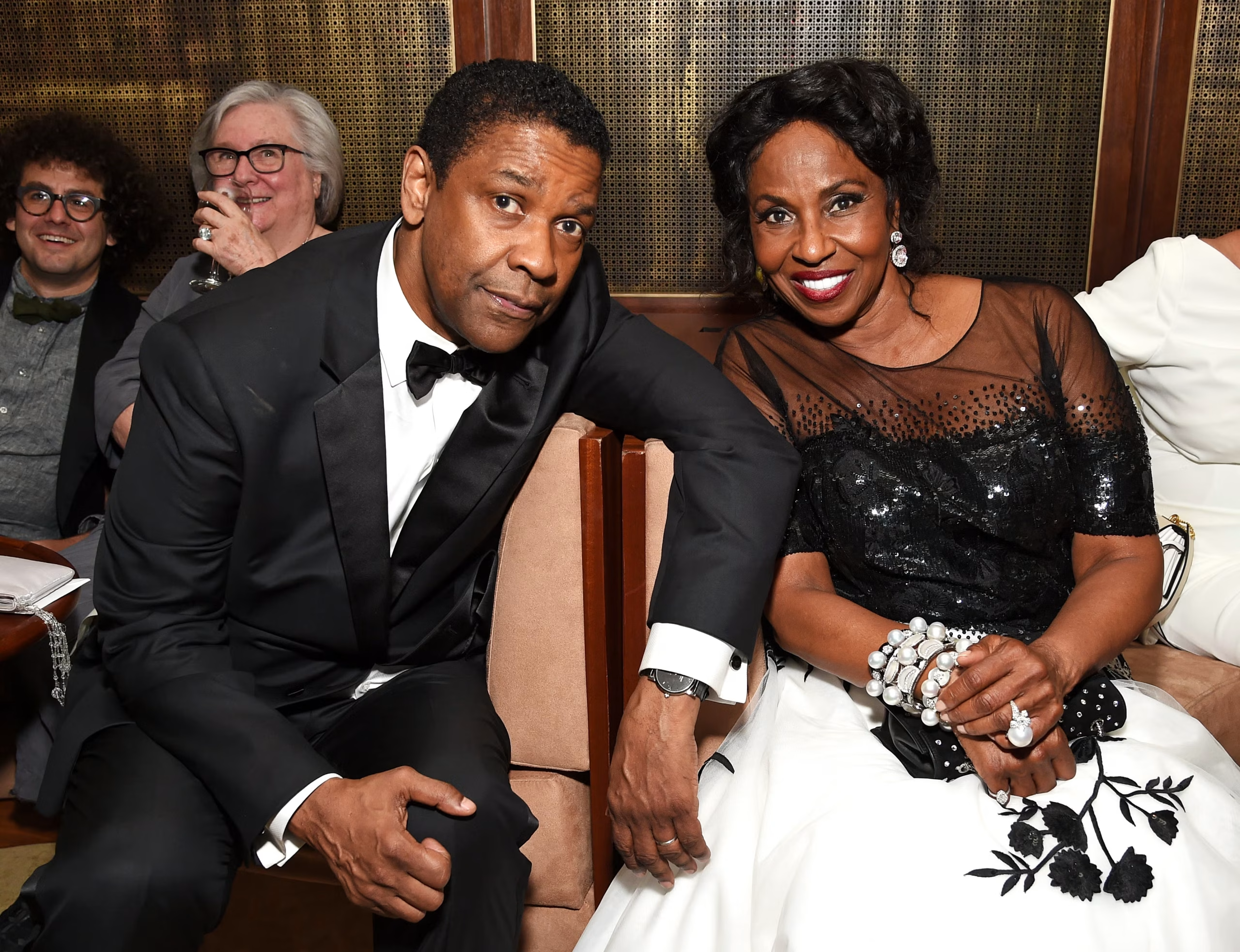
The Meaning of 43 Years
By the time Denzel and Pauletta marked 43 years of marriage in June 2026, their relationship had outlasted the early uncertainty surrounding his proposals and nearly every phase of his extraordinary career.
They had moved from two young performers on a television set to parents watching their adult children create films together.
Their longevity naturally invites questions about how they made it work. Yet Pauletta’s answer remains grounded in reality.
There was no magical secret.
There were years of negotiation, compromise and sacrifice. There were careers to balance, children to raise and difficult moments kept outside public view. There was faith, but also labor. There was love, but also the discipline required to protect it.
Most importantly, there was choice.
Pauletta did not accept Denzel the first time he asked. She did not accept him the second time either. Her eventual yes was not careless or automatic.
More than four decades later, the significance of that answer lies not only in the wedding it produced. It lies in all the times afterward when both of them had to say yes again—to the marriage, to their family and to the life they were still building together.