Goldie Hawn’s Quiet Message of Strength: Resilience, Love, and the Courage to Accept Support

Behind one of Hollywood’s most recognizable smiles
For generations, Goldie Hawn has been associated with laughter, warmth, and an unmistakable energy that seems capable of lighting up any room.
Her performances helped establish her as one of Hollywood’s most beloved comedic stars. Her work in Cactus Flower earned her the Academy Award for Best Supporting Actress, while later films allowed her to move between comedy, romance, drama, and family entertainment.
To millions of viewers, Hawn has long represented optimism.
But optimism does not mean that life is always easy.
A reflective story circulating online has drawn attention to a quieter side of the actress’s public image: the idea that even people known for strength and happiness may experience periods when they need to slow down, accept care, and depend on those closest to them.
The story refers broadly to Hawn’s well-being and recovery, but it does not identify a confirmed diagnosis, medical procedure, date, or official statement from the actress or her representatives. Its central message is therefore less about a specific health event and more about a universal truth:
No one should be expected to face every difficult moment alone.
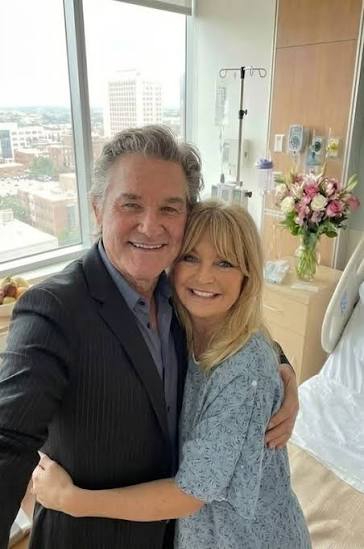
A message that resonated beyond celebrity
The idea behind the story is simple but powerful.
People are often taught that strength means remaining composed, independent, and productive regardless of what they are experiencing. They may believe that admitting fear or accepting help will make them appear weak.
But difficult periods can challenge that assumption.
Recovery—whether physical, emotional, or personal—rarely follows a perfect schedule. Some days bring visible progress. Others require rest, patience, and the willingness to acknowledge uncertainty.
In those moments, strength may not look dramatic.
It may mean allowing a family member to help.
It may mean speaking honestly about exhaustion.
It may mean stepping away from public expectations long enough to protect one’s well-being.
That message carries particular weight when connected to someone like Hawn, whose public identity has been shaped by joy. Audiences sometimes assume that entertainers who make others happy must feel happy themselves at all times.
But the ability to bring laughter to millions does not remove a person’s need for care, privacy, or emotional support.
Fame may change the scale of public attention, but it does not eliminate vulnerability.
More than a Hollywood career
Hawn’s public legacy extends far beyond her films.
In 2003, she founded The Goldie Hawn Foundation after becoming concerned about rising emotional distress among children. The organization later developed MindUP, a school-based program designed to help young people understand their emotions, regulate stress, improve attention, and build resilience.
The work reflects a long-standing interest in the connection between emotional well-being, education, and human development.
MindUP describes its mission as helping students, educators, and families develop emotional literacy and mental-fitness skills through practices involving attention, kindness, optimism, and gratitude.
That advocacy gives the current discussion about resilience additional meaning.
Hawn has spent years encouraging children to recognize their feelings rather than hide them. The same principle applies to adults.
Emotional strength is not the absence of discomfort. It is the ability to recognize what is happening, respond with awareness, and seek support when necessary.
The message is especially relevant in a culture that often celebrates relentless productivity. People are praised for continuing to work through pain and uncertainty, while rest is sometimes treated as failure.
Hawn’s broader philosophy offers a different perspective: slowing down can be part of moving forward.
Kurt Russell and the value of a steady companion
Any discussion of Hawn’s personal support system naturally brings attention to Kurt Russell, her longtime partner and one of the most consistent figures in her life.
The two first worked together when they were young performers and later began their relationship in the early 1980s. Over the decades, they built a blended family while maintaining successful careers and largely avoiding the public conflicts that often surround celebrity relationships.
Hawn has described their family as a strong support system and has spoken warmly about the humor and companionship she shares with Russell.
Their relationship has lasted without a marriage certificate—an arrangement that has generated public curiosity for years.
Hawn and Russell have repeatedly emphasized that lasting commitment depends less on formal appearances than on the continuing decision to remain connected. Hawn has described mutual freedom as an important part of their relationship, while also emphasizing admiration, humor, attraction, and the ability to accept one another as imperfect people.
That kind of companionship can become especially meaningful during challenging periods.
A supportive partner cannot remove every fear, solve every problem, or guarantee that recovery will happen quickly. What that person can provide is presence.
Sometimes presence means listening without immediately offering advice.
Sometimes it means protecting another person’s privacy.
Sometimes it means handling ordinary responsibilities so that a loved one has space to recover.
And sometimes it means remaining beside someone when neither person knows exactly what comes next.
Why receiving help can be harder than giving it
Many people are comfortable supporting others but struggle to accept the same kindness in return.
They may be accustomed to serving as the dependable person in a family—the one who keeps everyone calm, solves problems, and brings energy into difficult situations.
For someone with that identity, becoming the person who needs support can feel uncomfortable.
The loss of control may be harder than the challenge itself.
Public figures face an additional burden. Their careers often depend on maintaining a recognizable image. A performer known for joy may feel pressure to appear cheerful. An actor associated with strength may feel compelled to look invulnerable.
But refusing help does not make hardship disappear.
It can instead create isolation.
Accepting support is an acknowledgment that human beings are interconnected. No career, award, fortune, or public reputation changes that reality.
People heal through medical care when it is needed, but they also benefit from patience, reassurance, practical assistance, and emotional connection.
The strongest response to hardship is not always solitary endurance.
Sometimes it is allowing others to stand close enough to help carry the weight.

The private reality behind a public life
Celebrity news often turns personal experiences into public entertainment.
A photograph can trigger speculation about someone’s health. A missed appearance can become evidence of an alleged crisis. A vague social-media post may be interpreted as confirmation of something the person never said.
That is why careful reporting matters.
The article that inspired this reflection uses language about Hawn’s health, recovery, and time away from the spotlight, but it does not provide the specific information required to confirm a medical event. It should therefore not be presented as evidence that she has received a particular diagnosis or undergone surgery.
There is an important difference between expressing concern and spreading an unsupported claim.
Fans can send love without demanding private medical details.
Readers can appreciate a message about resilience without turning speculation into fact.
And journalists can discuss the emotional themes surrounding a public figure while clearly stating what has—and has not—been verified.
Respecting privacy is not the same as ignoring someone.
It is recognizing that public affection does not create an automatic right to every detail of another person’s life.
Why fans feel personally connected to her
Hawn’s appeal has never depended solely on fame.
Many viewers associate her films with specific chapters of their own lives: childhood evenings, family gatherings, first trips to a movie theater, or comedies watched during difficult times.
That creates a powerful emotional connection.
When an entertainer has made people laugh for decades, audiences may feel as though they know her—even though the relationship exists mainly through screens and performances.
This helps explain why stories about her well-being attract immediate attention.
Fans are not only reacting to a famous name. They are responding to the memories attached to that person.
The affection may be genuine, but it should still be expressed responsibly.
Supportive messages can celebrate Hawn’s work, acknowledge her humanity, and wish her peace without assuming that an unverified medical narrative is true.
That distinction protects both the subject and the audience.
It allows compassion to exist without misinformation.
Resilience does not require constant positivity
One of the most damaging ideas about resilience is the belief that resilient people must remain positive at all times.
Real resilience is more complicated.
It can include fear.
It can include anger, grief, fatigue, and uncertainty.
It may involve days when optimism feels natural and other days when simply completing an ordinary task requires enormous effort.
Positivity becomes meaningful not when it denies suffering, but when it exists alongside an honest understanding of difficulty.
Hawn’s life and advocacy have often emphasized gratitude, emotional awareness, and the importance of human connection. Those ideas do not demand that people hide painful feelings.
They encourage people to notice those feelings without allowing them to define the entire future.
Hope is not the claim that everything is fine.
Hope is the belief that the present moment is not necessarily the final chapter.

The importance of a strong family circle
Hawn and Russell’s blended family has remained central to their public story.
They have spoken about their closeness to their children and the value of building a family around connection rather than conventional expectations. Hawn has described the family as strongly supportive and noted that its members continue to live close to one another.
That kind of network can matter enormously during uncertain periods.
Family support does not always arrive through dramatic gestures. It often appears in small, repetitive acts:
A phone call at the right moment.
A shared meal.
A ride to an appointment.
Someone sitting nearby without demanding conversation.
A child checking on a parent.
A partner making an ordinary day feel less frightening.
These acts rarely become headlines. Yet they often form the foundation on which recovery is built.
The world may see a famous actress and an enduring Hollywood couple. Behind that public image is a family navigating time, aging, change, and uncertainty in many of the same ways as everyone else.
What her story can teach people facing their own battles
The attention surrounding Hawn’s story may ultimately matter most because of what it encourages readers to consider in their own lives.
Many people are quietly dealing with circumstances that others cannot see.
Someone may be recovering from a procedure.
Someone may be grieving privately.
Someone may be overwhelmed by work, caregiving, or financial pressure.
Someone who appears cheerful may be using nearly all of their energy simply to get through the day.
Support begins with paying attention.
It means asking a sincere question and being willing to hear an honest answer.
It means avoiding the assumption that capable people never need assistance.
It also means respecting boundaries. Supporting someone does not require forcing them to discuss experiences they are not ready to share.
The most valuable message may be this:
Do not wait for a person to collapse before offering kindness.
Moving forward without pretending to know every detail
The public does not currently have enough verified information from the cited article to describe a specific medical crisis involving Goldie Hawn.
That limitation should be stated clearly.
But the emotional message at the heart of the story remains worth examining.
A person can be successful and still need support.
A joyful public image can exist alongside private difficulty.
Love does not remove hardship, but it can make hardship less isolating.
And accepting help is not surrender.
It is an act of trust.
Goldie Hawn’s legacy has been shaped by laughter, performance, family, advocacy, and a sustained effort to promote emotional well-being. Her story reminds people that resilience is not a permanent state possessed only by extraordinary individuals.
It is something built gradually through relationships, patience, self-awareness, and hope.
Behind every strong person are often others who offered encouragement when the cameras were gone.
Behind every recovery are moments that may never be visible to the public.
And behind Goldie Hawn’s famous smile is a human being who, like everyone else, deserves compassion without speculation and support without conditions.
Perhaps that is the quiet lesson resonating so strongly with readers:
True strength is not proving that you can stand alone. It is knowing when to let someone stand beside you.