He Saved a Baby Chimp From Poachers—Four Decades Later, the Reunion Proved the Animal Had Never Forgotten
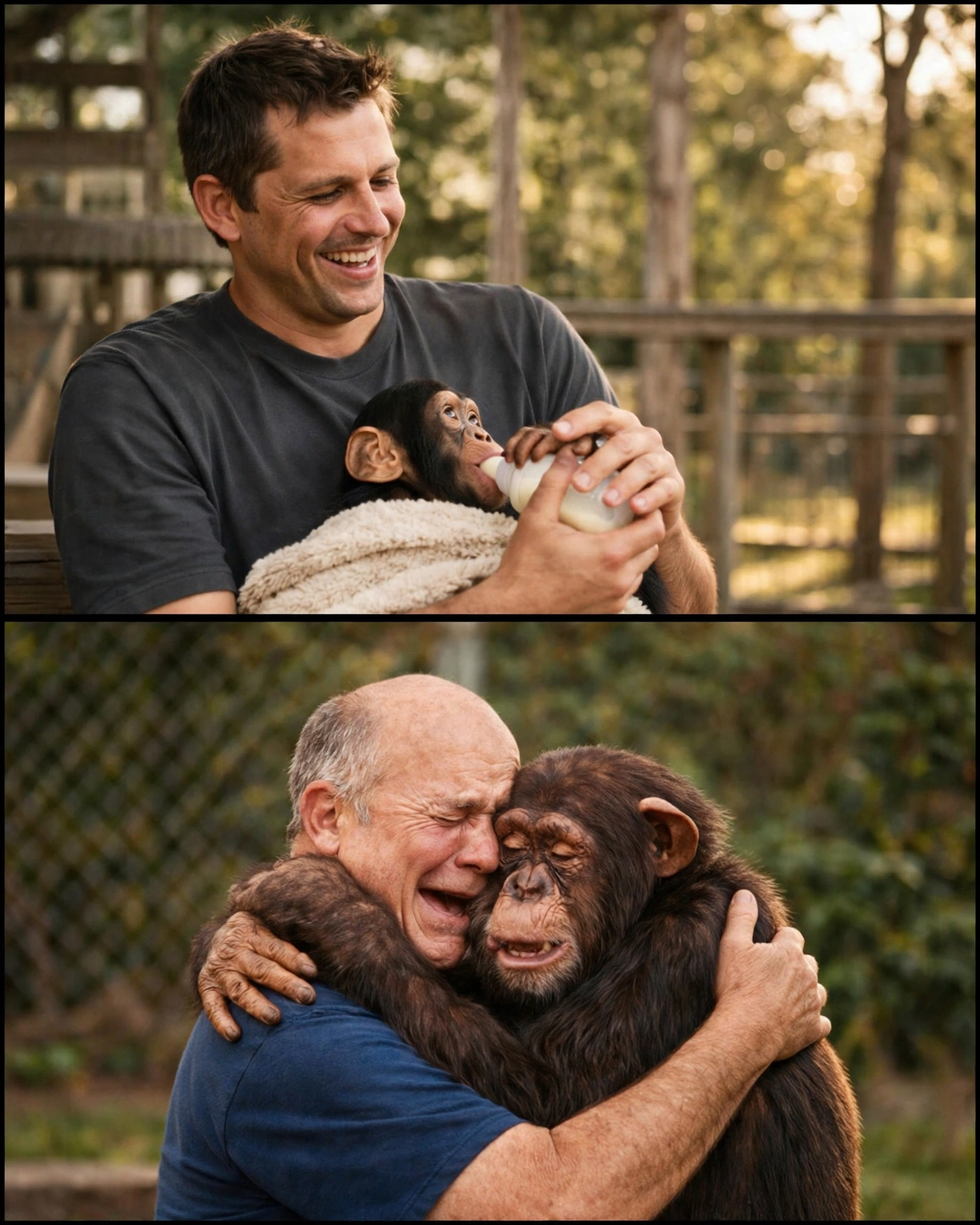
The moment felt almost unreal.
After 40 years apart, a man stood face to face with a chimpanzee he had once saved as a helpless infant. There was no way to predict what would happen next. Time had passed. Lives had changed. The animal was no longer the fragile baby he once carried in his arms.
But then something remarkable happened.
The chimp moved closer—calm, deliberate, almost certain. What followed wasn’t fear or distance. It was recognition.
And in that moment, the past came rushing back.
Decades earlier, the story had begun in a very different place.
The man had been working in an environment where wildlife was constantly under threat from poaching. During one of those encounters, he came across a baby chimpanzee who had been taken from its natural world. The animal was vulnerable, alone, and had little chance of survival without help.
The decision to intervene came quickly.
He rescued the chimp, removing it from a situation that could have ended its life. At the time, it was not about creating a bond or expecting anything in return. It was simply about doing what was necessary to save a living being.
The infant chimp was eventually brought to a safer environment where it could grow, recover, and adapt.
Then, life moved on.
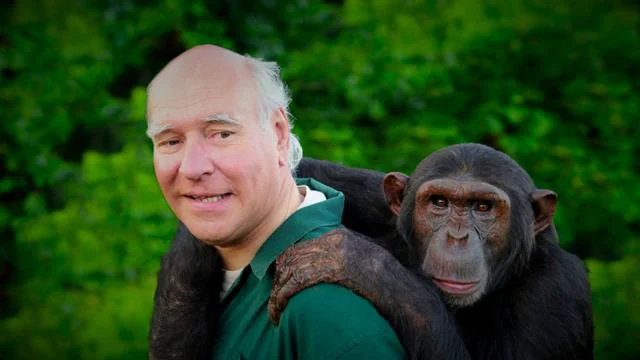
The man continued his work, and the chimp grew into adulthood. Years passed—then decades. The rescue became a memory, one of many moments in a life shaped by encounters with wildlife.
There was no expectation that their paths would ever cross again.
Animals return to their own worlds. Humans continue on with theirs. The separation felt final.
Until it wasn’t.
Forty years later, circumstances brought them back together.
By then, the chimpanzee was fully grown—strong, aware, and living within a protected environment. The man who had once saved it was no longer the same person either. Time had changed both of them.
The question was simple but uncertain:
Would the chimp remember?
As the two came into contact, there was a brief pause—a moment suspended between past and present. The man approached carefully, aware that animals, especially those with strength and intelligence, can react unpredictably.
But the chimp did not react with aggression.
Instead, it moved closer.
There was a sense of familiarity, something beyond instinct. The distance between them disappeared, replaced by a quiet connection that seemed to defy the passage of time.
Witnesses described the interaction as emotional.
The chimp showed behavior that suggested recognition—an awareness that this was not a stranger, but someone from its earliest memory. The man, in turn, responded with the same calm presence he had shown decades earlier.
No words were needed.
The moment spoke for itself.
What made the reunion so powerful was not just the passage of time, but what it revealed about memory and connection. Chimpanzees are known for their intelligence, their social bonds, and their ability to remember individuals over long periods.
But 40 years is a lifetime.
For the chimp to respond in such a way suggested something deeper than simple recall. It pointed to a lasting imprint—an early experience that had remained, even as the animal grew and changed.
For the man, the moment carried its own meaning.
What had once been an act of compassion—helping a vulnerable animal in need—had come full circle. Not as a reward, but as a reminder.
A reminder that actions, even those that feel small or temporary, can have lasting impact.
The story also highlights a broader truth about the relationship between humans and animals.
Connection is not always immediate, and it is not always visible. But it can exist in ways that are difficult to measure, shaped by moments of care, trust, and presence.
In this case, a single act—saving a baby chimp from danger—created something that lasted across decades.
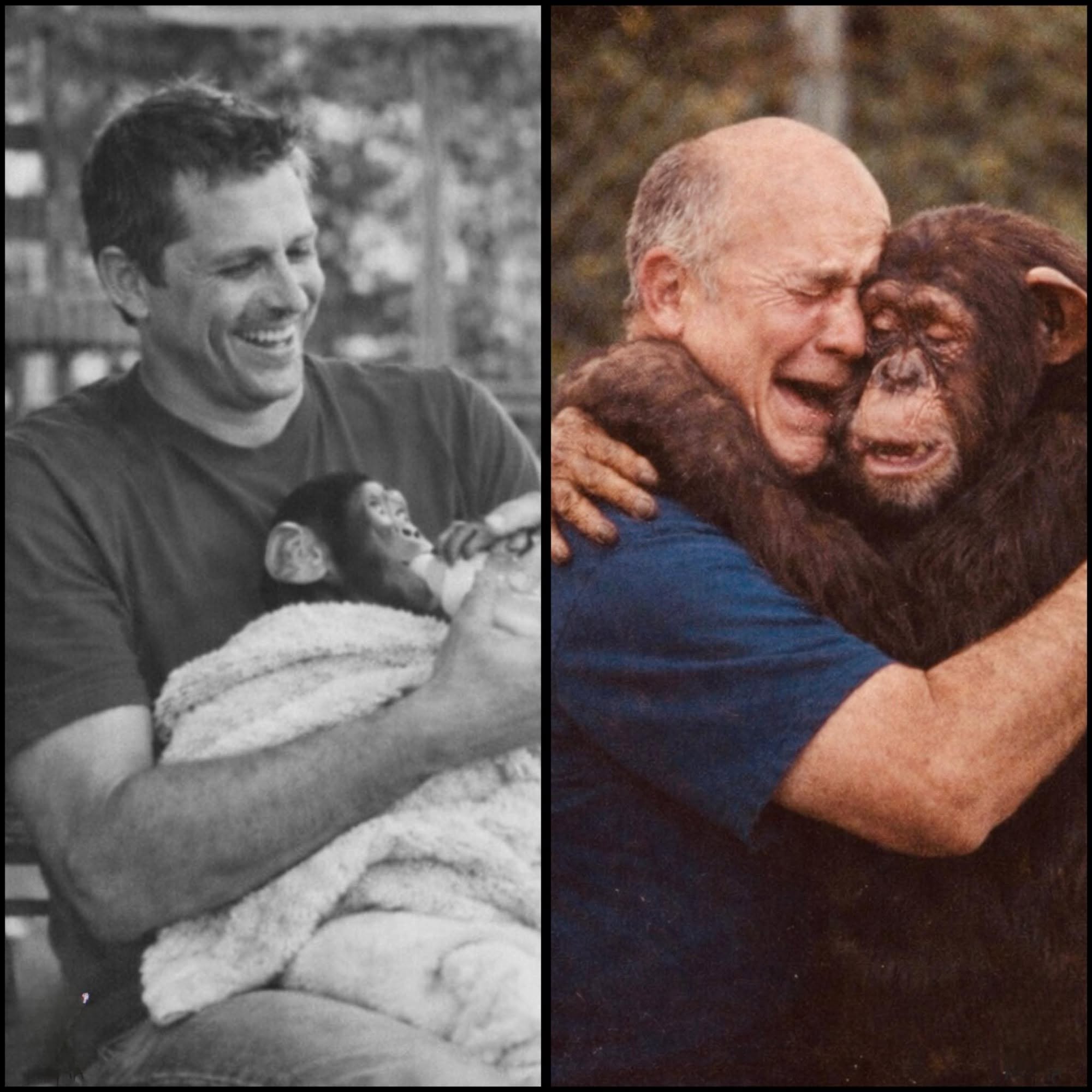
The reunion did not change the course of history. It did not alter the challenges facing wildlife or the ongoing threat of poaching. But it offered something else.
Perspective.
It showed that even in a world where loss is common, where animals are often separated from their natural lives, there can still be moments of connection that endure.
Moments that remind us of what is possible.
As the man and the chimp stood together once more, the years between them seemed to fade. What remained was simple and powerful:
Recognition.
Trust.
And a bond that time had not erased.
In the end, the story is not just about memory.
It is about what happens when kindness leaves a mark strong enough to last a lifetime—and then, unexpectedly, finds its way back.