He Survived 62 Hours on an Overturned Boat. Then the 15-Year-Old Told Rescuers What Happened to His Brother and Cousin
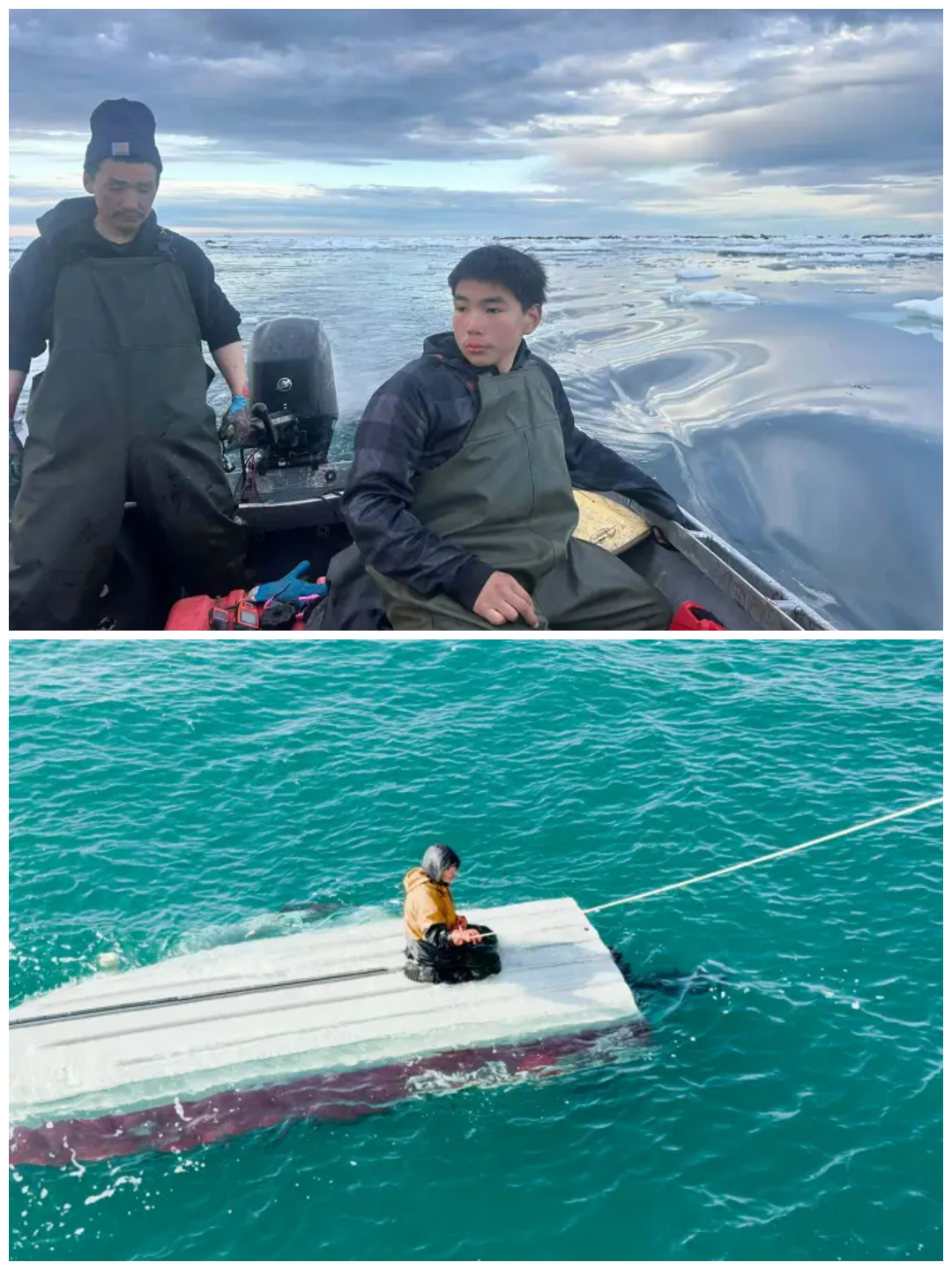
For more than two and a half days, 15-year-old Derek Parker Aghnaanga clung to the overturned hull of a small fishing boat in the freezing waters of Alaska’s Bering Sea.
He had no food.
He had no water.
The temperature of the sea hovered around 50 degrees Fahrenheit.
And by the time rescuers finally reached him, the teenager was alone.
Derek survived approximately 62 hours at sea after a fishing trip near St. Lawrence Island ended in tragedy. But shortly after being pulled aboard a rescue vessel, shivering and suffering from hypothermia, he revealed what had happened to the two relatives who had gone fishing with him.
His older brother was trapped beneath the overturned boat.
His cousin had managed to stay on the hull with Derek for a time — but eventually slipped away into the sea.
The teenage survivor had watched both of them disappear.
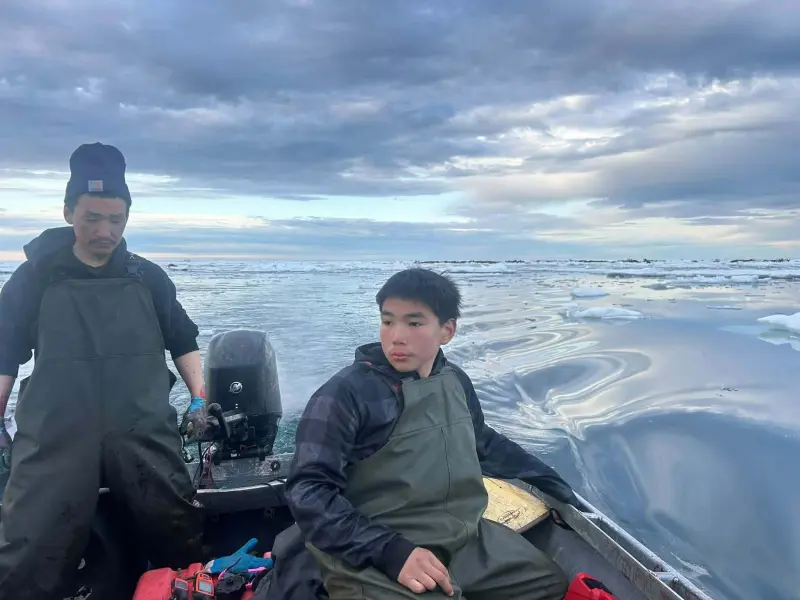
The ordeal began on Sept. 4, 2026, when Derek left the remote Alaska village of Savoonga aboard an 18-foot skiff with his older brother, 35-year-old Sidney Kulowiyi, and their 34-year-old cousin, Barton Rookok.
They were going halibut fishing, something deeply familiar in a community where fishing is not merely recreation but an important part of everyday life, tradition and food security.
The men were expected to return by early Sunday morning.
They never arrived.
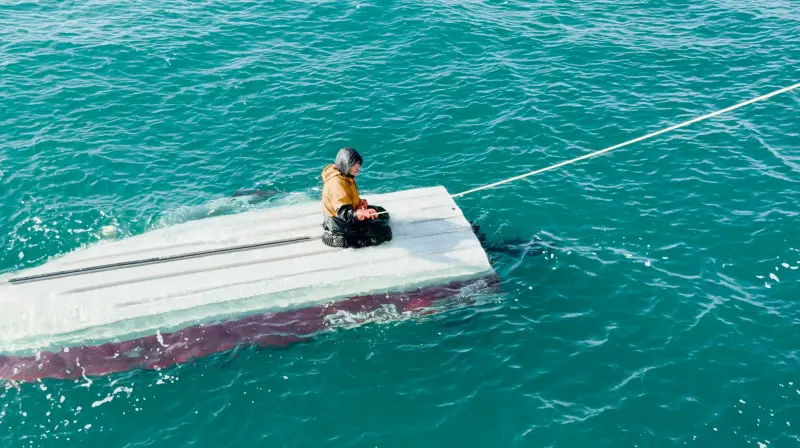
According to accounts from relatives, the boat capsized after trouble developed while they were on the water.
Derek’s mother later said Sidney, who was captaining the vessel, became trapped underneath the skiff.
Derek and Barton were able to remain above the water on the overturned hull.
For a while, the two survived together.
Then Barton was gone too.
Captain Adam White of the Northwest Explorer, the fishing vessel that ultimately rescued Derek, later recalled what the teenager told his crew after they brought him aboard.
Through chattering teeth, Derek said his brother was still underneath the skiff. He then explained that his cousin had slipped off the boat during the previous night.
For a 15-year-old already fighting cold, dehydration and exhaustion, the psychological trauma was almost impossible to imagine.
Family members said Derek tried to hold onto his relatives for as long as he could before they drowned.
Then he was alone.
The Bering Sea can be unforgiving even for experienced mariners.
St. Lawrence Island sits in a remote part of Alaska, closer to Russia than to much of the continental United States. Rescue operations can be complicated by enormous distances, fog, wind and rapidly changing conditions.
When Derek, Sidney and Barton failed to return, Alaska State Troopers notified the U.S. Coast Guard.
Poor visibility initially complicated the search.
By Monday morning, conditions had improved enough for Coast Guard aircraft to begin searching the area more effectively.
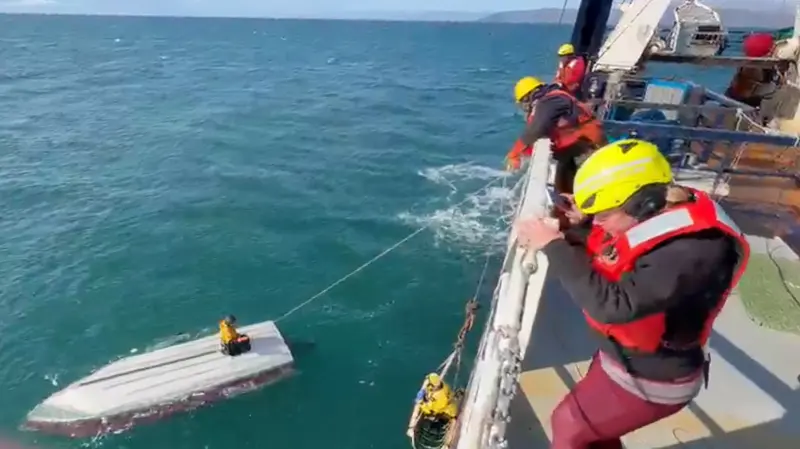
At approximately 10:30 a.m., a crew aboard an HC-130 Hercules aircraft saw something unusual in the water.
It was the overturned skiff.
And on top of it was a person.

Derek was alive.
The Coast Guard dropped survival equipment and an inflatable raft nearby, but Derek was too weak to reach it.
The teenager had already spent days exposed to cold air and water without eating or drinking.
The Coast Guard then contacted the Northwest Explorer, a 162-foot fishing vessel working in the area with scientists conducting a NOAA-supported survey.
The ship was approximately 39 miles away.
Captain White and his crew immediately changed course.
It took them roughly four hours to reach Derek.
White later described those hours as agonizing. His crew followed flares dropped by Coast Guard aircraft and repeatedly sounded the ship’s horn, hoping Derek would hear it and understand that someone was coming.
Eventually, they saw him.
A small figure in a bright yellow jacket was kneeling on the overturned hull.
White later said it was difficult to understand how someone could have survived under those conditions.
The water temperature was approximately 10 degrees Celsius, or 50 degrees Fahrenheit.
“That’s one tough kid,” White told Alaska’s News Source.
The crew threw Derek a line and brought him aboard.
He was showing signs of hypothermia.
Crew members wrapped him in blankets and warm towels and monitored his temperature while the vessel began the long journey toward Nome.
But almost immediately, the enormity of what Derek had experienced became clear.
This was not simply the rescue of a teenager from a capsized boat.
He was the only survivor of a family fishing trip.
And he knew what had happened to the other two men.
His brother Sidney had been more than two decades older than Derek and was described as an experienced commercial fisherman and an important provider in their community.
Barton, their cousin, had survived part of the ordeal alongside Derek before disappearing into the water.
Their bodies were eventually recovered.
For the crew that rescued Derek, the emotional contrast was overwhelming.
They had accomplished something extraordinary: finding a missing 15-year-old alive after days in one of Alaska’s harshest maritime environments.
But they were also returning him to a family that had lost two men.
White described seeing both gratitude and sorrow when Derek was finally reunited with relatives in Nome.
The emotions became so intense that the captain said he had to step away for a moment after watching the reunion.
Derek’s mother later described her youngest son simply as a survivor.
She said he had gone the entire ordeal without food or water.
“He lived on prayer,” she wrote, according to The New York Times.
The teenager’s survival has stunned even experienced rescue personnel.
Cold-water exposure can become dangerous quickly, especially when a person is wet, exhausted and unable to find proper shelter. Derek also faced dehydration and the possibility of falling asleep or slipping from the overturned hull.
Yet for roughly 62 hours, he kept holding on.
Coast Guard Lt. Cmdr. Jonathon Resch described the discovery as an emotional roller coaster — extraordinary joy at finding Derek alive mixed with deep sadness that Sidney and Barton could not also be saved.
The story has since spread far beyond the small Alaska community where the three began their fishing trip.
Part of the attention comes from the almost unbelievable nature of Derek’s survival.
But the story is not simply one of endurance.
It is also one of loss.
When rescuers first saw the teenager on the overturned skiff, they saw a miracle.
When they pulled him aboard and heard his story, they understood what that miracle had cost.
Derek survived cold, hunger, thirst and isolation.
He remained on the overturned boat after his brother died beneath it.
He stayed there after his cousin could no longer hold on.
And even after he became the only person left, he continued waiting.
Somewhere beyond the fog and empty horizon, Derek had to believe that another boat or aircraft might eventually see him.
Finally, one did.
After approximately 62 hours at sea, the 15-year-old was brought to safety.
His survival gave his family something extraordinary to be grateful for.
But the deaths of Sidney Kulowiyi and Barton Rookok mean the rescue will always carry two emotions at once.
Relief that one young life was saved.
And grief for the two family members who never made it home.