How Lionel Messi and Argentina sent the World Cup into a state of sporting nirvana

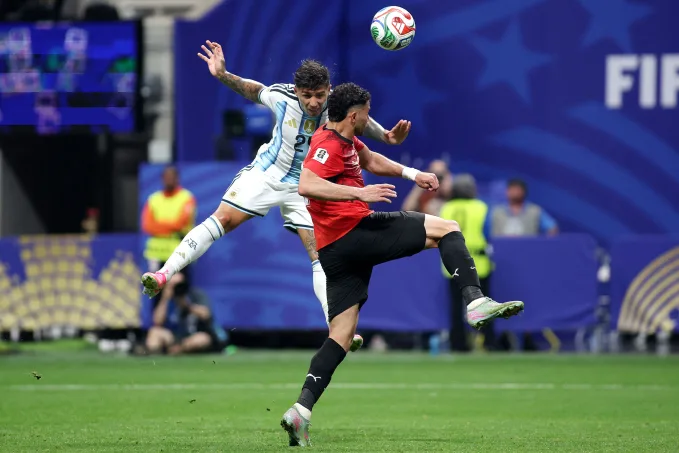 Atlanta — Often in life, moments pass us by without even the tiniest handhold to latch onto. Before we know it, they’re gone, and we’re left wishing we’d savored them just a little bit more.
And then sometimes, there are moments you can see before they happen. Moments when you’re able to process their meaning, their greatness, in the nanoseconds before they become reality. A moment when life grants you the ability to fully exist in the spectacular and soak it in.
For the overwhelming majority of the more than 68,000 fans at Mercedez-Benz Stadium in Atlanta on Tuesday, that moment came when Lautaro Martínez slowed down on the right wing of Argentina’s attack, sized up the scene in front of him and hit a cross.
It’s so cliché, but clichés exist for a reason: It played out like slow motion. The ball floated toward the box, over Egypt’s Yasser Ibrahim and toward the head of Enzo Fernández.
There was enough time to think. Enough time to say to yourself, “Oh my God, they’ve scored.” Enough time to brace for the tidal wave of noise from the blue-and-white-clad supporters jammed into one of this World Cup’s best venues.
Of course, Fernández made no mistake. A headed goal for the ages, completing a miraculous three-goal comeback in 13 minutes to send the Albiceleste through to the quarterfinals with a 3-2 win over the Egyptians.
After two days of hand-wringing that this World Cup was ruined by a phone call from US President Donald Trump to Gianni Infantino over Folarin Balogun’s red card, Egypt and Argentina reminded all of us what this tournament is really about. A fighting underdog spirit and the steely resolve of champions came together to create the highest possible drama.
For those lucky enough to be in the building, it is an experience that will be seared into the mind forever. And we were lucky enough to know it as it was happening.
Egypt’s magnificent spirit
On paper, Argentina was likely to roll the Egyptians. The talent on display for the Albiceleste makes them potential repeat World Cup champions, something that hasn’t been done in generations. The Egyptians possess one transcendent player – Mohamed Salah – who is a few years past his best.
But as Cape Verde reminded the Argentinians last week, World Cup matches are not won on paper. They’re won with guts and steel and capitalizing on the biggest opportunities.
And Egypt came ready for a fight.
The Pharaohs did not shrink from the challenge laid out by the defending champions and hung right with them in the opening minutes until Ibrahim rose above the Argentine defense and put a header past Emiliano Martínez. The small pockets of Egyptian fans in the stadium went absolutely berserk, jumping and ripping off their shirts as their team went bonkers below them.
A few minutes later, it seemed like the soccer gods had Egypt’s favor. A Lionel Messi penalty was saved by Mohamed Shobeir, who performed in the rest of the first half as if he had been anointed as his nation’s savior. He made save after save, building a brick wall in his net as Argentina appeared flustered. Egyptian fans in the 300 level of the stadium were outnumbered but felt brave enough to taunt the throngs of Argentines behind them.

The controversy that will live long in Egyptian hearts came in the 55th minute after Mostafa Ziko appeared to double the Pharaohs’ lead. As Egypt celebrated wildly, referee François Letexier went to the Video Assistant Referee (VAR) screen to look at a foul that may have occurred in the buildup. Letexier waved off Ziko’s goal for the infraction, which occurred an astonishing 18 seconds before the apparent goal.
After the match, Egypt’s manager Hossan Hassan and Ziko himself ripped into Letexier for his work during the match. There were possible penalty shouts, hard tackles that were not whistled for fouls, soft calls on Egypt that were ignored when similar plays were made by Argentina. Safe to say, the referee will not be welcome in The Land of the Pharaohs any time soon.
Ziko would eventually double the Egyptian lead, another strike on the counterattack. A 2-0 lead that scarcely seemed believable. Even with Egypt’s complaints about the referee, it seemed all set up for a remarkable upset.
Cometh the hour, cometh the man
But no team with Lionel Messi in it is ever truly dead.
To watch Argentina’s No. 10 is to watch a conductor working a soccer orchestra. He picks where Argentina plays with his movement – when he walks in one direction, the play goes the other way, but when he runs, the ball comes toward him. He points out passes for his teammates, slowly moving around the pitch with the unharried attitude of an evening stroll.
At 39, Messi conserves his energy when he can for the moments he needs it most. When those moments come, he explodes.
As Argentina tried to climb back into the contest, Messi took a hold of the game as if he was a boa constrictor around Egypt’s chest. The pressure tightened and tightened and tightened, until it felt as if the Pharaohs and their fans could hardly breathe.
Then the first moment of genius came. Messi lifted a ball over the Egyptian defense to Cristian Romero, who headed home. 2-1 in the 79th minute.
The Albiceleste went in search of the equalizer and Messi’s movement ramped up, cinching in the stranglehold on Egypt’s upset bid. When they found it, it was the inch-perfect reading of the game that the diminutive genius has mastered in the twilight years of his career that made the difference.
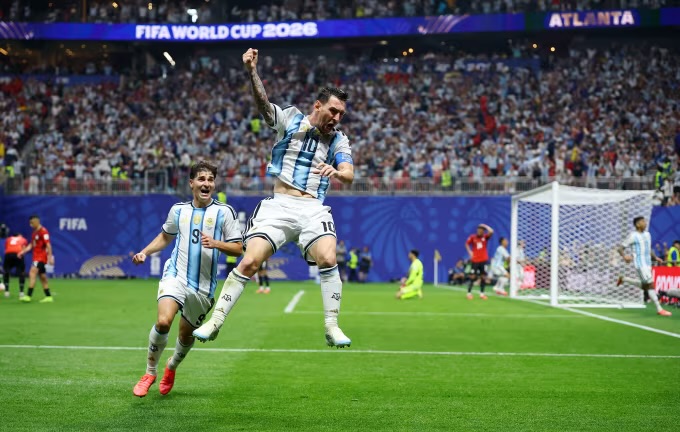
He played a ball in and jogged toward the goal. He watched that pass bounce off some heads, ping around the box and fall to the ground just yards in front of Shobeir. He arrived at the exact right moment, taking the lightest of passes from Gonzalo Montiel and lashing the ball off the keeper’s hand, off the cross bar and into the net.
He celebrated wildly, pumping his fist as he sprinted to the corner and hugging his teammates tightly. The stands shook with the pounding feet of tens of thousands of leaping Argentines screaming themselves hoarse.
Sporting nirvana
When Fernández’s header hit the net nearly 10 minutes later, those Argentines ascended into a realm of sporting nirvana that might come along once or twice in a lifetime. Strangers were hugged, margaritas went flying (at least, I think it was a margarita that hit me, it smelled fruity), shirts came off. One fan just kept yelling, “Oh my God!” over and over.
Behind the Egyptian goal, a massive group of Argentines leapt and danced, singing at the top of their lungs until their throats couldn’t take any more. In the 300 level, they spun shirts and scarves over their heads with disbelieving grins plastered on their faces. When the full-time whistle blew, they roared in joy, relief and gratitude.
Their worship of their heroes on the field below was enough to move Messi to tears as he and his teammates celebrated in front of that giant throng. Music played through the stadium’s sound system, but you couldn’t hear a word for the singing and screaming of the Argentines.
It’s the kind of moment that makes this tournament – and sports in general – so special, so crucial to our shared humanity. The overwhelming joy of the moment resulted in Argentina fans hugging security guards, hugging journalists, hugging anyone who came in front of them such was their desire to simply share in the moment. The human desire for connection comes through in so many ways as we’ve seen at this wonderful World Cup, and never as brilliantly as after a once-in-a-lifetime escape.
Argentina celebrated as if they’d won the cup again already. They still have to win three more to get back to the heights that they reached in Doha.
And even if they do, it’s hard to imagine they’ll feel a victory as deeply or as fully the one that came on Tuesday in Atlanta.
https://www.cnn.com/2026/07/07/sport/argentina-comeback-world-cup