How the Volkswagen Beetle Became One of America’s Most Beloved Cars
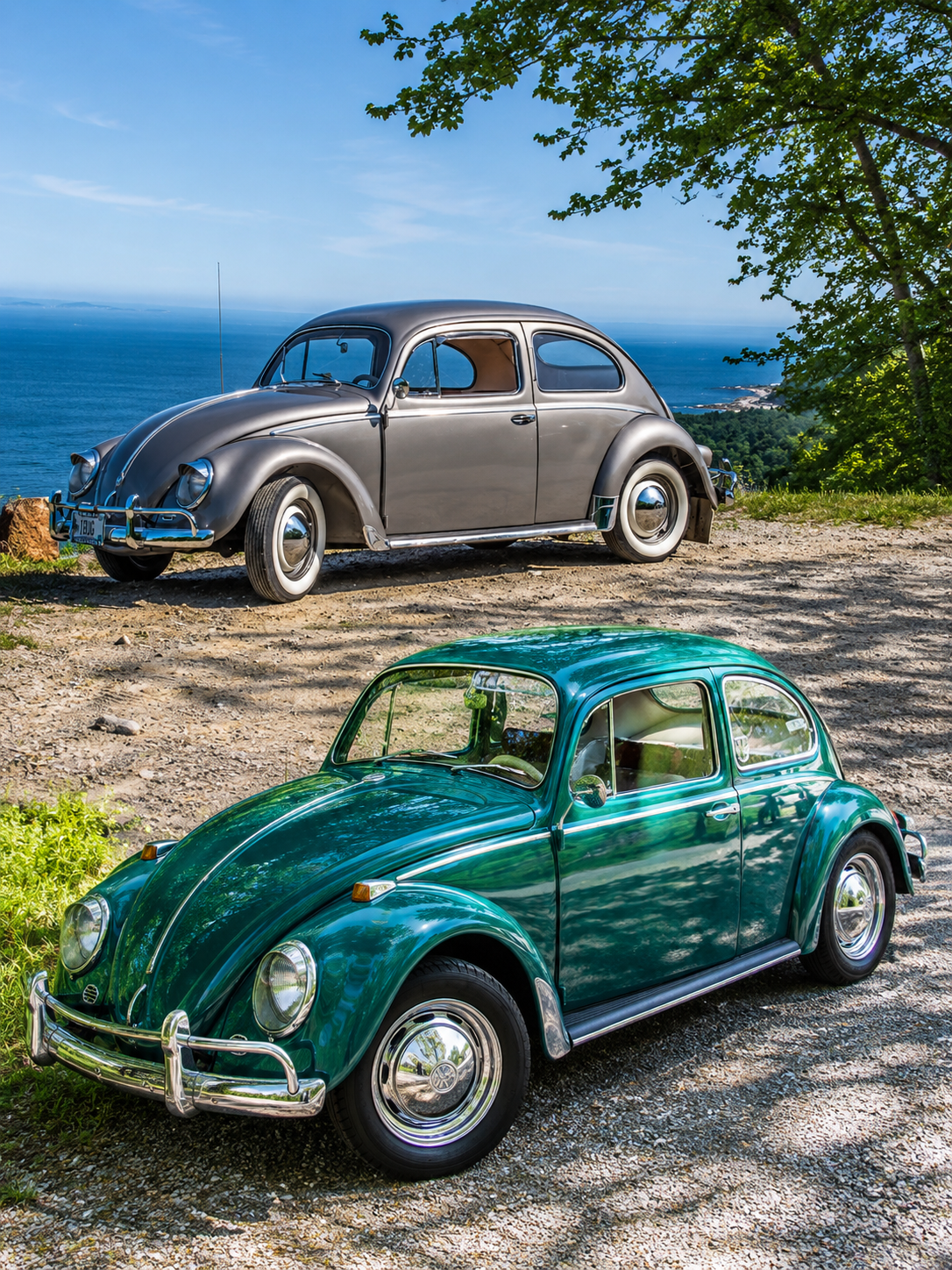
In postwar America, bigger usually meant better.
Cars stretched across parking spaces with long hoods, wide chrome grilles and engines advertised through ever-rising horsepower figures. Detroit sold automobiles as symbols of abundance, status and upward movement.
Then a tiny German car arrived looking as though it had misunderstood every rule.
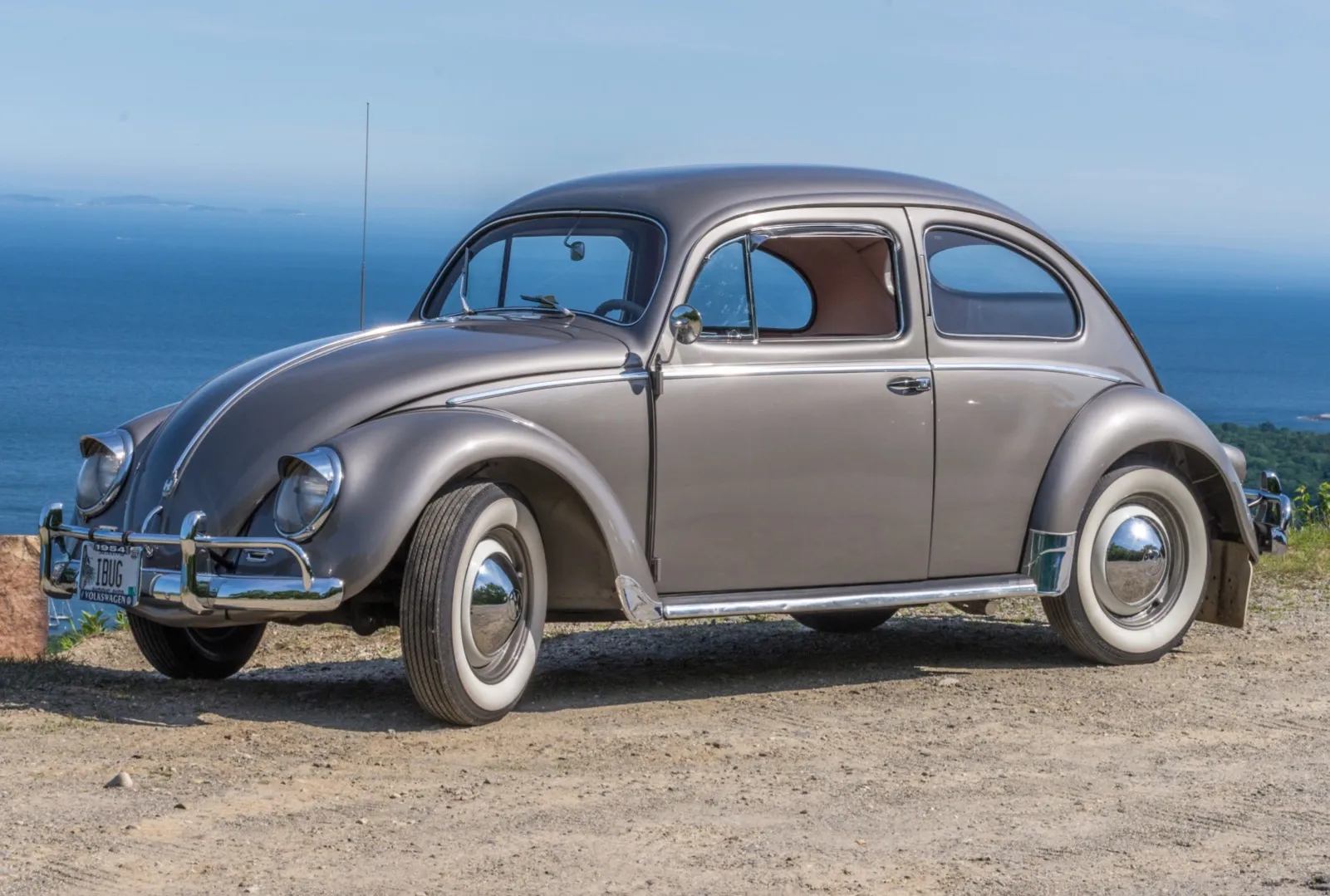
The Volkswagen Beetle was rounded where American cars were sharp, modest where they were theatrical and almost comically small beside the sedans filling the country’s new highways. Its engine sat behind the passengers. Its trunk was under the front hood. It relied on air rather than liquid coolant, and its styling changed so slowly that new models often looked remarkably similar to old ones.
The Beetle did not try to defeat American cars by becoming more like them.
It succeeded by turning its differences into a personality.
Over the following decades, the unlikely import became transportation for students, young families, commuters and people who rejected the idea that a car needed to announce wealth or power. Disney transformed one into a movie star. Owners gave theirs names, decorated them with flowers and repaired them in driveways.
A vehicle created under a dictatorship in Germany was eventually embraced in the United States as a symbol of individuality.
A Car With a Difficult Beginning
The Beetle’s origins cannot be separated from Nazi Germany.
Adolf Hitler wanted an affordable “people’s car” that ordinary German families could use on the country’s growing highway network. Ferdinand Porsche and his engineering team developed the rear-engined vehicle that became the foundation of the Volkswagen Type 1.
A factory was built at Wolfsburg, but the promised mass distribution of civilian cars did not occur before World War II. The plant shifted toward military production and used forced labor during the Nazi era.
After the war, the factory fell within the British occupation zone. British Army officer Ivan Hirst played an important role in restarting automobile production, initially to supply transportation for the occupying authorities.
From that damaged industrial operation emerged a car that would become one of West Germany’s greatest export successes.
Selling it in the United States presented an especially difficult challenge. The vehicle came from a country Americans had recently fought, carried associations with Hitler’s regime and looked nothing like the products offered by General Motors, Ford or Chrysler.
Dutch automobile importer Ben Pon brought two Volkswagens to the United States in 1949. Early sales were tiny, but the car gradually found dealers and curious buyers willing to look past its origins and unconventional appearance.
Everything American Cars Were Not
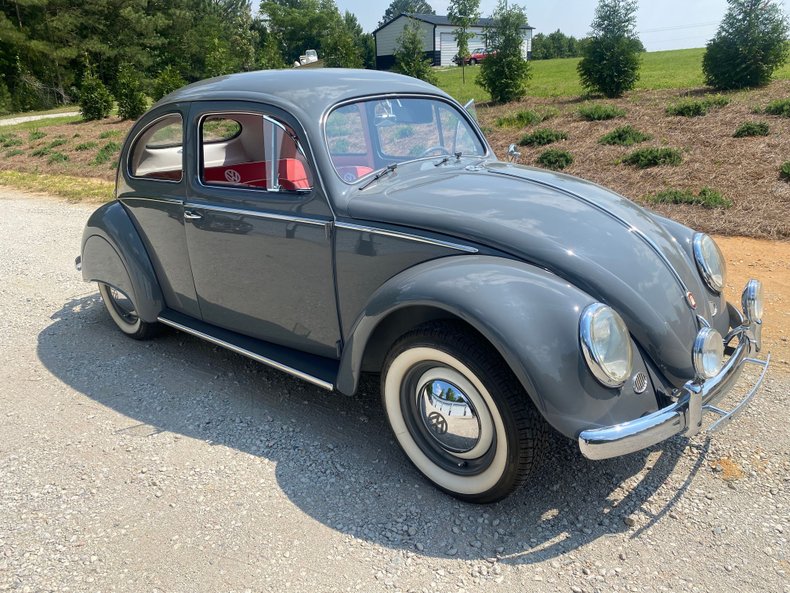
The Beetle’s engineering philosophy emphasized simplicity rather than spectacle.
Its air-cooled, horizontally opposed four-cylinder engine sat behind the rear axle. Without a conventional radiator or liquid-cooling system, there were fewer related components to maintain or freeze during cold weather.
The arrangement also placed weight over the driven rear wheels, giving the small car useful traction in snow. Its curved body and compact footprint made it easy to recognize and relatively easy to maneuver.
Performance was modest. Early Beetles were slow even by the standards of their time, and highway driving could require patience. Cabin heating depended on warm air carried forward from the engine area and was not one of the car’s most celebrated qualities.
Yet the Beetle offered benefits that mattered to practical buyers.
It used relatively little fuel, cost less than many American cars and could be repaired without highly specialized equipment. The basic engine was accessible, and generations of owners learned to adjust valves, replace parts and keep aging examples running.
The car also developed a reputation for sturdy construction. Its doors closed with a reassuring sound, and its conservative mechanical development meant that lessons learned on one Beetle often applied to another.
Volkswagen did not redesign the vehicle every year simply to make the previous version look outdated. That consistency reduced the pressure to own the newest model.
For Americans accustomed to annual styling changes, the approach felt almost rebellious.
“Think Small” Changes the Conversation
The Beetle’s greatest American breakthrough came not from a new engine or larger body, but from advertising that openly acknowledged what the car was not.
In 1959, the Doyle Dane Bernbach agency introduced the celebrated “Think Small” campaign. The print advertisement used an enormous field of white space with a tiny image of the Beetle positioned near the top.
It looked almost empty compared with the colorful, boastful automobile ads of the period.
The message was equally unusual. Rather than pretending the Beetle was luxurious, powerful or glamorous, Volkswagen’s campaign treated its limitations with intelligence and humor. Other ads used headlines such as “Lemon,” then explained the company’s inspection standards.
The approach invited consumers into the joke.
Volkswagen did not ask people to imagine that buying a Beetle would make them richer or more important. It suggested that choosing a small, economical and visually odd car might demonstrate independence and common sense.
The campaign helped reshape American advertising while giving the Beetle a voice that matched its appearance: self-aware, understated and slightly mischievous.
By making honesty feel sophisticated, Volkswagen turned potential weaknesses into reasons to buy.
The Car for People Choosing Another Path
The Beetle’s American popularity rose rapidly during the 1960s.
Its low operating costs appealed to students, teachers, young couples and families needing dependable transportation without a large monthly burden. Its size worked well in cities and around college campuses, while its mechanical simplicity attracted owners comfortable performing their own repairs.
But economy alone does not explain the affection it inspired.
The Beetle arrived as younger Americans were questioning institutions, consumption and traditional definitions of success. Against enormous sedans and aggressive muscle cars, it offered another kind of identity.
It did not dominate the road. It occupied as little of it as possible.
Some owners painted their Beetles in vivid colors, added flowers or covered the bodies with personal artwork. The car appeared at concerts, demonstrations, beaches and college towns, often alongside Volkswagen’s Microbus.
Not every Beetle owner belonged to the counterculture, and many simply wanted inexpensive transportation. Still, the vehicle became closely associated with people who preferred usefulness, humor and personality over conventional prestige.
Its German origins made that transformation especially striking. A product born from an authoritarian state was reinterpreted by many American buyers as a friendly symbol of personal freedom.
Herbie Gives the Beetle a Soul
In 1968, Disney turned the Beetle’s personality into a character.
The Love Bug starred a pearl-white Volkswagen numbered 53 and named Herbie. The car could drive itself, understand human behavior and compete successfully against machines that appeared far more powerful.
Herbie was small, stubborn and underestimated—the same qualities Americans had already learned to associate with the Beetle.
The movie became a major success and led to several sequels and later revivals. For children, Herbie made the Volkswagen feel less like machinery than a companion with a face, moods and loyalties.
The Beetle’s round headlights resembled eyes. Its hood suggested an expression, while the engine note gave it a distinctive voice. Few vehicles were better suited to becoming a living movie character.
Herbie strengthened the idea that Beetles deserved names. Families often remembered them not merely by model year but by color, personality and the adventures experienced inside them.
The car became part of family stories: the Beetle that carried a student to college, survived a cross-country trip or refused to stop running long after it should have been replaced.
The Original Beetle Outlives Its Era
Volkswagen eventually developed more modern front-wheel-drive vehicles, including the Golf, known initially in the United States as the Rabbit. German production of the Beetle ended as the company shifted toward designs better suited to changing safety, comfort and performance expectations.
But the original car continued elsewhere.
Production remained especially important in Mexico, where the Beetle—affectionately called the Vocho—became a familiar part of everyday life and served extensively as a taxi.
On July 30, 2003, the final original Type 1 left Volkswagen’s plant in Puebla. It belonged to a limited farewell edition and marked the end of a production story totaling 21,529,464 vehicles worldwide.
By then, the design’s basic roots were nearly seven decades old.
Volkswagen had already introduced the front-engined New Beetle in the late 1990s, using modern engineering beneath a body inspired by the original. Another generation followed years later before Beetle production ended again in 2019.
Those revivals demonstrated the strength of the shape, but they occupied a different place in automotive life.
The original had not been designed as nostalgia. It became nostalgic because millions of people had lived with it.
Why Americans Still Call It the Bug
The Beetle collected affectionate names wherever it traveled.
Americans called it the Bug and built a childhood road game around spotting one—known in various places as “Punch Buggy” or “Slug Bug.” In Germany it became the Käfer, while Mexico knew it as the Vocho and Brazil as the Fusca.
Those nicknames reveal something unusual.
People rarely invent such language for machines they consider anonymous. They do it for objects that have entered family life deeply enough to seem almost human.
The Beetle was never the fastest, largest or most comfortable car on American roads. It could be noisy, slow and cold. Its unconventional layout demanded compromises, and its dark historical origins remain an essential part of its full story.
Yet affection does not always grow from perfection.
Sometimes it begins with a familiar engine sound, a rounded roof visible across a parking lot or the memory of fitting an impossible amount of luggage into a very small car.
The Volkswagen Beetle became beloved because it never pretended to be what America’s automobile industry said a successful car should be.
It remained small when everything else wanted to grow. It stayed recognizable while styles changed around it. It appealed to people who saw personality in imperfection and freedom in choosing something different.
America did not simply import the Beetle.
It gave the strange little foreign car a new identity—and eventually made it part of its own memory.