Jamie Foxx Felt Something Was Wrong Standing Beside Leonardo DiCaprio — So He Secretly Changed Django’s Boots
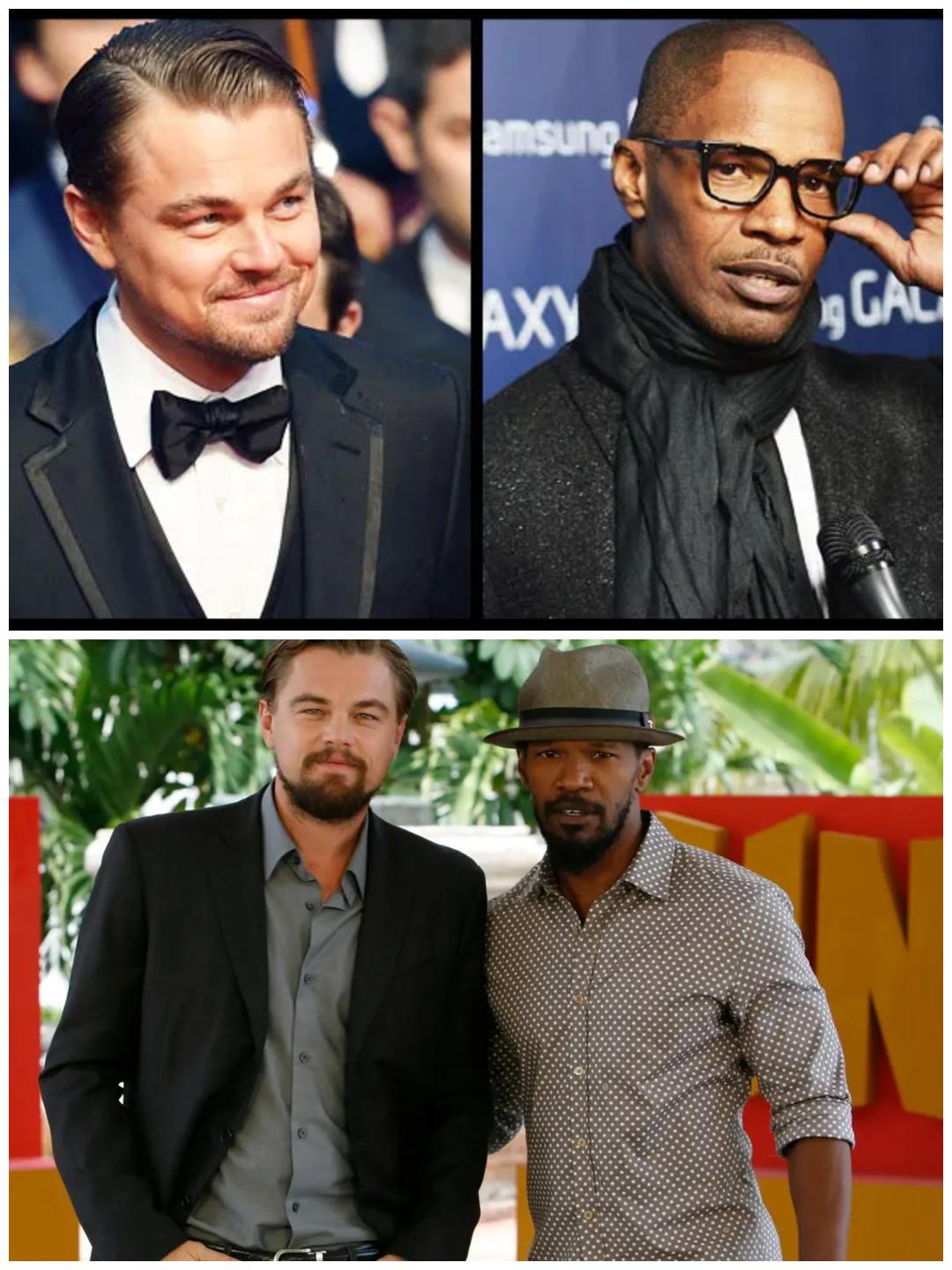
Jamie Foxx had already won an Oscar by the time he stepped onto the set of Django Unchained.
He had played Ray Charles. He had starred opposite Tom Cruise. He was a comedian, musician and movie star who knew exactly how to command a room.
Then Leonardo DiCaprio arrived.
Suddenly, Foxx felt something he had not expected while playing the title character in Quentin Tarantino’s movie.
He felt intimidated.
It wasn’t simply because DiCaprio was one of the biggest actors in Hollywood. It was the way DiCaprio carried himself once he arrived to play Calvin Candie, the wealthy and vicious plantation owner standing between Django and his wife.
Foxx took one look at the physical dynamic between them and realized he had a problem.
His solution was never written into Tarantino’s script.
He went to wardrobe and quietly asked for something extra to be put inside Django’s boots.
About four inches extra.
More than a decade later, Foxx has finally explained why.
Everything Changed When DiCaprio and Samuel L. Jackson Arrived
Foxx revisited the making of the 2012 film during the Aug. 25 episode of Keke Palmer’s podcast, Baby, This Is Keke Palmer, where he appeared alongside his daughter Corinne Foxx.
For a significant portion of the early production, Foxx had been working primarily with Christoph Waltz.
Waltz played Dr. King Schultz, the German bounty hunter who frees Django and eventually helps him search for his wife, Broomhilda.
That partnership dominates much of the movie’s first half.
Then the story reaches Candyland.
And the atmosphere changes.
That was also how Foxx remembered the actors arriving on set.
He jokingly described DiCaprio and Samuel L. Jackson — who played Candie’s deeply manipulative house servant Stephen — appearing with enormous confidence, walking as though they were moving in slow motion while smoking their vapes.
Foxx immediately noticed their presence.
These were not actors casually easing themselves into the production.
They had arrived ready to take over their section of the movie.
And Foxx knew he had to match them.
Then Foxx Stood Next to DiCaprio
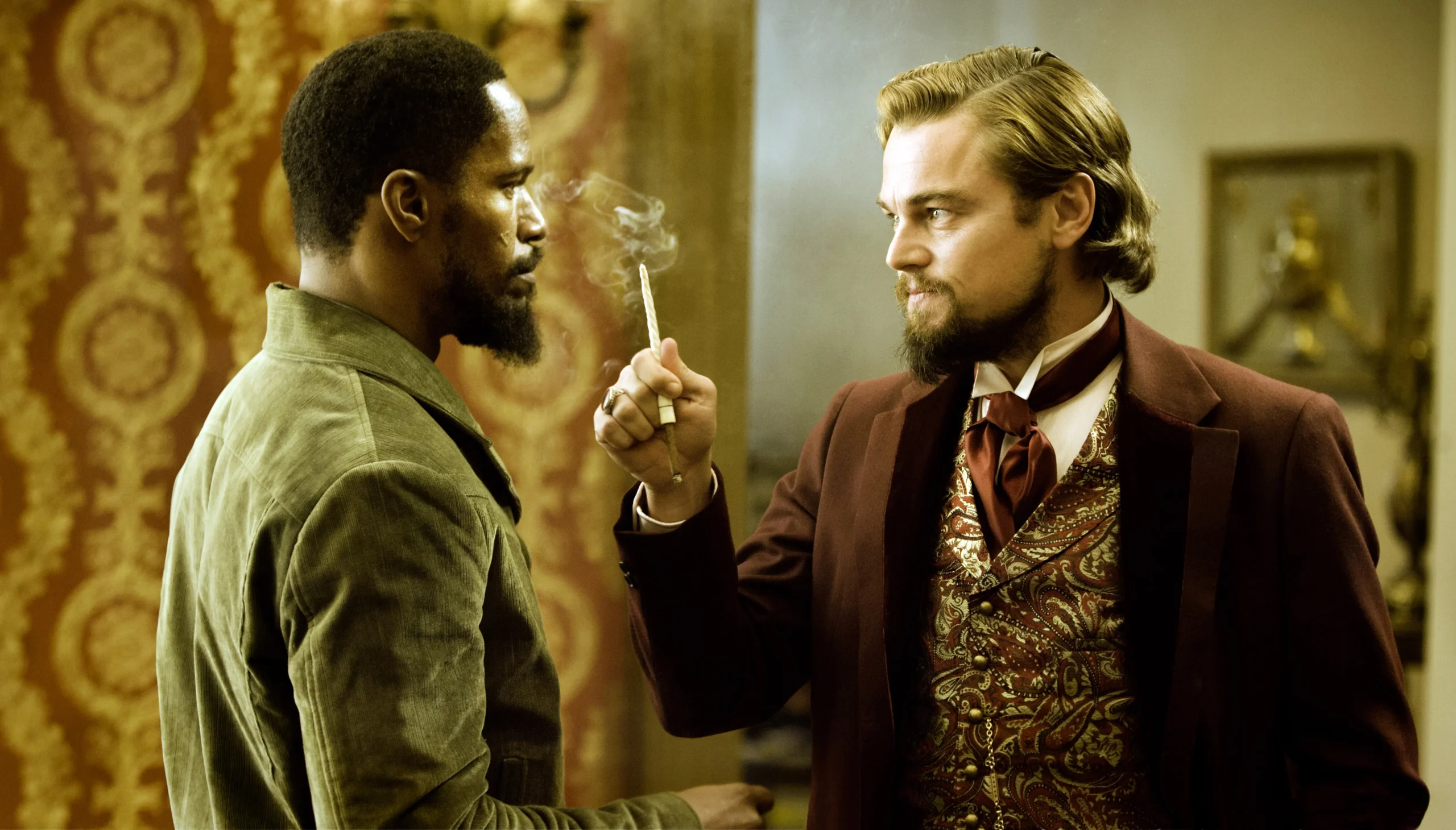
The problem became obvious during rehearsal.
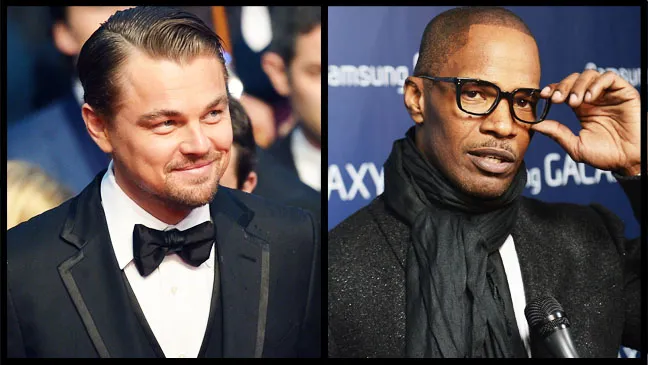
DiCaprio was taller.
That might sound insignificant, but for Foxx, it mattered.
The scenes between Django and Calvin Candie are built around power.
Candie believes he owns the room, the plantation and nearly everyone standing in front of him. Django, meanwhile, has to enter that world while hiding much of what he truly feels.
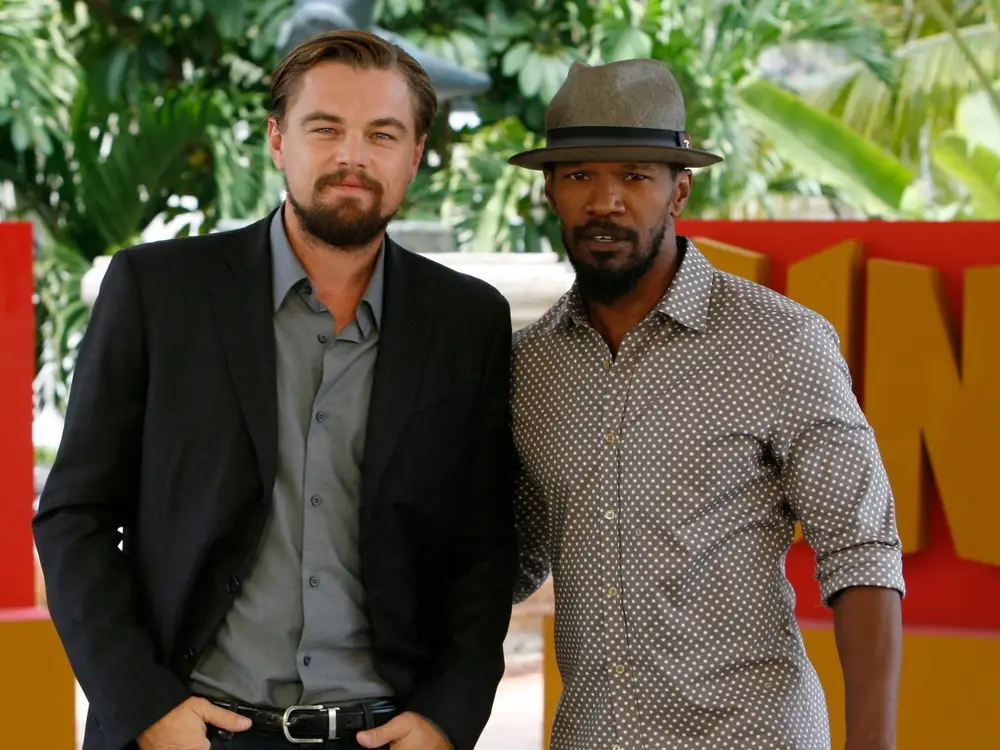
Foxx remembered realizing that during one exchange, DiCaprio would effectively be looking down at him and blowing smoke toward his face.
Visually, Candie suddenly had another advantage.
Foxx did not like it.
“I can’t beat him,” Foxx recalled thinking.
So he went to someone in wardrobe.
He had a request.
Put extra height inside his boots.
When the wardrobe employee apparently wanted to know why, Foxx did not offer a complicated explanation.
He simply insisted that he needed it.
The amount?
Four inches.
It was not a character detail Tarantino had ordered.
It was Foxx reacting to another actor’s physical presence and finding his own way to alter the balance of the scene.
Suddenly, Django could stand differently opposite Calvin Candie.
It Was About More Than Being Taller
The story is funny, especially because most viewers could watch Django Unchained repeatedly without ever wondering what was inside Foxx’s boots.
But the decision also reveals something about how carefully actors think about screen presence.
A confrontation is not created only through dialogue.
Height matters.
Posture matters.
Where one actor’s eyes meet another actor’s eyes matters.
Even the way one character appears to occupy space can subtly tell an audience who has power.
Foxx was playing a man whose transformation is central to the entire movie.
At the beginning, Django has almost no control over his circumstances. As the story progresses, his clothes change, his posture changes and his confidence grows.
By the time he enters Candie’s world, Django cannot simply disappear beside the movie’s villain.
Foxx wanted him to hold his ground.
And DiCaprio was making that difficult before he even delivered a line.
DiCaprio’s Intensity Was Real
Foxx has repeatedly spoken about how seriously DiCaprio approached the role.
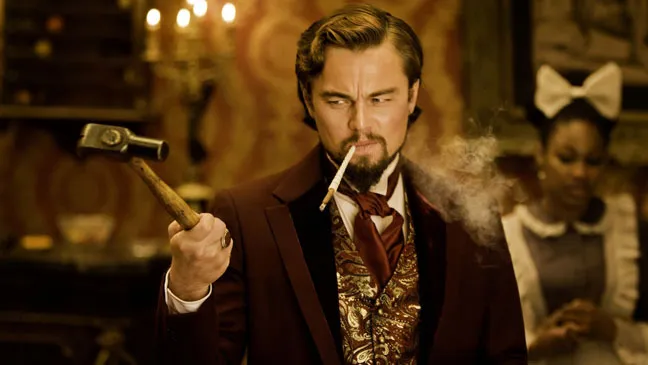
Calvin Candie was a particularly ugly character for an actor to inhabit, and some of the dialogue made DiCaprio uncomfortable.
Foxx previously recalled a script reading in which DiCaprio stopped because of the racist language his character was required to use.
Samuel L. Jackson pushed him to stop distancing himself from the material and commit to playing the character truthfully.
Foxx gave DiCaprio similar advice.
He reminded him that inside the world portrayed by the movie, Django and Candie were not Jamie and Leo — two friendly actors working on a movie together.
DiCaprio had to become the man Django would have been forced to confront.
Foxx recalled that when DiCaprio returned afterward, his demeanor had changed.
He was in character.
That intensity helped create one of the film’s most memorable villains.
It also helps explain why Foxx felt the need to make an adjustment of his own.
Samuel L. Jackson Was Another Problem Entirely
DiCaprio was not the only performer who impressed Foxx.
In his conversation with Palmer, Foxx also praised Samuel L. Jackson in extraordinary terms, essentially describing him as the strongest actor among the group.
According to Foxx, even DiCaprio agreed about Jackson’s ability.
That meant Foxx, despite being the star of the movie, suddenly found himself surrounded by performers bringing enormous energy to Candyland.
DiCaprio had Calvin’s menace.
Jackson had Stephen’s unpredictability and control.
Foxx had to ensure Django remained the center of his own story.
Sometimes that required acting choices.
Apparently, sometimes it required taller boots.
The Detail Was Hiding in Plain Sight
Django Unchained became one of Tarantino’s biggest successes after its 2012 release.
Waltz won the Academy Award for Best Supporting Actor, while Tarantino won for his original screenplay.
But more than a decade later, stories from behind the camera are still changing the way familiar scenes can be viewed.
Now fans can go back to the confrontations between Django and Calvin Candie and look at Foxx’s boots differently.
They were not simply part of an elaborate Western costume.
Hidden inside them was a small piece of Hollywood competition.
Jamie Foxx saw Leonardo DiCaprio walk onto the set, felt the balance of the scene shifting against him and decided Django needed a little help.
Not another speech.
Not a rewrite.
Not a different camera angle.
Just four more inches.